


Live updates: Follow the latest news on Cop28
In another key breakthrough at Cop28, at least 60 countries signed a pledge to cut emissions from the cooling sector.
This "global cooling pledge" calls on nations to cut cooling-related emissions by at least 68 per cent from 2022 levels by 2050, as the need for cooling is set to triple in that time period with the planet warming up.
But the cut could go further, to potentially 96 per cent, if new technology and sustainable measures can be introduced, according to a lead author of the report that led to Tuesday's pledge.
For example, if air conditioners become much more efficient and buildings are constructed using techniques that allow the release of more heat, there will be less demand for power.
"Unless this growth in cooling is met sustainably, it’s going to make the achievement of that net zero target [by 2050] very hard, because the rise in emissions that’s going to come from this cooling demand is extremely high," Dr Radhika Khosla, associate professor at the Smith School of Enterprise and the Environment at the University of Oxford, and a lead author of the UN report cited at Cop, told The National.
"If we do this right, if the growth in cooling emissions is actually complemented and undertaken in a way where a range of different sustainable cooling measures are put in place, then we can reduce these 2050 greenhouse gas emissions from cooling by at least 60 per cent.
"That number could increase to a reduction of 96 per cent depending on rates of decarbonisation."
Currently, cooling accounts for about one fifth of the world’s electricity consumption and more than seven per cent of greenhouse gas emissions globally, from both the generation of electricity to power devices and from refrigerant gases.
What is more, about 1.2 billion people in Asia and Africa do not have access to cooling, so the sector’s growth is seen as necessary but must be done in a sustainable way.
Cop28 - in pictures
-
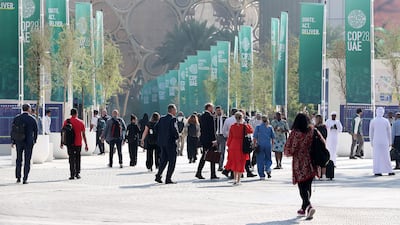
Delegates on the 11th day of the Cop28 summit at Expo City Dubai. Pawan Singh / The National -
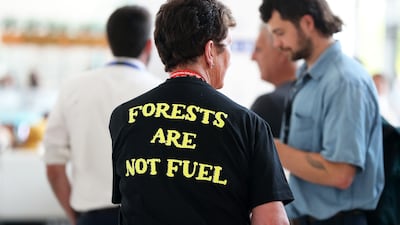
Cop28 is scheduled to conclude at 11am on Tuesday. Pawan Singh / The National -

Mariam Almheiri, UAE Minister of Climate Change and Environment, addresses a press conference on agriculture on the 11th day of Cop28 in Dubai. Pawan Singh / The National -
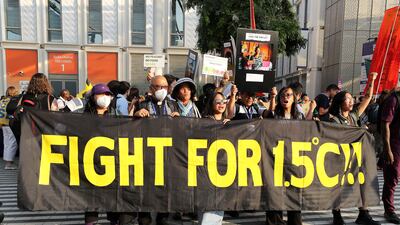
Activists called for a ceasefire in Gaza and measures to protect the climate on the 10th day of the summit. Pawan Singh / The National -

Visitors walk in the Green Zone, in Expo City Dubai’s Sustainability District. Pawan Singh / The National -

Models take part in the Sustainable Fashion Show held on the seventh day of the summit at Al Wasl Plaza. Pawan Singh / The National -

The summit heard from indigenous peoples, many of whom inhabit island nations and contribute the least to greenhouse emissions. Chris Whiteoak / The National -

UN climate change executive secretary Simon Stiell speaks to the media on the 12th day of Cop28. Chris Whiteoak / The National -

About 70,000 participants are attending the two-week event. Chris Whiteoak / The National -

The last two scheduled days of the summit have been left clear for final negotiations. Chris Whiteoak / The National -

The Wake Up experience with Sadhguru, on the sixth day of Cop28. Chris Whiteoak / The National -

Activists from youth organisation Engajamundo stage a protest about smog caused by deforestation in the Amazon. Chris Whiteoak / The National -

Lights shine from Al Wasl Dome at Expo City Dubai. AP -
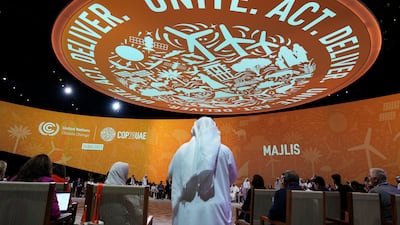
Delegates arrive for a meeting at the Cop28 summit. AP -
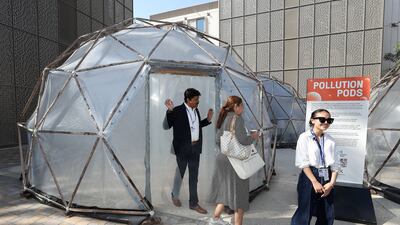
Cop28 attendees visit British artist Michael Pinsky's Pollution Pods, which replicate the air quality in Beijing, London and New Delhi, at Expo City in Dubai. Pawan Singh / The National -
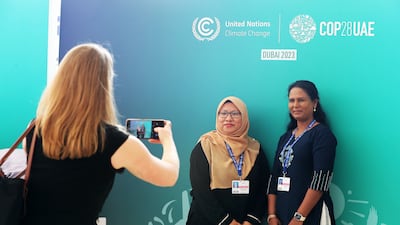
Delegates on the 10th day of the Cop28 UAE at the Expo City in Dubai. Pawan Singh / The National -

Cop27 President Sameh Shoukry, left, hands over the gavel to Cop28 President Dr Sultan Al Jaber at the UN climate conference's opening ceremony. AFP -
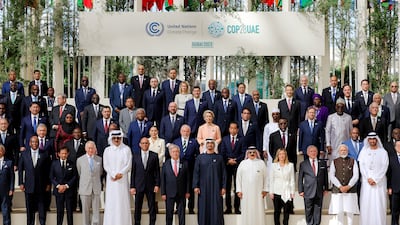
World leaders on day two of Cop28 in Dubai. Reuters -
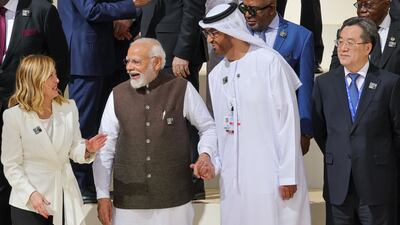
From left, Italy's Prime Minister Giorgia Meloni, Prime Minister Narendra Modi of India, Cop28 President Dr Sultan Al Jaber and Japan's Prime Minister Fumio Kishida arrive for a group photo. AFP -

King Charles III with King Abdullah II of Jordan during the opening ceremony of the World Climate Action Summit at Cop28. PA -
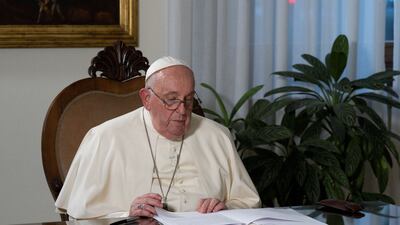
Pope Francis records a video message to be broadcast during the inauguration of the Faith Pavilion, at Casa Santa Marta, in the Vatican. Reuters -
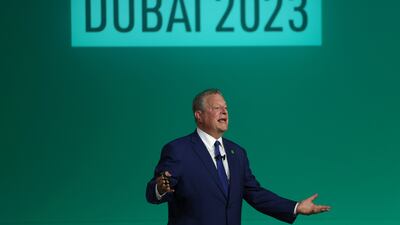
Al Gore, environmentalist and former US vice president, presents the Climate Trace global greenhouse gases emissions database on day four of Cop28. Getty Images -

Visitors in the Green Zone at Expo City Dubai. Pawan Singh / The National -

Sheikh Abdullah bin Zayed, Minister of Foreign Affairs, Microsoft co-founder Bill Gates, Tanzanian President Samia Hassan and Reem Al Hashimy, Minister of State for International Co-operation, attend the Reaching the Last Mile Forum held alongside Cop28. Reuters -
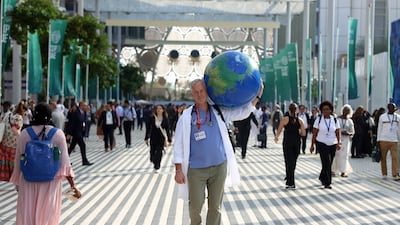
Joseph Vipond from the Canadian Association of Physicians for the Environment crosses the Blue Zone. Getty Images -
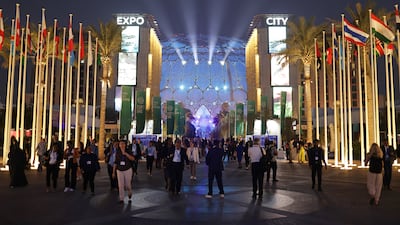
Participants walk among flagpoles on day four of the Cop28 summit in Dubai. Getty Images -
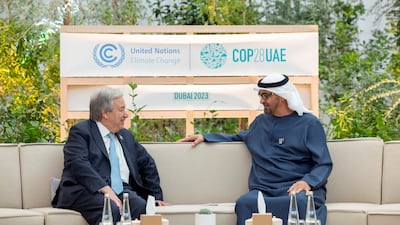
President Sheikh Mohamed and UN Secretary General Antonio Guterres hold a meeting at the Cop28 summit in Dubai. Photo: UAE Presidential Court


The report, Keeping it Chill: How to meet cooling demands while cutting emissions, was released by the UN Environment Programme (Unep) on Tuesday.
The Unep report indicates that if countries focus on three key measures, the impact of cooling on the environment – in terms of both the electricity generated to power cooling devices and the refrigerants the devices use – could be cut significantly.
One is the greater use of passive cooling, which includes insulation, shading, reflective surfaces and natural ventilation. Tougher regulations can ensure they are used more often today in favour of air-conditioning units, the report said.
"Building energy codes that explicitly incorporate such passive cooling measures are one of the most effective regulatory instruments to help reduce cooling demand," the report said.
"These codes can also be extremely important in driving uptake of efficient cooling equipment with low global warming potential."
A second key area is having more efficient air conditioning. Leading technology today could triple the efficiency of the cooling sector, according to the report.
Regulation can help here, too, such as through the enforcement of minimum performance standards.
The third mentioned in the report is a call for stronger product labelling so consumers can choose more efficient options.
Air conditioning action plan
The UAE has its own initiative to improve the efficiency of air conditioning. As reported in The National, Strata, the aerospace unit of Mubadala Investment Company, Abu Dhabi’s sovereign investor, last year teamed up with industrial 3D-printing company EOS and AI-engineering firm Hyperganic to develop an air-conditioning system that could be 10 times as efficient as the current industry standard.
The Unep report also says more than 80 per cent of countries have advanced sustainable cooling through at least one of the three key policy actions but efforts are often pilot-scale or siloed, managed by different government departments, and "challenges to implementation are significant".
Dr Khosla said Vietnam was notable for integrating cooling into its regulatory structure, making it an important case study.
"[Cooling] is going to become essential to almost every part of the world," Dr Khosla said. "Cooling is indeed central to achieving the sustainable development goals, all of them.
"It’s not actually just about thermal comfort.
"It’s as much about food security. It’s as much about keeping vaccines stable. It has huge impacts on productivity.
"It does become vital, particularly as we have extreme heat that’s rising in intensity, duration and frequency around the world.
"No part of the world is going to be left shy of needing large amounts of cooling, especially not the Middle East."
Current projections suggest the demand for cooling could triple by 2050, with total installed capacity reaching 58 terawatts. Even though equipment is likely to become more efficient, this tripling in demand could still result in a doubling of power used by the sector.
In this scenario, cooling could account for 10 per cent of global emissions by 2050, with annual cooling emissions increasing to the equivalent of between 4.4 and 6.1 billion tonnes of carbon dioxide.

