


UAE scientists have sounded the alarm over the uncertain future of dozens of at-risk wild varieties of staple crops, which could hold the key to strengthening the food chain against the growing threat of climate change.
New research has highlighted that the Emirates is home to 87 crop wild relatives (CWRs), some of which possess genes which can be harnessed for breeding programmes to bolster crop resistance against weather changes such as steep rises in temperatures.
But a UAE study has cautioned that these wild relatives must be better protected or the potentially valuable genetic resources they possess could be lost.
The research, written by scientists at UAE University and published earlier this month, reports that crop wild relatives in the Emirates come from plant families including the legumes, the grasses and the cucurbits, the last being a group that includes cucumbers and watermelons.
When it comes to using wild relatives as sources of useful genes, the new study, “Crop Wild Relatives (CWRs) in the United Arab Emirates: Resources for Climate Resilience and Their Potential Medicinal Applications,” warns that in future, fewer such wild plants may exist.
Climate-busting crops in peril
“Despite the invaluable potential of CWRs to enhance some crop varieties in breeding programmes, their conservation, both in their natural habitats (in situ) and outside their natural habitats (ex situ), has been neglected for many years, placing them at risk of extinction,” the authors wrote.
“In the Arabian Peninsula, excessive grazing by goats and camels poses a significant threat to plants, including crop wild relatives. As CWRs grow in a wild environment without any protective measures, they are susceptible to depletion.”
They concluded that conserving and investigating the wild relatives of crop plants was “essential given the escalating threat posed by climate change”.
Prof Nigel Maxted, professor of plant genetic conservation at the University of Birmingham in the UK, said that concerns over how climate change would affect crops meant that interest in their wild relatives as sources of useful genes was now of greater “magnitude”.
“Because of climate change you’re going to need crops that can survive in higher temperatures and possibly with less water,” said Prof Maxted, who is not involved in the UAE research.
“These are the traits we’re looking for, not just for a specific crop, but every crop. Climate change doesn’t have a particular threat against certain crops – it will impact all of them.”
A growing concern
As temperatures soar and droughts become more common, some crops may struggle.
A 2021 study by Nasa scientists showed that global yields of maize, for example, could fall as much as 24 per cent, largely because maize will become harder to grow in the tropics.
This research found that crop yields could be affected as soon as 2030.
Yields of some crops, such as wheat, may increase, because of expansion in the area where they can be grown.
Prof Julie King, professor of cereal genetics a the University of Nottingham in the UK, said that only a small proportion of the genetic variation of CWRs had been incorporated into crops to combat these various stresses and improve yields.
“You have all that variation sitting there,” she said. “It’s the same for every crop – it’s evolved from a limited number of wild relatives.”
With wheat, the crop that she works on, segments of chromosomes – the inherited bundles of genetic material and proteins – of wild relatives have been incorporated into the genomes (the complete set of genetic material of an organism) of some domesticated varieties.
Prof King said that the latest techniques of genetic analysis allowed scientists to track more precisely which genes were transferred through traditional plant breeding.
“That technology has gone through so many leaps over the last 10, 20 years,” she said.
Also, gene-editing technology called Crispr has opened up opportunities to make crops more resistant to biotic and abiotic stresses.
“There’s a lot of interest in Crispr, but you have to know which genes to alter,” Prof King said.
Prof Maxted said that conserving crop wild relatives was vital if the world was to produce enough food.
“Unless we do something about conserving these species, we’ll go extinct, probably within our children’s lifetimes,” he said.
“What we need to do is to make sure all of these species we could use in breeding programmes are conserved.”
He said that it was important to conserve plants in gene banks, where seeds are kept in storage, and in their natural habitats. These habitats, he said, may not be pristine environments, but could be areas such as roadsides.
Impact of climate change in the Middle East - in pictures
-

Flooding in the Al Barsha area of Dubai. Chris Whiteoak / The National -
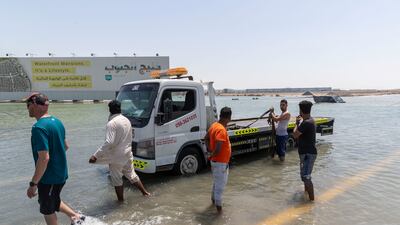
Vehicles being recovered near Al Maktoum airport in Dubai. Antonie Robertson / The National -

Flooding in the Al Barsha area of Dubai. Chris Whiteoak / The National -
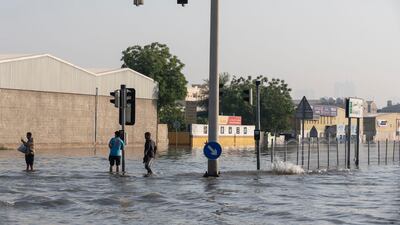
Flooding along Sheikh Zayed Road in Dubai. Antonie Robertson / The National -
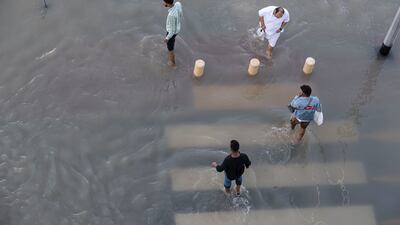
Flooding along Sheikh Zayed Road in Dubai. Antonie Robertson / The National -

Cars move through floodwater in Al Qudra, Dubai. Chris Whiteoak / The National -

Flooding on Dubai's Al Khail Road. Chris Whiteoak / The National -
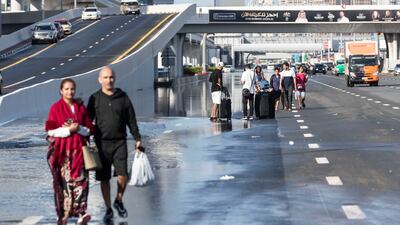
People abandon their cars on Sheikh Zayed Road due to heavy rain. Antonie Robertson/The National -

Flooding on Al Khail Road. Chris Whiteoak / The National -
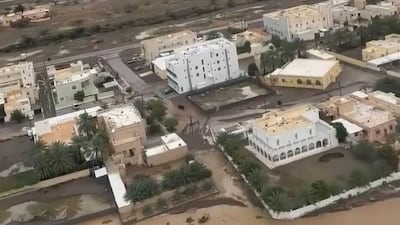
Flooding in Oman. Photo: Royal Oman Police -

A damaged car in Derna, Libya. Reuters -
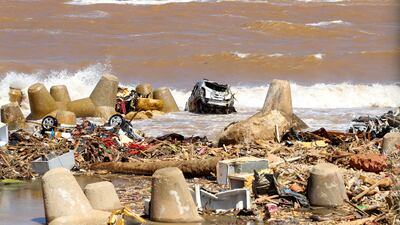
A destroyed vehicle in Derna. AFP -

Abdul Salam Ibrahim Al-Qadi walks on rubble in front of his house, searching for his missing father and brother, in Derna. Reuters -

An aerial view of the destruction in Derna. Reuters -
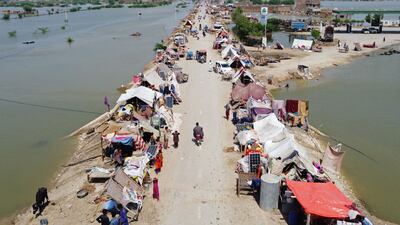
Flood-affected people taking refuge in a makeshift camp after heavy monsoon rains in Jaffarabad district of Balochistan province. AFP -
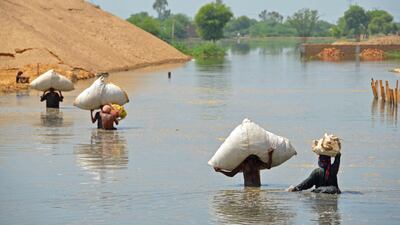
Internally displaced flood-affected people shift husk for their animals in a flood-hit area following heavy rains in Dera Allah Yar in Balochistan. AFP -
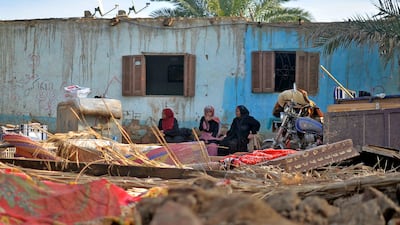
The aftermath of flooding in Egypt's southern city of Aswan, 920 kilometres south of the capital. AFP -

The Nile River from the top of Famine Stela, or Rock of Starvation, Egypt. Reuters -

Volunteers search for people in need following heavy rainfall in east Mosul, Iraq, in March 2020. Reuters -

People clean up after floods in Duhok, Iraq, on March 19. Reuters



