


Climate activists hailed a landmark legal win on Tuesday as a European court ruled states have a duty to protect the planet in the name of human rights.
Judges rebuked Switzerland for a failing climate policy that did not provide “effective protection” for people's everyday lives.
Lawyers called it a “historic precedent” that will apply across Europe, piling pressure on governments to enact green policies or be hauled into court.
“This is a massive win for all generations,” said Gerry Liston, a lawyer at the Global Legal Action Network, a group involved in the case.
The European Court of Human Rights sided with a group of older women in Switzerland who said a lack of climate action was affecting their lives, living conditions and health.
Switzerland's Alpine glaciers have lost about a third of their volume – exposing the country to floods and droughts – as temperatures rise across Europe.
Judges in Strasbourg dismissed two parallel lawsuits by a French former mayor and six Portuguese youth activists, saying they lacked standing to bring a case.
The case in Switzerland relied on Article 8 of the European Convention on Human Rights, which protects people's private and family life.
This amounts to a right to “effective protection by the state authorities from the serious adverse effects of climate change on their lives, health, well-being and quality of life,” ruled the 17-judge bench.

The court ruled it to be a “matter of fact” that man-made climate change exists and “poses a serious current and future threat to the enjoyment of human rights”.
Some of the women who brought the case – a group of more than 2,000 “climate seniors” – said they had suffered health problems due to climate change, especially during heatwaves.
The court said states must “undertake measures to reduce their [greenhouse gas] emission levels, with a view to reaching net neutrality, in principle within the next three decades”.
“In this respect, states need to put in place relevant targets and timelines, which must form an integral part of the domestic regulatory framework, as a basis for mitigation measures,” it said.
Switzerland failed to do this, the court found, with “critical gaps” in its policies that meant there were no caps on carbon emissions.
The Swiss authorities failed to meet emissions targets and “had not acted in time and in an appropriate way”, judges said.
The ruling in the Swiss case sets a precedent that covers 46 countries including non-EU members such as Switzerland, the UK and Turkey.
Swedish activist Greta Thunberg said the case was “only the beginning of climate litigation” as activists increasingly turn to the courts.
“Today's rulings make very clear that the European states have a legal responsibility to take real climate action,” she said.
Joie Chowdhury, from the Centre for International Environmental Law, predicted the ruling would influence climate action “across Europe and far beyond”.
The verdict leaves no doubt that “the climate crisis is a human rights crisis, and states have human rights obligations to act urgently and effectively”, she said.
“It also affirms the power and courage of those who speak out and dare to demand a liveable future for all.”
Swiss authorities said they would study the ruling.
“Sustainability is very important to Switzerland, biodiversity is very important to Switzerland, the net zero target is very important to Switzerland,” said President Viola Amherd.
“We are working on those and will continue to work on them with all our strength. This ruling does nothing to change that.”
Nations at risk due to climate change – in pictures
-

Internally displaced children Ali and Osman Abdulahi stand near carcasses of their family's livestock, killed by severe drought near Dollow, Somalia. Reuters -
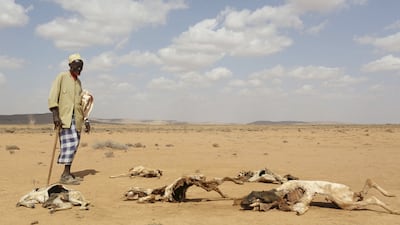
Quick distribution of climate funds agreed at Cop28 will help devastated populations get back on their feet, Somalia’s Deputy Prime Minister Salah Jama has said. Reuters -

Commuters ride on rickshaws on a flooded road after heavy rains in Dhaka, Bangladesh. Reuters -
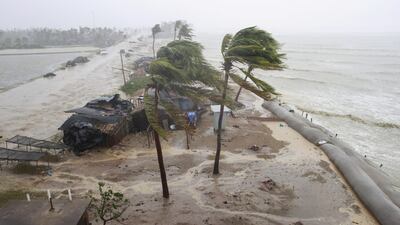
Cyclone Mocha makes landfall near Cox's Bazar, Bangladesh. A rise in extreme weather events around the world has been blamed on global warming caused by man-made greenhouse gases. EPA -
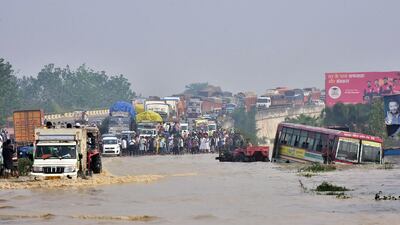
Commuters stand on a flyover, on a flooded motorway near Rampur, in India's Uttar Pradesh state, in 2021. AFP -
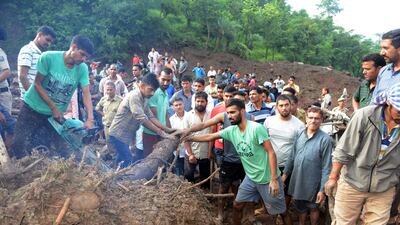
Monsoon floods and landslides killed about 100 people in Nepal and India earlier this year. AFP -
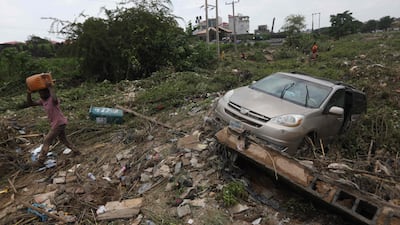
A man walks past a car swept by floodwaters in Abuja, Nigeria, in 2021. AFP -
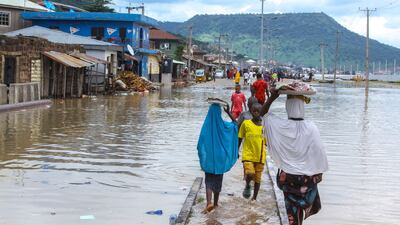
Flooding in Kogi, Nigeria, in October 2022. AP -
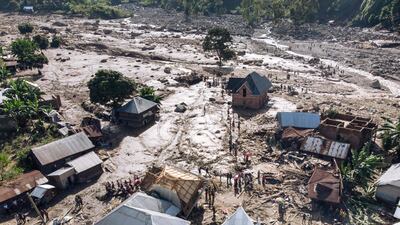
A landslide engulfs Nyamukubi village, eastern Democratic Republic of Congo. AFP -

A landslide in the Mont Ngafula district of Kinshasa, the capital of the Democratic Republic of Congo. AFP -
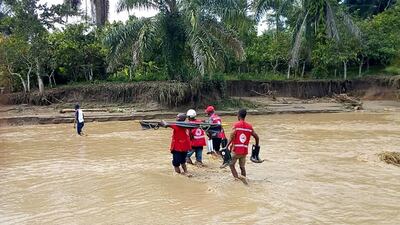
Aid workers crossing flooded areas in Bundibugyo, Uganda. Twitter/UgandaRedCross -
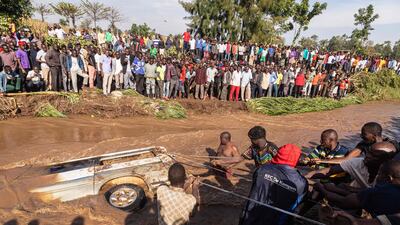
Villagers try to pull up a minibus in which 14 bodies were retrieved, in the river Nabuyonga in eastern Uganda, after flash floods. AFP



