

Arizona, California and Nevada on Monday reached a plan to significantly reduce their use of water from the drought-stricken Colorado River over the next three years, a breakthrough in a year-long stalemate that pitted western states against one another.
The plan would conserve an additional 3.7 million megalitres of water through 2026, when current guidelines for how the river is shared expire. A megalitre is 1 million litres. About half the cuts would come by the end of 2024.
“Today’s agreement between the Department of the Interior and seven Colorado River Basin states on a consensus-based approach marks an important step forward in our efforts to protect the stability of the Colorado River System in the face of climate change and historic drought conditions,” US President Joe Biden said of the deal.
The agreement amount is less than what federal officials said last year would be needed to stave off a crisis for the river amid a years-long drought, but still marks a notable step in drawn-out and difficult negotiations between the three states.
The 2,334-kilometre river provides water to tens of millions of people in seven states in the US West, parts of Mexico and more than two dozen Native American tribes.
It is responsible for producing hydropower and supplying water to farms that grow most of the nation's winter vegetables.
In exchange for temporarily using less water, cities, irrigation districts and tribes in the three states will receive federal funding, though officials did not say how much money they expected to receive.
“This approach will benefit the 40 million people who rely on the Colorado River Basin for agriculture, drinking water and power, and is a critical step to building a sustainable, resilient future for states, tribes and communities throughout the West,” Mr Biden added.
The three states – which form the Lower Basin – are entitled to 9.25 million megalitres of water altogether from the river.
California gets the most, based on a century-old water rights priority system. Under the new proposal, the state would give up about 1.9 million mega litres through 2026 – a little more than half of the total.
The Colorado River has been in crisis for years due to a multi-decade drought in the West intensified by climate change, rising demand and overuse.
Those pressures have sent water levels at key reservoirs along the river to unprecedented lows, though they have rebounded somewhat thanks to heavy precipitation and deep snowpack this winter.
The Associated Press contributed to this report
-
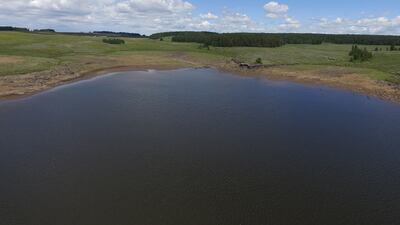
An aerial shot of a depleted reservoir on Grand Mesa outside Grand Junction, Colorado. Janie VanWinkle relies on the reservoir to feed her cattle. -

An aerial view of Frank Nieslanik’s farm. On one side of the road, the fields have been irrigated. On the other, they haven’t. -
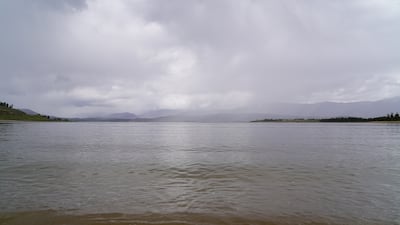
Lake Granby in Colorado is part of the headwaters that feed the Colorado River. -
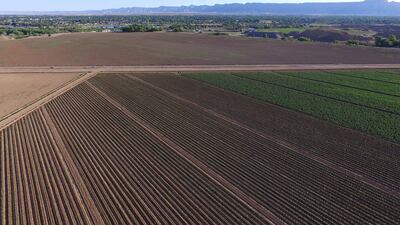
An aerial view of Frank Nieslanik’s farm in Grand Junction, Colorado. -

An aerial shot of Janie VanWinkle’s ranch shows how dry conditions have become. Down the hill, where the grass is green, shows the difference irrigation makes. -

Frank Nieslanik poses next to produce grown on his farm. He’s farmed the land for 30 years and has never seen it so dry. -

An aerial view of an irrigation canal on Frank Nieslanik’s farm shows the difference water makes to crops. -

Farm workers sow a field at Frank Nieslanik’s farm in Grand Junction, Colorado. The Colorado River has been in a drought for 22 years, putting stress on the state’s farmers. -
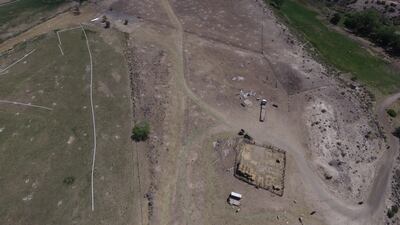
An aerial shot of Janie VanWinkle’s ranch outside Grand Junction, Colorado, shows how dry conditions have become. -
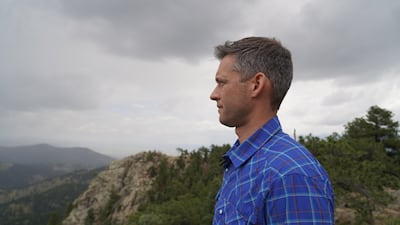
Keith Musselman, a scientist at the University of Colorado’s Institute of Arctic and Alpine Research, looks out towards the continental divide. -
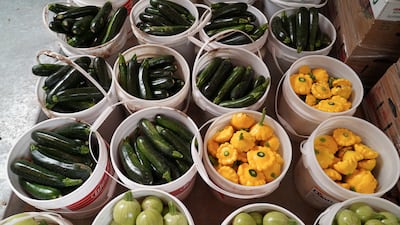
Produce from Frank Nieslanik’s farm in Grand Junction, Colorado. The Colorado River has been in a drought for 22 years, putting stress on the state’s farmers. -
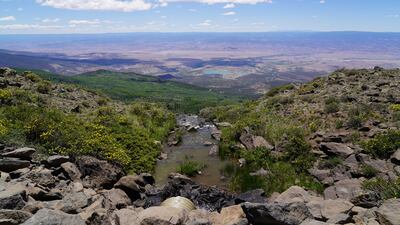
A view from the top of Grand Mesa overlooking the dry Western Slope of Colorado. In July, the state’s governor declared a drought emergency. -

Janie VanWinkle drives a tractor as she collects hay for her cows. The drought has meant she needs more hay than usual to keep her cattle healthy. -

Snow still graces the top of a peak in the Rocky Mountains of Colorado. Snowpack from the mountains is vital to the health of the Colorado River, which provides water to 40 million people in the American South-West and Mexico. -
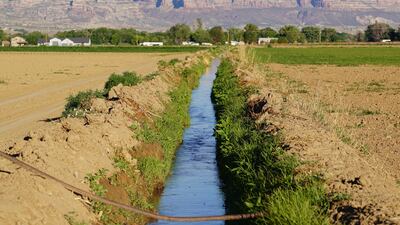
An irrigation canal runs through a farm in Grand Junction, Colorado. The area is famous for its cattle and produce. -

A view of Frank Nieslanik’s farm. On one side of the road, the fields have been irrigated. On the otherside, they haven’t. -
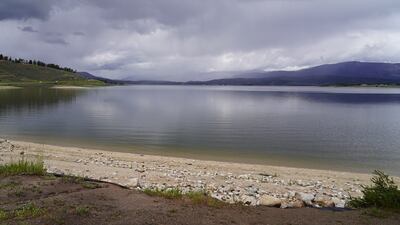
Lake Granby in Colorado is part of the headwaters that feed the Colorado River. -
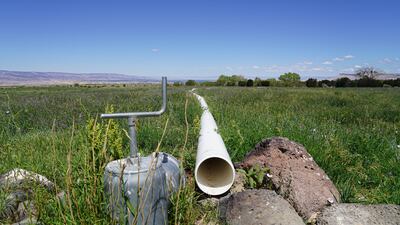
An untapped irrigation pipe at one of the tracts of land Janie VanWinkle and her family graze their cattle on. -

Janie Van Winkle’s husband, Howard, drives a tractor as she collects hay for her cows. The drought has meant she needs more hay than usual to keep her cattle healthy. -
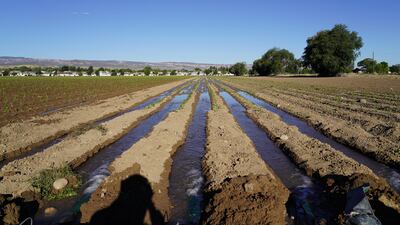
A field is irrigated at Frank Nieslanik’s farm in Grand Junction, Colorado. The Colorado River has been in a drought for 22 years, putting stress on the state’s farmers. -

A winding portion of the Colorado River. -

A depleted reservoir high on top of Grand Mesa near Grand Junction, Colorado. -
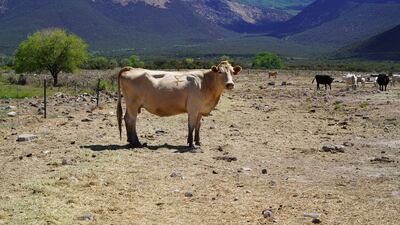
A cow stands on a dry patch of grass on one of the tracts of land Janie VanWinkle and her family use to graze them on. -
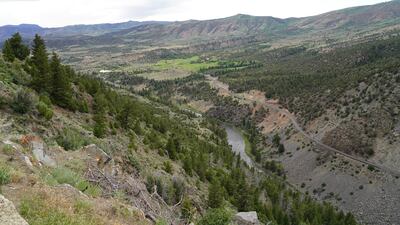
A stretch of the Colorado River, near the river’s headwaters.



