


Samsung Electronics is set to introduce its first flagship smartphones for the year and the buzz around them is growing as the company's first major event for 2023 draws closer.
The world's largest mobile phone manufacturer is certain to introduce the Galaxy S23 series on at its Unpacked event on Wednesday, plus a shift from past undercard devices.
There have been plenty of leaks and speculation about what to expect. In any case, we expect Samsung to make a big splash and kick off another interesting year for the most popular device in the consumer electronics category.
The National will be at Unpacked, so make sure to stay tuned for our live updates.
When and where will Samsung introduce its new smartphones?
Samsung has traditionally held two Unpacked events a year, the first for the Galaxy S series in February. The company will unveil the S23 line-up on February 1 in San Francisco, dousing earlier reports that it would be introduced at January's Consumer Electronics Show in Las Vegas.
Reliable tipster Ice Universe had correctly announced this in December, while the English-language Korea JoongAng Daily earlier reported that Unpacked would indeed be held in February, but without giving a specific day.
Samsung confirmed the February 1 date in a post on its website on January 11, then followed it up with a tweet with a teaser video a week later.
For those without a ringside seat in San Francisco, you can watch the live stream of the event on Samsung's website, its newsroom and on the company's YouTube channel, at 10pm UAE time.
On Tuesday, Samsung Gulf Electronics said it would be opening an experience zone at The Dubai Mall from February 2, where you can see their newest devices.
How many Galaxy S23 phones will be launched?
It's all but guaranteed that Samsung will launch three smartphones — the base S23, the bigger S23+ and the high-end S23+ Ultra.
This would match the same number of devices on the S22 line-up. The S21 and S20 had four models, with the addition of an FE, or “fan edition” option, while the S10 had five.
When do orders for the Galaxy S23 begin?
Orders usually begin after Unpacked. Historically, Samsung's new phones have been made available a week after its introduction, meaning customers can get their hands on them by the middle of next week.
However, Samsung had already offered reservations for the S23 devices since January 11 — but only in the US.
Those who register will get $100 credit, but there's a catch: you have to follow through on that reservation when orders start on Wednesday, and you can't use that cash on the S23 devices; it's only for other products.
If you head to Samsung's UAE website, the registration will only be for Unpacked — but you'll get a complimentary two-year coverage for Samsung Care+ on the next Galaxy device you buy.
How much will the Galaxy S23 devices be?
It's widely expected that Samsung won't budge from their prices last year: the base S22 started at $800, the S22+ at $1,000 and the S22 Ultra at $1,200.
However, that may not be the case in other countries. Some weeks ago, reports on the web circulated that prices in South Korea and Australia could be up anywhere from 10 per cent to 20 per cent.
Earlier in January, reliable tipster Roland Quandt hinted that customers in Europe — Belgium, Germany, the Netherlands and Spain, specifically — should be prepared to shell out as much as €300 ($325) more for the new smartphones.
What else will be launched?
Here's an interesting bit: a closer look at the Samsung US website shows that, aside from the S23, reservations are also being accepted for a new Galaxy Book laptop.
Samsung isn't new to computers — they made their first PC in 1983 and first laptop in 1996 — but they haven't heavily marketed those products compared to their smartphones.
Which leads to the last bit of that $100 credit: you can only get the full amount if you reserve both the S23 and Galaxy Book; reserving either will only get you $50.
Galaxy S23 base storage to be bumped up
One significant expectation on the Galaxy S23 is that Samsung will offer 256GB as the base storage, which gives double the capacity for entry-level users, Ahmed Qwaider, another active Samsung tipster, tweeted on January 1.
However, his tweet seems to indicate that Samsung will offer only one variant — 8GB of RAM plus 256GB of storage — for both the S23 and S23+. The Galaxy S22 and S22+ had 128GB and 256GB storage options, so it is unclear whether Samsung would also offer a 512GB version for these phones.
The S23 Ultra, meanwhile, will purportedly come with 12GB of RAM across its 256GB, 512GB and 1TB options, Mr Qwaider said.
If the base storage comes to fruition, Samsung would outdo Apple, which continues to offer 128GB as its base storage on its iPhones. Apple, however, would have enough time to respond and match (maybe even surpass?) Samsung as it is expected to unveil the iPhone 15 in September.
'Night vision' on a whopping 200MP camera
Cameras have been one of the most important selling points on smartphones, particularly with the highest-end devices. Multiple reports said the Galaxy S23 Ultra would come with a 200MP main sensor — almost double that of the 108MP found in the Ultra versions of the S20, S21 and S22. That's part of a quad-camera set-up.
There's also speculation that the S23 Ultra will be able to shoot 8K video in 30fps, compared to the 24fps on its predecessor. This means that videos would be smoother.
And as with every new iteration, night photography is expected to be improved. This time, however, Samsung is said to be adding what Ice Universe has called “night vision” on the S23 Ultra.
Night vision is most popular in the military, where it is used to detect targets in dark conditions, even in moonless situations. The top-of-the-line night vision equipment allows users to see objects up to more than 910 metres away.
It is unclear what kind of technology Samsung would be using for its night vision. In any case, and given how it's being described, it could be a serious upgrade.
Samsung has always promoted its “nightography” capabilities; the night mode on its devices are already very good, so using night vision should, by definition, result in significantly clearer and brighter images at night — even without any light at all.
In a January 17 blog post, Samsung's head of mobile, TM Roh, said the company's cameras were "getting smarter", and "easier and more seamless than ever".
"Along with the hardware and software optimisation, our newest chipset born out of Samsung’s open partnership philosophy enables the fastest and most powerful Galaxy performance," he said.
All these are backed up by Samsung's teaser, which says, "Epic nights are coming".
A 'cooling system' to beat the heat
Samsung drew fire last year for throttling some apps on Galaxy S22 devices to prevent overheating, which led to performance downgrades. The debacle led to its chief executive apologising.
This time, the company wants to play it safer by adding what has been called a “cooling system” in the Galaxy S23 series. The system that will be used on the S23, S23+ and S23 Ultra would be 1.6 times, 2.8 times and 2.3 times better than those on its predecessors, respectively.
The S23 devices will be using the Snapdragon 8 Gen 2 system-on-chip, which has been designed to generate less heat, creating a win-win scenario.
Additionally, Qualcomm's latest processor will help the S23 series improve its CPU, graphics and neural processing by 36 per cent, 48 per cent and 60 per cent, respectively, according to Mr Qwaider.
What about the next foldable devices?
The second Unpacked event is expected in August, in which Samsung will reveal its new Galaxy Fold line-up. As this is still far off, it is understandable that details for this are very scarce at the moment.
The only major detail that has circulated is one from tipster Ross Young, who claimed the Flip 5 would have 3-inch cover display, bigger than the present Flip's 1.9 inches.
For the Fold 5, there have been no significant reports, but it is expected that Samsung will try to improve on battery life. Another thing to look for is whether Samsung will bring the Fold's cameras to the levels of the S series. That, however, may not bode well for its price, which is already high.
-
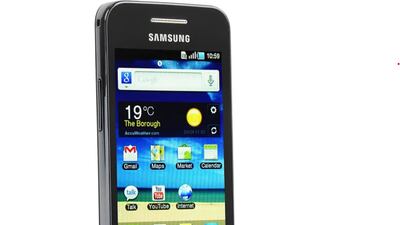
Samsung released its first Galaxy S phone in 2010, three years after the launch of the first Apple iPhone. It had a 4-inch (10.16 centimetre) Super AMOLED display and a five-megapixel rear camera. Photo: Samsung -
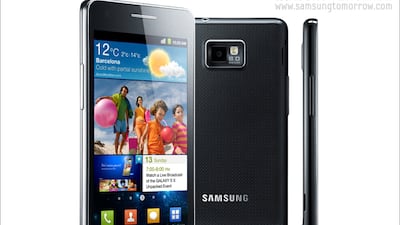
Samsung's Galaxy S2, released in 2011, looked, as you would expect, like a jump forward in terms of technology. The screen was slightly bigger, at 4.3 inches, while the rear camera was now 8MP. The device came with a dual-core processor. Photo: Samsung -
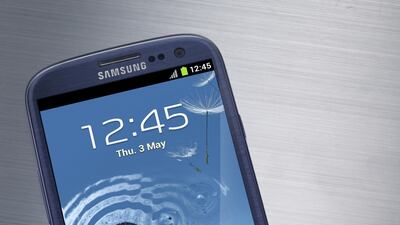
The Samsung Galaxy S3, which was released in 2012, was the first in the series to have an HD screen. The new design had a more rounded shape. It ran on the Android 4.0 Ice Cream Sandwich operating system. Photo: Samsung -
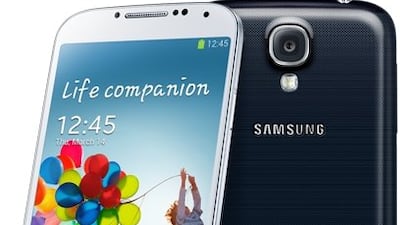
Samsung's Galaxy S4 was released in April 2013 and felt like a real competitor to the iPhone. Its processing power was increased, the screen was enlarged to five inches and the rear camera to 13MP. Photo: Samsung -
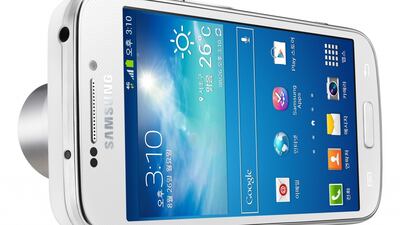
Ah, some innovation ... the Samsung Galaxy S4 Zoom came with an optical zoom lens on the back. Quirky, and not necessarily practical. Photo: Samsung -
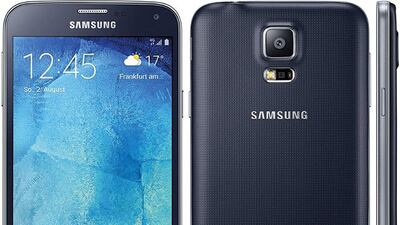
Samsung's Galaxy S5 arrived in 2014 and came with a plastic back which didn't feel particularly advanced. However, the phone itself had a 5.1-inch screen which produced beautiful colours (for the time). The S5 had a heart-rate monitor, was water-proof and had a 16MP rear camera. Photo: Samsung -
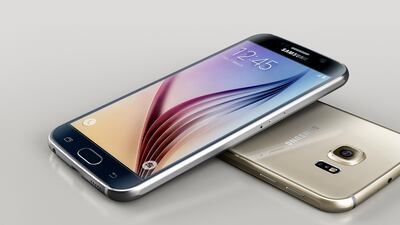
There was a big change in store for the Samsung Galaxy series in 2015. It launched the Galaxy S6 and S6 edge at the same time. Photo: Samsung -
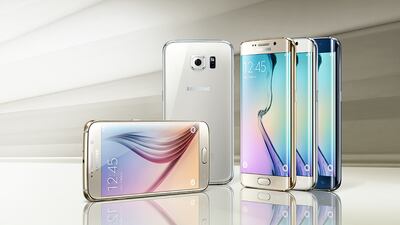
The Samsung Galaxy S6 edge was full metal and had two curved sides extending the screen. This was a big jump and a step ahead of Apple. Photo: Samsung -
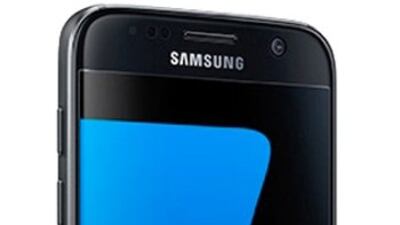
Samsung's Galaxy S7 came in 2016 and incorporated Samsung Pay. The 2K screen resolution was impressive. The edge version offered a wraparound display. Photo: Samsung -
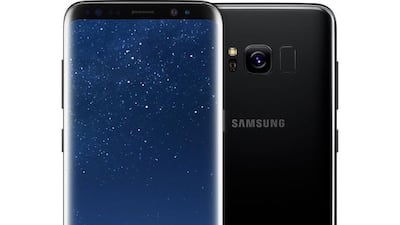
Both Samsung Galaxy S8 models had curved sides. A fingerprint button was moved to the back while a button on the side was introduced for voice assistant Bixby. Photo: Samsung -
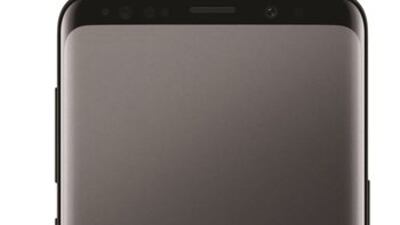
The Samsung Galaxy S9 arrived in 2018 and had a much stronger battery than the S8. Otherwise, it was a very similar product. Photo: Samsung -

Samsung's Galaxy S10 was released in 2019 and came with a triple-camera system. It had a punch-hole camera on the front and an UltraSonic fingerprint sensor. Photo: Samsung -
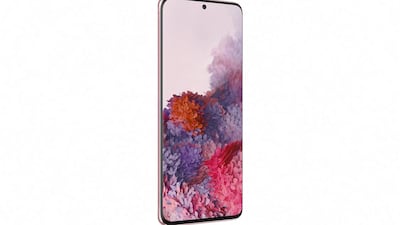
Samsung's 6.2-inch Galaxy S20 was 2020's offering and there were two other versions — the 6.7-inch S20+ and the 6.9-inch S20 Ultra. The phones were 5G-enabled. The S20 and S20+ came with 64MP cameras while the S20 Ultra came with a 108MP camera. Photo: Samsung -

The Samsung Galaxy S21 series came with bigger batteries, advanced computing, greater energy efficiency, improved cameras and enhanced privacy features. Samsung added a stylus to the S21 Ultra — a first in the series. Photo: Samsung -
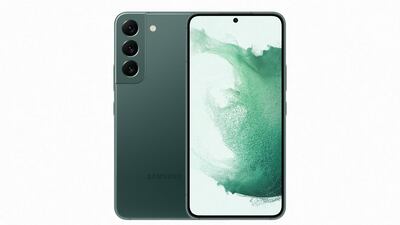
Samsung's Galaxy S22 was unveiled in February 2022, with the S22, S22+ and S22 Ultra, the last of which featured a slot to hold the S Pen, the signature accessory of the Note series. Photo: Samsung -

The Samsung Galaxy Note 3 was first launched in 2011 with its big screen and stylus functionality. The series continued until the Note 20 in 2020, when the stylus was moved to the S series. Photo: Samsung -
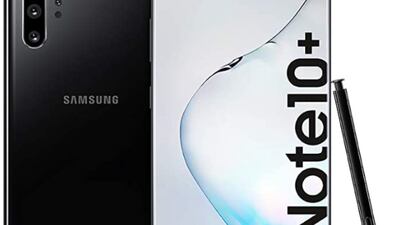
The release of the Note 10 in 2019 marked the first time Samsung offered a Plus model of its Note. It had a 6.8-inch display. Photo: Samsung -
The Galaxy Z Flip came in March 2020 and was like turning back time, with phone makers having tried flip phones many years before. It uses a hybrid glass coating called an Infinity Flex Display. Pawan Singh / The National -
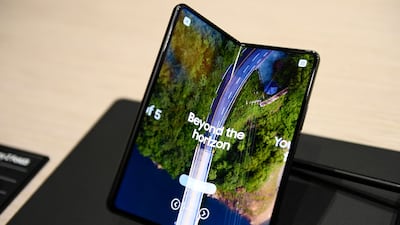
The Samsung Galaxy Z Fold was first unveiled in March 2019. It opened out horizontally to create a 7.3-inch tablet-style screen. AFP



