A Volvo XC60 hybrid car is seen plugged into a charging point outside a Volvo dealership in Reading, west of London. AFP

Europe set to be global leader for electric vehicle use by 2030, report says


Ian Oxborrow
  • English
  • Arabic

Europe is forecast to overtake China and have the highest rate of electric vehicle use in the world by 2030, according to a report.

The region is forecast to have a 67.3 per cent penetration rate — up from 22 per cent in 2023 — for new energy vehicles, the Citi State of Global Electric Vehicle Adoption report said.

This places it ahead of China (66.6 per cent), South Korea (60.5 per cent) and the US (45.8 per cent), while the Middle East and Africa are forecast to have a penetration rate of only 2.7 per cent.

In October 2022, an agreement was reached by the European Parliament and European Council ensuring all new cars and vans registered in Europe will be zero-emission by 2035.

“Reaching zero emissions by 2035 raises questions around the long-term relevance of hybrid technology in Europe and implies an outright ban on combustion engine technology within 15 years,” the report said.

“While OEMs [original equipment manufacturers] viewed electrification as just a tool to meet CO2 targets a couple of years ago, it has now become an integral part of many of their strategies. The uptake from end consumers has also been encouraging as evidenced in the strong BEV [battery electric vehicle] sales outperformance since 2020.”

The growth in popularity of electric vehicles was shown in the UK in the past year, as battery electric new cars took a market share of about 17 per cent in 2022, overtaking diesel for the first time to become the second most popular system after petrol, data released by the Society of Motor Manufacturers and Traders shows.

December saw battery electric vehicles claim their largest ever monthly market share of 33 per cent, driven by a large number of Tesla cars being delivered.

Sales of new petrol and diesel cars and vans in the UK will be banned from 2030.

Last year was regarded as a “good year” for electric vehicle adoption in the US, the Citi report said, with new vehicle sales penetration growing throughout the year to more than 5 per cent of total light vehicle sales.

The rise in EV adoption came despite significant price increases implemented by car makers to offset input costs, however two-thirds of total EV sales came from just eight US states.

The Citi report said there could be a sudden rise in demand on the way.

“Though US EV penetration continues to lag other geographies, we continue to believe that the structure of the US auto market lends itself well for a potential sharp and sudden inflection in EV demand,” the report said.

“This is because vehicle density in the US — the ratio of vehicles per household — ranks highest in the world at greater than 2x, with around 285 million light vehicles on the road.

“EVs have gained in popularity not only for being electric, but also for containing state-of-the-art connectivity and over-the-air software updates often with next-generation advanced driver assistance systems features. As the supply of available EVs grows and as EV charging infrastructure continues to expand, it is conceivable that an increasing number of US households will rapidly decide to migrate to a one internal combustion engine and one EV household — essentially retaining the best of both worlds.”

____________________________

10 of the world's most expensive electric cars — in pictures

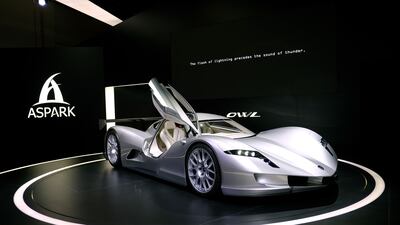
  • Aspark Owl, $3.6 million. Getty Images
    Aspark Owl, $3.6 million. Getty Images
  • Pininfarina Battista, $2.6 million. Photo: Automobili Pininfarina
    Pininfarina Battista, $2.6 million. Photo: Automobili Pininfarina
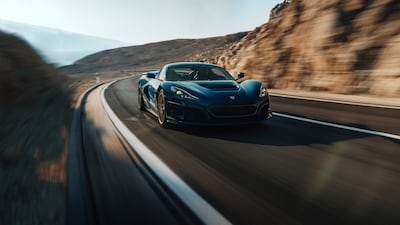
  • Rimac Nevera, $2.5 million. AP Photo
    Rimac Nevera, $2.5 million. AP Photo
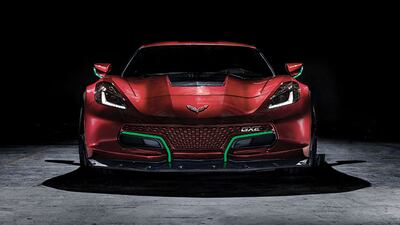
  • Genovation GXE, $750,000. Photo: Genovation
    Genovation GXE, $750,000. Photo: Genovation
  • Mercedes Benz SLS AMG Electric Drive, $550,000. Photo: Daimler AG
    Mercedes Benz SLS AMG Electric Drive, $550,000. Photo: Daimler AG
  • Rolls Royce 102 EX, $500,000. Getty Images
    Rolls Royce 102 EX, $500,000. Getty Images
  • Lightning GT, $300,000. Alamy
    Lightning GT, $300,000. Alamy
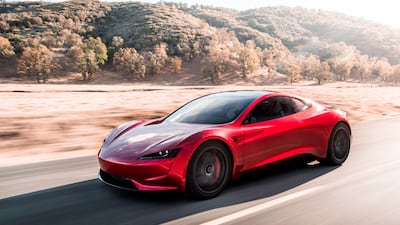
  • Tesla Roadster, $200,000. Reuters
    Tesla Roadster, $200,000. Reuters
  • Porsche Taycan Turbo S, $185,000. AFP
    Porsche Taycan Turbo S, $185,000. AFP
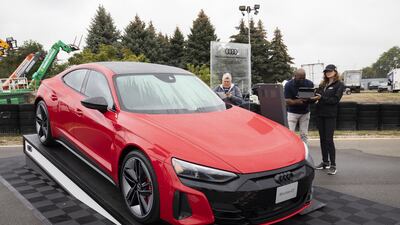
  • Audi e-Tron GT, $164,000. AFP
    Audi e-Tron GT, $164,000. AFP

____________________________

The economic downturn could, however, provide a “shock” to EV adoption in the US.

EV sales in California account for 35 per cent of the US total, and they could be susceptible to the technology industry layoffs which have been prevalent in recent months, especially with demand supported by a greater mix of younger buyers.

EV adoption in the latter part of the decade will depend on newer battery technologies and the ability to launch high volume EVs at mass market prices, the Citi report added.

Meanwhile, in China, the adoption of new energy vehicles is being driven by consumer appetite for the technology, strong product cycles and government incentives.

Growth in EV users will be aided by a sharp rise in the number of models available to buyers, and particularly at a lower price point.

“Across the price stack, we expect the number of distinct NEVs [new energy vehicles] available for sale to increase from 235 models in 2022 to 399 models in 2025,” the Citi report said.

“On average, we expect 70 per cent of NEVs to transact at prices below RMB200,000 ($28,700) and only 5 per cent-7 per cent of NEVs to transact at prices above RMB300,000 ($43,000), during that forecast horizon.”

The report comes as Tesla, the world's biggest electric car company, announced another record for annual deliveries as it shipped 1.31 million cars in 2022, up more than 40 per cent year on year.

However, Tesla's deliveries missed Wall Street estimates and even the company's own growth projection of 50 per cent, despite opening two new factories last year.


Pox that threatens the Middle East's native species

Camelpox

Caused by a virus related to the one that causes human smallpox, camelpox typically causes fever, swelling of lymph nodes and skin lesions in camels aged over three, but the animal usually recovers after a month or so. Younger animals may develop a more acute form that causes internal lesions and diarrhoea, and is often fatal, especially when secondary infections result. It is found across the Middle East as well as in parts of Asia, Africa, Russia and India.

Falconpox

Falconpox can cause a variety of types of lesions, which can affect, for example, the eyelids, feet and the areas above and below the beak. It is a problem among captive falcons and is one of many types of avian pox or avipox diseases that together affect dozens of bird species across the world. Among the other forms are pigeonpox, turkeypox, starlingpox and canarypox. Avipox viruses are spread by mosquitoes and direct bird-to-bird contact.

Houbarapox

Houbarapox is, like falconpox, one of the many forms of avipox diseases. It exists in various forms, with a type that causes skin lesions being least likely to result in death. Other forms cause more severe lesions, including internal lesions, and are more likely to kill the bird, often because secondary infections develop. This summer the CVRL reported an outbreak of pox in houbaras after rains in spring led to an increase in mosquito numbers.

F1 drivers' standings

1. Lewis Hamilton, Mercedes 281

2. Sebastian Vettel, Ferrari 247

3. Valtteri Bottas, Mercedes 222

4. Daniel Ricciardo, Red Bull 177

5. Kimi Raikkonen, Ferrari 138

6. Max Verstappen, Red Bull 93

7. Sergio Perez, Force India 86

8. Esteban Ocon, Force India 56

Yahya Al Ghassani's bio

Date of birth: April 18, 1998

Playing position: Winger

Clubs: 2015-2017 – Al Ahli Dubai; March-June 2018 – Paris FC; August – Al Wahda

Dengue%20fever%20symptoms
%3Cul%3E%0A%3Cli%3EHigh%20fever%3C%2Fli%3E%0A%3Cli%3EIntense%20pain%20behind%20your%20eyes%3C%2Fli%3E%0A%3Cli%3ESevere%20headache%3C%2Fli%3E%0A%3Cli%3EMuscle%20and%20joint%20pains%3C%2Fli%3E%0A%3Cli%3ENausea%3C%2Fli%3E%0A%3Cli%3EVomiting%3C%2Fli%3E%0A%3Cli%3ESwollen%20glands%3C%2Fli%3E%0A%3Cli%3ERash%3C%2Fli%3E%0A%3C%2Ful%3E%0A%3Cp%3EIf%20symptoms%20occur%2C%20they%20usually%20last%20for%20two-seven%20days%3C%2Fp%3E%0A
MATCH INFO

Uefa Champions League quarter-final, second leg (first-leg score):

Manchester City (0) v Tottenham Hotspur (1), Wednesday, 11pm UAE

Match is on BeIN Sports

German intelligence warnings
  • 2002: "Hezbollah supporters feared becoming a target of security services because of the effects of [9/11] ... discussions on Hezbollah policy moved from mosques into smaller circles in private homes." Supporters in Germany: 800
  • 2013: "Financial and logistical support from Germany for Hezbollah in Lebanon supports the armed struggle against Israel ... Hezbollah supporters in Germany hold back from actions that would gain publicity." Supporters in Germany: 950
  • 2023: "It must be reckoned with that Hezbollah will continue to plan terrorist actions outside the Middle East against Israel or Israeli interests." Supporters in Germany: 1,250 

Source: Federal Office for the Protection of the Constitution

War 2

Director: Ayan Mukerji

Stars: Hrithik Roshan, NTR, Kiara Advani, Ashutosh Rana

Rating: 2/5

Mercer, the investment consulting arm of US services company Marsh & McLennan, expects its wealth division to at least double its assets under management (AUM) in the Middle East as wealth in the region continues to grow despite economic headwinds, a company official said.

Mercer Wealth, which globally has $160 billion in AUM, plans to boost its AUM in the region to $2-$3bn in the next 2-3 years from the present $1bn, said Yasir AbuShaban, a Dubai-based principal with Mercer Wealth.

Within the next two to three years, we are looking at reaching $2 to $3 billion as a conservative estimate and we do see an opportunity to do so,” said Mr AbuShaban.

Mercer does not directly make investments, but allocates clients’ money they have discretion to, to professional asset managers. They also provide advice to clients.

“We have buying power. We can negotiate on their (client’s) behalf with asset managers to provide them lower fees than they otherwise would have to get on their own,” he added.

Mercer Wealth’s clients include sovereign wealth funds, family offices, and insurance companies among others.

From its office in Dubai, Mercer also looks after Africa, India and Turkey, where they also see opportunity for growth.

Wealth creation in Middle East and Africa (MEA) grew 8.5 per cent to $8.1 trillion last year from $7.5tn in 2015, higher than last year’s global average of 6 per cent and the second-highest growth in a region after Asia-Pacific which grew 9.9 per cent, according to consultancy Boston Consulting Group (BCG). In the region, where wealth grew just 1.9 per cent in 2015 compared with 2014, a pickup in oil prices has helped in wealth generation.

BCG is forecasting MEA wealth will rise to $12tn by 2021, growing at an annual average of 8 per cent.

Drivers of wealth generation in the region will be split evenly between new wealth creation and growth of performance of existing assets, according to BCG.

Another general trend in the region is clients’ looking for a comprehensive approach to investing, according to Mr AbuShaban.

“Institutional investors or some of the families are seeing a slowdown in the available capital they have to invest and in that sense they are looking at optimizing the way they manage their portfolios and making sure they are not investing haphazardly and different parts of their investment are working together,” said Mr AbuShaban.

Some clients also have a higher appetite for risk, given the low interest-rate environment that does not provide enough yield for some institutional investors. These clients are keen to invest in illiquid assets, such as private equity and infrastructure.

“What we have seen is a desire for higher returns in what has been a low-return environment specifically in various fixed income or bonds,” he said.

“In this environment, we have seen a de facto increase in the risk that clients are taking in things like illiquid investments, private equity investments, infrastructure and private debt, those kind of investments were higher illiquidity results in incrementally higher returns.”

The Abu Dhabi Investment Authority, one of the largest sovereign wealth funds, said in its 2016 report that has gradually increased its exposure in direct private equity and private credit transactions, mainly in Asian markets and especially in China and India. The authority’s private equity department focused on structured equities owing to “their defensive characteristics.”

Updated: January 09, 2023, 3:00 AM