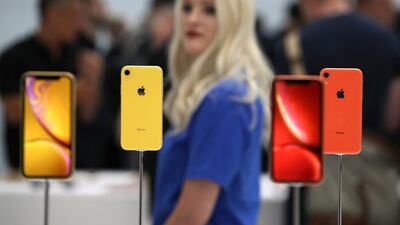
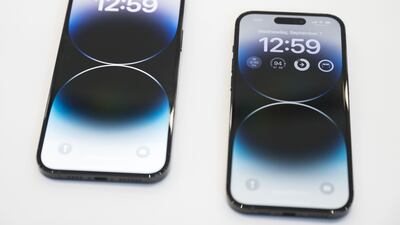
Customers look at the iPhone 13 Pro at the Apple Store at Yas Mall, in Abu Dhabi. Victor Besa / The National

Apple iOS 15.5: features, Apple Cash, updates and all you need to know


Alvin R Cabral
  • English
  • Arabic

Apple released the latest update of its iOS software for iPhones, featuring an update to Apple Cash, which now allows users to send and receive money in the Messages and Wallet apps.

The update, compatible with the iPhone 6s and later models, is aimed at boosting the Cupertino-based company's position in the financial services vertical as online transactions continue to grow.

It also comes ahead of the Apple's Worldwide Developers Conference (WWDC), which is scheduled to take place online from June 6-10.

Here's an overview of what's new in iOS 15.5, and what the road ahead looks like in the lead-up to the WWDC and, most importantly, the next-generation iPhones:

What's new in iOS 15.5 update?

An Apple release note showed that iOS 15.5 includes enhancements to Apple Cash card and Apple Podcasts, besides the usual "other features and bug fixes".

Specifics include a fix for an issue in HomeKit — Apple's framework for smart home systems — where home automations, triggered by people arriving or leaving, may fail. It is also fixing another issue that may cause the third-generation iPhone SE to unexpectedly shut down.

What is Apple Cash and how does it work?

Apple Cash is a digital card in the Wallet app that allows users to send and receive money in Messages or Wallet. The money received appears on Wallet's Apple Cash card, and it can used for purchases in stores, online sites and in apps that work with Apple Pay.

You can initiate sending money by tapping a contact in Messages, starting a new conversation and tapping the Apple Pay logo in the app drawer. The Apple Cash card will be used by default when a user sends money, but this can be changed to any debit card. Money received will automatically be credited to the Apple Cash card.

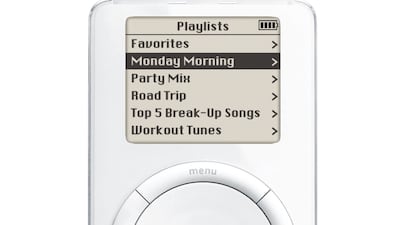
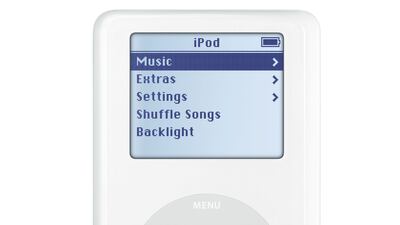
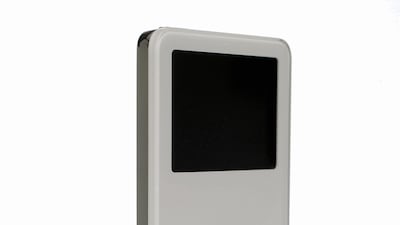
  • The Apple iPod 1st generation was released October 23, 2001. It cost $399, and had 5GB storage holding 1,000 songs. Photo: Apple
    The Apple iPod 1st generation was released October 23, 2001. It cost $399, and had 5GB storage holding 1,000 songs. Photo: Apple
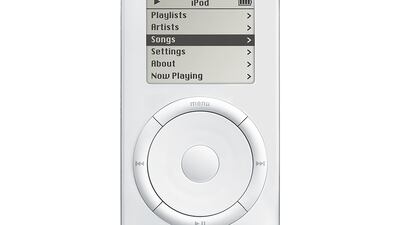
  • The Apple iPod 2nd generation was released July 17, 2002. It came with 10GB of storage for $399 and later a 20GB version was released for $499. Photo: Apple
    The Apple iPod 2nd generation was released July 17, 2002. It came with 10GB of storage for $399 and later a 20GB version was released for $499. Photo: Apple
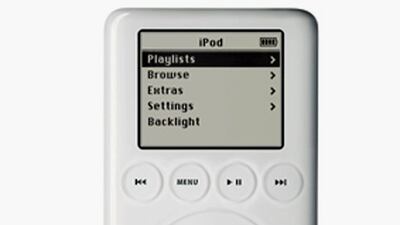
  • The Apple iPod 3rd generation was released April 28, 2003 and started making use of the iTunes store. It was the first to have an all-touch wheel to scroll. Prices ranged from $299 to $499 depending on storage size. Photo: Apple
    The Apple iPod 3rd generation was released April 28, 2003 and started making use of the iTunes store. It was the first to have an all-touch wheel to scroll. Prices ranged from $299 to $499 depending on storage size. Photo: Apple
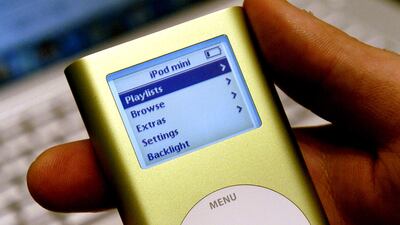
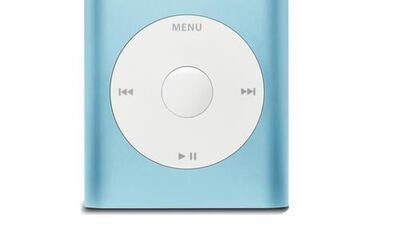
  • The Apple iPod mini 1st generation was released January 6, 2004. This was the first time the click wheel was used and the pod came in five different colours - blue, pink, silver, green, and gold. It sold for $249. Photo: Getty Images
    The Apple iPod mini 1st generation was released January 6, 2004. This was the first time the click wheel was used and the pod came in five different colours - blue, pink, silver, green, and gold. It sold for $249. Photo: Getty Images
  • The Apple iPod 4th generation was released July 19, 2004. The function buttons were moved on to the wheel. A 20 GB model sold for $299, while a 40 GB model was available for $399. Photo: Apple
    The Apple iPod 4th generation was released July 19, 2004. The function buttons were moved on to the wheel. A 20 GB model sold for $299, while a 40 GB model was available for $399. Photo: Apple
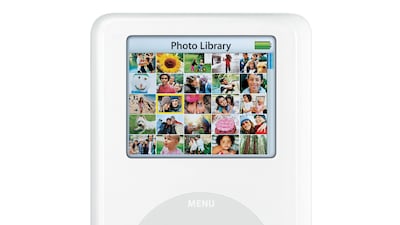
  • The Apple iPod 4th generation with a colour screen was released October 26, 2004. Album covers could be seen for the first time and the shuffle function was introduced. Photo: Apple
    The Apple iPod 4th generation with a colour screen was released October 26, 2004. Album covers could be seen for the first time and the shuffle function was introduced. Photo: Apple
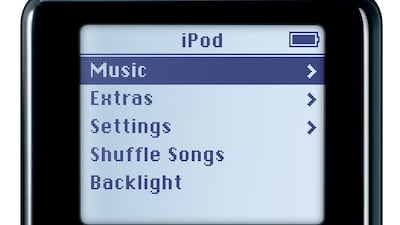
  • The Apple iPod U2 Edition was released at the same time as the 4th generation. It held up to 5,000 songs and featured a black enclosure with a red click wheel and custom engraving of U2 band member signatures. It retailed at $349. Photo: Apple
    The Apple iPod U2 Edition was released at the same time as the 4th generation. It held up to 5,000 songs and featured a black enclosure with a red click wheel and custom engraving of U2 band member signatures. It retailed at $349. Photo: Apple
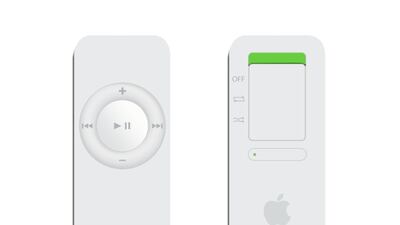
  • The Apple iPod shuffle 1st generation was released January 11, 2005. A first entry to the low-end market, it had no screen and just buttons to play / pause, next song or previous. The 512MB model sold for $99, while the 1GB model sold for $149. Photo: Apple
    The Apple iPod shuffle 1st generation was released January 11, 2005. A first entry to the low-end market, it had no screen and just buttons to play / pause, next song or previous. The 512MB model sold for $99, while the 1GB model sold for $149. Photo: Apple
  • The Apple iPod mini 2nd generation was released February 22, 2005. It had just minor changes from the first generation mini, and the 4GB version sold for $199, while the 6GB model sold for $249. Photo: Getty Images
    The Apple iPod mini 2nd generation was released February 22, 2005. It had just minor changes from the first generation mini, and the 4GB version sold for $199, while the 6GB model sold for $249. Photo: Getty Images
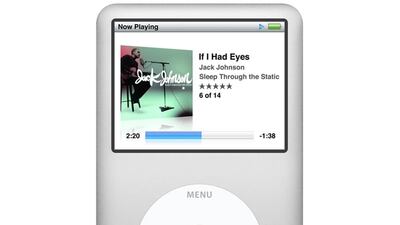
  • The Apple iPod 6th generation was released September 5, 2007. It came in a 160GB model for $349. Photo: Apple
    The Apple iPod 6th generation was released September 5, 2007. It came in a 160GB model for $349. Photo: Apple
  • The Apple Nano iPod 1st generation was released September 7, 2005. This was a super thin iPod at just 0.27in thick. It used flash memory for storage, and sold at $199 and $249 for 4BG and 6GB respectively. Photo: Getty Images
    The Apple Nano iPod 1st generation was released September 7, 2005. This was a super thin iPod at just 0.27in thick. It used flash memory for storage, and sold at $199 and $249 for 4BG and 6GB respectively. Photo: Getty Images
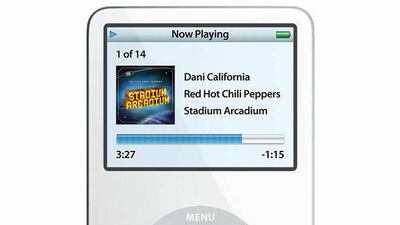
  • The Apple iPod 5th generation was released October 12, 2005. This had a larger screen, smaller wheel and played video. In 2005, Apple also released the iPod nano and iPod shuffle. Photo: Apple
    The Apple iPod 5th generation was released October 12, 2005. This had a larger screen, smaller wheel and played video. In 2005, Apple also released the iPod nano and iPod shuffle. Photo: Apple
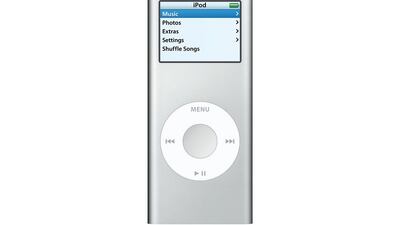
  • The Apple Nano iPod 2nd generation was released September 12, 2006. More colour options were added, plus an 8GB version for $249. Photo: Apple
    The Apple Nano iPod 2nd generation was released September 12, 2006. More colour options were added, plus an 8GB version for $249. Photo: Apple
  • The Apple iPod shuffle 2nd generation was released September 12, 2006. A small, clip-on size was introduced in a variety of colours. A dock replaced the integrated USB connector. With 1GB is was $79. Photo: Apple
    The Apple iPod shuffle 2nd generation was released September 12, 2006. A small, clip-on size was introduced in a variety of colours. A dock replaced the integrated USB connector. With 1GB is was $79. Photo: Apple
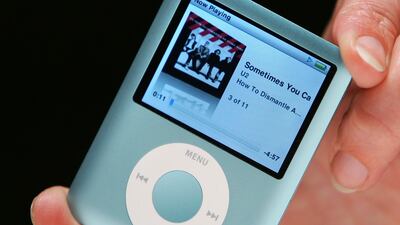
  • The Apple iPod Nano 3rd generation was released September 5, 2007. A big change in shape to allow video display. The 4GB model was $149, while the 8GB model was $199. Photo: Getty Images
    The Apple iPod Nano 3rd generation was released September 5, 2007. A big change in shape to allow video display. The 4GB model was $149, while the 8GB model was $199. Photo: Getty Images
  • The Apple iPod Touch 1st generation was released September 5, 2007. It was basically the iPhone without the camera and phone capabilities. An 8GB model sold for $299, and a 16 GB model sold for $399. Photo: Apple
    The Apple iPod Touch 1st generation was released September 5, 2007. It was basically the iPhone without the camera and phone capabilities. An 8GB model sold for $299, and a 16 GB model sold for $399. Photo: Apple
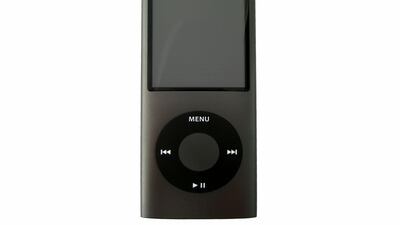
  • The Apple Nano iPod 4th generation was released September 9, 2008. It was a return to the rectangular shape, while the "Genius" playlist option was introduced. It had bigger capacity, came in nine colours and was $149 and $199 for 8GB and 16GB respectively. Photo: Getty Images
    The Apple Nano iPod 4th generation was released September 9, 2008. It was a return to the rectangular shape, while the "Genius" playlist option was introduced. It had bigger capacity, came in nine colours and was $149 and $199 for 8GB and 16GB respectively. Photo: Getty Images
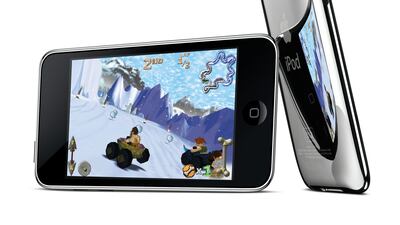
  • The Apple iPod Touch 2nd generation was released September 9, 2008. It featured the new iPhone 2.0 OS and a curved back. An 8GB model was $229, a 16GB model was $299, and a 32GB model was $399. Photo: Apple
    The Apple iPod Touch 2nd generation was released September 9, 2008. It featured the new iPhone 2.0 OS and a curved back. An 8GB model was $229, a 16GB model was $299, and a 32GB model was $399. Photo: Apple
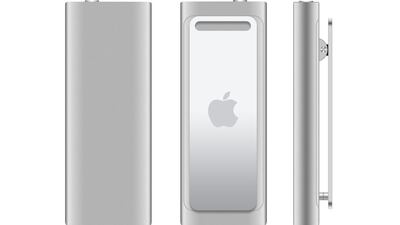
  • The Apple iPod shuffle 3rd generation was released March 11, 2009. A shape change saw it go back to rectangular. It included Apple's new VoiceOver feature, with song title, artist, and playlist title spoken aloud. Photo: Apple
    The Apple iPod shuffle 3rd generation was released March 11, 2009. A shape change saw it go back to rectangular. It included Apple's new VoiceOver feature, with song title, artist, and playlist title spoken aloud. Photo: Apple
  • The Apple iPod Nano 5th generation was released September 9, 2009. An integrated video camera, FM radio and pedometer were added. 8GB and 16 GB cost $149 and $179 respectively. Photo: Getty Images
    The Apple iPod Nano 5th generation was released September 9, 2009. An integrated video camera, FM radio and pedometer were added. 8GB and 16 GB cost $149 and $179 respectively. Photo: Getty Images
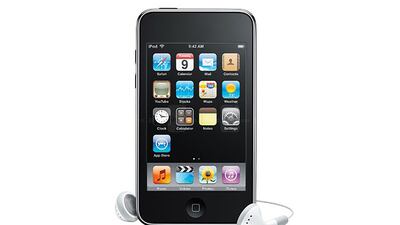
  • The Apple iPod Touch 3rd generation was released September 9, 2009. Faster and with greater capacity, it came in 32GB and 64GB for $299 and $399 respectively. Photo: Apple
    The Apple iPod Touch 3rd generation was released September 9, 2009. Faster and with greater capacity, it came in 32GB and 64GB for $299 and $399 respectively. Photo: Apple
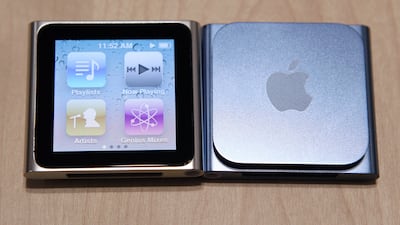
  • The Apple iPod Nano 6th generation was released September 1, 2010. It was goodbye click wheel and hello touch screen. The camera was removed, while it was sold in seven colors, in capacities of 8 and 16 GB, for $149 and $179, respectively. Photo: Getty Images
    The Apple iPod Nano 6th generation was released September 1, 2010. It was goodbye click wheel and hello touch screen. The camera was removed, while it was sold in seven colors, in capacities of 8 and 16 GB, for $149 and $179, respectively. Photo: Getty Images
  • The Apple iPod shuffle 4th generation was released September 1, 2010. It shrunk in size again and was sold with 2GB of storage for $49, in five colours. Photo: Apple
    The Apple iPod shuffle 4th generation was released September 1, 2010. It shrunk in size again and was sold with 2GB of storage for $49, in five colours. Photo: Apple
  • The Apple iPod Touch 4th generation was released September 1, 2010. It brought in iPhone 4 enhancements such as retina display, front and rear cameras. 8GB was $229, 32GB was $299 and 64GB $399. Photo: Apple
    The Apple iPod Touch 4th generation was released September 1, 2010. It brought in iPhone 4 enhancements such as retina display, front and rear cameras. 8GB was $229, 32GB was $299 and 64GB $399. Photo: Apple
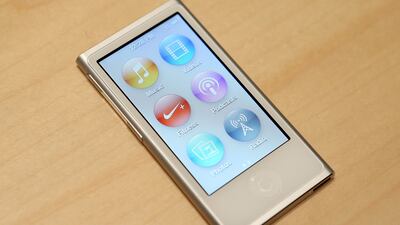
  • The Apple iPod Nano 7th generation was released September 12, 2012. Another change in shape - back to tall and thin. It sold in eight colours, with 16GB of storage for $149. Photo: Getty Images
    The Apple iPod Nano 7th generation was released September 12, 2012. Another change in shape - back to tall and thin. It sold in eight colours, with 16GB of storage for $149. Photo: Getty Images
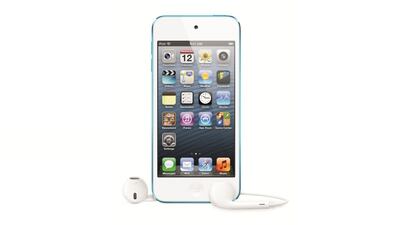
  • The Apple iPod Touch 5th generation was released September 12, 2012. A bigger 4in screen was added, plus Bluetooth 4.0 and the lightning connector. 32GB was $299 and 64GB $399. Photo: Apple
    The Apple iPod Touch 5th generation was released September 12, 2012. A bigger 4in screen was added, plus Bluetooth 4.0 and the lightning connector. 32GB was $299 and 64GB $399. Photo: Apple
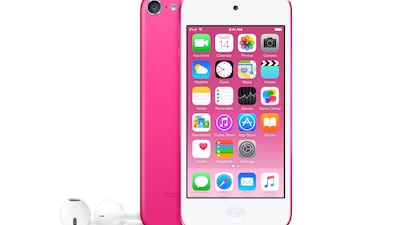
  • The Apple iPod Touch 6th generation was released July 15, 2015. The A8 processor found in the iPhone 6 was brought in, plus better cameras. 16 GB was sold for $199, 32 GB for $249, 64GB for $299 and 128GB for $399. Photo: Apple
    The Apple iPod Touch 6th generation was released July 15, 2015. The A8 processor found in the iPhone 6 was brought in, plus better cameras. 16 GB was sold for $199, 32 GB for $249, 64GB for $299 and 128GB for $399. Photo: Apple
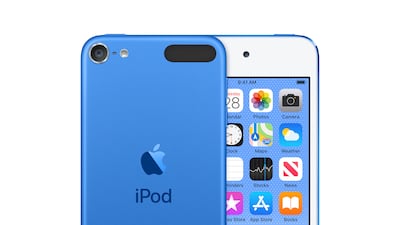
  • The Apple iPod Touch 7th generation was released May 28, 2019. The quad-core A10 chip from the iPhone 7 was used, and Apple said it had a 40-hour battery life for music. It coincided with the launch of Apple Arcade games. 32, 128, and 256GB cost $199, $299 and $399 respectively. Photo: Apple
    The Apple iPod Touch 7th generation was released May 28, 2019. The quad-core A10 chip from the iPhone 7 was used, and Apple said it had a 40-hour battery life for music. It coincided with the launch of Apple Arcade games. 32, 128, and 256GB cost $199, $299 and $399 respectively. Photo: Apple

However, Apple Cash — as well as its sending and receiving feature, plus Apple Card — works only in the US at the moment. The company has not made any formal announcement when it would expand the service elsewhere in the world.

The update comes after Apple in February introduced a Tap to Pay feature for iPhones, which will allow businesses to use mobile devices as a terminal for contactless payments when it launches later this year. The service is aimed at small businesses, chief executive Tim Cook had said at the time.

What's new in Apple Podcasts?

Apple Podcasts includes a new setting to limit episodes stored on an iPhone and automatically delete older ones.

This is particularly important for users of iPhones with lower storage limits, as it will help make way for other more important content, including necessary apps, important media and personal files.

What other updates were released?

Along with iOS 15.5, Apple also delivered new versions of its software across its product range, including iPadOS 15.5, macOS 12.4, watchOS 8.6 and tvOS 15.5.

A word of caution: once an Apple device is upgraded to the latest OS, it cannot be downgraded to a previous version, so it is highly recommended to back up your devices before performing an upgrade.

When will the next iOS update be?

Barring any major bugs, the next major iOS update would be iOS 16, the beta version of which would be launched during the expected iPhone 14 launch in September.

Apple, however, releases iOS updates to address even minor issues to ensure the integrity of its ecosystem. The previous update — iOS 15.4.1 — was delivered on March 31.

Rumours about an iPhone 14 have been making rounds since last year when the iPhone 13 was launched, including a complete redesign featuring a flat, camera bump-less rear and the long-awaited satellite technology.

Any surprises in the iOS 15.5 release?

Some rather "exciting" features have accidentally surfaced in the code of iOS 15.5, as spotted by Bloomberg's tech reporter Mark Gurman, who has a long history of accurate reporting on Apple's product plans.

The Apple expert wrote in his Power On newsletter that iOS 16 will come with a number of "fresh" apps and "new ways of interaction", in time for the iPhone 14 series launch.

Mr Gurman did not offer further details. He did, however, point out that some are long overdue, and that Google already has its Look to Talk feature that lets users directly speak to an Android device without having to trigger it using the "OK Google" command.

Apple being a bit late into certain aspects of the smartphone game isn't really a surprise, but it's expected that they would offer a better version of what's already out in the market.

_____________________

Apple iPhone through the years

  • The iPhone through the ages: Former Apple CEO Steve Jobs introduces the iPhone to the world in San Francisco, California, on January 9, 2007. It had a 3.5-inch screen and 2MP camera. Reuters
    The iPhone through the ages: Former Apple CEO Steve Jobs introduces the iPhone to the world in San Francisco, California, on January 9, 2007. It had a 3.5-inch screen and 2MP camera. Reuters
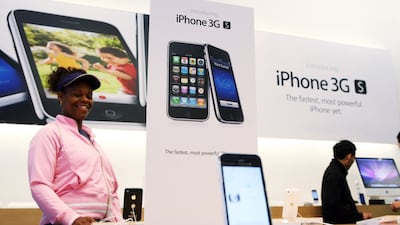
  • The iPhone 3G was launched in 2008 with a faster 3G connection. It also added location services. Reuters
    The iPhone 3G was launched in 2008 with a faster 3G connection. It also added location services. Reuters
  • The iPhone 3GS was released on June 19, 2009. It was twice as fast as its previous version. AFP
    The iPhone 3GS was released on June 19, 2009. It was twice as fast as its previous version. AFP
  • The iPhone 4 was released on June 24, 2010. It featured FaceTime for the first occasion as well as a retina screen. Reuters
    The iPhone 4 was released on June 24, 2010. It featured FaceTime for the first occasion as well as a retina screen. Reuters
  • A later release, this time on October 14, 2011, the iPhone 4S had a new dual-core processor. Reuters
    A later release, this time on October 14, 2011, the iPhone 4S had a new dual-core processor. Reuters
  • Apple CEO Tim Cook takes to the stage following the reveal of the iPhone 5 in San Francisco, California, on September 12, 2012. This was the first 4-inch screen and the phone was faster and slimmer. Reuters
    Apple CEO Tim Cook takes to the stage following the reveal of the iPhone 5 in San Francisco, California, on September 12, 2012. This was the first 4-inch screen and the phone was faster and slimmer. Reuters
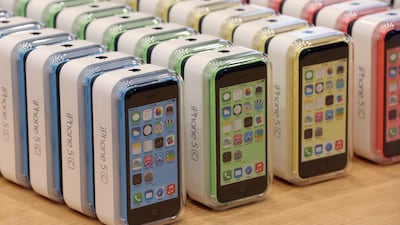
  • The iPhone 5C arrived on September 20, 2013 and was less expensive and very similar to the iPhone 5 except it came with colourful casing. Getty Images
    The iPhone 5C arrived on September 20, 2013 and was less expensive and very similar to the iPhone 5 except it came with colourful casing. Getty Images
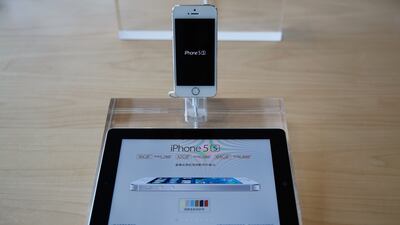
  • The iPhone 5s came at the same time as the 5C and introduced touch ID and a motion data processor as health and fitness apps started to come to the fore. Getty Images
    The iPhone 5s came at the same time as the 5C and introduced touch ID and a motion data processor as health and fitness apps started to come to the fore. Getty Images
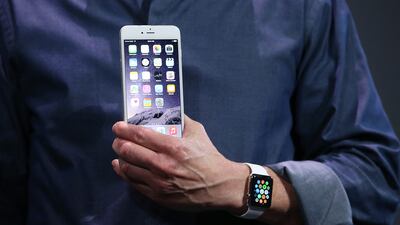
  • The iPhone 6 marked another double launch when unveiled on September 9, 2014. The 6 had a 4.7-inch screen, faster processor and improved camera. AFP
    The iPhone 6 marked another double launch when unveiled on September 9, 2014. The 6 had a 4.7-inch screen, faster processor and improved camera. AFP
  • The iPhone 6 Plus had a 5.5-inch screen and was $100 more expensive. Reuters
    The iPhone 6 Plus had a 5.5-inch screen and was $100 more expensive. Reuters
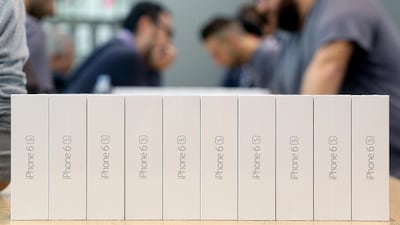
  • The iPhone 6s came on September 25, 2015 with 3D touch and a camera that could shoot 4K video. EPA
    The iPhone 6s came on September 25, 2015 with 3D touch and a camera that could shoot 4K video. EPA
  • The iPhone 6s Plus is displayed at Tokyo's flagship store on September 25, 2015. Both new phones came in a new colour - rose gold. AFP
    The iPhone 6s Plus is displayed at Tokyo's flagship store on September 25, 2015. Both new phones came in a new colour - rose gold. AFP
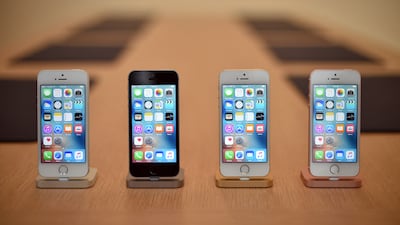
  • Unveiled on March 21, 2016, the iPhone SE had the same design as the iPhone 5 and saw a return to the 4-inch screen which was preferred by some users. It was more affordable and hence lacked features such as Touch ID. AFP
    Unveiled on March 21, 2016, the iPhone SE had the same design as the iPhone 5 and saw a return to the 4-inch screen which was preferred by some users. It was more affordable and hence lacked features such as Touch ID. AFP
  • The iPhone 7 announced on September 7, 2016, said somewhat controversially goodbye to the audio jack. Reuters
    The iPhone 7 announced on September 7, 2016, said somewhat controversially goodbye to the audio jack. Reuters
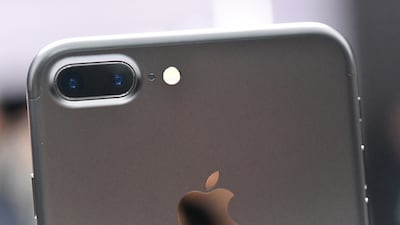
  • The iPhone 7 Plus had a dual camera added. AFP
    The iPhone 7 Plus had a dual camera added. AFP
  • The iPhone 8 was released on September 22, 2017 and had a new glass and aluminium design, retina HD screen. Reuters
    The iPhone 8 was released on September 22, 2017 and had a new glass and aluminium design, retina HD screen. Reuters
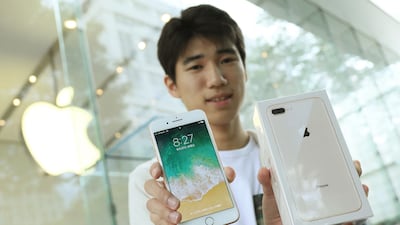
  • A customer gets his hands on an iPhone 8 Plus on launch day in Tokyo on September 22, 2017. The launches also saw speakers that were 25% louder and the most powerful and smartest chip in a smartphone (according to Apple). AFP
    A customer gets his hands on an iPhone 8 Plus on launch day in Tokyo on September 22, 2017. The launches also saw speakers that were 25% louder and the most powerful and smartest chip in a smartphone (according to Apple). AFP
  • The iPhone X marked a decade of iPhones on September 12, 2017. It's main changes were an edge-to-edge super retina screen. Touch ID was removed with Face ID introduced. Reuters
    The iPhone X marked a decade of iPhones on September 12, 2017. It's main changes were an edge-to-edge super retina screen. Touch ID was removed with Face ID introduced. Reuters
  • The iPhone XS was released on September 21, 2018 and had a Super Retina OLED screen with improved scratch and water resistance. Face ID was faster. Reuters
    The iPhone XS was released on September 21, 2018 and had a Super Retina OLED screen with improved scratch and water resistance. Face ID was faster. Reuters
  • The iPhone XS Max had the largest iPhone screen to date at 6.5 inches. It could handle 3 million pixels. Reuters
    The iPhone XS Max had the largest iPhone screen to date at 6.5 inches. It could handle 3 million pixels. Reuters
  • The iPhone XR was slightly cheaper than the XS and came with a 6.1-inch screen. AFP
    The iPhone XR was slightly cheaper than the XS and came with a 6.1-inch screen. AFP
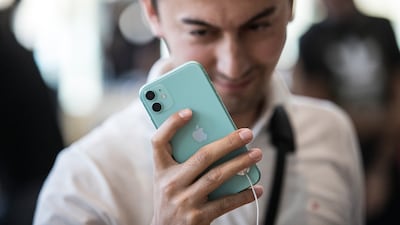
  • A customer looks at the iPhone 11 at an Apple store in Dubai Mall on September 20, 2019. EPA
    A customer looks at the iPhone 11 at an Apple store in Dubai Mall on September 20, 2019. EPA
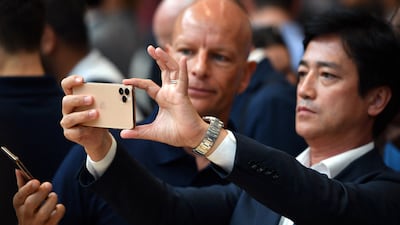
  • A man tries out the iPhone 11 Pro in Cupertino, California, on September 10, 2019. AFP
    A man tries out the iPhone 11 Pro in Cupertino, California, on September 10, 2019. AFP
  • Midnight Green was introduced for the iPhone 11 Pro Max, while there was also a new three-camera system. Reuters
    Midnight Green was introduced for the iPhone 11 Pro Max, while there was also a new three-camera system. Reuters
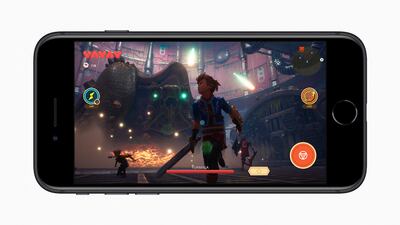
  • Arriving on April 15, 2020, the iPhone SE was for budget-minded customers and was pretty much a replica of the iPhone 8. Its 4.7-inch screen felt rather on the small side compared to the big screens of its big brothers. Apple Inc. / AFP
    Arriving on April 15, 2020, the iPhone SE was for budget-minded customers and was pretty much a replica of the iPhone 8. Its 4.7-inch screen felt rather on the small side compared to the big screens of its big brothers. Apple Inc. / AFP
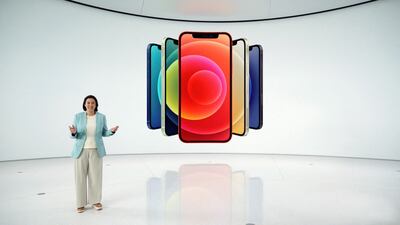
  • The iPhone 12 on October 13, 2020 introduced a new processor and a screen that offered four times better protection if dropped. Apple / AFP
    The iPhone 12 on October 13, 2020 introduced a new processor and a screen that offered four times better protection if dropped. Apple / AFP
  • The iPhone 12 mini offered a 5.4-inch screen. Getty Images
    The iPhone 12 mini offered a 5.4-inch screen. Getty Images
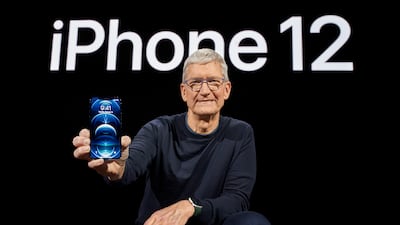
  • Mr Cook showcases the iPhone 12 Pro during an event at Apple Park in Cupertino, California, on October 13, 2020. This upgrade saw a faster chip, 5G speed, a "camera system that’s killer in low light. A LiDAR Scanner for more realistic AR. And two great sizes to choose from — including our largest display ever". Apple / EPA
    Mr Cook showcases the iPhone 12 Pro during an event at Apple Park in Cupertino, California, on October 13, 2020. This upgrade saw a faster chip, 5G speed, a "camera system that’s killer in low light. A LiDAR Scanner for more realistic AR. And two great sizes to choose from — including our largest display ever". Apple / EPA
  • The iPhone 12 Pro Max was categorised as a 'legacy phone'. Reuters
    The iPhone 12 Pro Max was categorised as a 'legacy phone'. Reuters
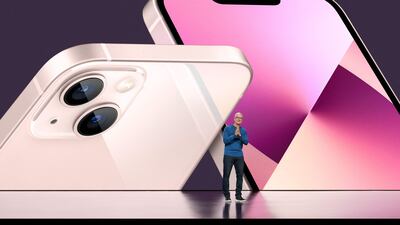
  • The new iPhone 13 was unveiled on September 14, 2021. It has a smart data mode which helps battery life, more 5G bands and antenna lines that use material made from recycled plastic water bottles. AFP
    The new iPhone 13 was unveiled on September 14, 2021. It has a smart data mode which helps battery life, more 5G bands and antenna lines that use material made from recycled plastic water bottles. AFP
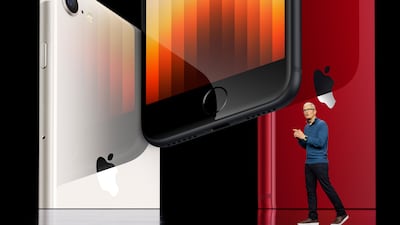
  • Apple CEO Tim Cook showcasing the third generation iPhone SE featuring 5G and the A15 Bionic chip on March 8, 2022. EPA
    Apple CEO Tim Cook showcasing the third generation iPhone SE featuring 5G and the A15 Bionic chip on March 8, 2022. EPA
  • The Apple iPhone 14, 14 Plus, Pro Max and the Apple iPhone 14 Pro were unveiled during an event on September 7, 2022. It didn’t raise its US prices during one of the worst years for inflation in decades. The biggest addition was emergency calling after a car crash. Bloomberg
    The Apple iPhone 14, 14 Plus, Pro Max and the Apple iPhone 14 Pro were unveiled during an event on September 7, 2022. It didn’t raise its US prices during one of the worst years for inflation in decades. The biggest addition was emergency calling after a car crash. Bloomberg
Who was Alfred Nobel?

The Nobel Prize was created by wealthy Swedish chemist and entrepreneur Alfred Nobel.

  • In his will he dictated that the bulk of his estate should be used to fund "prizes to those who, during the preceding year, have conferred the greatest benefit to humankind".
  • Nobel is best known as the inventor of dynamite, but also wrote poetry and drama and could speak Russian, French, English and German by the age of 17. The five original prize categories reflect the interests closest to his heart.
  • Nobel died in 1896 but it took until 1901, following a legal battle over his will, before the first prizes were awarded.
How%20to%20avoid%20getting%20scammed
%3Cul%3E%0A%3Cli%3ENever%20click%20on%20links%20provided%20via%20app%20or%20SMS%2C%20even%20if%20they%20seem%20to%20come%20from%20authorised%20senders%20at%20first%20glance%3C%2Fli%3E%0A%3Cli%3EAlways%20double-check%20the%20authenticity%20of%20websites%3C%2Fli%3E%0A%3Cli%3EEnable%20Two-Factor%20Authentication%20(2FA)%20for%20all%20your%20working%20and%20personal%20services%3C%2Fli%3E%0A%3Cli%3EOnly%20use%20official%20links%20published%20by%20the%20respective%20entity%3C%2Fli%3E%0A%3Cli%3EDouble-check%20the%20web%20addresses%20to%20reduce%20exposure%20to%20fake%20sites%20created%20with%20domain%20names%20containing%20spelling%20errors%3C%2Fli%3E%0A%3C%2Ful%3E%0A
Dengue%20fever%20symptoms
%3Cp%3EHigh%20fever%20(40%C2%B0C%2F104%C2%B0F)%3Cbr%3ESevere%20headache%3Cbr%3EPain%20behind%20the%20eyes%3Cbr%3EMuscle%20and%20joint%20pains%3Cbr%3ENausea%3Cbr%3EVomiting%3Cbr%3ESwollen%20glands%3Cbr%3ERash%26nbsp%3B%3C%2Fp%3E%0A
The biog

Family: wife, four children, 11 grandchildren, 16 great-grandchildren

Reads: Newspapers, historical, religious books and biographies

Education: High school in Thatta, a city now in Pakistan

Regrets: Not completing college in Karachi when universities were shut down following protests by freedom fighters for the British to quit India 


Happiness: Work on creative ideas, you will also need ideals to make people happy

FIXTURES

All times UAE ( 4 GMT)

Saturday
Fiorentina v Torino (8pm)
Hellas Verona v Roma (10.45pm)

Sunday
Parma v Napoli (2.30pm)
Genoa v Crotone (5pm)
Sassuolo v Cagliari (8pm)
Juventus v Sampdoria (10.45pm)

Monday
AC Milan v Bologna (10.45om)

Playing September 30

Benevento v Inter Milan (8pm)
Udinese v Spezia (8pm)
Lazio v Atalanta (10.45pm)

The%20specs
%3Cp%3E%3Cstrong%3EPowertrain%3A%20%3C%2Fstrong%3ESingle%20electric%20motor%0D%3Cbr%3E%3Cstrong%3EPower%3A%20%3C%2Fstrong%3E201hp%0D%3Cbr%3E%3Cstrong%3ETorque%3A%20%3C%2Fstrong%3E310Nm%0D%3Cbr%3E%3Cstrong%3ETransmission%3A%20%3C%2Fstrong%3ESingle-speed%20auto%0D%3Cbr%3E%3Cstrong%3EBattery%3A%20%3C%2Fstrong%3E53kWh%20lithium-ion%20battery%20pack%20(GS%20base%20model)%3B%2070kWh%20battery%20pack%20(GF)%0D%3Cbr%3E%3Cstrong%3ETouring%20range%3A%20%3C%2Fstrong%3E350km%20(GS)%3B%20480km%20(GF)%0D%3Cbr%3E%3Cstrong%3EPrice%3A%20%3C%2Fstrong%3EFrom%20Dh129%2C900%20(GS)%3B%20Dh149%2C000%20(GF)%0D%3Cbr%3E%3Cstrong%3EOn%20sale%3A%3C%2Fstrong%3E%20Now%3C%2Fp%3E%0A
Farage on Muslim Brotherhood

Nigel Farage told Reform's annual conference that the party will proscribe the Muslim Brotherhood if he becomes Prime Minister.
"We will stop dangerous organisations with links to terrorism operating in our country," he said. "Quite why we've been so gutless about this – both Labour and Conservative – I don't know.
“All across the Middle East, countries have banned and proscribed the Muslim Brotherhood as a dangerous organisation. We will do the very same.”
It is 10 years since a ground-breaking report into the Muslim Brotherhood by Sir John Jenkins.
Among the former diplomat's findings was an assessment that “the use of extreme violence in the pursuit of the perfect Islamic society” has “never been institutionally disowned” by the movement.
The prime minister at the time, David Cameron, who commissioned the report, said membership or association with the Muslim Brotherhood was a "possible indicator of extremism" but it would not be banned.

Updated: May 17, 2022, 11:14 AM