


As teams prepare to do battle in Euro 2016 in France, across the Atlantic, families in Mexico’s Chichihualco village in the state of Guerrero, famous for hand-stitching footballs for over 50 years, face a fight of an altogether different sort. In its heyday, Chichihualco made the footballs used by Mexico’s first division clubs and by the national team. But Asian manufacturers, and pressure from drug gangs, have relegated Chichihualco’s footballs to amateur recreational sales.
-

-

Men work bag up hand-made footballs in Chichihualco in the mountains of the impoverished state of Guerrero. Pedro Pardo/AFP -
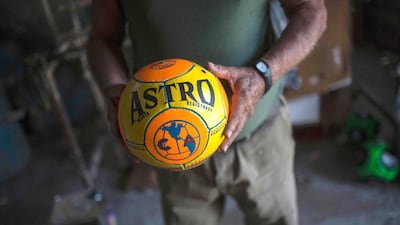
Despite the village's losing streak, entire families in the community of 25,000 continue the tradition of making footballs. Pedro Pardo/AFP -

The first workshop in the village appeared in the 1960s when the Mexican national team used the balls. Today, they are only used by amateur teams. Pedro Pardo/AFP -

Today there are only 15 workshops in the village. In its heyday there were 70, churning out 60,0000 balls a month, says the mayor Alfredo Alarcon. Pedro Pardo/AFP -

Each ball sell sfor about US$3 to $5, leaving makers with about an 8 per cent profit. Pedro Pardo/AFP -

As well as Asian competition, drug cartels have spread fear across the Guerrero region. The labour force has dwindled as scared locals migrate to the United States. Pedro Pardo/AFP -

Workshops have outsourced some of the work to surrounding communities and even a local prison. Pedro Pardo/AFP -

Some 40 families sew balls in Chichhualco and another 200 work in surrounding communities. Pedro Pardo/AFP -
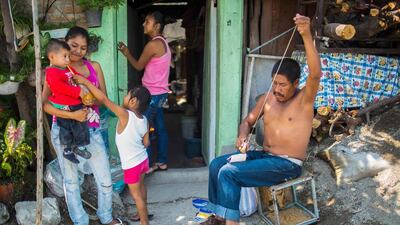
Mayor Alarcon estimates 70 per cent of the village has gone across the border to the US, from where they send money home, fuelling much of Chchihualco's economy. Pedro Pardo/AFP -

fewer people are making footballs because they can find more lucrative work than 10 Mexican pesos (Dh2) a ball. Pedro Pardo/AFP -

A man works on a football in Chichihualco. Under pressure from drug cartels, some have turned to the production of opium poppies in the mountains. Pedro Pardo/AFP -

The workshops have machines to make and cut synthetic leather into panels, which are sewn together by villagers at home. The balls then go back to the workshops where they are inflated and the finishing touches applied. Pedro Pardo/AFP -

"We are stuck," says one worker. "We can't produce more because we can't invest in new machinery. We could compete with balls from anywhere in the world. Our ball is really spherical, sewn by hand, while Chinese balls go all over the place when you kick them." Pedro Pardo/AFP -
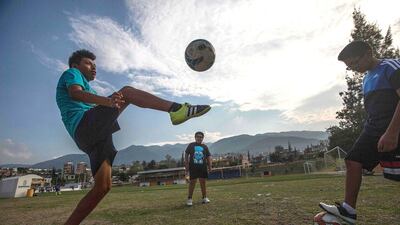
Despite their poverty, football remains a central focus for the villagers - who claim their ball is among the world's best. Pedro Pardo/AFP
Relegation woes for Mexico’s football makers – in pictures
Most popular today

