


Mumbai’s salt pan lands could be the next real estate bonanza for private developers, but there have been legal challenges against opening up these lands for commercial development.
-

-

Over 3,000 acres of salt pan lands in Mumbai could be freed up for development to provide housing for squatters. As land prices in Mumbai go up, more and more heads are turning to salt pans, which are being viewed by developers and builders as the answer to the city’s housing problems. Indranil Mukherjee / AFP -

An Indian labourer empties a tub of salt at a salt pan on the outskirts of Mumbai. Mumbai and its suburbs have over 6,000 acres of salt land – both privately-owned and lease-held – under litigation as private businesess eye these lands for commercial development. Indranil Mukherjee / AFP -

An Indian labourer collects salt with the help of a wooden rake at a salt pan on the outskirts of Mumbai. Over 3,000 acres of salt pan lands in Mumbai could be freed up for development to provide housing for squatters. Indranil Mukherjee / AFP -

An Indian labourer collects salt at a salt pan on the outskirts of Mumbai. While the development of unused salt pan land is being viewed as a possible answer to the city’s staggering housing problem, real estate dealers feel that redevelopment of government-owned salt pans could get delayed for decades unless the private sector is allowed to participate. Indranil Mukherjee / AFP -
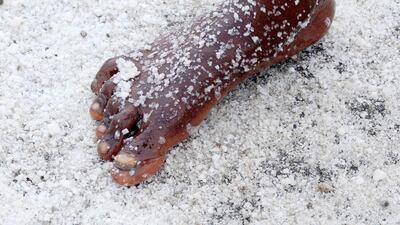
India’s present annual salt production is over 25 million tonnes and the country is the third largest producer after China and the US and is expected to increase its annual salt production to 40 million tonne by 2020. Indranil Mukherjee / AFP -
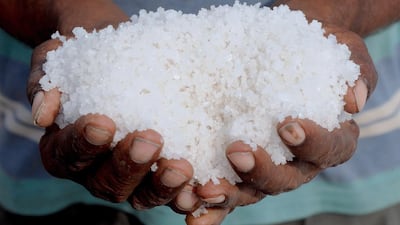
India’s present annual salt production is over 25 million tonnes and the country is the third largest producer after China and the US and is expected to increase its annual salt production to 40 million tonne by 2020. Indranil Mukherjee / AFP -
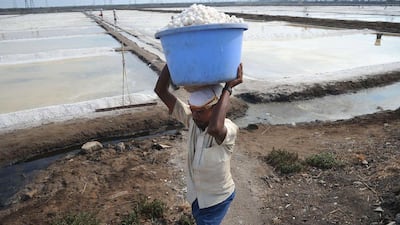
An Indian labourer carries a tub of salt at a salt pan on the outskirts of Mumbai. Over 3,000 acres of salt pan lands in Mumbai could be freed up for development to provide housing for squatters. Indranil Mukherjee / AFP -
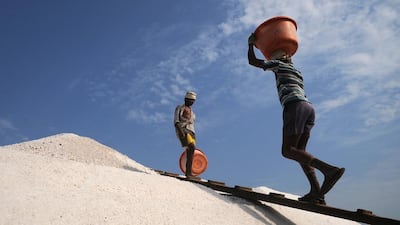
Over 3,000 acres of salt pan lands in Mumbai could be freed up for development to provide housing for squatters. As land prices in Mumbai go up, more and more heads are turning to salt pans, which are being viewed by developers and builders as the answer to the city’s housing problems. Indranil Mukherjee / AFP -

India’s present annual salt production is over 25 million tonnes and the country is the third largest producer after China and the US and is expected to increase its annual salt production to 40 million tonne by 2020. Indranil Mukherjee / AFP -

An Indian labourer collects salt at a salt pan on the outskirts of Mumbai. While the development of unused salt pan land is being viewed as a possible answer to the city’s staggering housing problem, real estate dealers feel that redevelopment of government-owned salt pans could get delayed for decades unless the private sector is allowed to participate. Indranil Mukherjee / AFP -

An Indian labourer empties a tub of salt at a salt pan on the outskirts of Mumbai. Mumbai and its suburbs have over 6,000 acres of salt land – both privately-owned and lease-held – under litigation as private businesess eye these lands for commercial development. Indranil Mukherjee / AFP
In pictures: Bitter reality for Mumbai’s salt pan lands
Most popular today

