


Rising mortgage rates have led to a slump in demand and sales volumes in the UK's housing market, according to the Royal Institution of Chartered Surveyors (RICS).
The RICS Residential Survey for July showed new buyer inquiries were down at 45 per cent of the estate agents and property appraisers polled in the month, after a similar slump in June.
RICS said this "metric continues to signal a sharp downturn in buyer demand following the latest escalation in mortgage interest rates".
The average rate on a two-year fixed rate mortgage, the most common version in Britain, rose to its highest level since 2008 at 6.86 per cent last month.
The Bank of England raised its base rate to 5.5 per cent earlier this month, with the expectation of more to come.
Meanwhile, the survey of estate agents and property appraisers showed 44 per cent of them registered a decline in agreed sales in the month, the weakest since the spring of 2020 and down from a balance of minus 36 per cent in June.
At the same time, the survey's house price balance, which measures the difference between the percentage of surveyors' reported price rises and falls, dropped to minus 53 in July from a downwardly revised minus 48 for June.
“The recent uptick in mortgage activity looks likely to be reversed over the coming months if the feedback to the latest RICS Residential Survey is anything to go by," said RICS chief economist Simon Rubinsohn.
"The continued weak reading for the new buyer enquiries metric is indicative of the challenges facing prospective purchasers against a backdrop of economic uncertainty, rising interest rates and a tougher credit environment."
In is house price survey last week, Nationwide said average house prices in July were 3.8 per cent lower than a year earlier, the biggest annual fall since 2009.
“Buyer confidence continues to be stifled by interest rate rises and challenging economic headwinds," said Terry Woodley, managing director of development finance at Shawbrook.

Tense time for tenants
Meanwhile, the RICS survey also showed the pressure on tenants is increasing, as the supply of rental properties is crimped.
Some landlords sold up in the face of higher mortgage costs and increased rules that require improved energy efficiency within rental properties and regulations that make it harder to evict tenants.
The RICS survey found 63 per cent of professionals expect rental prices to increase over the next three months, marking a new high since records began in 1999.
Demand from tenants rose at the fastest pace since early 2022, while the number of properties being offered by landlords fell by the most since the early in the pandemic.
Britain's Office for National Statistics reported that private-sector rents in England rose 5.1 per cent in the year to June, the most since records began in 2006.
"Demand [from renters] shows no signs of letting up, supply remains constrained and that means rents are likely to continue rising sharply despite the cost-of-living crisis,” said Mr Rubinsohn.
Cost of living crisis in the UK – in pictures
-

People demonstrate in central London against the rising cost of living. EPA -
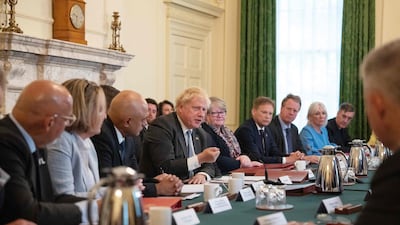
Former British prime minister Boris Johnson said workers should accept a pay cut to avoid spiralling inflation. AFP -
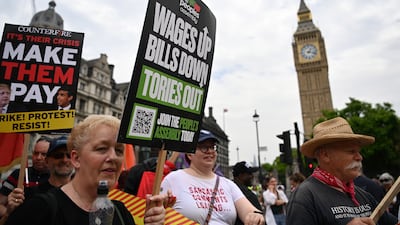
Inflation in the UK hit an annual rate of 9.1 per cent in May. EPA -

The British government told workers they cannot expect pay rises to keep up with the increasing cost of living. EPA -
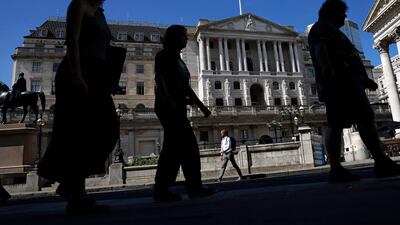
The Bank of England, which says it can do nothing to stop the sharp increase in prices, is raising rates at an unprecedented rate. AFP -

The UK was also brought to standstill by the biggest rail strike in 30 years this week, with 40,000 RMT union members walking out in a row over a below-inflation pay offer. PA -

The RMT picket line outside Bristol Temple Meads station. PA -

The cost of petrol continues to rise. AFP -
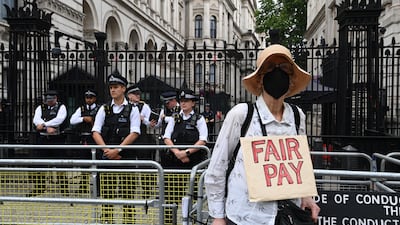
A protester demonstrates outside Downing Street. EPA -

Volunteers in Bradford, northern England, prepare food parcels at the Bradford Central Foodbank. More and more people are visiting the centre. AFP


Dan Wilson Craw, deputy chief executive of campaign group Generation Rent, said of the findings: “In many cases, tenants are being priced out of their homes and forced into the lettings market to compete for a new place to live.
“At the same time, a lot of people who want to move can’t because rents on new tenancies have risen so rapidly. That has a knock-on effect for the number of homes coming on to the market.
“Long term, the answer is to build many more homes in the places people want to live, including social housing to allow more people to escape private renting.”
Better times ahead?
Some major mortgage lenders have been cutting rates this week amid signs that stubbornly high inflation is easing.
Among the rate reductions, HSBC UK has cut some homebuyer, first-time buyer and remortgage rates on offer by up to 0.35 percentage points, as well as adding a £500 ($636) cashback incentive to some deals.
“Some lenders are cutting mortgage costs as the [Bank of England base] rate nears its peak, which means that while sentiment will remain subdued, it should improve in the second half of this year,” said Tom Bill, head of UK residential research at Knight Frank.
He added that higher mortgage rates have compounded issues for renters, “which means the squeeze on tenants won’t vanish in the short term”.
A separate study from property website Zoopla found 42 per cent of non-homeowners under 40 had given up on the idea of getting on the property ladder in the next 10 years.
Even among those earning more than £60,000 per year, 38 per cent said they had given up on the idea of being able to afford a home over the next decade.
A little more than a fifth (21 per cent) of people across the survey believe they will definitely be able to afford a home in the next decade – and 14 per cent are already planning to buy one, or are in the process of doing so.
A quarter believe they would probably be able to buy a home in the next decade but are not certain, while nearly one in 10 (9 per cent) said they were not sure and a further 3 per cent chose none of the survey answer options.
Among those who have given up on a home in the next decade, the cost-of-living crisis was seen by 64 per cent of respondents as the main barrier to home ownership, house prices were highlighted by 51 per cent and nearly half (49 per cent) pointed to higher mortgage rates.
Of those who are planning, or in the process of buying their first home, 85 per cent said they had made financial sacrifices to do so.
Zoopla commissioned Censuswide to survey 2,000 UK adults under the age of 40 who do not own a home.

