The value of real estate transactions in the Dubai property market surged by 87 per cent on an annual basis in May as demand continued to rise amid robust economic growth.
The aggregate value of property deals rose last month to Dh34 billion ($9.3 billion) from Dh26.5 billion recorded in the same period of 2022, according to a report by real estate listings website Property Finder.
The emirate registered 11,700 real estate transactions, a 78 per cent year on year increase in volume compared to 6,587 deals recorded in May 2022.
Off-plan deals significantly supported Dubai’s real estate market growth in May, accounting for 49 per cent of the total sales transaction volume and 43 per cent of the value, according to Property Finder data.
The volume of off-plan property sales surged to more than 5,700 transactions, a 110 per cent jump on an annual basis, from 2,716 deals registered a year earlier.
This increase was reflected in the value of off-plan properties, which rose by almost 136 per cent to more than Dh14.5 billion, surpassing the Dh6.15 billion recorded in April 2022.
“May 2023 has yet again established the fact that Dubai’s real estate sector continues to thrive amid a largely dynamic property landscape,” Scott Bond, UAE country manager at Property Finder, said.
“It is interesting to see the significant rise in off-plan transactions, hinting of a future that knows no slowdown … growth from April has been remarkable with a significant increase in values.”
Dubai’s economy expanded by 4.6 per cent on an annual basis in the first nine months of 2022, according to data from the emirate's statistics centre. Emirates NBD estimates Dubai's full-year growth for 2022 at 5 per cent and expects its economy to expand by 3.5 per cent this year.
S&P Global Ratings projects Dubai economy will grow by 3 per cent in 2023 and sustain the same growth momentum over the next two to three years.
The UAE property market has also recovered strongly from the pandemic driven-slowdown, maintaining growth momentum this year on the back of government initiatives, higher oil prices and other measures to support the economy.
Property transactions in Dubai and Abu Dhabi surged last year amid higher demand from buyers.
The performance of the Dubai property market last year was described as “exceptional” by the emirate's Crown Prince, Sheikh Hamdan bin Mohammed, as the value of deals reached a new high of Dh528 billion.
The value of transactions was up 76.5 per cent annually, while the number of transactions, at 122,658, rose 44.7 per cent year on year, a Dubai Media Office statement said in January.
Dubai’s property market trend in May follows a 53 per surge in the value of deals and a 45 per cent rise in the volume of transaction in April, both value and volumes have increased steadily this year.
“As a PropTech home search enabler, we look forward to seeing the rise in momentum persist as we enter into June and continue to prioritise a seamless consumer experience that facilitates this growth,” Mr Bond said.
Secondary market deals in the emirate recorded an annual increase of more than 55 per cent in volume, with more than 6,000 transactions recorded.
Value of these transactions jumped 62 per cent year on year to Dh19.5 billion in May 2022.
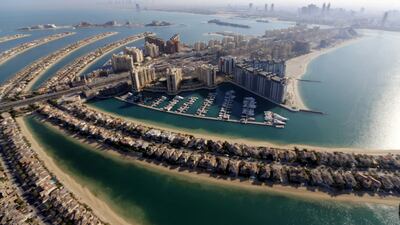
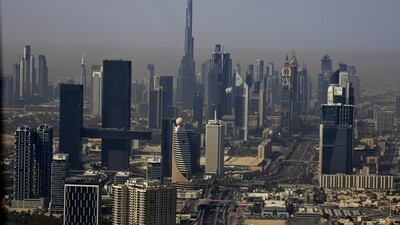
Developments in Palm Jumeirah, Burj Khalifa, Dubai Hills, Wadi Al Safa 3, Business Bay, Dubai Marina’s Marsa Dubai, Madinat Al Mataar, Jumeirah Village Circle, Al Hebiah Fifth and Emirate Living contributed to more than 45 per cent of the total sales value and 39 per cent of the total transactions.
The most searched for areas for apartments in May included Dubai Marina, Downtown Dubai, Business Bay, Palm Jumeirah and Jumeirah Village Circle, according to last Property Finder data.
Properties in Dubai Hills Estate, Palm Jumeirah, Arabian Ranches and Damac Hills were preferred by buyers looking to own villas and townhouses, data showed.
Buyers’ preferences also followed April trends, with more than 58.1 per cent of people seeking to own a property looking for an apartment, while the reminder showed interest in villas and townhouses.
Within the rental segment, 77.7 per cent of tenants searched for apartments, and 22.3 per cent looked for villas and townhouses, according to the Property Finder report.

The Saga Continues
Wu-Tang Clan
(36 Chambers / Entertainment One)
'Gold'
Director:Anthony Hayes
Stars:Zaf Efron, Anthony Hayes
Rating:3/5
Notable salonnières of the Middle East through history
Al Khasan (Okaz, Saudi Arabia)
Tamadir bint Amr Al Harith, known simply as Al Khasan, was a poet from Najd famed for elegies, earning great renown for the eulogy of her brothers Mu’awiyah and Sakhr, both killed in tribal wars. Although not a salonnière, this prestigious 7th century poet fostered a culture of literary criticism and could be found standing in the souq of Okaz and reciting her poetry, publicly pronouncing her views and inviting others to join in the debate on scholarship. She later converted to Islam.
Maryana Marrash (Aleppo)
A poet and writer, Marrash helped revive the tradition of the salon and was an active part of the Nadha movement, or Arab Renaissance. Born to an established family in Aleppo in Ottoman Syria in 1848, Marrash was educated at missionary schools in Aleppo and Beirut at a time when many women did not receive an education. After touring Europe, she began to host salons where writers played chess and cards, competed in the art of poetry, and discussed literature and politics. An accomplished singer and canon player, music and dancing were a part of these evenings.
Princess Nazil Fadil (Cairo)
Princess Nazil Fadil gathered religious, literary and political elite together at her Cairo palace, although she stopped short of inviting women. The princess, a niece of Khedive Ismail, believed that Egypt’s situation could only be solved through education and she donated her own property to help fund the first modern Egyptian University in Cairo.
Mayy Ziyadah (Cairo)
Ziyadah was the first to entertain both men and women at her Cairo salon, founded in 1913. The writer, poet, public speaker and critic, her writing explored language, religious identity, language, nationalism and hierarchy. Born in Nazareth, Palestine, to a Lebanese father and Palestinian mother, her salon was open to different social classes and earned comparisons with souq of where Al Khansa herself once recited.
%20Ramez%20Gab%20Min%20El%20Akher
%3Cp%3E%3Cstrong%3ECreator%3A%3C%2Fstrong%3E%20Ramez%20Galal%3C%2Fp%3E%0A%3Cp%3E%3Cstrong%3EStarring%3A%3C%2Fstrong%3E%20Ramez%20Galal%3C%2Fp%3E%0A%3Cp%3E%3Cstrong%3EStreaming%20on%3A%20%3C%2Fstrong%3EMBC%20Shahid%3C%2Fp%3E%0A%3Cp%3E%3Cstrong%3ERating%3A%20%3C%2Fstrong%3E2.5%2F5%3C%2Fp%3E%0A
Ten tax points to be aware of in 2026
1. Domestic VAT refund amendments: request your refund within five years
If a business does not apply for the refund on time, they lose their credit.
2. E-invoicing in the UAE
Businesses should continue preparing for the implementation of e-invoicing in the UAE, with 2026 a preparation and transition period ahead of phased mandatory adoption.
3. More tax audits
Tax authorities are increasingly using data already available across multiple filings to identify audit risks.
4. More beneficial VAT and excise tax penalty regime
Tax disputes are expected to become more frequent and more structured, with clearer administrative objection and appeal processes. The UAE has adopted a new penalty regime for VAT and excise disputes, which now mirrors the penalty regime for corporate tax.
5. Greater emphasis on statutory audit
There is a greater need for the accuracy of financial statements. The International Financial Reporting Standards standards need to be strictly adhered to and, as a result, the quality of the audits will need to increase.
6. Further transfer pricing enforcement
Transfer pricing enforcement, which refers to the practice of establishing prices for internal transactions between related entities, is expected to broaden in scope. The UAE will shortly open the possibility to negotiate advance pricing agreements, or essentially rulings for transfer pricing purposes.
7. Limited time periods for audits
Recent amendments also introduce a default five-year limitation period for tax audits and assessments, subject to specific statutory exceptions. While the standard audit and assessment period is five years, this may be extended to up to 15 years in cases involving fraud or tax evasion.
8. Pillar 2 implementation
Many multinational groups will begin to feel the practical effect of the Domestic Minimum Top-Up Tax (DMTT), the UAE's implementation of the OECD’s global minimum tax under Pillar 2. While the rules apply for financial years starting on or after January 1, 2025, it is 2026 that marks the transition to an operational phase.
9. Reduced compliance obligations for imported goods and services
Businesses that apply the reverse-charge mechanism for VAT purposes in the UAE may benefit from reduced compliance obligations.
10. Substance and CbC reporting focus
Tax authorities are expected to continue strengthening the enforcement of economic substance and Country-by-Country (CbC) reporting frameworks. In the UAE, these regimes are increasingly being used as risk-assessment tools, providing tax authorities with a comprehensive view of multinational groups’ global footprints and enabling them to assess whether profits are aligned with real economic activity.
Contributed by Thomas Vanhee and Hend Rashwan, Aurifer
The specs
- Engine: 3.9-litre twin-turbo V8
- Power: 640hp
- Torque: 760nm
- On sale: 2026
- Price: Not announced yet
UPI facts
More than 2.2 million Indian tourists arrived in UAE in 2023
More than 3.5 million Indians reside in UAE
Indian tourists can make purchases in UAE using rupee accounts in India through QR-code-based UPI real-time payment systems
Indian residents in UAE can use their non-resident NRO and NRE accounts held in Indian banks linked to a UAE mobile number for UPI transactions
FA Cup quarter-final draw
The matches will be played across the weekend of 21 and 22 March
Sheffield United v Arsenal
Newcastle v Manchester City
Norwich v Derby/Manchester United
Leicester City v Chelsea
'HIJRAH%3A%20IN%20THE%20FOOTSTEPS%20OF%20THE%20PROPHET'
%3Cp%3E%3Cstrong%3EEdited%20by%3A%3C%2Fstrong%3E%20Idries%20Trevathan%3Cbr%3E%3Cstrong%3EPages%3A%3C%2Fstrong%3E%20240%3Cbr%3E%3Cstrong%3EPublisher%3A%3C%2Fstrong%3E%20Hirmer%20Publishers%3Cbr%3E%3Cstrong%3EAvailable%3A%3C%2Fstrong%3E%20Now%3C%2Fp%3E%0A
Top Hundred overseas picks
London Spirit: Kieron Pollard, Riley Meredith
Welsh Fire: Adam Zampa, David Miller, Naseem Shah
Manchester Originals: Andre Russell, Wanindu Hasaranga, Sean Abbott
Northern Superchargers: Dwayne Bravo, Wahab Riaz
Oval Invincibles: Sunil Narine, Rilee Rossouw
Trent Rockets: Colin Munro
Birmingham Phoenix: Matthew Wade, Kane Richardson
Southern Brave: Quinton de Kock
Company%C2%A0profile
%3Cp%3ECompany%3A%20Zywa%3Cbr%3EStarted%3A%202021%3Cbr%3EFounders%3A%20Nuha%20Hashem%20and%20Alok%20Kumar%3Cbr%3EBased%3A%20UAE%3Cbr%3EIndustry%3A%20FinTech%3Cbr%3EFunding%20size%3A%20%243m%3Cbr%3ECompany%20valuation%3A%20%2430m%3C%2Fp%3E%0A
What vitamins do we know are beneficial for living in the UAE
Vitamin D: Highly relevant in the UAE due to limited sun exposure; supports bone health, immunity and mood.
Vitamin B12: Important for nerve health and energy production, especially for vegetarians, vegans and individuals with absorption issues.
Iron: Useful only when deficiency or anaemia is confirmed; helps reduce fatigue and support immunity.
Omega-3 (EPA/DHA): Supports heart health and reduces inflammation, especially for those who consume little fish.