


A property deal for the purchase of land worth Dh600 million ($163.4m) has been recorded by the Dubai Land Department as prices in prime areas of Dubai continue to rise.
The land, on The Palm Jumeirah, was bought by an unnamed buyer, with the area listed as 5,534 square metres.
The deal comes a few weeks after a record was set for Dubai's most expensive property with the sale of a villa on Palm Jumeirah for Dh302m.
The market has rebounded on the back of the UAE's broader economic recovery from the coronavirus-induced slowdown, and a shortage of prime property in the city that has been driving up prices.
Prime residential values in Dubai, which encompass The Palm Jumeirah, Emirates Hills and Jumeirah Bay, have risen by 89 per cent in the past 12 months, according to a report by property consultancy Knight Frank.
“Prime residential values in Dubai continue to strengthen, growing by 29 per cent in Q3 [third quarter] alone, fuelled by a persistent deluge of UHNWI [ultra high net worth individuals] who are zeroing in on Dubai’s premier districts, in search of second homes,” said Faisal Durrani, partner and head of Middle East research at Knight Frank.
“This trend marks a significant departure to the emirate’s two previous market cycles, where the overriding flavour of buyers was linked to buy-to-let or buy-to-flip purchases.
“This insatiable demand has fuelled villa price rises of over 100 per cent in locations such as The Palm Jumeirah since the start of the pandemic.”
A total of 152 ultra-prime sales, those costing more than $10m, were recorded in the first nine months of 2022, beating last year's total of 93.
__________________________
Palm Jumeirah villa sells for Dh280m — in pictures
-

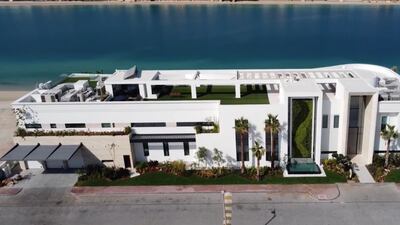
This Dh280 million property has a prime location on Dubai's Palm Jumeirah. All photos courtesy Belleview Real Estate -

The custom-built villa has 10 bedrooms. -
The 33,000sq ft villa features state-of-the-art technology. -
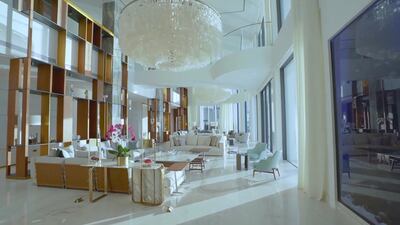
The villa has imported and handpicked book-matched Italian marble, and is furnished by uber-lux Italian furniture houses Giorgetti and Minotti. -

Dubai’s property sector has been experiencing a boom, partly driven by Expo 2020 Dubai, which finished last month. -
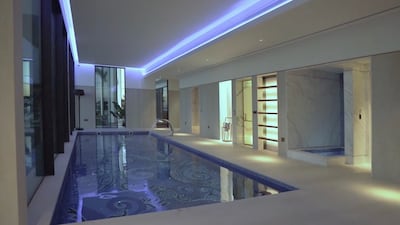
The indoor pool is perfect for when it's too hot outside. -

The spa facilities include a hair salon and gym. -
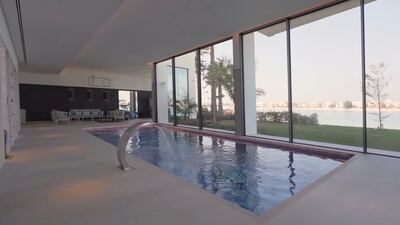
The previous record sale for a Palm Jumeirah villa was Dh185m, set in 2015. -

An aerial view of the outdoor pool. -
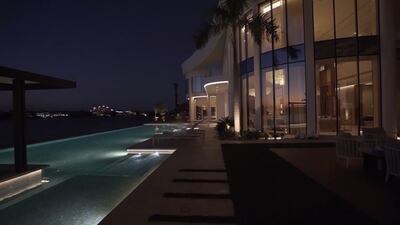
The property comes with more than 70 metres of private beachfront.


__________________________
Knight Frank does not expect prices or demand to wane in the short to medium term, with a further price growth of 5 per cent to 7 per cent expected by the end of the year.
It noted that only eight new villas are due in Dubai’s prime residential areas between 2023 and 2025 — all of which are on Jumeirah Bay Island.
“The overriding challenge for the emirate is the shortage of waterfront homes,” Mr Durrani added. “The revival of Deira Islands as The Dubai Islands should help to alleviate the drought of ultra-prime homes once the development plans are finalised, albeit it is likely to be a few years yet before the first homes are ready to move into here.”
Broker Chris Boswell, who for seven years held the record for Dubai’s highest private residence sale and has sold more than 100 properties on The Palm since 2006, told The National that the man-made island was now one of the most premium waterfront addresses in the world, but remains still well priced compared to luxury locations in other countries.
“The demand we are seeing for Palm Jumeirah villas is completely unprecedented,” he said.
“I always said that real estate on the island was undervalued before the acceleration in prices and still feel prices are still under where they should be, in comparison to other global luxury waterfront destinations. The amenities, hotels, restaurants and retail destinations are the best in the world, and I foresee prices — due to the demand and the lack of prime supply — will climb further into Q1 2023.”
The market boom is expected to continue across all price segments, with a further boost set to come from the hosting of the football World Cup in Qatar next month.
Developer Nakheel said it was revisiting its plans for Palm Jebel Ali, which could fill the gap in waterside properties available. The project has been dormant since 2009.
Dubai Land Department data showed 22,895 units were sold in the third quarter, up 61 per cent from the same period in 2021.
Villa and townhouse prices in Al Furjan experienced a 12 per cent increase, according to Betterhomes, followed by a 7 per cent rise in Jumeirah Golf Estates.
However, Jumeirah Village Circle, a popular and affordable community for families, had a 5 per cent drop in prices.
“While there are still pockets of runaway prices. On the whole, prices have stabilised over the past quarter and we now seem to be in a period of strong transactions and sustainable price growth,” said Richard Waind, group managing director at Betterhomes.

