


Dubai property prices experienced their slowest monthly growth rate in 18 months in August, according to a report by property consultancy ValuStrat.
“The villa submarket continued to perform, albeit at a slower 1.3 per cent month-on-month expansion,” its August report said.
Apartments, which represent the majority of Dubai's residential market, “gradually approached possible price ceilings with a modest 0.7 per cent monthly rise”, it said.
The residential ValuStrat Price Index (VPI) rose 1 per cent monthly to 83.1 points last month. The 100 base points were set in January 2014.
The VPI for the villa segment was up more than 28 per cent annually to 101.9, while the apartment VPI stood at 71.4 points, an increase of about 8 per cent year on year.
Dubai property prices, particularly in prime areas, have increased over the past 12 months on the back of the wider economic recovery in the UAE from the coronavirus-induced slowdown.
The city has reported an influx of high-net-worth individuals and its market has also been buoyed by the success of the UAE's golden visa programme.
In July, Dubai also recorded the highest number of sales transactions in the past 12 years, according to Property Finder.
___________________________
Dubai property prices: where they rose and fell — July 2022
-
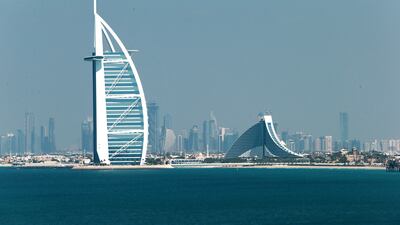
APARTMENT PRICES: Jumeirah: Dh2,082 per square foot — up 0.1 per cent in July, up 1.8 per cent in June, up 3.6 per cent in May, up 3.5 per cent in April. The National -
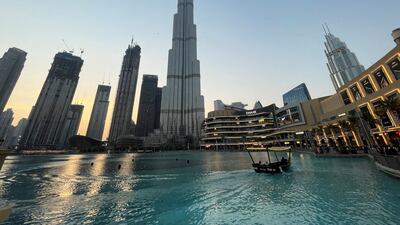
Downtown Dubai: Dh2,071 - up 1 per cent in July, up 0.3 per cent in June, up 0.5 per cent in May, up 0.7 per cent in April. Reuters -
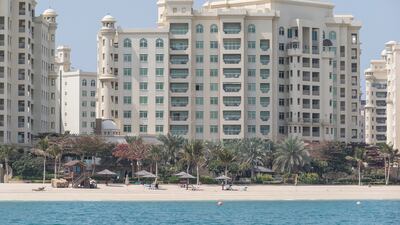
The Palm Jumeirah: Dh1,943 per square foot — up 1.5 per cent in July, down 4.2 per cent in June, up 4.2 per cent in May, up 4 per cent in April. Antonie Robertson / The National -
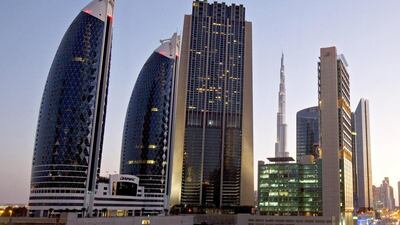
DIFC: Dh1,684 per square foot — up 0.3 per cent in July, down 0.5 per cent in June, up 2.5 per cent in May, up 1.2 per cent in April. Jeff Topping / The National -
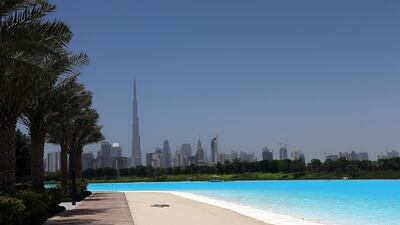
Mohammed bin Rashid City: Dh1,551 per square foot — up 1.3 per cent in July, up 1.9 per cent in June, up 2.3 per cent in May, down 0.2 per cent in April. Satish Kumar / The National -
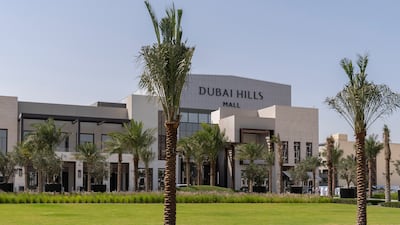
Dubai Hills: Dh1,537 per square foot — up 1.7 per cent in July, up 1.6 per cent, up 2.7 per cent in May, up 0.3 per cent in April. Photo: Emaar Malls Management -
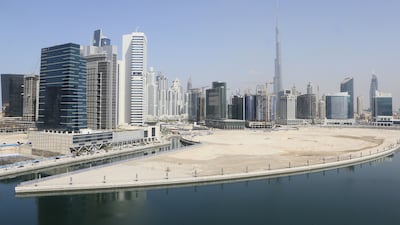
Business Bay: Dh1,469 per square foot — down 1.4 per cent in July, down 2.2 per cent in June, up 1.3 per cent in May, up 1.7 per cent in April. Sarah Dea / The National -
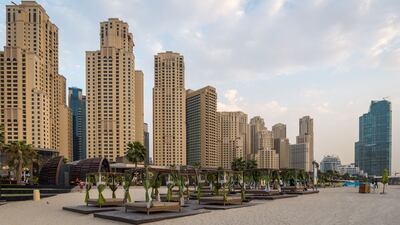
Jumeirah Beach Residence: Dh1,400 per square foot — down 0.8 per cent in July, down 2.8 per cent in June, down 1.0 per cent in May, down 2.2 per cent in April. Photo: LuxuryProperty.com -
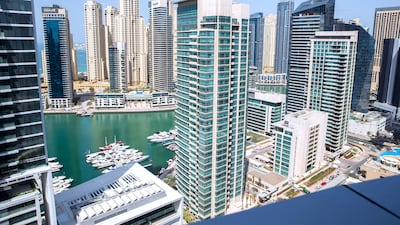
Dubai Marina: Dh1,418 per square foot — up 2.3 per cent in July, up 1.8 per cent in June, down 0.3 per cent in May, down 0.7 per cent in April. Victor Besa / The National -
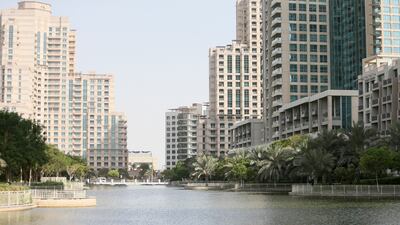
The Greens and The Views: Dh1,107 per square foot — up 2.4 per cent in July, up 1.2 per cent in June, down 2.5 per cent in May, down 0.6 per cent in April. Sarah Dea / The National -
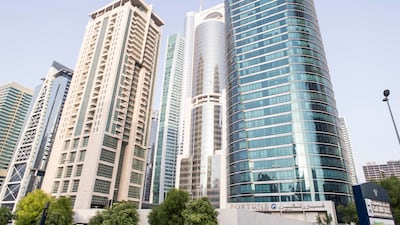
Jumeirah Lakes Towers: Dh1,022 per square foot — up 1.7 per cent, down 0.9 per cent in June, up 3.1 per cent in May, down 1.1 per cent in April. Antonie Robertson / The National -

Damac Hills: Dh1,023 per square foot — up 2.1 per cent, up 0.4 per cent in June, up 2.1 per cent in May, down 0.7 per cent in April. Pawan Singh / The National -
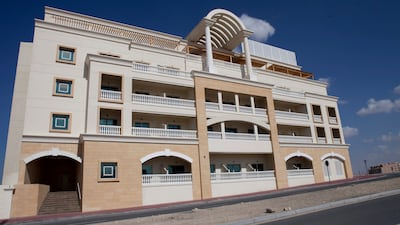
Jumeirah Village Circle: Dh916 per square foot — up 0.5 per cent in July, up 1.2 per cent in June, up 0.4 per cent in May, up 0.1 per cent in April. Razan Alzayani / The National -
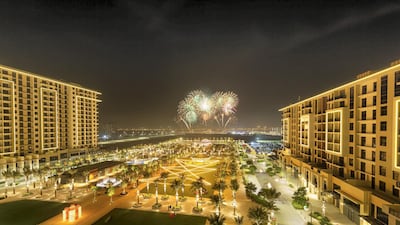
Town Square: Dh853 per square foot — up 0.9 per cent in July, down 1.9 per cent in June, up 0.4 per cent in May, down 1.9 per cent in April. -
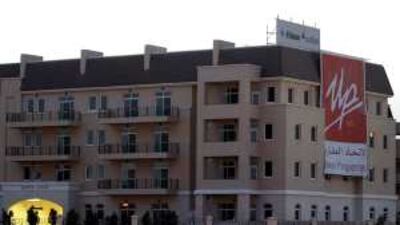
Motor City: Dh641 per square foot — down 1.8 per cent in July, down 2.5 per cent in June, up 0.8 per cent in May, down 0.7 per cent in April. -
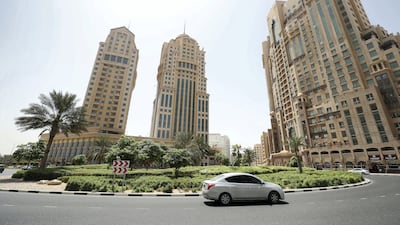
Dubai Silicon Oasis: Dh612 per square foot — up 1.8 per cent in July, up 3.6 per cent in June, down 2.9 per cent in May, down 0.7 per cent in April. Chris Whiteoak / The National -
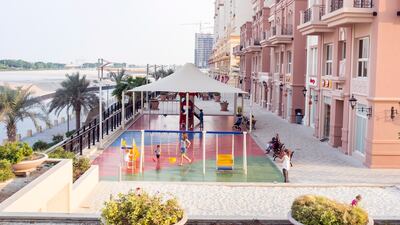
Dubai Sports City: Dh609 per square foot — up 0.5 per cent, up 3.0 per cent in June, down 3.9 per cent in May, down 1.1 per cent in April. Reem Mohammed / The National -
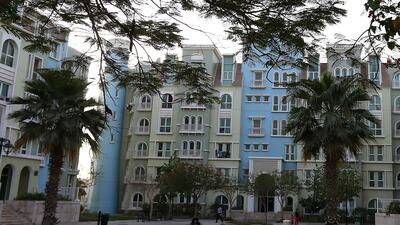
Discovery Gardens: Dh511 per square foot — down 0.8 per cent in July, down 1.8 per cent in June, up 0.3 per cent in May, down 2.2 per cent in April. Pawan Singh / The National -
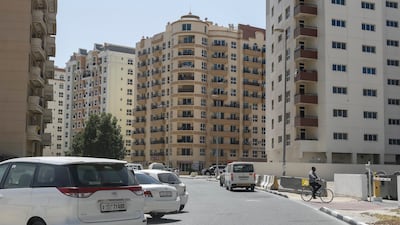
International City: Dh450 per square foot — up 2 per cent in July, up 0.9 per cent in June, down 0.5 per cent in May, down 0.6 per cent in April. Antonie Robertson / The National


___________________________
However, rising interest rates are expected to taper price growth in the latter part of the year.
“Demand for residential properties has reached an all-time high this year, but this trend could change due to the rising cost of living, increasing mortgage rates and anticipated new supply,” Haider Tuaima, director and head of real estate research at ValuStrat, told Reuters.
Average villa prices were up 28.1 per cent annually in August, ValuStrat said. The top performers were Arabian Ranches (33.3 per cent), Jumeirah Islands (31.9 per cent), Palm Jumeirah (29 per cent) and the Meadows (28.8 per cent).
Meanwhile, apartments recorded a more moderate 7.9 per cent average annual increase, with the highest growth registered on The Palm Jumeirah (18.2 per cent), Burj Khalifa (16.7 per cent) and Jumeirah Beach Residences (13.7 per cent).
The volume of residential sales transactions also jumped 80.4 per cent annually and 40.8 per cent monthly in August, ValuStrat said.
A total of 25 transactions valued at more than Dh30 million ($8.16m) were recorded last month. One transaction involved a villa located in Jumeirah Bay Island, which sold for Dh115m, while the largest penthouse at Atlantis The Royal Residences on The Palm Jumeirah sold for Dh163m.
The top off-plan locations for transactions in August included projects located in Damac Lagoons (14.3 per cent), Business Bay (12.1 per cent), Jumeirah Village (10.4 per cent), Arjan (8.8 per cent) and Downtown Dubai (7.2 per cent).
Industry experts told The National last month that demand in the UAE’s mortgage market is being driven by “Fomo [fear of missing out] buyers”, as potential home owners rushed to the market amid rising prices.

