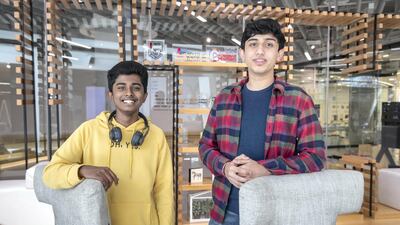
Aadithyan Rajesh and Rishabh Java are co-founders of Tangled, a peer-to-peer learning platform in the UAE that features 50 instructors and 1,000 users. Photo: Antonie Robertson / The National

How to start a business in your teens


Deepthi Nair
  • English
  • Arabic

Five famous companies founded by teens

There are numerous success stories of teen businesses that were created in college dorm rooms and other modest circumstances. Below are some of the most recognisable names in the industry:

  1. Facebook: Mark Zuckerberg and his friends started Facebook when he was a 19-year-old Harvard undergraduate. 
  2. Dell: When Michael Dell was an undergraduate student at Texas University in 1984, he started upgrading computers for profit. He starting working full-time on his business when he was 19. Eventually, his company became the Dell Computer Corporation and then Dell Inc. 
  3. Subway: Fred DeLuca opened the first Subway restaurant when he was 17. In 1965, Mr DeLuca needed extra money for college, so he decided to open his own business. Peter Buck, a family friend, lent him $1,000 and together, they opened Pete’s Super Submarines. A few years later, the company was rebranded and called Subway. 
  4. Mashable: In 2005, Pete Cashmore created Mashable in Scotland when he was a teenager. The site was then a technology blog. Over the next few decades, Mr Cashmore has turned Mashable into a global media company.
  5. Oculus VR: Palmer Luckey founded Oculus VR in June 2012, when he was 19. In August that year, Oculus launched its Kickstarter campaign and raised more than $1 million in three days. Facebook bought Oculus for $2 billion two years later.

Rishabh Java, 18, realised there was pent-up demand in the UAE for online classes taught by young instructors while delivering lessons to others during coronavirus-induced school closures. So he teamed up with friends Aadithyan Rajesh, 14, Neel Adwani, 19, and Khawaish Gulati, 18, to launch Tangled.ae, a new peer-to-peer learning website, in August last year.

The teenagers built the platform in 20 days and it now features 50 instructors and 1,000 users.

“We all were at home during the lockdown, had a lot of time and wanted to build something that was bigger than ourselves,” says Mr Java, who has also been involved with a neuroscience start-up called Aces for three years. “We are helping students build skills free of charge through Tangled.”

The founders recruit instructors, known as Untanglers, aged from 13 to 23 years through a three-stage process. First, they complete a form listing their achievements, then an interview and finally a demo class. Most Tangled learners are from the UAE and India, while instructors are from as far afield as the US, Canada and Australia.

The founders say that STEAM (science, technology, engineering, arts and mathematics) subjects are the most popular on the Tangled platform. However, it also offers courses on karate, dance, cooking and economics, among others.

Meanwhile, the learners, who must be aged between 7 and 21 years, are incentivised by using Tangled tokens.

“You start with 200 tokens. When you attend a class, you lose tokens but you can gain more by watching a video, for instance. Every post on the discussion forum gives you a Tangled XP token. This decides your rank on the leaderboard, which motivates the students and gamifies the learning experience,” says Mr Rajesh, who has also been working on a digital agency called Trinet Solutions for two years and will soon join Microsoft as a software engineering intern.

Mr Rajesh is the chief experience officer at Tangled, while Mr Adwani is chief technology officer and Ms Gulati is responsible for outreach and communication.

The platform is free of charge for both learners and instructors, so the Tangled founders use other means to fund operations.

“As teenagers, the one thing we don’t have is money,” says Mr Java, whose title is "chief Tangler".

“What we are doing to finance the project and keep it running before tapping sponsors is to participate in competitions, pitch our ideas and if we win, the entire prize money goes towards Tangled. We recently won Dh1,400 in prize money at a competition, which went into a virtual private server for a year.”

  • Michael Dell, chief executive of Dell Technologies, started working full-time on his business when he was 19 years. Photo: Bloomberg
    Michael Dell, chief executive of Dell Technologies, started working full-time on his business when he was 19 years. Photo: Bloomberg
  • Facebook chief executive Mark Zuckerberg created the social media platform when he was a Harvard undergrad aged 19. Reuters
    Facebook chief executive Mark Zuckerberg created the social media platform when he was a Harvard undergrad aged 19. Reuters
  • Fred DeLuca, chairman of Subway Restaurants, opened the first branch of the fast food franchise when he was 17 years old. Photo: Bloomberg
    Fred DeLuca, chairman of Subway Restaurants, opened the first branch of the fast food franchise when he was 17 years old. Photo: Bloomberg
  • Palmer Luckey, co-founder of Oculus VR, founded the virtual reality headset company in June 2012, when he was 19 years old. Photo: Bloomberg
    Palmer Luckey, co-founder of Oculus VR, founded the virtual reality headset company in June 2012, when he was 19 years old. Photo: Bloomberg
  • Pete Cashmore created Mashable in Scotland in 2005 when he was a teenager. The site was then a technology blog. Photo: Bloomberg
    Pete Cashmore created Mashable in Scotland in 2005 when he was a teenager. The site was then a technology blog. Photo: Bloomberg

The four teens have collectively spent about $700 to date. Expenses include $400 for web hosting and cloud services, and about $100 to find a unique domain. While the co-founders did most of the development and back-end work on the website themselves, they also spent $100 on freelance work for the platform.

“Getting funded as a young start-up is challenging anywhere in the world. Right now, we are operating at a very small scale. Trying to make do with limited financial resources is a huge challenge,” Mr Java says.

The teen entrepreneurs are building a premium model of Tangled, where learners will have to pay a small monthly fee for extra features, such as attending class recordings that they have missed or have a one-on-one session with an instructor. In the future, they also plan to move to a YouTube-based revenue model, where approximately 60 per cent of the profit will be paid to the instructors. The founders are also working on an app for Tangled.

What we are doing to finance the project and keep it running before tapping sponsors is to participate in competitions, pitch our ideas and if we win, the entire prize money goes toward Tangled

Although the teens say their driving force is hitting milestones, such as the number of registered users, they are often confronted with a lack of credibility when pitching their start-up to schools.

“People don’t think we are legitimate because we are offering free courses. It’s very difficult to get an opportunity for a face-to-face meeting with school principals and pitch our idea to them,” says Mr Java.

This problem also resonates with Rajvir Kohli, founder of another peer learning platform called StudySmart. The 18 year-old says schools are hesitant to promote such platforms because they think student-led initiatives lack credibility.

"My business is not something I am doing just for fun," he tells The National.

StudySmart is a free, student-developed platform that offers retrospective timetables, crash-course videos, tailored studying advice, self-produced revision guides, and other custom features for the GCSE, IB and A-level examinations. The platform began as a way of disseminating resources as a way of combating resource inequity between students in the UAE.

“While there are a lot of tutoring organisations in Dubai, there are not a lot of resources that teach students how to study, how to effectively revise or manage stress along with their regular exams,” says Mr Kohli. He launched StudySmart two years ago to address this market gap.

Rajvir Kohli, founder of StudySmart, says raising finance is the toughest part for a student-led initiative. He pitched the business to Silicon Fen Venture Fund, an ecosystem for young innovators, and was affiliated with them for some time. Photo: Reem Mohammed / The National

The teen has taken 12 to 13 students on board to work on content production and website development. The platform has so far garnered 180 learners organically.

The entrepreneur says raising finance is the toughest part for a student-led initiative. He pitched the business to the Silicon Fen Venture Fund, an ecosystem for young innovators, and was affiliated with them and received guidance on how to manage finances.

“As students, it is difficult to pitch to angel investors. We have gone through private means, by getting referred to people through friends and family,” says Mr Kohli, who also invests money earned from his tutoring endeavours into the business.

The start-up, which has been funded with $1,200 since launch, recently raised another $1,800 privately. The founder is planning to launch a few optional paid features, such as a question bank.

My business is not something I am doing just for fun

“Other challenges are our time constraints. The level of work we put in fluctuates based on our exams and other academic responsibilities. That holds back progress on the platform. Eventually, when we scale up, we will also have to start paying people, so we may need to restructure the organisation,” adds Mr Kohli.

The teenager says he will continue working on the start-up in university. “Universities abroad have a much bigger audience. They usually have incubators to help start-ups. There will be a lot more opportunity to grow.”

One of the few places where teen entrepreneurs can gain access to funds is through friends and family, says Jazeer Jamal, founder of GrowValley, a start-up studio building start-ups at scale, and co-founder of Kidstarter, an online marketplace where children can run their own business with minimal adult support. Once the business is launched, “there are multiple options to raise money from the likes of incubators, accelerators and VCs such as Hub71, 500Startups and Sheraa in the UAE”, he adds.

Mr Jamal also recommends that teens read The Art of Start-up Fundraising by Alejandro Cremades to learn about raising funds.

Teen entrepreneurs must learn to spend less than what they can afford and put the maximum funds in developing their business. Getty Images

“Frugality is something that teen entrepreneurs need to learn. Most importantly, learn to spend less than what you can afford and put the maximum funds in developing the business,” he adds.

Schools and other educational institutions in the UAE offer entrepreneurship programmes that teach various skills such as writing business plans, pitching to investors, prototyping , marketing and hiring a team. However, most of these programmes do not teach the key skill of financial literacy, says Marilyn Pinto, founder of Kids Finance Initiative.

“A majority of young entrepreneurs will be bootstrapping their business and this is where their knowledge and habits of being careful spenders and budgeting efficiently will come into use,” says Ms Pinto. “They need to distinguish between and prioritise their needs over their wants. Lack of this basic awareness will lead them to burn through their funds at an alarming rate, thus paving the way for an entrepreneurial disaster.”

She also recommends that teen entrepreneurs understand how credit works, steer clear of costly debt and realise the importance of maintaining a good credit history.

“Many bank lenders look at personal credit histories before they agree to give entrepreneurs start-up loans. Having a poor credit score will scuttle their chances of getting those loans, even if they have the best business plan out there,” Ms Pinto adds.


Women’s T20 World Cup Asia Qualifier

ICC Academy, November 22-28

UAE fixtures
Nov 22, v Malaysia
Nov 23, v Hong Kong
Nov 25, v Bhutan
Nov 26, v Kuwait
Nov 28, v Nepal

ICC T20I rankings
14. Nepal
17. UAE
25. Hong Kong
34. Kuwait
35. Malaysia
44. Bhutan 

UAE squad
Chaya Mughal (captain), Natasha Cherriath, Samaira Dharnidharka, Kavisha Egodage, Mahika Gaur, Priyanjali Jain, Suraksha Kotte, Vaishnave Mahesh, Judit Peter, Esha Rohit, Theertha Satish, Chamani Seneviratne, Khushi Sharma, Subha Venkataraman

The Internet
Hive Mind
four stars

Fixtures

Friday Leganes v Alaves, 10.15pm; Valencia v Las Palmas, 12.15am

Saturday Celta Vigo v Real Sociedad, 8.15pm; Girona v Atletico Madrid, 10.15pm; Sevilla v Espanyol, 12.15am

Sunday Athletic Bilbao v Getafe, 8.15am; Barcelona v Real Betis, 10.15pm; Deportivo v Real Madrid, 12.15am

Monday Levante v Villarreal, 10.15pm; Malaga v Eibar, midnight

UAE currency: the story behind the money in your pockets
The%20specs
%3Cp%3E%3Cstrong%3EEngine%3A%20%3C%2Fstrong%3E4.0-litre%20twin-turbo%20V8%0D%3Cbr%3E%3Cstrong%3EPower%3A%20%3C%2Fstrong%3E640hp%20at%206%2C000rpm%0D%3Cbr%3E%3Cstrong%3ETorque%3A%20%3C%2Fstrong%3E850Nm%20from%202%2C300-4%2C500rpm%0D%3Cbr%3E%3Cstrong%3ETransmission%3A%20%3C%2Fstrong%3E8-speed%20auto%0D%3Cbr%3E%3Cstrong%3EFuel%20consumption%3A%20%3C%2Fstrong%3E11.9L%2F100km%0D%3Cbr%3E%3Cstrong%3EPrice%3A%20%3C%2Fstrong%3EDh749%2C800%0D%3Cbr%3E%3Cstrong%3EOn%20sale%3A%20%3C%2Fstrong%3Enow%3C%2Fp%3E%0A

8 traditional Jamaican dishes to try at Kingston 21

  1. Trench Town Rock: Jamaican-style curry goat served in a pastry basket with a carrot and potato garnish
  2. Rock Steady Jerk Chicken: chicken marinated for 24 hours and slow-cooked on the grill
  3. Mento Oxtail: flavoured oxtail stewed for five hours with herbs
  4. Ackee and salt fish: the national dish of Jamaica makes for a hearty breakfast
  5. Jamaican porridge: another breakfast favourite, can be made with peanut, cornmeal, banana and plantain
  6. Jamaican beef patty: a pastry with ground beef filling
  7. Hellshire Pon di Beach: Fresh fish with pickles
  8. Out of Many: traditional sweet potato pudding
FINAL SCORES

Fujairah 130 for 8 in 20 overs

(Sandy Sandeep 29, Hamdan Tahir 26 no, Umair Ali 2-15)

Sharjah 131 for 8 in 19.3 overs

(Kashif Daud 51, Umair Ali 20, Rohan Mustafa 2-17, Sabir Rao 2-26)

Other acts on the Jazz Garden bill

Sharrie Williams
The American singer is hugely respected in blues circles due to her passionate vocals and songwriting. Born and raised in Michigan, Williams began recording and touring as a teenage gospel singer. Her career took off with the blues band The Wiseguys. Such was the acclaim of their live shows that they toured throughout Europe and in Africa. As a solo artist, Williams has also collaborated with the likes of the late Dizzy Gillespie, Van Morrison and Mavis Staples.
Lin Rountree
An accomplished smooth jazz artist who blends his chilled approach with R‘n’B. Trained at the Duke Ellington School of the Arts in Washington, DC, Rountree formed his own band in 2004. He has also recorded with the likes of Kem, Dwele and Conya Doss. He comes to Dubai on the back of his new single Pass The Groove, from his forthcoming 2018 album Stronger Still, which may follow his five previous solo albums in cracking the top 10 of the US jazz charts.
Anita Williams
Dubai-based singer Anita Williams will open the night with a set of covers and swing, jazz and blues standards that made her an in-demand singer across the emirate. The Irish singer has been performing in Dubai since 2008 at venues such as MusicHall and Voda Bar. Her Jazz Garden appearance is career highlight as she will use the event to perform the original song Big Blue Eyes, the single from her debut solo album, due for release soon.

KYLIAN MBAPPE 2016/17 STATS

Ligue 1: Appearances - 29, Goals - 15, Assists - 8
UCL: Appearances - 9, Goals - 6
French Cup: Appearances - 3, Goals - 3
France U19: Appearances - 5, Goals - 5, Assists - 1

Five famous companies founded by teens

There are numerous success stories of teen businesses that were created in college dorm rooms and other modest circumstances. Below are some of the most recognisable names in the industry:

  1. Facebook: Mark Zuckerberg and his friends started Facebook when he was a 19-year-old Harvard undergraduate. 
  2. Dell: When Michael Dell was an undergraduate student at Texas University in 1984, he started upgrading computers for profit. He starting working full-time on his business when he was 19. Eventually, his company became the Dell Computer Corporation and then Dell Inc. 
  3. Subway: Fred DeLuca opened the first Subway restaurant when he was 17. In 1965, Mr DeLuca needed extra money for college, so he decided to open his own business. Peter Buck, a family friend, lent him $1,000 and together, they opened Pete’s Super Submarines. A few years later, the company was rebranded and called Subway. 
  4. Mashable: In 2005, Pete Cashmore created Mashable in Scotland when he was a teenager. The site was then a technology blog. Over the next few decades, Mr Cashmore has turned Mashable into a global media company.
  5. Oculus VR: Palmer Luckey founded Oculus VR in June 2012, when he was 19. In August that year, Oculus launched its Kickstarter campaign and raised more than $1 million in three days. Facebook bought Oculus for $2 billion two years later.