Project directors and development, real estate asset, leasing and property managers are in high demand, according to recruitment experts. Getty

Construction and real estate jobs in the UAE: How much do they pay?


Deepthi Nair
  • English
  • Arabic

Mega projects in the region and property development in the hospitality industry are driving demand for experienced professionals in the UAE’s property and construction sector, according to recruitment specialists.

The most sought-after professionals are those with experience in the design and planning stages of a project through to delivery, the Hays 2023 GCC Salary Guide says.

“Certain areas were busier than others – real estate development in the hospitality industry maintained a steady pace throughout the year,” says Aaron Fletcher, senior manager of construction, property and engineering at Hays.

“Additionally, design consultancies were busy recruiting staff to meet project demand in Saudi Arabia and the UAE.”

About a quarter (24 per cent) of construction, property and engineering professionals in the UAE changed roles in 2022, compared with 23 per cent who started a new job in 2021, Hays reports.

The jobs market in the UAE, the second-largest Arab economy, has made a strong recovery from the coronavirus-induced slowdown on the back of the government’s fiscal measures.

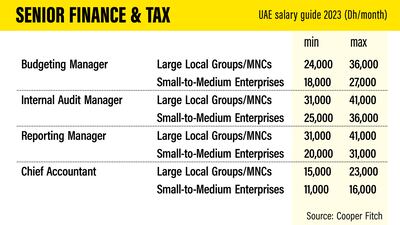
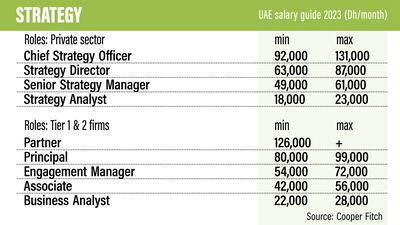
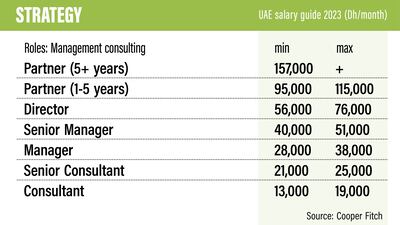
The majority of companies in the Emirates plan to hire new employees for the remainder of the year and wages are expected to increase by just under 2 per cent in 2023, according to the Cooper Fitch Salary Guide 2023.

More than half of all companies (57 per cent) expect to increase salaries this year, according to the Cooper Fitch survey, which polled business leaders at 300 companies in the GCC.

With hiring on the increase in the UAE’s property and construction sector, what are the most sought-after jobs and how much do they pay?

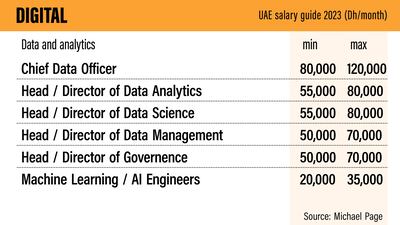
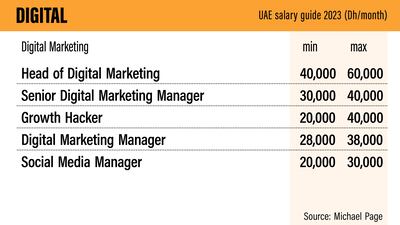
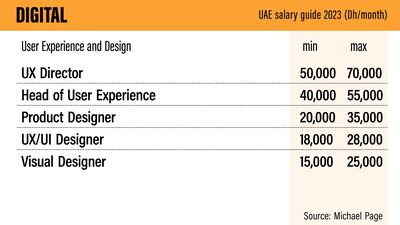
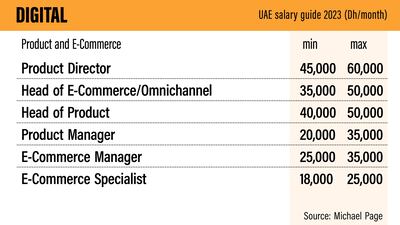
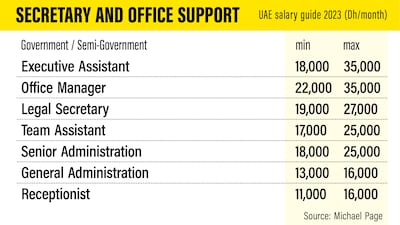
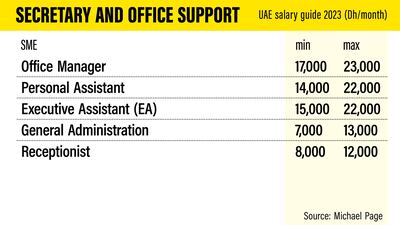
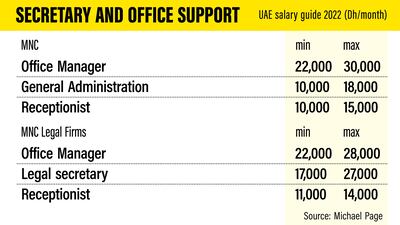
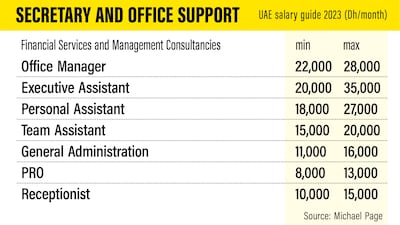
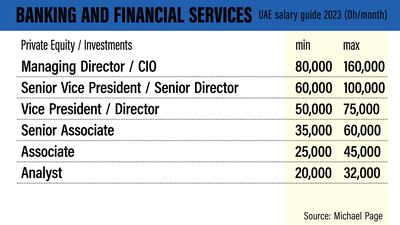
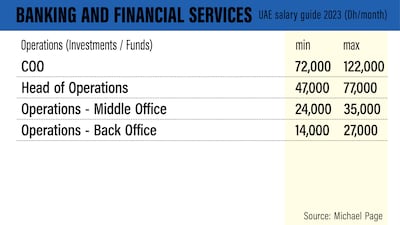
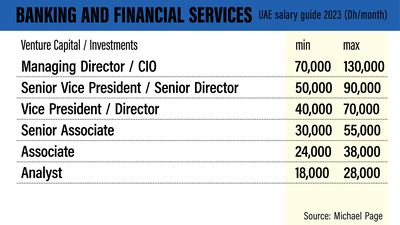
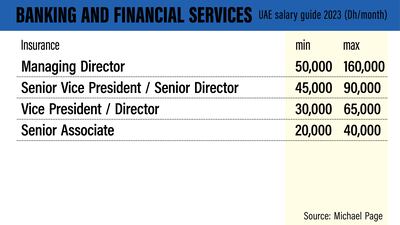
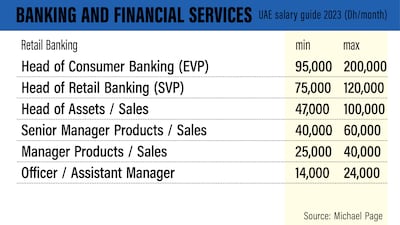
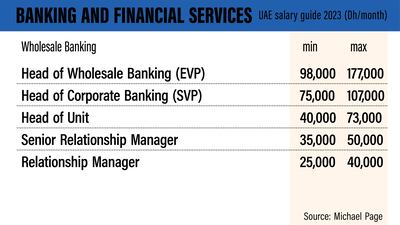
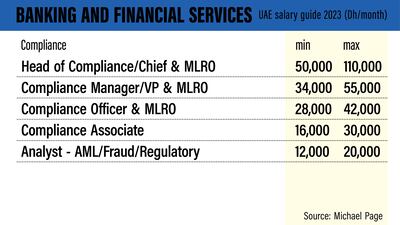
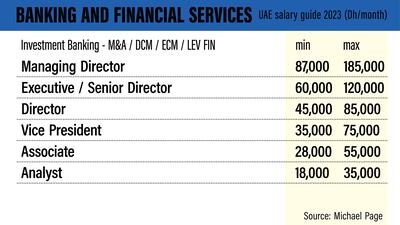
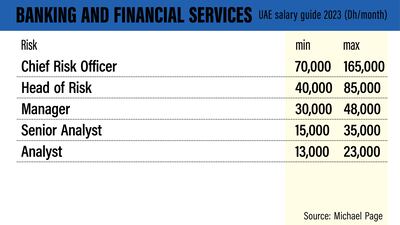
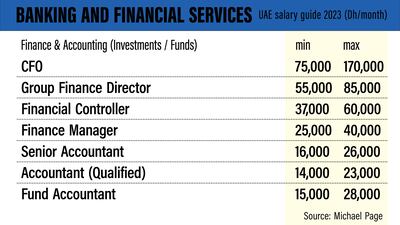
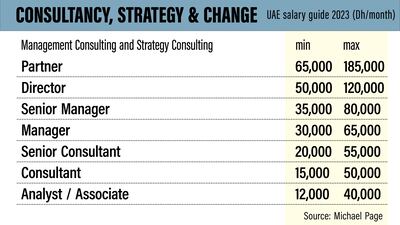
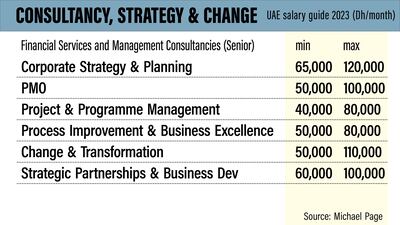
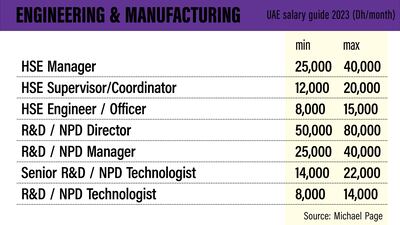
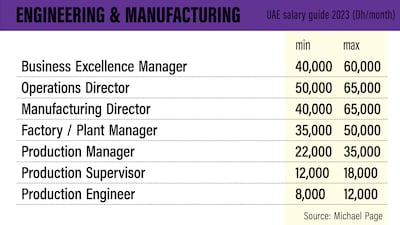
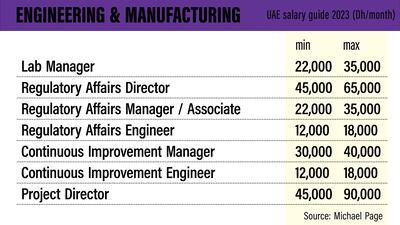
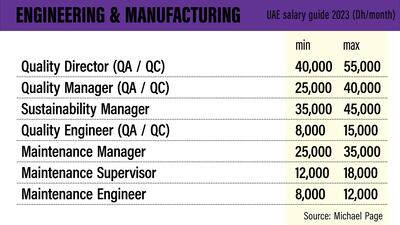
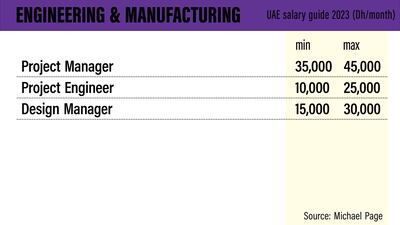
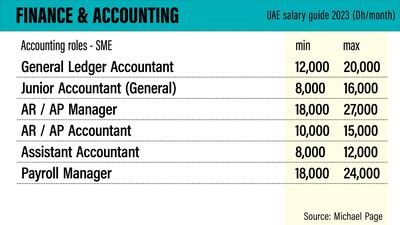
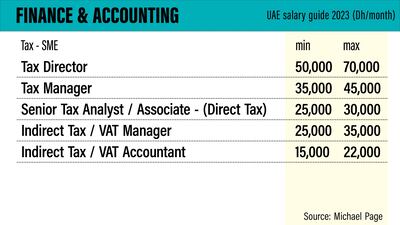
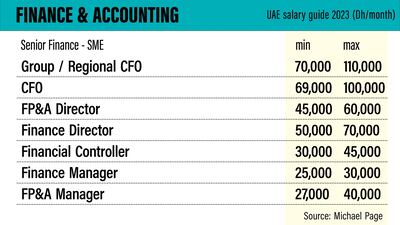
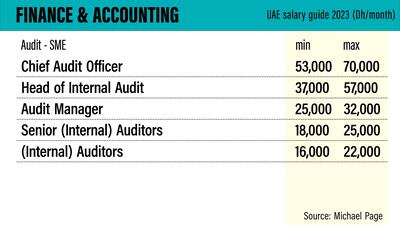
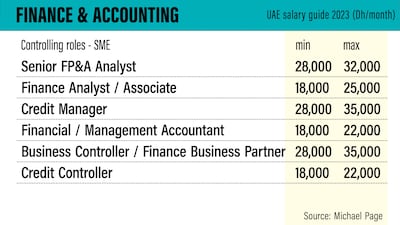
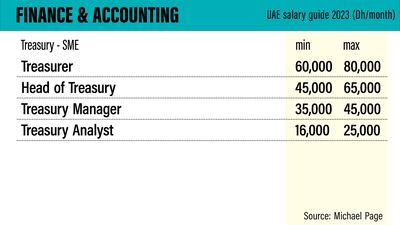
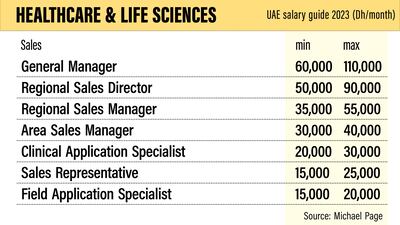
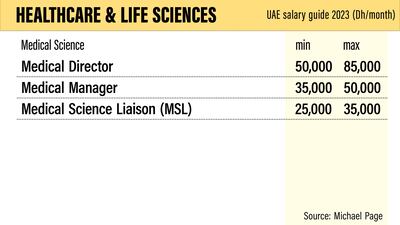
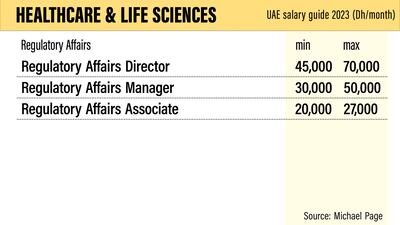
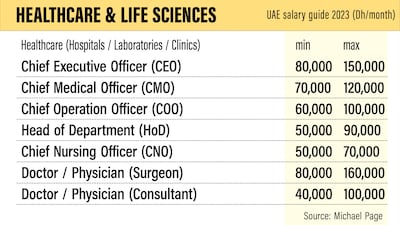
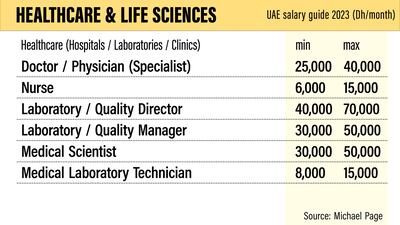
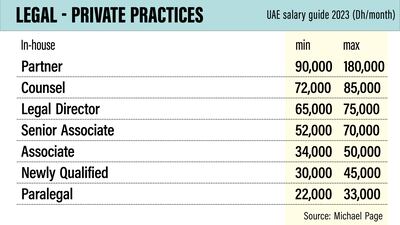
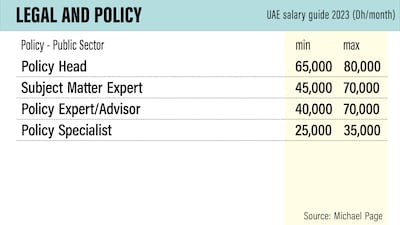
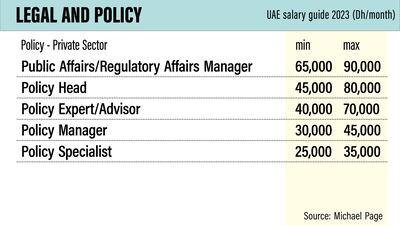
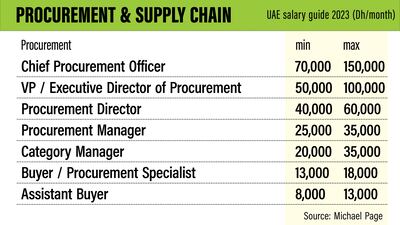
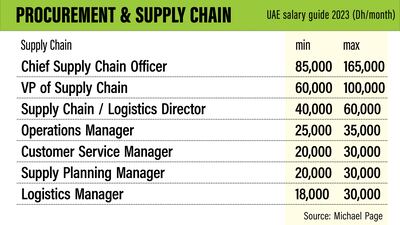
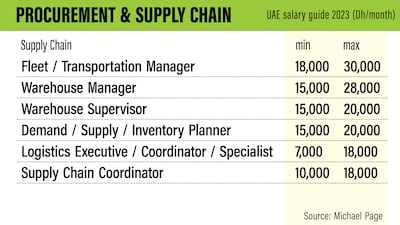
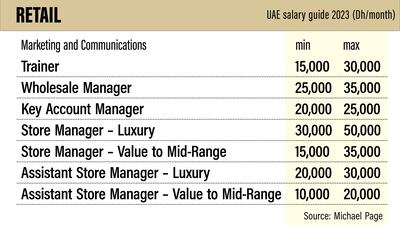
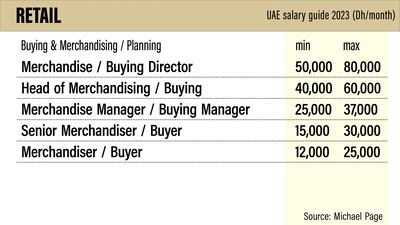
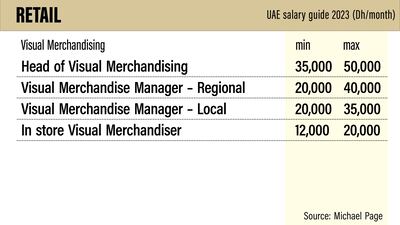
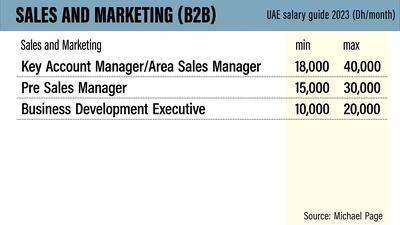
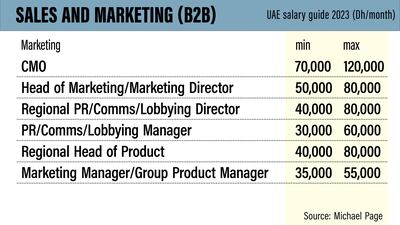
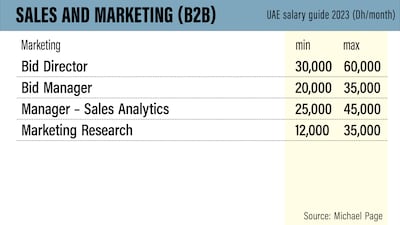
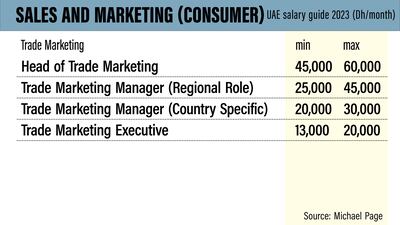
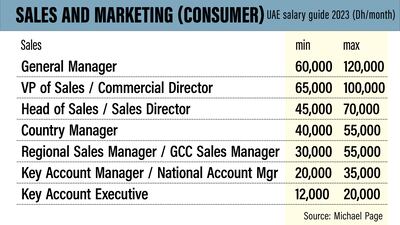
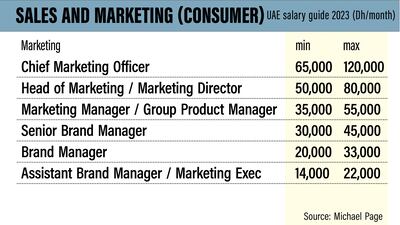
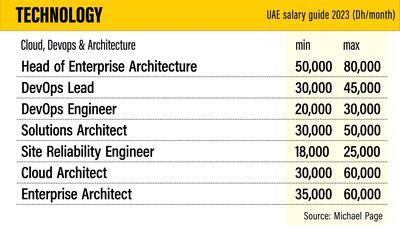
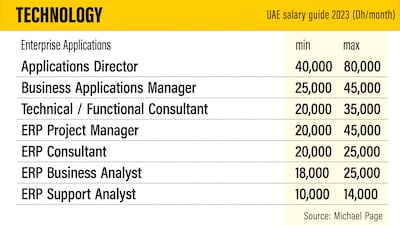
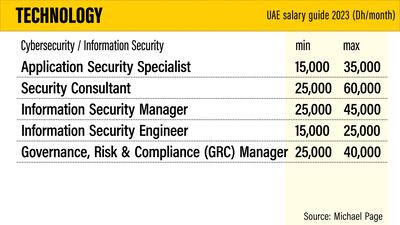
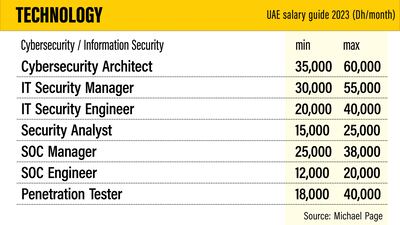
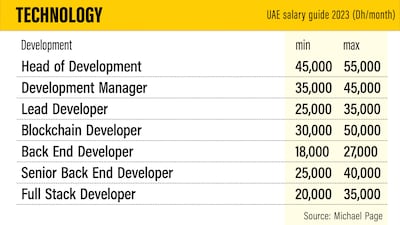
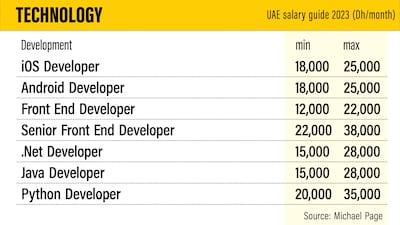
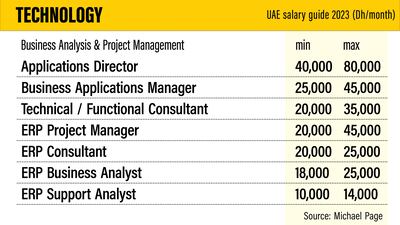
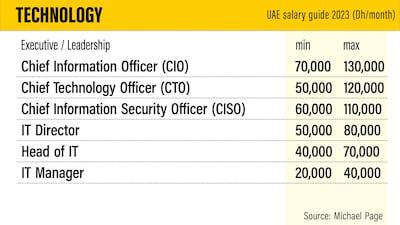
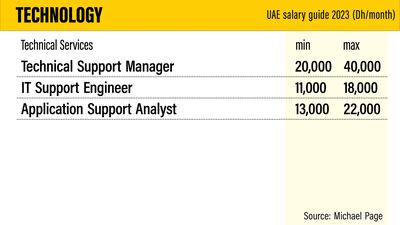
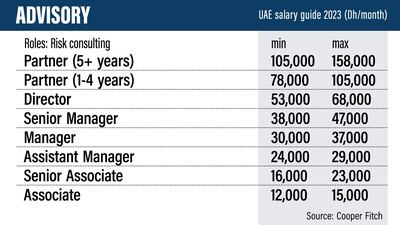
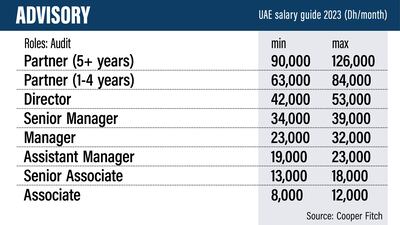
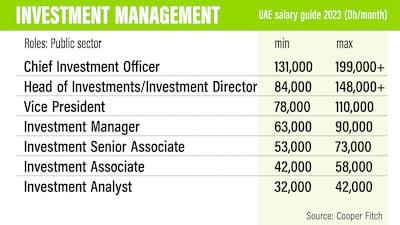
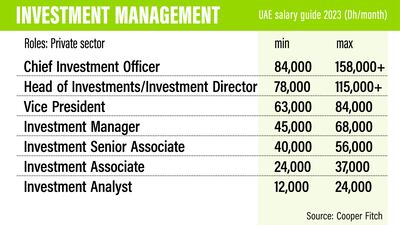
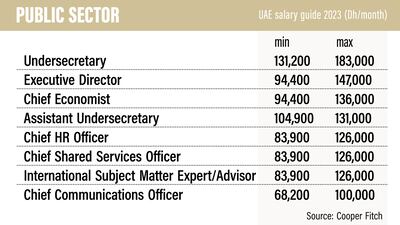
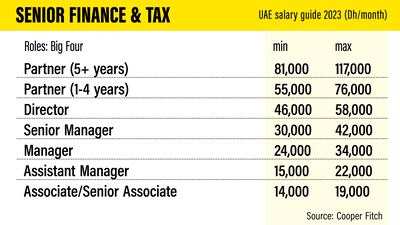
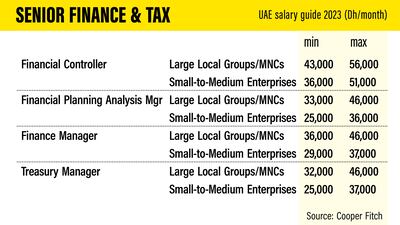
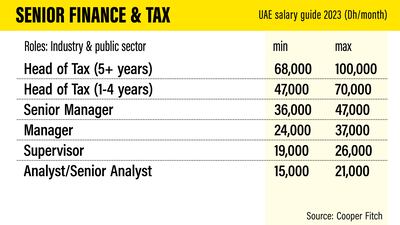
Read on to find out – and check out our comprehensive UAE salary guide 2023 slide show below for a snapshot of your sector.

  • UAE salary guide 2023
    UAE salary guide 2023
  • UAE salary guide 2023
    UAE salary guide 2023
  • UAE salary guide 2023
    UAE salary guide 2023
  • UAE salary guide 2023
    UAE salary guide 2023
  • UAE salary guide 2023
    UAE salary guide 2023
  • UAE salary guide 2023
    UAE salary guide 2023
  • UAE salary guide 2023
    UAE salary guide 2023
  • UAE salary guide 2023
    UAE salary guide 2023
  • UAE salary guide 2023
    UAE salary guide 2023
  • UAE salary guide 2023
    UAE salary guide 2023
  • UAE salary guide 2023
    UAE salary guide 2023
  • UAE salary guide 2023
    UAE salary guide 2023
  • UAE salary guide 2023
    UAE salary guide 2023
  • UAE salary guide 2023
    UAE salary guide 2023
  • UAE salary guide 2023
    UAE salary guide 2023
  • UAE salary guide 2023
    UAE salary guide 2023
  • UAE salary guide 2023
    UAE salary guide 2023
  • UAE salary guide 2023
    UAE salary guide 2023
  • UAE salary guide 2023
    UAE salary guide 2023
  • UAE salary guide 2023
    UAE salary guide 2023
  • UAE salary guide 2023
    UAE salary guide 2023
  • UAE salary guide 2023
    UAE salary guide 2023
  • UAE salary guide 2023
    UAE salary guide 2023
  • UAE salary guide 2023
    UAE salary guide 2023
  • UAE salary guide 2023
    UAE salary guide 2023
  • UAE salary guide 2023
    UAE salary guide 2023
  • UAE salary guide 2023
    UAE salary guide 2023
  • UAE salary guide 2023
    UAE salary guide 2023
  • UAE salary guide 2023
    UAE salary guide 2023
  • UAE salary guide 2023
    UAE salary guide 2023
  • UAE salary guide 2023
    UAE salary guide 2023
  • UAE salary guide 2023
    UAE salary guide 2023
  • UAE salary guide 2023
    UAE salary guide 2023
  • UAE salary guide 2023
    UAE salary guide 2023
  • UAE salary guide 2023
    UAE salary guide 2023
  • UAE salary guide 2023
    UAE salary guide 2023
  • UAE salary guide 2023
    UAE salary guide 2023
  • UAE salary guide 2023
    UAE salary guide 2023
  • UAE salary guide 2023
    UAE salary guide 2023
  • UAE salary guide 2023
    UAE salary guide 2023
  • UAE salary guide 2023
    UAE salary guide 2023
  • UAE Salary Guide
    UAE Salary Guide
  • UAE salary guide 2023
    UAE salary guide 2023
  • UAE salary guide 2023
    UAE salary guide 2023
  • UAE salary guide 2023
    UAE salary guide 2023
  • UAE salary guide 2023
    UAE salary guide 2023
  • UAE salary guide 2023
    UAE salary guide 2023
  • UAE salary guide 2023
    UAE salary guide 2023
  • UAE salary guide 2023
    UAE salary guide 2023
  • UAE salary guide 2023
    UAE salary guide 2023
  • UAE salary guide 2023
    UAE salary guide 2023
  • UAE salary guide 2023
    UAE salary guide 2023
  • UAE salary guide 2023
    UAE salary guide 2023
  • UAE salary guide 2023
    UAE salary guide 2023
  • UAE salary guide 2023
    UAE salary guide 2023
  • UAE salary guide 2023
    UAE salary guide 2023
  • UAE salary guide 2023
    UAE salary guide 2023
  • UAE salary guide 2023
    UAE salary guide 2023
  • UAE salary guide 2023
    UAE salary guide 2023
  • UAE salary guide 2023
    UAE salary guide 2023
  • UAE salary guide 2023
    UAE salary guide 2023
  • UAE salary guide 2023
    UAE salary guide 2023
  • UAE salary guide 2023
    UAE salary guide 2023
  • UAE salary guide 2023
    UAE salary guide 2023
  • UAE salary guide 2023
    UAE salary guide 2023
  • UAE salary guide 2023
    UAE salary guide 2023
  • UAE salary guide 2023
    UAE salary guide 2023
  • UAE salary guide 2023
    UAE salary guide 2023
  • UAE salary guide 2023
    UAE salary guide 2023
  • UAE salary guide 2023
    UAE salary guide 2023
  • UAE salary guide 2023
    UAE salary guide 2023
  • UAE salary guide 2023
    UAE salary guide 2023
  • UAE salary guide 2023
    UAE salary guide 2023
  • UAE salary guide 2023
    UAE salary guide 2023
  • UAE salary guide 2023
    UAE salary guide 2023
  • UAE salary guide 2023
    UAE salary guide 2023
  • UAE salary guide 2023
    UAE salary guide 2023
  • UAE salary guide 2023
    UAE salary guide 2023
  • UAE salary guide 2023
    UAE salary guide 2023
  • UAE salary guide 2023.
    UAE salary guide 2023.
  • UAE salary guide 2023.
    UAE salary guide 2023.
  • UAE salary guide 2023.
    UAE salary guide 2023.
  • UAE salary guide 2023
    UAE salary guide 2023
  • UAE salary guide 2023
    UAE salary guide 2023
  • UAE salary guide 2023
    UAE salary guide 2023
  • UAE salary guide 2023
    UAE salary guide 2023
  • UAE salary guide 2023
    UAE salary guide 2023
  • UAE salary guide 2023
    UAE salary guide 2023
  • UAE salary guide 2023
    UAE salary guide 2023
  • UAE salary guide 2023
    UAE salary guide 2023
  • UAE salary guide 2023
    UAE salary guide 2023
  • UAE salary guide 2023
    UAE salary guide 2023
  • UAE salary guide 2023
    UAE salary guide 2023
  • UAE salary guide 2023
    UAE salary guide 2023
  • UAE salary guide 2023
    UAE salary guide 2023

Which property jobs are in demand?

As with previous years, construction delivery roles, including project/construction directors and senior managers, will be required in 2023, according to the Hays salary guide.

Much of this demand will come from the flagship big projects in Saudi Arabia – such as Red Sea Global, Neom, the Diriyah Gate Development Authority and Roshn – that have progressed further in their construction stages, the consultancy estimates.

“For new giga-projects at the design and planning stages, architectural designers and urban planners will be required,” it says.

“Additionally, due to a talent shortage, development directors/managers and candidates who have experience implementing digital technology, especially building information management, will be highly sought-after.”

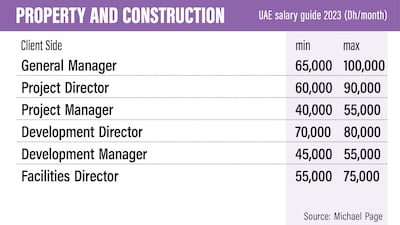
Recruiter Michael Page says in its 2023 UAE Salary Guide that positions in demand in the UAE’s property and construction sector include project directors and development, real estate asset, leasing, and property and facilities managers.

What job skills are employers looking for?

Experience in managing projects from inception through to handover is desirable, according to Hays.

Employers look for stability and a proven track record of end-to-end project management, the recruiter says.

Equally, as projects evolve, progress and sometimes change direction, a flexible attitude towards work is essential. Employers are increasingly seeking out candidates with a “start-up mentality” that are willing to go above and beyond to deliver, Hays says.

Meanwhile, Michael Page cites real estate consultancy, development and real estate asset management as sought-after roles in the UAE.

“There is a shortage of talent across the GCC for the major real estate consultancies and Big Four organisations offering real estate advisory services such as valuations, development advisory, transaction advisory and more,” it says.

“Major projects have been announced across the region and these companies are busier than ever.”

Organisations are also expanding their project portfolios across the GCC as they looking for new project opportunities to add to their portfolios.

Therefore, development professionals with extensive experience in the initial phases of development such as market research, feasibility and business development are in high demand, Michael Page explains.

“Organisations are also looking to enhance their real estate portfolios. Announcements from key players in the sector with plans to expand portfolios, refurbish or convert assets to meet the market demands has been a common theme,” it says.

“Property and asset management specialists are in demand to support plans to enhance or reposition current portfolios and offer strategic advice to future projects.”

Are salaries expected to rise in the property sector?

Professionals within the property and construction sector feel positive about their pay for this year, with 73 per cent expecting their salary to increase, Hays finds.

Equally, 76 per cent of employers expect rates of pay within their organisation to increase.

However, with employers in the GCC increasingly offering more sustainable salaries and, instead, opting to sell themselves as an employer of choice, the average expected salary increase is 5 per cent or less, according to Hays.

“Employees with high-level responsibilities and strong individual performance are most likely to have their pay increase request approved,” the recruiter says.

Design consultancies are busy recruiting staff to meet project demand in Saudi Arabia and the UAE
Aaron Fletcher,
senior manager of construction, property and engineering at Hays

What other benefits can employees expect?

Retaining talent has become a top priority in the property and construction sector and organisations are addressing this with consistent promotions, clear lines of career development, full bonus payouts and competitive salaries, according to Michael Page.

“It is a great opportunity for international candidates with these skill sets considering a move to the GCC,” it says.

Developers, property consultancies and construction specialists have been recruiting in large volumes, making the market extremely competitive for employers in terms of securing and retaining top talent, the consultancy says.

“Salaries have increased, benefits are becoming more versatile and people now desire flexible working, such as work-from-home policies,” it says.

“Some employers are meeting the markets' demands; however, many are still operating like pre-Covid times.”

When budgets are limited, organisations must look at their incentives and the candidate motivations, Michael Page recommends.

In a market where candidates’ priorities have changed and family and wellness have become the priority, organisations must learn to accommodate this to remain competitive, the consultancy says.

Aside from the salary and benefits package, the availability of career development opportunities and work-life balance (including flexible working options) are the most important factors for employees when considering a new role, Hays reports.

Employers that want to retain staff should focus on upskilling and reskilling their existing workforce by providing ongoing professional development, it suggests.

What are the highest-paying jobs in the property and construction sector?

Development and design

Chief development officer: Dh126,000 ($34,300) to Dh252,000 a month

Executive director of development: Dh84,000 to Dh158,000

Executive director of design: Dh76,000 to Dh122,000

Director of development: Dh53,000 to Dh90,000

Director of design: Dh53,000 to Dh90,000

Director of urban planning: Dh53,000 to Dh90,000

Senior development manager: Dh41,000 to Dh69,000

Senior design manager: Dh38,000 to Dh64,000

Senior urban planning manager: Dh37,000 to 61,000

Design manager: Dh26,000 to Dh47,000

Development manager: Dh26,000 to Dh47,000

Urban planning manager: Dh26,000 to Dh42,000

Construction and project management

Chief projects officer: Dh102,000 to Dh214,000

Executive director of project delivery: Dh73,000 to Dh125,000

Director of infrastructure: Dh61,000 to Dh88,000

Commercial director: Dh61,000 to Dh87,000

Director of project controls: Dh60,000 to Dh79,000

Director of construction: Dh53,000 to Dh73,000

Project director: Dh53,000 to Dh73,000

Senior project manager: Dh37,000 to Dh53,000

Senior commercial manager: Dh36,000 to Dh53,000

Senior manager of project controls: Dh36,000 to 52,000

Project manager: Dh21,000 to Dh37,000

Construction manager: Dh21,000 to Dh37,000

Commercial manager: Dh20,000 to Dh36,000

Project controls manager: Dh20,000 to Dh35,000

Sales and post construction

Executive director of sales: Dh78,000 to Dh115,000

Executive director of asset management: Dh78,000 to Dh105,000

Executive director of facilities management: Dh61,000 to Dh97,000

Director of asset management: Dh63,000 to Dh84,000

Director of sales: Dh58,000 to Dh78,000

Director of leasing: Dh47,000 to Dh73,000

Senior asset manager: Dh53,000 to Dh68,000

Director of facilities: Dh37,000 to Dh58,000

Asset manager: Dh26,000 to Dh42,000

Property manager: Dh21,000 to Dh42,000

Facilities manager: Dh21,000 to 42,000

Leasing manager: Dh21,000 to Dh37,000

Sales manager: Dh21,000 to Dh37,000

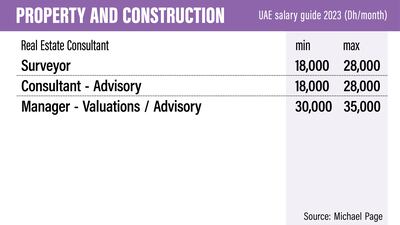
Real estate consultant

Surveyor: Dh18,000 to Dh28,000

Consultant – advisory: Dh18,000 to Dh28,000

Manager – valuations/advisory: Dh30,000 to Dh35,000

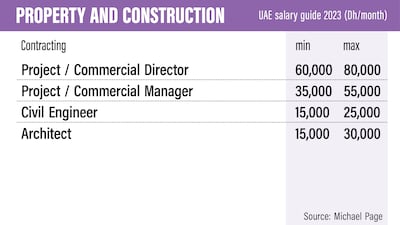
Contracting

Project /commercial director: Dh60,000 to Dh80,000

Project /commercial manager: Dh35,000 to Dh55,000

Civil engineer: Dh15,000 to Dh25,000

Architect: Dh15,000 to Dh30,000

Source: Cooper Fitch and Michael Page

Top tips

Create and maintain a strong bond between yourself and your child, through sensitivity, responsiveness, touch, talk and play. “The bond you have with your kids is the blueprint for the relationships they will have later on in life,” says Dr Sarah Rasmi, a psychologist.
Set a good example. Practise what you preach, so if you want to raise kind children, they need to see you being kind and hear you explaining to them what kindness is. So, “narrate your behaviour”.
Praise the positive rather than focusing on the negative. Catch them when they’re being good and acknowledge it.
Show empathy towards your child’s needs as well as your own. Take care of yourself so that you can be calm, loving and respectful, rather than angry and frustrated.
Be open to communication, goal-setting and problem-solving, says Dr Thoraiya Kanafani. “It is important to recognise that there is a fine line between positive parenting and becoming parents who overanalyse their children and provide more emotional context than what is in the child’s emotional development to understand.”
 

Ten tax points to be aware of in 2026

1. Domestic VAT refund amendments: request your refund within five years

If a business does not apply for the refund on time, they lose their credit.

2. E-invoicing in the UAE

Businesses should continue preparing for the implementation of e-invoicing in the UAE, with 2026 a preparation and transition period ahead of phased mandatory adoption. 

3. More tax audits

Tax authorities are increasingly using data already available across multiple filings to identify audit risks. 

4. More beneficial VAT and excise tax penalty regime

Tax disputes are expected to become more frequent and more structured, with clearer administrative objection and appeal processes. The UAE has adopted a new penalty regime for VAT and excise disputes, which now mirrors the penalty regime for corporate tax.

5. Greater emphasis on statutory audit

There is a greater need for the accuracy of financial statements. The International Financial Reporting Standards standards need to be strictly adhered to and, as a result, the quality of the audits will need to increase.

6. Further transfer pricing enforcement

Transfer pricing enforcement, which refers to the practice of establishing prices for internal transactions between related entities, is expected to broaden in scope. The UAE will shortly open the possibility to negotiate advance pricing agreements, or essentially rulings for transfer pricing purposes. 

7. Limited time periods for audits

Recent amendments also introduce a default five-year limitation period for tax audits and assessments, subject to specific statutory exceptions. While the standard audit and assessment period is five years, this may be extended to up to 15 years in cases involving fraud or tax evasion. 

8. Pillar 2 implementation 

Many multinational groups will begin to feel the practical effect of the Domestic Minimum Top-Up Tax (DMTT), the UAE's implementation of the OECD’s global minimum tax under Pillar 2. While the rules apply for financial years starting on or after January 1, 2025, it is 2026 that marks the transition to an operational phase.

9. Reduced compliance obligations for imported goods and services

Businesses that apply the reverse-charge mechanism for VAT purposes in the UAE may benefit from reduced compliance obligations. 

10. Substance and CbC reporting focus

Tax authorities are expected to continue strengthening the enforcement of economic substance and Country-by-Country (CbC) reporting frameworks. In the UAE, these regimes are increasingly being used as risk-assessment tools, providing tax authorities with a comprehensive view of multinational groups’ global footprints and enabling them to assess whether profits are aligned with real economic activity. 

Contributed by Thomas Vanhee and Hend Rashwan, Aurifer

RESULTS

6.30pm: Al Maktoum Challenge Round-1 Group 1 (PA) Dh119,373 (Dirt) 1,600m
Winner: Brraq, Adrie de Vries (jockey), Jean-Claude Pecout (trainer)

7.05pm: Handicap (TB) Dh102,500 (D) 1,200m
Winner: Taamol, Connor Beasley, Ali Rashid Al Raihe.

7.40pm: Handicap (TB) Dh105,000 (Turf) 1,800m
Winner: Eqtiraan, Connor Beasley, Ali Rashid Al Raihe.

8.15pm: UAE 1000 Guineas Trial (TB) Dh183,650 (D) 1,400m
Winner: Soft Whisper, Pat Cosgrave, Saeed bin Suroor.

9.50pm: Handicap (TB) Dh105,000 (D) 1,600m
Winner: Hypothetical, Mickael Barzalona, Salem bin Ghadayer.

9.25pm: Handicap (TB) Dh95,000 (T) 1,000m
Winner: Etisalat, Sando Paiva, Ali Rashid Al Raihe

The%20specs%20
%3Cp%3E%3Cstrong%3EEngine%3A%20%3C%2Fstrong%3E2.0-litre%204cyl%20turbo%0D%3Cbr%3E%3Cstrong%3EPower%3A%20%3C%2Fstrong%3E261hp%20at%205%2C500rpm%0D%3Cbr%3E%3Cstrong%3ETorque%3A%20%3C%2Fstrong%3E400Nm%20at%201%2C750-4%2C000rpm%0D%3Cbr%3E%3Cstrong%3ETransmission%3A%20%3C%2Fstrong%3E7-speed%20dual-clutch%20auto%0D%3Cbr%3E%3Cstrong%3EFuel%20consumption%3A%20%3C%2Fstrong%3E10.5L%2F100km%0D%3Cbr%3E%3Cstrong%3EOn%20sale%3A%20%3C%2Fstrong%3ENow%0D%3Cbr%3E%3Cstrong%3EPrice%3A%20%3C%2Fstrong%3EFrom%20Dh129%2C999%20(VX%20Luxury)%3B%20from%20Dh149%2C999%20(VX%20Black%20Gold)%3C%2Fp%3E%0A

Mercer, the investment consulting arm of US services company Marsh & McLennan, expects its wealth division to at least double its assets under management (AUM) in the Middle East as wealth in the region continues to grow despite economic headwinds, a company official said.

Mercer Wealth, which globally has $160 billion in AUM, plans to boost its AUM in the region to $2-$3bn in the next 2-3 years from the present $1bn, said Yasir AbuShaban, a Dubai-based principal with Mercer Wealth.

Within the next two to three years, we are looking at reaching $2 to $3 billion as a conservative estimate and we do see an opportunity to do so,” said Mr AbuShaban.

Mercer does not directly make investments, but allocates clients’ money they have discretion to, to professional asset managers. They also provide advice to clients.

“We have buying power. We can negotiate on their (client’s) behalf with asset managers to provide them lower fees than they otherwise would have to get on their own,” he added.

Mercer Wealth’s clients include sovereign wealth funds, family offices, and insurance companies among others.

From its office in Dubai, Mercer also looks after Africa, India and Turkey, where they also see opportunity for growth.

Wealth creation in Middle East and Africa (MEA) grew 8.5 per cent to $8.1 trillion last year from $7.5tn in 2015, higher than last year’s global average of 6 per cent and the second-highest growth in a region after Asia-Pacific which grew 9.9 per cent, according to consultancy Boston Consulting Group (BCG). In the region, where wealth grew just 1.9 per cent in 2015 compared with 2014, a pickup in oil prices has helped in wealth generation.

BCG is forecasting MEA wealth will rise to $12tn by 2021, growing at an annual average of 8 per cent.

Drivers of wealth generation in the region will be split evenly between new wealth creation and growth of performance of existing assets, according to BCG.

Another general trend in the region is clients’ looking for a comprehensive approach to investing, according to Mr AbuShaban.

“Institutional investors or some of the families are seeing a slowdown in the available capital they have to invest and in that sense they are looking at optimizing the way they manage their portfolios and making sure they are not investing haphazardly and different parts of their investment are working together,” said Mr AbuShaban.

Some clients also have a higher appetite for risk, given the low interest-rate environment that does not provide enough yield for some institutional investors. These clients are keen to invest in illiquid assets, such as private equity and infrastructure.

“What we have seen is a desire for higher returns in what has been a low-return environment specifically in various fixed income or bonds,” he said.

“In this environment, we have seen a de facto increase in the risk that clients are taking in things like illiquid investments, private equity investments, infrastructure and private debt, those kind of investments were higher illiquidity results in incrementally higher returns.”

The Abu Dhabi Investment Authority, one of the largest sovereign wealth funds, said in its 2016 report that has gradually increased its exposure in direct private equity and private credit transactions, mainly in Asian markets and especially in China and India. The authority’s private equity department focused on structured equities owing to “their defensive characteristics.”

Jetour T1 specs

Engine: 2-litre turbocharged

Power: 254hp

Torque: 390Nm

Price: From Dh126,000

Available: Now

First Person
Richard Flanagan
Chatto & Windus 

Company%20Profile
%3Cp%3E%3Cstrong%3ECompany%20name%3A%3C%2Fstrong%3E%20Cargoz%3Cbr%3E%3Cstrong%3EDate%20started%3A%3C%2Fstrong%3E%20January%202022%3Cbr%3E%3Cstrong%3EFounders%3A%3C%2Fstrong%3E%20Premlal%20Pullisserry%20and%20Lijo%20Antony%3Cbr%3E%3Cstrong%3EBased%3A%3C%2Fstrong%3E%20Dubai%3Cbr%3E%3Cstrong%3ENumber%20of%20staff%3A%3C%2Fstrong%3E%2030%3Cbr%3E%3Cstrong%3EInvestment%20stage%3A%3C%2Fstrong%3E%20Seed%3C%2Fp%3E%0A
Updated: August 01, 2023, 6:09 AM