


It was not until 2012 that Cameron and Tyler Winklevoss, the billionaire founders of cryptocurrency exchange Gemini, stumbled across Bitcoin while on a summer holiday in Ibiza, Spain.
When they returned to the US, they started researching the digital token that was created by Satoshi Nakamoto, the pseudonym used by the person believed to have developed Bitcoin during the 2008 global financial crisis.
And it was then that the light bulb came on and they realised that Bitcoin could be the investment of the decade, they told The National during a recent visit to the UAE to announce plans to apply for a virtual asset licence to operate Gemini in the Emirates.
“In short, Bitcoin is money that's purpose-built for the internet. It is a protocol, the same way your email works on a protocol. And when we understood that, that was a big moment,” says Tyler Winklevoss.
In 2004, the mirror twins famously sued Facebook chief executive Mark Zuckerberg, who they employed to build their social networking site, HarvardConnection, alleging that he stole their idea to create the social media platform, now known as Meta Platforms.
They settled the case in 2008 and the twins, known by the collective nickname of “Winklevii”, reportedly received $65 million in cash and Facebook shares.
It was this money that they used to invest in Bitcoin when it was less than $10 through the Japan-based Mt Gox exchange, which collapsed in 2014 after fraudsters stole about 850,000 Bitcoin from customers.
The implosion inspired them to set up Gemini in 2014, which has grown to offer more than 90 cryptocurrencies, a credit card, derivatives, staking and custodial services, among other services.
Trading volume has also reached more than $200 billion on Gemini, which is regulated by the New York State Department of Financial Services.
Now billionaires – they each have a net worth of $1.2 billion, according to Forbes estimates – and believed to be two of the largest holders of Bitcoin, they talk to The National about their crypto journey.
When was your 'aha' moment with Bitcoin?
Tyler Winklevoss: We found Bitcoin in Ibiza of all places, on holiday in the summer of 2012. We started digging into it and learning about it when we got back to the States. Pretty quickly, the light bulb turned on; there's that “aha” moment because the more we dug into Bitcoin, three things jumped out to us: Money is broken, finance is broken and the internet is broken.
Money should work like email. At the end of the day, it is information. It is simply an entry in a ledger, and why does it not work that way? It is because the money that we are used to predates the internet, was built by bankers, not technologists. Bitcoin is really the first money purpose-built for the internet. That was a big moment for us. And also, the fact that money is a social network at the end of the day and people are all connected online, so it makes sense.
What was Bitcoin’s price then and what platform did you use to buy it?
Cameron Winklevoss: So, we bought our first Bitcoin under $10. At that time, it was a combination of using over the counter brokers and also buying on Mt Gox, which was the largest exchange.
Once we were on-boarded, we could buy directly from the exchange. But it was scary. It did not have any of the controls or security precautions that you would expect from a platform today.
And while we were not injured in that process, it famously imploded not long after and that experience really informed us that if cryptocurrency and Bitcoin were going to go mainstream, we would have to build infrastructure that could support that growth.
Cryptocurrencies – in pictures
-
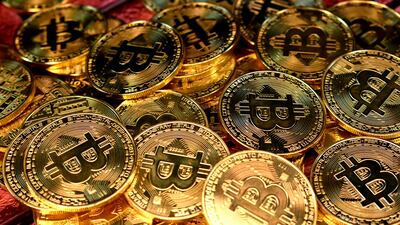
The crypto market, which includes currencies such as Bitcoin, pictured, has lost $2 trillion of its value in six months. Unsplash -
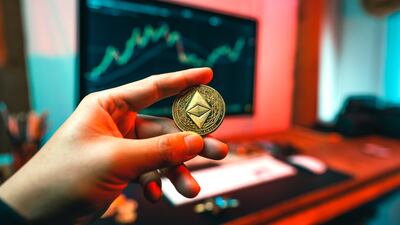
The price of Ethereum, the second largest cryptocurrency by market size, has fallen by 70 per cent this year. Investors and analysts are watching to see if it will dip below $1,000. Unsplash -
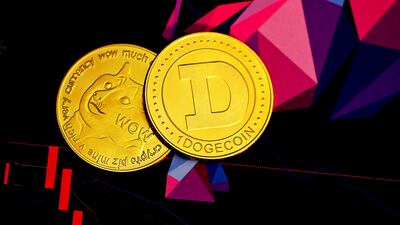
Dogecoin, supported by Elon Musk, is about 90 per cent down from May last year, yet it is outperforming Bitcoin and Ethereum in the current crash. Unsplash -
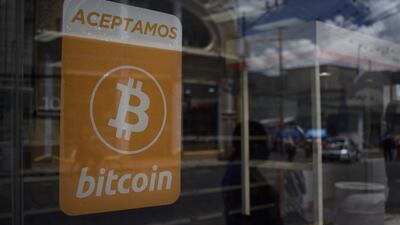
The government of El Salvador has invested $105 million in Bitcoin. President Nayib Bukele's embrace of the cryptocurrency as legal tender is being questioned as the market crashes. Getty -
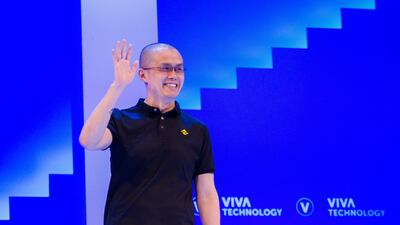
Changpeng Zhao, founder of crypto exchange giant Binance, has compared the current market turmoil to the dotcom bubble of the early 2000s. Still, the company is aggressively pursuing licensing in international jurisdictions and introducing new products. Getty -
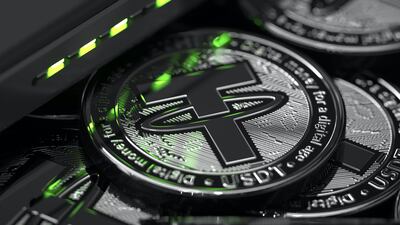
Tether is the biggest issuer of stablecoins, a type of cryptocurrency pegged to a traditionally stable asset like the US dollar. Most stablecoins are meant to maintain a constant price of $1 and are backed by real reserve funds, making it easy to convert crypto investments into cash. But Tether's financial statements show that may not be true, leaving the issuer and its investors vulnerable. Unsplash -

The recent crypto crash can in part be attributed to the collapse of TerraUSD, a stablecoin pegged to the US dollar through algorithms and linked to a "sister" cryptocurrency named Luna. When the price of Luna plummeted, TerraUSD also fell, creating a “death spiral” to practically zero for both coins. Unsplash -

On June 12 crypto lender Celsius Network said it had paused customer withdrawals, saying it needed “to stabilise liquidity and operations”. Investors are still waiting, with no signs that the current meltdown will let up. Getty


Is that when you started Gemini?
TW: That experience led us to ultimately solve our own problem. Bitcoin is great but the companies built on top of it are not – yet – and Gemini would be the solution to that problem. It would be a simple, easy, reliable way for folks to buy, store, sell Bitcoin and, ultimately, that has expanded to other cryptocurrencies as they have been invented.
You once said that Bitcoin was the trade of the decade. Do you still believe that now?
CW: It is still going to be the best investment of this decade. Bitcoin is similar to a honey badger. Whatever does not kill it, makes it stronger. And it has been through a lot.
We have gone through all these different phases [with Bitcoin], up to this point. And most recently, of course, the FTX SBF [Sam Bankman-Fried] fraud … Certainly, the impact on the psyche of a newer asset class and technology is enormous. The impact was large and Bitcoin went down to about $15,000. We are now back to close to $30,000, so the market has clearly processed it; it is in the rear-view mirror at this point. Bitcoin is super, super resilient. As Tyler mentioned earlier, you would have to shut off the internet to stop Bitcoin.
TW: Our bull case for Bitcoin is that it will disrupt gold. If you do the maths on 21 million in the supply of Bitcoin, the market cap of gold, let us say it is $10 trillion, maybe it is $11 [trillion], somewhere in that ballpark, that puts one Bitcoin – if it disrupts gold, and gets that market cap – at $500,000.
Watch: What happened to the Bitcoin price?
We obviously think Bitcoin does more than gold. It is programmable money; it could be the foundation for many other things that are built on top of it.
If you look at the properties that make gold valuable, Bitcoin matches each attribute or does better. The gold disruption story of Bitcoin is super powerful. We believe in it. And that is why we think Bitcoin is still, despite the crypto winter, despite the beatings and all these other headwinds, heavily undervalued.
Where do you see Bitcoin in five years’ time?
CW: We usually take a decade view on it. When we wrote a piece on the value that predicted it being $500,000 Bitcoin, we said within the decade. Is that in three years from now or nine years? The timing part is hard. But I think that Bitcoin created $1 trillion worth of value in under a decade … and spawned many huge projects such as Ethereum and an entire asset class.
If you look at the value increases in Bitcoin, it is this punctuated equilibrium where it is steady, steady, steady. And then boom – it reaches a new price level. That is the new normal. So, it could happen very quickly.
What do you see as the greatest threat or opportunity for cryptocurrency’s future?
TW: Governments can kind of slow it down and put in speed bumps or roadblocks but, ultimately, it is going to win. I find it hard to imagine any scenario 10 years out where cryptocurrency is not here … it is on a similar growth pattern as the early commercial internet, or potentially much greater because this is … not just the internet. It is the internet of money; it is supercharged.
What advice do you have for crypto investors?
TW: We cannot give investment advice. I would say conviction is really important, though. Generally speaking, in investing, patience is important. Doing business with regulated players is important. And get-rich-quick schemes are probably too good to be true.
CW: Generally speaking, if you subscribe to Bitcoin being a store-of-value type investment, then that strategy is HODL [hold on for dear life]. The same way you would HODL gold. It is a buy and hold long-term investment. That is the approach we have taken and for most people, that is probably the right approach.
co-founder of Gemini
It is very hard to time the market. Generally, the biggest question is, what do I buy? And then when do I buy it? How do I time it? Obviously, the big two projects right now are Bitcoin and Ether. With those two, you have a lot of exposure to the space. You can go deeper and try other things but these are great starting points.
I think a lot of times people are overwhelmed and the easiest thing is probably to start by dipping your toes in. It is hard to truly understand cryptocurrency if you do not own any, so maybe just picking up a little bit and experiencing that.
Outside of the crypto universe, what is the next thing you would bet on?
CW: I think artificial intelligence, obviously; it is buzzy right now. We are definitely looking at using AI at Gemini for a number of different things, including, customer support and developer productivity, code review and maybe even enabling trading strategies or helping people to build those strategies.
We think that the intersection of AI and cryptocurrency will be incredible – and it is going to happen very quickly.

