Twitter's Elon Musk has acquired tech talent recruiting service Laskie in a part-equity and part-cash deal. AFP

Billionaires: Elon Musk makes first acquisition for Twitter


  • English
  • Arabic

Elon Musk

Elon Musk’s X Corporation, the parent company of Twitter, has made its first acquisition: a tech talent recruiting service called Laskie.

The deal, which was part-equity and part-cash, recently closed, a source said.

Laskie matches tech talent with potential employers, saying on its website that its tool can “confirm mutual interest, set clear expectations, and give visibility into the hiring process”.

The acquisition marks one of Mr Musk’s first major initiatives since the billionaire bought the social media service for $44 billion in October.

Most of Mr Musk’s moves since then have shrunk the service, from firing much of its staff to reducing its server footprint.

Watch: Elon Musk says pain of buying Twitter 'extremely high'

Mr Musk, who has appointed Linda Yaccarino as Twitter's chief executive to improve its reputation among advertisers, has said he plans to turn the service into an “everything app", with a variety of features to entice new users, including financial services.

It is unclear how Mr Musk plans to integrate Laskie into his holding company.

Last week, a message on the recruitment service's website said “the Laskie platform is no longer available”.

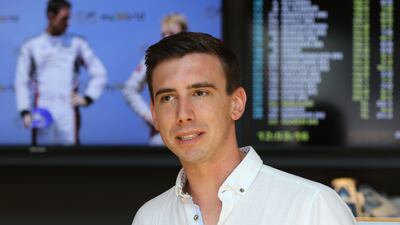
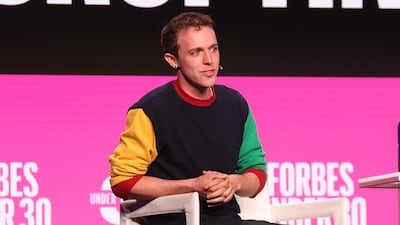
The company’s founder, Chris Bakke, is a prolific tweeter of viral jokes and commentary on the tech industry, with more than 140,000 followers, including Mr Musk.

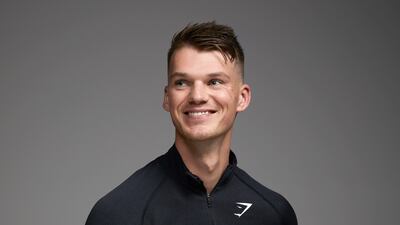
Ben Francis, Britain's youngest billionaire, aims to expand his Gymshark brand. Photo: Wikimedia Commons

Ben Francis

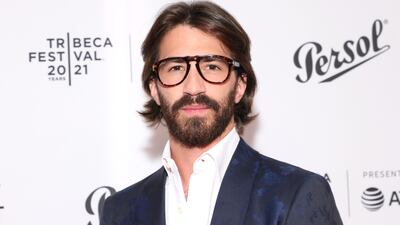
Ben Francis, the UK’s youngest billionaire, plans to open more physical stores for the Gymshark fitness wear brand that made his fortune.

The company is “looking at more” new stores, Gymshark’s founder and chief executive said.

“I don’t know what that looks like now, but these are conversations we’re going to be having over the next few weeks internally," he said.

The comments come after Mr Francis, 30, opened Gymshark’s first physical outlet on London’s Regent Street in October. The venue includes a gym, juice bar and hangout areas.

The company now operates across online and traditional retail platforms to sell items including £40 ($49.85) women’s leggings and £18 men’s T-shirts.

“We actually signed that deal at the height of Covid,” Mr Francis said of the London store.

“There was a lot of uncertainty, but it felt like the right thing to do given our long-term aspirations to build out a 100-year brand.”

World’s richest people aged 30 and under – in pictures

Mr Francis founded Gymshark in 2012 in his parents’ garage, near the company’s current headquarters in Solihull, England, while still a university student.

He relied on web sales to build the company.

Gymshark’s revenue reached £484.5 million in the year through to July 2022, according to registry filings.

US private equity company General Atlantic bought a 21 per cent stake in Gymshark in 2020 that valued the brand at more than £1 billion.

At the time, Mr Francis boosted his stake to about 70 per cent, which is worth about $1.2 billion based on the company’s internal pricing for its shares last year, making him the UK’s youngest billionaire, Bloomberg Billionaires Index showed.

Mr Francis said his business would continue to seek expansion in the US, which accounts for about half of his company’s sales, and ruled out any immediate plans for an initial public offering.

“In terms of IPOs, we’re not there yet. The main focus for us right now is building out the best brand we can,” he said.

Google co-founder Sergey Brin's net worth has surged to $104 billion. Image Press Agency / NurPhoto

Sergey Brin

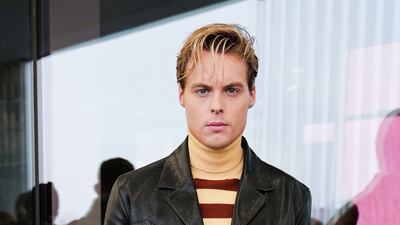
Google co-founder Sergey Brin has gifted Alphabet shares worth about $600 million during a week in which his wealth grew the most in more than two years.

The gift, disclosed in a filing last Monday, does not specify who received the 5.2 million shares, which were evenly split between newly converted Class A stock and Class C stock.

They could be directed to a charity, or given to other financial vehicles or trusts.

Google did not respond to a request for comment on the filing.

Mr Brin and co-founder Larry Page saw their wealth surge by a combined $18 billion last week, their biggest gain since February 2021, after investor frenzy around artificial intelligence boosted Alphabet’s stock.

The day before his share gift, the California-based company announced a more conversational search engine and said it was making its AI-powered chatbot more broadly available.

Mr Brin’s net worth is now $104 billion, according to the Bloomberg Billionaires Index.

His fortune, the ninth-highest in the world, is largely made up of a combination of Class B and Class C shares of Alphabet.

He has sold more than $10 billion worth of shares since the company’s IPO in 2004, according to data compiled by Bloomberg.

The stock gift follows a similar move by Mr Brin late last year, when he transferred about one million shares.

He also used some of his Alphabet stock to set up a new non-profit called Catalyst4, which focuses on health and climate change, although filings show the majority of its funding so far comes from Tesla shares sold near their peak in late 2021.

Billionaire George Soros has offloaded shares in electric vehicle maker Tesla. AFP

George Soros

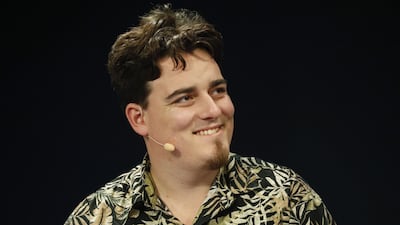
George Soros’s investment company cut holdings in electric vehicle makers, slashing a stake in Rivian Automotive after a 90 per cent share decline and eliminating an investment in Tesla.

Soros Fund Management sold about 10.8 million shares of Rivian stock in the first quarter, reducing the market value of the stake to $55.4 million, according to a regulatory filing last week.

The remaining 3.6 million shares are about 1.1 per cent of Mr Soros’s roughly $5 billion US equities portfolio, which fell about $687 million in the first quarter.

The New York-based company also sold off its entire $16 million stake in Tesla, after taking a new stake during a big tech push in the second quarter of 2022.

The company trimmed other tech-related positions, including stakes in Alphabet, Amazon, Salesforce and Intuit.

Rivian declined about 90 per cent at the end of the year from its intraday peak in November 2021.

Mr Soros, 92, has an estimated net worth of $8.5 billion, according to the Bloomberg Billionaires Index.

He has poured billions into his philanthropic efforts and has used his fortune to fund groups promoting democracy, human rights and progressive politics through his Open Society Foundations.

Most of his company's assets belong to the foundations rather than the Soros family.

Money managers overseeing more than $100 million in US equities have to file a 13F form within 45 days of the end of each quarter to list their holdings in stocks that trade on US exchanges.

It is one of the few places to gain insight into how hedge funds and some large family offices invest.


What can victims do?

Always use only regulated platforms

Stop all transactions and communication on suspicion

Save all evidence (screenshots, chat logs, transaction IDs)

Report to local authorities

Warn others to prevent further harm

Courtesy: Crystal Intelligence

UAE currency: the story behind the money in your pockets
The stats

Ship name: MSC Bellissima

Ship class: Meraviglia Class

Delivery date: February 27, 2019

Gross tonnage: 171,598 GT

Passenger capacity: 5,686

Crew members: 1,536

Number of cabins: 2,217

Length: 315.3 metres

Maximum speed: 22.7 knots (42kph)

Timeline

2012-2015

The company offers payments/bribes to win key contracts in the Middle East

May 2017

The UK SFO officially opens investigation into Petrofac’s use of agents, corruption, and potential bribery to secure contracts

September 2021

Petrofac pleads guilty to seven counts of failing to prevent bribery under the UK Bribery Act

October 2021

Court fines Petrofac £77 million for bribery. Former executive receives a two-year suspended sentence 

December 2024

Petrofac enters into comprehensive restructuring to strengthen the financial position of the group

May 2025

The High Court of England and Wales approves the company’s restructuring plan

July 2025

The Court of Appeal issues a judgment challenging parts of the restructuring plan

August 2025

Petrofac issues a business update to execute the restructuring and confirms it will appeal the Court of Appeal decision

October 2025

Petrofac loses a major TenneT offshore wind contract worth €13 billion. Holding company files for administration in the UK. Petrofac delisted from the London Stock Exchange

November 2025

180 Petrofac employees laid off in the UAE

The%20specs
%3Cp%3E%3Cstrong%3EEngine%3A%3C%2Fstrong%3E%202-litre%204-cylinder%3Cbr%3E%3Cstrong%3EPower%3A%20%3C%2Fstrong%3E153hp%20at%206%2C000rpm%3Cbr%3E%3Cstrong%3ETorque%3A%20%3C%2Fstrong%3E200Nm%20at%204%2C000rpm%3Cbr%3E%3Cstrong%3ETransmission%3A%20%3C%2Fstrong%3E6-speed%20auto%3Cbr%3E%3Cstrong%3EFuel%20consumption%3A%20%3C%2Fstrong%3E6.3L%2F100km%3Cbr%3E%3Cstrong%3EPrice%3A%20%3C%2Fstrong%3EDh106%2C900%3Cbr%3E%3Cstrong%3EOn%20sale%3A%20%3C%2Fstrong%3Enow%3C%2Fp%3E%0A
Libya's Gold

UN Panel of Experts found regime secretly sold a fifth of the country's gold reserves. 

The panel’s 2017 report followed a trail to West Africa where large sums of cash and gold were hidden by Abdullah Al Senussi, Qaddafi’s former intelligence chief, in 2011.

Cases filled with cash that was said to amount to $560m in 100 dollar notes, that was kept by a group of Libyans in Ouagadougou, Burkina Faso.

A second stash was said to have been held in Accra, Ghana, inside boxes at the local offices of an international human rights organisation based in France.

About%20My%20Father
%3Cp%3E%3Cstrong%3EDirector%3A%20%3C%2Fstrong%3ELaura%20Terruso%3C%2Fp%3E%0A%3Cp%3E%3Cstrong%3EStars%3A%20%3C%2Fstrong%3ERobert%20De%20Niro%2C%20Sebastian%20Maniscalco%2C%20Kim%20Cattrall%3C%2Fp%3E%0A%3Cp%3E%3Cstrong%3ERating%3A%3C%2Fstrong%3E%202%2F5%26nbsp%3B%3C%2Fp%3E%0A

Mercer, the investment consulting arm of US services company Marsh & McLennan, expects its wealth division to at least double its assets under management (AUM) in the Middle East as wealth in the region continues to grow despite economic headwinds, a company official said.

Mercer Wealth, which globally has $160 billion in AUM, plans to boost its AUM in the region to $2-$3bn in the next 2-3 years from the present $1bn, said Yasir AbuShaban, a Dubai-based principal with Mercer Wealth.

Within the next two to three years, we are looking at reaching $2 to $3 billion as a conservative estimate and we do see an opportunity to do so,” said Mr AbuShaban.

Mercer does not directly make investments, but allocates clients’ money they have discretion to, to professional asset managers. They also provide advice to clients.

“We have buying power. We can negotiate on their (client’s) behalf with asset managers to provide them lower fees than they otherwise would have to get on their own,” he added.

Mercer Wealth’s clients include sovereign wealth funds, family offices, and insurance companies among others.

From its office in Dubai, Mercer also looks after Africa, India and Turkey, where they also see opportunity for growth.

Wealth creation in Middle East and Africa (MEA) grew 8.5 per cent to $8.1 trillion last year from $7.5tn in 2015, higher than last year’s global average of 6 per cent and the second-highest growth in a region after Asia-Pacific which grew 9.9 per cent, according to consultancy Boston Consulting Group (BCG). In the region, where wealth grew just 1.9 per cent in 2015 compared with 2014, a pickup in oil prices has helped in wealth generation.

BCG is forecasting MEA wealth will rise to $12tn by 2021, growing at an annual average of 8 per cent.

Drivers of wealth generation in the region will be split evenly between new wealth creation and growth of performance of existing assets, according to BCG.

Another general trend in the region is clients’ looking for a comprehensive approach to investing, according to Mr AbuShaban.

“Institutional investors or some of the families are seeing a slowdown in the available capital they have to invest and in that sense they are looking at optimizing the way they manage their portfolios and making sure they are not investing haphazardly and different parts of their investment are working together,” said Mr AbuShaban.

Some clients also have a higher appetite for risk, given the low interest-rate environment that does not provide enough yield for some institutional investors. These clients are keen to invest in illiquid assets, such as private equity and infrastructure.

“What we have seen is a desire for higher returns in what has been a low-return environment specifically in various fixed income or bonds,” he said.

“In this environment, we have seen a de facto increase in the risk that clients are taking in things like illiquid investments, private equity investments, infrastructure and private debt, those kind of investments were higher illiquidity results in incrementally higher returns.”

The Abu Dhabi Investment Authority, one of the largest sovereign wealth funds, said in its 2016 report that has gradually increased its exposure in direct private equity and private credit transactions, mainly in Asian markets and especially in China and India. The authority’s private equity department focused on structured equities owing to “their defensive characteristics.”

Updated: May 22, 2023, 5:00 AM