Mark Zuckerberg, chief executive of Meta Platforms, lost 57 per cent of his fortune in 2022. AFP

Mark Zuckerberg's net worth jumps $10.2bn as Meta shares surge


Felicity Glover
  • English
  • Arabic

Mark Zuckerberg’s net worth surged by $10.2 billion on Thursday — his third-biggest wealth increase on record — after shares of Facebook’s parent company Meta rose by nearly 14 per cent despite a 24 per cent annual decline in the company's first-quarter profit.

Mr Zuckerberg, founder and chief executive of Meta, now has a personal fortune of $87.3 billion and is the 12th-richest person in the world, according to the Bloomberg Billionaires Index.

Meta Platforms earned a net profit of $5.7 billion in the quarter ending March 31, a jump of 22.7 per cent compared with the fourth quarter of 2022 and beating analysts' estimates after the company slashed expenses and 11,000 jobs, the California-based company said on Wednesday.

World's top 10 richest people in 2023 — in pictures

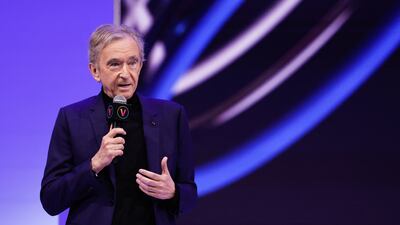
  • LVMH chairman Bernard Arnault is the world's richest person in 2023 with a net worth of $211 billion. Reuters
    LVMH chairman Bernard Arnault is the world's richest person in 2023 with a net worth of $211 billion. Reuters
  • Elon Musk, the co-founder of Tesla and owner of Twitter, has a personal fortune of $180 billion and is the second-richest person on the planet. Reuters
    Elon Musk, the co-founder of Tesla and owner of Twitter, has a personal fortune of $180 billion and is the second-richest person on the planet. Reuters
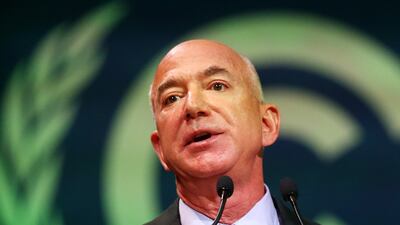
  • Amazon founder Jeff Bezos remains the third-wealthiest person in the world with a personal fortune of $114 billion. EPA
    Amazon founder Jeff Bezos remains the third-wealthiest person in the world with a personal fortune of $114 billion. EPA
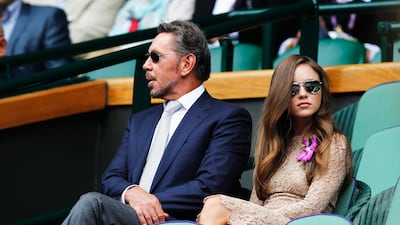
  • Larry Ellison, co-founder of Oracle, was ranked fourth by Forbes with a net worth of $107 billion. Getty
    Larry Ellison, co-founder of Oracle, was ranked fourth by Forbes with a net worth of $107 billion. Getty
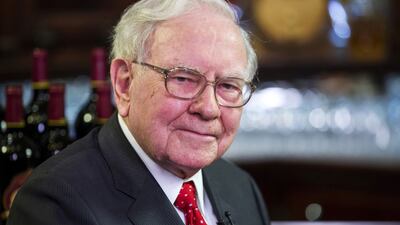
  • Berkshire Hathaway chairman Warren Buffett has a net worth of $106 billion. Reuters
    Berkshire Hathaway chairman Warren Buffett has a net worth of $106 billion. Reuters
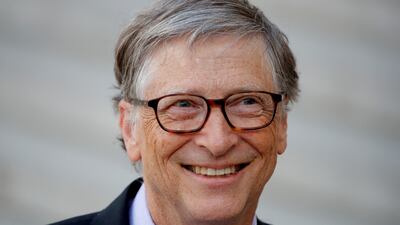
  • Microsoft co-founder Bill Gates slipped back to sixth place with a fortune of $104 billion. Reuters
    Microsoft co-founder Bill Gates slipped back to sixth place with a fortune of $104 billion. Reuters
  • Michael Bloomberg is a new entry on this year's top 10 richest list with a net worth of $94.5 billion. EPA
    Michael Bloomberg is a new entry on this year's top 10 richest list with a net worth of $94.5 billion. EPA
  • Mexico's Carlos Slim is the world's eighth-richest person with $93 billion. EPA
    Mexico's Carlos Slim is the world's eighth-richest person with $93 billion. EPA
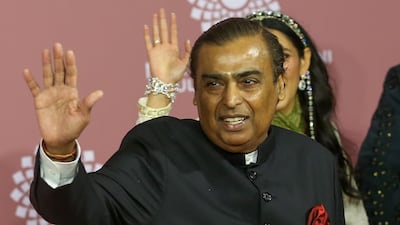
  • Mukesh Ambani moved up a spot to ninth place on the world's richest list with $83.4 billion. EPA
    Mukesh Ambani moved up a spot to ninth place on the world's richest list with $83.4 billion. EPA
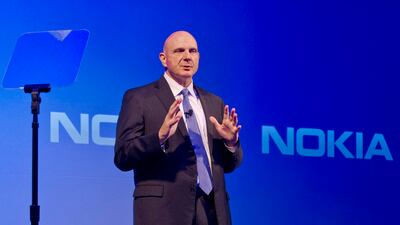
  • Steve Ballmer is the 10th-richest person in the world with a net worth of $80.7 billion. EPA
    Steve Ballmer is the 10th-richest person in the world with a net worth of $80.7 billion. EPA

At the close of trading on Thursday, Nasdaq-listed Meta Platforms jumped 13.93 per cent on the better-than-expected results to end the day at $238.56 — its highest close in 15 months. The company's stock is up 91.25 per cent year to date.

“We had a good quarter, and our community continues to grow,” Mr Zuckerberg said on Wednesday.

“Our AI work is driving good results across our apps and business.”

The majority of Mr Zuckerberg's wealth is derived from his 12.8 per cent stake in Meta, the world’s biggest social media company.

In 2022, Mr Zuckerberg shed $71 billion — or 57 per cent — from his net worth as the stock market bear run eroded the personal wealth of many of the world’s technology billionaires.

Mr Zuckerberg's wealth rout began in February last year, when he fell out of the list of the world’s top 10 wealthiest people — and the elite $100 billion club — for the first time since 2015, Reuters reported.

At the time, he lost $29 billion of his net worth after Meta’s stock recorded its biggest one-day fall on February 4, when it dropped by 26 per cent and erased more than $200 billion from the company’s market capitalisation.

Mr Zuckerberg’s one-day wealth decline in February last year is among the biggest in history and came after Tesla chief executive and Twitter owner Elon Musk's $35 billion single-day paper loss in November 2020, Reuters reported.

However, Mr Musk holds the world record for the biggest wealth loss in history after shedding $182 billion from his net worth between November 2021 and January 2023, the Guinness World Records said.

Mr Zuckerberg ended 2022 with a net worth of $44 billion and was ranked the world's 25th-wealthiest person, down from a high of number three in 2021.

His other biggest one-day wealth increases are $12.5 billion on February 2, 2023, and $11 billion about a year ago, according to Bloomberg.

Top 10 richest people in the world

  1. Bernard Arnault — $208 billion
  2. Elon Musk — $162 billion
  3. Jeff Bezos — $133 billion
  4. Bill Gates — $122 billion
  5. Warren Buffett — $115 billion
  6. Larry Ellison — $107 billion
  7. Steve Ballmer — $106 billion
  8. Larry Page — $99.1 billion
  9. Sergey Brin — $94.7 billion
  10. Francoise Bettencourt Meyers — $94.6 billion

Source: Bloomberg Billionaires Index

UAE currency: the story behind the money in your pockets

Mercer, the investment consulting arm of US services company Marsh & McLennan, expects its wealth division to at least double its assets under management (AUM) in the Middle East as wealth in the region continues to grow despite economic headwinds, a company official said.

Mercer Wealth, which globally has $160 billion in AUM, plans to boost its AUM in the region to $2-$3bn in the next 2-3 years from the present $1bn, said Yasir AbuShaban, a Dubai-based principal with Mercer Wealth.

Within the next two to three years, we are looking at reaching $2 to $3 billion as a conservative estimate and we do see an opportunity to do so,” said Mr AbuShaban.

Mercer does not directly make investments, but allocates clients’ money they have discretion to, to professional asset managers. They also provide advice to clients.

“We have buying power. We can negotiate on their (client’s) behalf with asset managers to provide them lower fees than they otherwise would have to get on their own,” he added.

Mercer Wealth’s clients include sovereign wealth funds, family offices, and insurance companies among others.

From its office in Dubai, Mercer also looks after Africa, India and Turkey, where they also see opportunity for growth.

Wealth creation in Middle East and Africa (MEA) grew 8.5 per cent to $8.1 trillion last year from $7.5tn in 2015, higher than last year’s global average of 6 per cent and the second-highest growth in a region after Asia-Pacific which grew 9.9 per cent, according to consultancy Boston Consulting Group (BCG). In the region, where wealth grew just 1.9 per cent in 2015 compared with 2014, a pickup in oil prices has helped in wealth generation.

BCG is forecasting MEA wealth will rise to $12tn by 2021, growing at an annual average of 8 per cent.

Drivers of wealth generation in the region will be split evenly between new wealth creation and growth of performance of existing assets, according to BCG.

Another general trend in the region is clients’ looking for a comprehensive approach to investing, according to Mr AbuShaban.

“Institutional investors or some of the families are seeing a slowdown in the available capital they have to invest and in that sense they are looking at optimizing the way they manage their portfolios and making sure they are not investing haphazardly and different parts of their investment are working together,” said Mr AbuShaban.

Some clients also have a higher appetite for risk, given the low interest-rate environment that does not provide enough yield for some institutional investors. These clients are keen to invest in illiquid assets, such as private equity and infrastructure.

“What we have seen is a desire for higher returns in what has been a low-return environment specifically in various fixed income or bonds,” he said.

“In this environment, we have seen a de facto increase in the risk that clients are taking in things like illiquid investments, private equity investments, infrastructure and private debt, those kind of investments were higher illiquidity results in incrementally higher returns.”

The Abu Dhabi Investment Authority, one of the largest sovereign wealth funds, said in its 2016 report that has gradually increased its exposure in direct private equity and private credit transactions, mainly in Asian markets and especially in China and India. The authority’s private equity department focused on structured equities owing to “their defensive characteristics.”

The Laughing Apple

Yusuf/Cat Stevens

(Verve Decca Crossover)

Updated: April 28, 2023, 6:26 AM