

What can you do with a volatile and speculative asset class that has no proven end-use but refuses to do the polite thing and die?
Buy it, maybe?
Even Bitcoin’s biggest sceptics may be throwing up their hands in surrender as the crypto bellwether soaks up everything the last turbulent year could throw at it, and starts climbing once again.
Those who thought — or hoped — it would be wiped out by a turbulent 2022 look set to be disappointed, again.
If a peak-to-trough crash from $68,000 to $16,000 can’t kill it off, then what can, exactly?
Incredibly, Bitcoin is now 2023’s best-performing asset class, up 67.59 per cent year-to-date and trading at a nine-month high of around $28,000 at the time of writing.
It might be time to admit defeat and accept that Bitcoin, Ethereum, Dogecoin and the rest are here to stay, like it or not.
Bitcoin is still dirty, polluting, volatile and not much use, unless you’re a scammer, gangster or trafficker.
It is also a money destruction machine for naive traders who reckon they can get rich overnight, only to waste their lives glued to an app that destroys their wealth before their delusions.
Last year destroyed the claim that Bitcoin was digital gold, a safe haven in times of economic trouble.
It sold off last year along with tech stocks, bonds, real estate, emerging markets and other key asset classes. The end of the cheap money era, as inflation and interest rates rocketed, was always going to hurt more speculative assets like this one.
It couldn’t kill it, though.
As they say, hope springs eternal and Bitcoin is swinging back into favour as investors look forward to the US Federal Reserve’s “pivot”, when it signals that the war on inflation is won and it will start cutting interest rates rather than hiking them.
Trading platform eToro has just seen a 78 per cent jump in newly opened Bitcoin positions over the past month, as investors wake up to the opportunity, says the site’s crypto analyst Simon Peters.
“Although inflation remains sticky, the headline numbers are coming down. As a result, we’re seeing the opposite of what we saw in 2022 and the pressure is easing off crypto.”
Now, the collapse of Silicon Valley Bank in the US and the takeover of Credit Suisse in Switzerland have given it another lift.
Crypto was a child of the 2007-2008 global financial crisis, appearing shortly after the world's central bankers started to debase fiat currencies by printing trillions of virtual money through quantitative easing.
But it could come of age in the latest banking meltdown, as traders calculate the Fed and others will be forced to cut interest rates and deliver more QE to prevent systemic meltdown.
Loose monetary policy is good for crypto, says Vijay Valecha, chief investment officer at Century Financial.
“When the Fed tightens, Bitcoin tends to fall. If it eases, then crypto could rise.”
Gabriella Kusz, chief executive of the Global Digital Asset and Cryptocurrency Association, says investors are moving towards Bitcoin and other forms of crypto “as a reflection of their potential value as a hedge and alternative store of value during such times”.
Lower interest rates will boost all zero-yielding assets, including Bitcoin, gold, silver and US stocks, as investors will get a poorer return on cash and bonds, says Fawad Razaqzada, market analyst at City Index and Forex.com.
The gold price is menacing $2,000 an ounce again after jumping almost 10 per cent in a month, while silver and tech stocks are also up.
Mr Razaqzada says Bitcoin has faced resistance around the $28,000 mark but the Fed’s “dovish rate hike” of just 0.25 per cent at last week’s meeting helped push it over the threshold.
“Investors are starting to price in interest rate cuts for later this year or early 2024,” Mr Razaqzada says.
Falling interest rate expectations have also hit the US dollar, giving Bitcoin a further boost because it is priced in dollars, and this makes it cheaper for buyers in other currencies.
Crypto investors are renowned for their short memories and many will have forgotten that as recently as February, this sector was in crisis.
It has suffered a string of crashes over the past year, starting with the supposedly stablecoin Luna in May, which was swiftly followed by Singapore-based crypto hedge fund Three Arrows Capital in June, platforms Celsius Network and Voyager in July, and Bitfront and BlockFi in November.
Losses topped $2 trillion and some thought Sam Bankman-Fried’s FTX scandal might be the final nail in the crypto coffin, but it has risen from the dead yet again.
Cryptocurrencies - in pictures
-
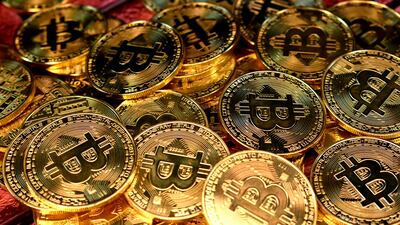
The crypto market, which includes currencies such as Bitcoin, pictured, has lost $2 trillion of its value in six months. Unsplash -

The price of Ethereum, the second largest cryptocurrency by market size, has fallen by 70 per cent this year. Investors and analysts are watching to see if it will dip below $1,000. Unsplash -
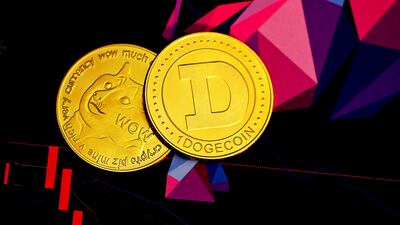
Dogecoin, supported by Elon Musk, is about 90 per cent down from May last year, yet it is outperforming Bitcoin and Ethereum in the current crash. Unsplash -
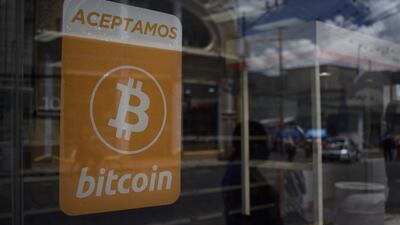
The government of El Salvador has invested $105 million in Bitcoin. President Nayib Bukele's embrace of the cryptocurrency as legal tender is being questioned as the market crashes. Getty -

Changpeng Zhao, founder of crypto exchange giant Binance, has compared the current market turmoil to the dotcom bubble of the early 2000s. Still, the company is aggressively pursuing licensing in international jurisdictions and introducing new products. Getty -
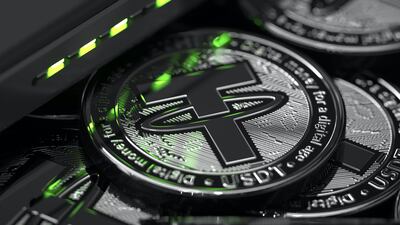
Tether is the biggest issuer of stablecoins, a type of cryptocurrency pegged to a traditionally stable asset like the US dollar. Most stablecoins are meant to maintain a constant price of $1 and are backed by real reserve funds, making it easy to convert crypto investments into cash. But Tether's financial statements show that may not be true, leaving the issuer and its investors vulnerable. Unsplash -

The recent crypto crash can in part be attributed to the collapse of TerraUSD, a stablecoin pegged to the US dollar through algorithms and linked to a "sister" cryptocurrency named Luna. When the price of Luna plummeted, TerraUSD also fell, creating a “death spiral” to practically zero for both coins. Unsplash -

On June 12 crypto lender Celsius Network said it had paused customer withdrawals, saying it needed “to stabilise liquidity and operations”. Investors are still waiting, with no signs that the current meltdown will let up. Getty


Calls for effective regulation are growing louder, particularly in Europe and the UK, says Nils Bulling, head of strategic innovation at digital bank Avaloq.
Some fear regulation will sink crypto, but he reckons it will boost the sector rather than sink it.
“Investors still seem interested in crypto assets and currencies. This should be even more true if the investment partners are trustworthy and subject to meaningful regulation,” Mr Bulling says.
Bitcoin is what it has always been, a high-risk play on volatility. Yet the longer it survives, the harder it is to ignore.
In fact, its lack of correlation with other asset classes — or anything, really — may ultimately turn out to be its strength.
Despite its failings, there is a growing argument for having some exposure in a balanced portfolio.
If tempted, the old rules apply, so diversify by investing the majority of your invested wealth in traditional asset classes, such as shares, bonds, gold, property, commodities and cash.
Resist short-term profit grabbing, overtrading, impulse buying (and selling), extreme hype, crazy forecasters and ever-present crypto scammers. Never borrow money to buy it and never, ever invest what you cannot afford to lose.
If you can do all that, you might find an acceptable role for Bitcoin, even if you don’t understand or like it.

