

This has been a volatile year for investors, but perhaps the biggest shock is that gold has failed to live up to its reputation as the world’s safe-haven asset in a storm.
Gold has acted as a store of value for more than 4,000 years, but in this turbulent year, it has fallen along with everything else.
This will have dismayed investors, who were advised to hold gold in their portfolios as protection against troubled times such as these.
The theory was that when riskier assets like shares fall, investors dive into the precious metal, driving its price up and offsetting losses.
But gold has not done its job this year. Today’s price of $1,706 an ounce is 4.83 per cent lower than it was a year ago.
While that is hardly a meltdown, it is not the type of performance to get the gold bugs buzzing.
“Gold isn’t working,” says David Henry, investment manager at Quilter Cheviot. “This year’s rampant inflation, geopolitical turmoil, recession fears and rock bottom sentiment should have been the ideal environment for gold.”
Yet, it hasn’t worked out that way, which he calls a “head scratcher”.
“A lot of the theoretical bull arguments for gold have materialised this year, yet the asset has gone nowhere,” Mr Henry says.
In the inflation-wracked 1970s, gold was the best-performing asset class, appreciating more than 10 times in dollar terms.
That’s when it won its reputation as an inflation hedge, it has regularly failed to live up to it, Mr Henry says.
When inflation picked up in the late 1980s and late 1990s, the gold price did not rise to match it.
It did put a shift in when markets crashed after the 2008 financial crisis, and again in July 2011, when the European single currency seemed on the brink of collapse.
Gold also peaked at the height of Covid-19 uncertainty, when the price hit $2,084 in August 2020.
But two years later, it is trading about 18 per cent lower, despite this year’s catalogue of economic troubles.
Investors typically buy gold when they are fearful, Mr Henry says.
“Gold price performance during every recession since 1970 has been positive, but it’s hardly a home run every time,” he says.
One reason is that a bar of gold may be “heavy, beautiful and reassuring”, but it generates zero income. That makes it less appealing today, when interest rates are at last rising after a dozen years, driving up the returns on rival safe havens cash and bonds.
“In this environment, the relative attractiveness of a lump of shiny metal, which does not pay you anything, diminishes,” Mr Henry says.
Gold is also less attractive than shares as they continue to pay dividends even when stock markets fall.
The best argument in favour of holding gold within a balanced portfolio is that it “dances to its own beat”, helping risk-conscious investors diversify their wealth, he says.
“Just bear in mind that there are no guarantees that gold will rise when stocks or bonds fall, just as we have seen this year.”
____________
Watch — Dubai's Gold Souq reopens
Another reason gold isn’t working this year is because the US dollar has usurped its role as the number one safe-haven asset.
Investors have piled into the world’s reserve currency to generate higher returns on offer as interest rates rise and gold will remain on a “shaky footing” while the US dollar is strong, says Vijay Valecha, chief investment officer at Century Financial.
“Until inflation peaks and the Fed eases off, it will continue to be the same old story for gold,” he says.
Investors dumped gold again last week after the US inflation rate in August remained stubbornly high at 8.3 per cent.
Although that was marginally lower than July’s 8.5 per cent, investors took this as a sign that the US Federal Reserve will increase its funds rate by 0.75 per cent this week, says Fawad Razaqzada, market analyst at City Index and Forex.com.
“The dollar rallied sharply as a result, which in turn weighed on gold,” he says.
Gold could have further to fall as a result and could now test last year’s low of $1,676, Mr Razaqzada says.
Shoppers in Dubai Gold Souq — in pictures
-

Shoppers explore the Deira Gold Souq in Deira. All photos: Khushnum Bhandari / The National -
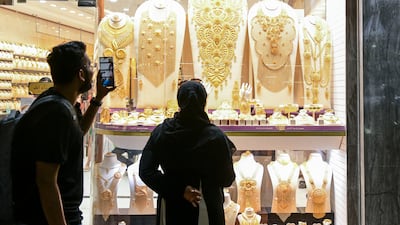
The rich displays of the gold souq. -

A salesman adding pieces to the window display. -
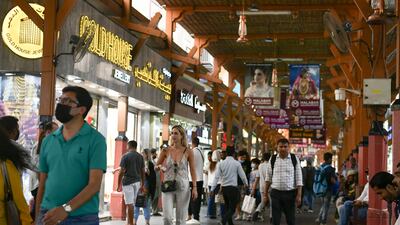
Crowds brave the summer heat at the Deira souq. -
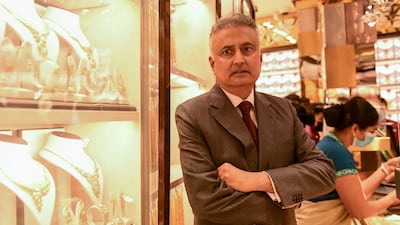
Anil Dhanak, founder of Kanz Jewellers, in the gold souq, Dubai. -
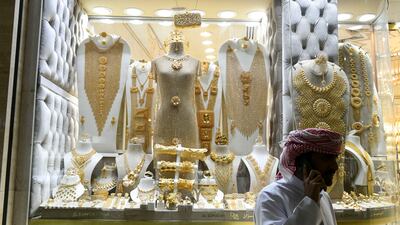
The gold souq in Deira, Dubai. -

Wares on display at the gold souq in Deira. -

Sales staff at Kanz Jewellers in the gold souq. -
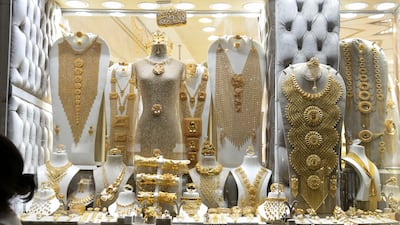
A dazzling window display at the gold souq. -
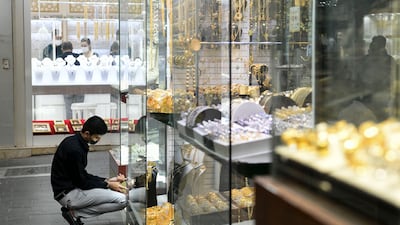
A staff member adds pieces to a window display at the gold souq. It is a popular attraction for visitors to Dubai. -
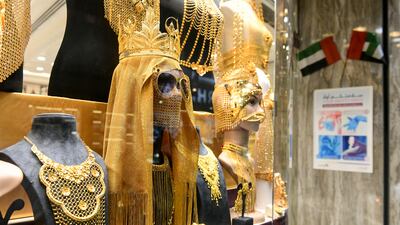
Intricately crafted items fill a window at the souq. -

A shopkeeper makes sure that his windows gleam as much as the gold items on sale behind them. -
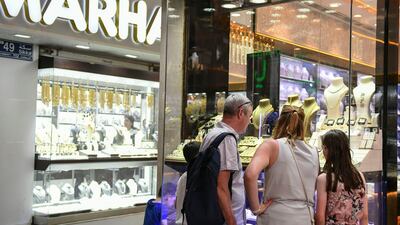
Window shopping at the gold souq. -
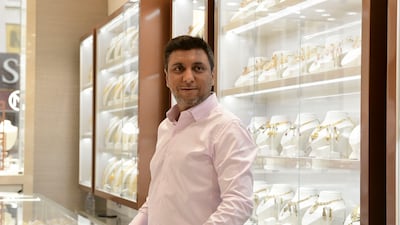
Vishal Dhakan, director of Dhakan Jewellers, stands behind his counter, surrounded by an array of gold items.


But people should not overdo the gloom on gold, says Victoria Scholar, head of investment at Interactive Investor.
“Although gold has struggled this year, the Nasdaq Composite is down by more than 20 per cent, so it has outperformed the equity market,” she says.
Gold could rally at some point, say, if the world slips into recession and inflation and interest rates come down, taking the US dollar with them.
As always, investors must take the longer-term view, Ms Scholar says. “Gold is still up 30 per cent over five years, so it may still make sense as part of a diversified portfolio.”
Gold has done a glittering job for some investors this year. It is priced in US dollars, so long-term investors in other currencies have benefited from the greenback's strength.
The US dollar is up 18.45 per cent against the euro over 12 months, 20.03 per cent against the British pound and an incredible 31.24 per cent against the Japanese yen (also previously considered a safe haven).
head of investment at Interactive Investor
So for non-dollar investors, gold has shone. It is up 11.14 per cent measured in euros over the past 12 months, and 12.94 per cent in sterling terms.
Over five years, euro investors are up 53.19 per cent and pound investors 50.43 per cent. For them, gold still works.
Mr Henry says gold polarises opinion more than any other asset, with the exception of cryptocurrencies.
There are evangelists on both sides, he says, and urges investors to keep an open mind. “Cast your investment net as wide as possible, which may include gold.”
Most advisers still recommend having gold as part of your portfolio, but typically no more than five or 10 per cent.
The easiest way to gain exposure is through an exchange-traded fund investing in physical gold, such as SPDR Gold Shares and iShares Gold Trust.

