


Global gold demand fell 8 per cent in the second quarter of 2022 as investors shifted their focus to rapidly rising interest rates and a strong US dollar, the World Gold Council has said.
Gold demand in the three months to the end of June dropped to 948 tonnes, despite strong exchange-traded fund inflows in the first quarter, the trade body said in its latest report.
However, gold demand for the first six months of this year is up 12 per cent compared with the same period in 2021 at 2,189 tonnes, the WGC said.
“In the first half of 2022, the global gold market was supported by macroeconomic factors such as rampant inflation and geopolitical uncertainty, but it also faced headwinds from rising interest rates coupled with an almost unprecedented surge in the value of the US dollar,” Louise Street, senior analyst for Europe, the Middle East and Africa at the WGC, said.
“While we have seen prices ease from exceptionally high levels in Q1, gold has been one of the best-performing assets so far this year.”
Geopolitical and economic uncertainty is mounting across the globe following Russia’s military offensive against Ukraine, with inflation also rising due to higher commodity prices and supply chain disruptions.
Earlier this week, the International Monetary Fund lowered its 2022 growth forecast for the global economy for the second time this year to 3.2 per cent from its previous estimate of 3.6 per cent in April.
The price of gold averaged $1,871 per ounce in the second quarter, up 3 per cent compared to the same period last year. However, it was 5 per cent lower on a quarterly basis. Gold was trading 5.68 per cent higher at $1,744.8 per ounce at 1.13pm UAE time on Thursday.
Gold ETFs recorded outflows of 39 tonnes in the second quarter, offsetting the strong inflow gains of 269 tonnes in the January to March period, according to the report. Net inflows in the first half totalled 234 tonnes, compared with 127 tonnes of outflows during the same period last year.
“However, the Q2 decline likely sets a weaker tone for ETFs in H2 given a potentially softening inflation outlook amid continued rate rises,” the WGC said.
Meanwhile, gold bar and coin demand remained unchanged year on year at 245 tonnes in the second quarter. Growth in demand came from India, the Middle East and Turkey, which helped to balance the weakness from China that was partially driven by continued coronavirus lockdowns, the report said.
However, global bar and coin demand recorded a 12 per cent annual decline at 526 tonnes in the first half of the year, it added.
Gold jewellery demand increased 4 per cent annually to 453 tonnes in the second quarter, helped by a recovery in Indian demand, which increased 49 per cent compared with the same period last year, the WGC said.
The strong performance in India balanced a 29 per cent decline in China, where the market was dampened by coronavirus lockdowns that stalled economic activity and constrained consumer spending, according to the report.
Jewellery demand in the Middle East continued its recovery and returned to pre-Covid average price levels. Rising oil prices supported demand across the region, leading to a boost in consumer sentiment and income levels.
Dubai Gold Souq — in pictures
-
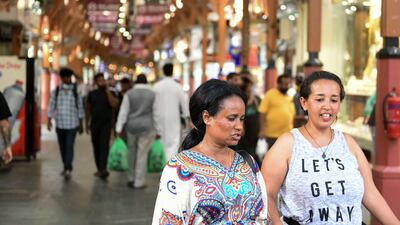
Shoppers explore the Deira Gold Souq in Deira. All photos: Khushnum Bhandari / The National -
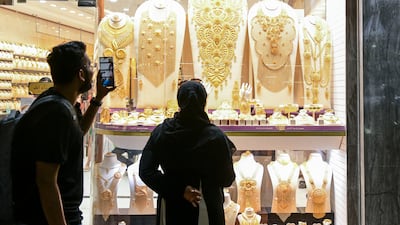
The rich displays of the gold souq. -

A salesman adding pieces to the window display. -
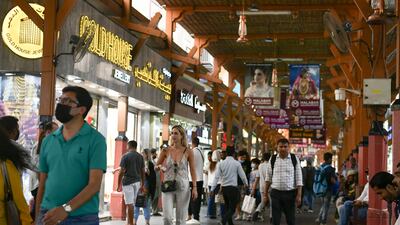
Crowds brave the summer heat at the Deira souq. -
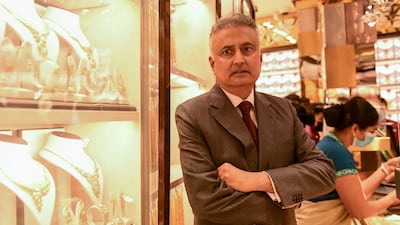
Anil Dhanak, founder of Kanz Jewellers, in the gold souq, Dubai. -
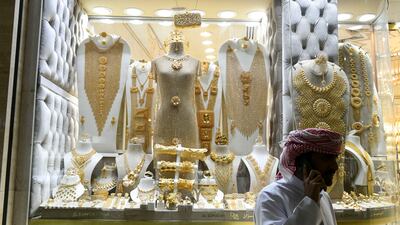
The gold souq in Deira, Dubai. -
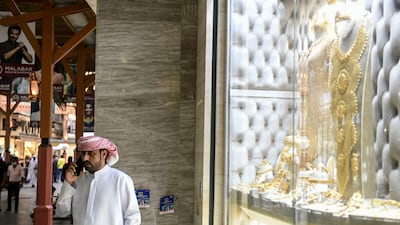
Wares on display at the gold souq in Deira. -
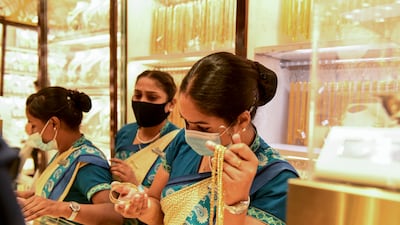
Sales staff at Kanz Jewellers in the gold souq. -
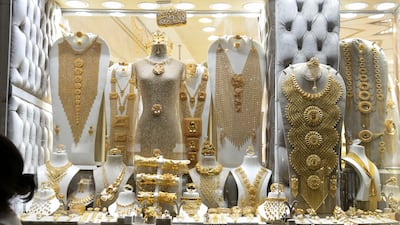
A dazzling window display at the gold souq. -
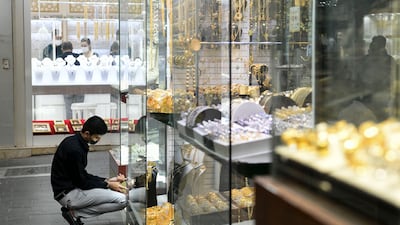
A staff member adds pieces to a window display at the gold souq. It is a popular attraction for visitors to Dubai. -

Intricately crafted items fill a window at the souq. -

A shopkeeper makes sure that his windows gleam as much as the gold items on sale behind them. -
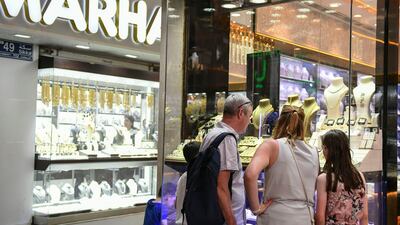
Window shopping at the gold souq. -
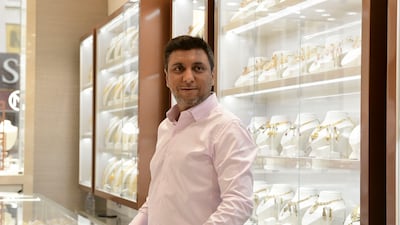
Vishal Dhakan, director of Dhakan Jewellers, stands behind his counter, surrounded by an array of gold items.


The UAE continued to benefit from a return to near-normal tourist numbers, while Iran posted an annual increase in demand, although this was partially due to the low base from the second quarter of 2021, the report said.
Demand in Egypt fell 3 per cent annually in the second quarter as depreciation of the local currency translated into a notable increase in local gold prices, it added.
Central banks also boosted purchases of gold amid global economic uncertainties. Net buying by central banks boosted global reserves by 180 tonnes in the second quarter, with Turkey emerging as the biggest buyer.
Net purchases by central banks reached 270 tonnes in the first six months of 2022.
Meanwhile, demand for gold in technology dipped 2 per cent annually to 78 tonnes, the report said.
Total gold supply in the second quarter increased 5 per cent on the year to 2,357 tonnes, driven by strong mine production and recycling supply, the report said.
Mine production for the first half of the year hit a record 1,764 tonnes, up 3 per cent annually.
Production was boosted by some projects mining higher-grade deposits and China's mining industry returning to normal output levels after safety stoppages last year, the research found.

