
Bitcoin has always divided investors and now it is the sceptics who are rubbing their hands together and saying they were right all along.
Bitcoin has crashed before, but this year has been a bloodbath for the digital token. It is swimming in a sea of red, having entered a “death spiral” and crashed a staggering 55 per cent so far this year.
At the time of writing on Monday, Bitcoin was trading at $19,983.31 after falling below $18,000 at the weekend. It is now less than a third of its record high of $67,734, which it hit in November. Pity those cryptocurrency hopefuls who bought at the top of that bull run.
-

Changpeng Zhao, founder and chief executive of Binance, is the world’s richest crypto billionaire with a net worth of $65 billion. Bloomberg -

Sam Bankman-Fried, founder and chief executive of FTX cryptocurrency exchange, ranked as the second-wealthiest crypto billionaire with a personal fortune of $24bn. Bloomberg -
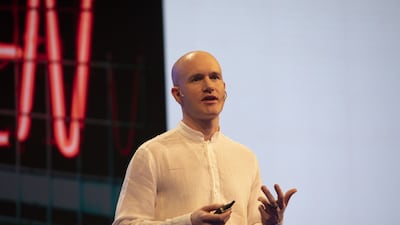
Brian Armstrong, co-founder of Coinbase, is the third-wealthiest crypto billionaire with a net worth of $6.6bn. Bloomberg -
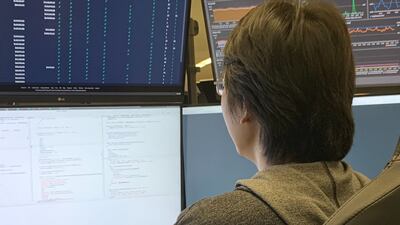
Gary Wang, co-founder of FTX cryptocurrency exchange, ranked fourth with a net worth of $5.9bn. FTX -
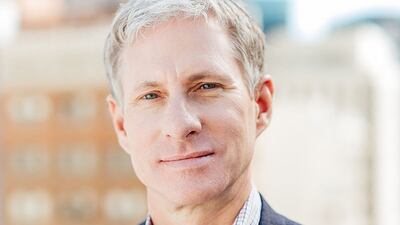
Chris Larsen, executive chairman of Ripple’s board of directors and former chief executive and co-founder of Ripple, rounded out the list of top five wealthiest crypto billionaires with a fortune of $4.3bn. Ripple -

Song Chi-hyung, founder of Upbit, the largest cryptocurrency exchange in South Korea, has a net worth of $3.7bn. Courtesy: Dunamu -

Tyler Winklevoss, chief executive and co-founder of Gemini Trust, left, and Cameron Winklevoss, president and co-founder of Gemini Trust, have a net worth of $4bn each. Bloomberg -
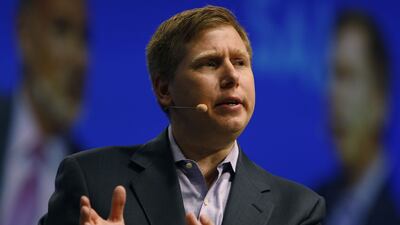
Barry Silbert, founder and chief executive of Digital Currency Group, has a net worth of $3.2bn. Bloomberg -

Jed McCaleb, founder and chief architect of the Stellar Development Foundation and co-founder of Ripple, has a net worth of $2.5bn. Courtesy: Stellar Development Foundation


The entire alt-coin space is in a death spiral, with some losing a quarter of their value in only one day’s trading, Vijay Valecha, chief investment officer at Century Financial, says.
“The crash has wiped out its bull market cycle gains, taking prices to December 2020 lows and killing the blockchain euphoria.”
There are signs of stress and panic everywhere, with cryptocurrency lender Celsius freezing withdrawals and transfers citing “extreme” market conditions in a move that was quickly followed by Binance.
So much for cryptocurrencies taking on the might of the banking system and putting investors in charge of their money. Now they can’t get it.
This added to jitters over cryptocurrency stability, which had already been stoked by the collapse of the Luna and Terra tokens, and the world’s largest stablecoin Tether temporarily breaking its link with the US dollar in May.
Total cryptocurrency market capitalisation has now fallen below $1 trillion to about $983 billion. In comparison, it touched $3tn on November 10.
It could become worse, Mr Valecha says. “There is a high probability of another crypto or exchange going bust as market turmoil is now utterly pessimistic.”
Bitcoin is the worst-performing major investment of 2022, according to personal finance site Finder.com, turning $1,000 into about $450 today.
However, that does follow two years of incredible growth, which saw Bitcoin rocket 292 per cent in 2020 and 59 per cent in 2021.
Bitcoin is following the same trajectory as other asset classes that benefited from late-stage bull market hysteria, such as Elon Musk's Tesla Motors, which is down 44.77 per cent so far this year, and meme stock AMC Entertainment, down 55.05 per cent. Hot money trades are cooling fast.
Investors are selling risk and buying safety, as the world stands on the brink of a recession and investors can’t afford to take chances.
The causes of the crash in risk assets is clear, Fawad Razaqzada, market analyst at City Index and Forex.com, says.
“It all boils down to inflation. Very hot inflation. This is causing panic among global central banks, as they rush to tighten policy to bring price levels down.”
US inflation rose to 8.6 per cent in May, defying expectations of 8.3 per cent, while it has hit a record high of 8.1 per cent in the eurozone.
“Other countries have it even worse. In Turkey, it is in excess of 70 per cent,” Mr Razaqzada says.
The US Federal Reserve aggressively hiked rates by 0.75 per cent last Wednesday and more increases will follow, marking a dramatic reversal from the past 20 years of near-zero rates and apparently limitless stimulus.
That is the environment that fed the boom in both US technology stocks and cryptocurrencies, and now it is over.
Investors are seeking safety in the US dollar, driving up its value and making Bitcoin even more expensive to non-US investors as it is priced in dollars.
Fed rate increases are also making lower-risk government bonds more attractive, as yields on 10-year US Treasuries have more than doubled to 3.45 per cent this year. A year ago, they stood at about half a per cent.
“Cryptos don’t pay any dividends or interest, which make them even less attractive to yield-seekers,” Mr Razaqzada says.
The post-financial crash euphoria, which fuelled a host of investment crazes from meme stocks to non-fungible tokens (NFTs), already seems to belong to another world.
If money-making businesses such as Amazon, which is down almost 40 per cent this year, Apple (down 27.06 per cent) and Google owner Alphabet (down 26.4 per cent) are finding the current environment too hot, what hope does a “wing-and-a-prayer” asset class such as cryptocurrency have?
The blockchain may have its uses but the market was driven by speculation and greed. Now the dominant emotion is fear.
There is also an intensely practical reason for the sell-off. People need their money as living costs rocket, says Adrian Lowery, financial analyst at investing platform Bestinvest.
“Investors have rapidly liquidated their holdings, partly because they fear further price drops but also to shore up bank balances and safety-net savings.”
Before the cryptocurrency crash, the theory going around was that the sector made its biggest moves while US traders were asleep.
That theory has lost its purchase, with the market falling both day and night and, in any case, cryptocurrency investors have bigger worries on their minds right now.
The case for Bitcoin as digital gold has been destroyed, says Myron Jobson, senior personal finance campaigner at Interactive Investor.
“Instead of protecting investors from a stock market crash, it has fallen far, far faster.”
Traders who have bought the dips have only suffered further drops and the question is how far Bitcoin can go, and when — or if — it will recover.
“Cryptocurrencies have typically rebounded from steep falls in the past, although in some cases it took several years,” Mr Jobson says.
“But past performance is not indicative of future returns and the market environment now is very different.”
The cryptocurrency industry also faces the prospect of further regulatory crackdowns, which remain a perpetual threat, he says.
Writing off cryptocurrency is always dangerous. It has shown surprising resilience before. However, being a true cryptocurrency believer is also costly. Private investors have lost fortunes.
Many may have been plunged into severe financial difficulties as a result, Susannah Streeter, senior investment and markets analyst at Hargreaves Lansdown, says.
“One in seven who bought crypto during the pandemic got into debt to do so, according to the UK’s Financial Conduct Authority,” she says.
“It is a stark reminder that dabbling in the crypto wild west is highly risky and investments in such assets should only be at the edges of a portfolio, with money you can afford to lose.”
Bitcoin may be back. But right now, that is not the way to bet. The world has changed.

