

Rakesh Jhunjhunwala
Akasa Air, a new Indian airline backed by billionaire Rakesh Jhunjhunwala, plans to offer stock options to attract staff, using an incentive more often used by technology start-ups in its bid to gain a foothold in one of the world’s most competitive air-travel markets.
The airline, which is preparing to start flying in late May, is taking the unusual approach of granting company shares to a bigger pool of top employees, rather than a select group of senior executives.
“We want to have an organisation that is very tight knit in values but diverse in experiences, genders, locations within India,” chief executive Vinay Dube said. “We were saddened by the plight of employees through the pandemic, some of the bankruptcies that have taken place in Indian aviation and we wanted to create homes for them where they are happy.”
The degree to which Akasa Air plans to grant stock options for staff will be “far greater than most airlines in India and, hopefully, reminiscent of maybe some of the tech start-ups where they go fairly deep in the way they provide employee stock ownership plans”, Mr Dube said.
However, there is no suggestion stock options would be given to airline crew or regular pilots.
Akasa Air, backed by aviation veterans, has hired about 50 employees for back office functions and is now recruiting pilots, flight attendants and airport staff, said Mr Dube, who is also Akasa’s founder and managing director.
The careers page of Akasa’s website states that new applications have been paused after an “unprecedented number” of inquiries were received.
Mr Dube is optimistic his airline, with secure financing and a low cost-structure, can succeed where other Indian airlines have failed.
founder and chief executive of Akasa Air
“What gives us confidence is the way in which we have purchased our aircraft, established our long-term engine maintenance deals, the way in which we have started leasing our aircraft with the lessors,” he said.
The leadership team Akasa has attracted is also “hyper-focused on the hundreds of elements that make up an airline’s cost structure”.
Akasa plans to grow at a breakneck pace, adding 18 aircraft during the year ending March 2023 — the first deliveries from a November order for 72 Boeing 737 Max jets worth $9 billion at sticker prices.
Akasa is on track to be well-capitalised, with a potential ability to raise $500 million through the sale and leaseback of its aircraft over five years, he said.
Mr Jhunjhunwala initially pumped $35m into the airline, which will begin flying internationally by the summer of 2023 when it inducts 20 aircraft, the minimum fleet requirement to serve overseas routes according to local regulations, Mr Dube said.
Akasa will have an option of flying to the Middle East, South-East Asia, Nepal, Bangladesh and Sri Lanka, all within the range of a 737 Max.

MacKenzie Scott
MacKenzie Scott’s stake in Amazon shrunk by 2.5 million shares last year, according to a regulatory filing, as the world’s fifth-richest woman set records with the pace of her philanthropy.
Those shares would be worth as much as $8.5bn based on the average of Amazon’s share price between the dates of the two disclosures. The stake would total $7.3bn based on Amazon’s current $2,879.56 share price.
Ms Scott still holds 14.9 million shares, according to the filing. It details Jeff Bezos’s holdings, including stock that Ms Scott ended up with after their 2019 divorce and which Mr Bezos retains voting power over.
Currently, Ms Scott is worth $48.3bn, according to the Bloomberg Billionaires Index. It would be considerably more but she has donated more than $8.6bn since their split to hundreds of charities across the US.
-
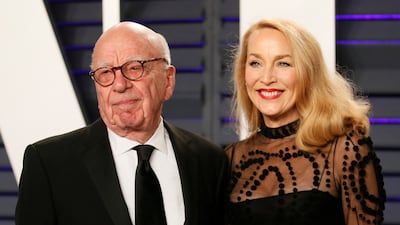
Jerry Hall cited irreconcilable differences as the reason for her split from billionaire Rupert Murdoch. Reuters -
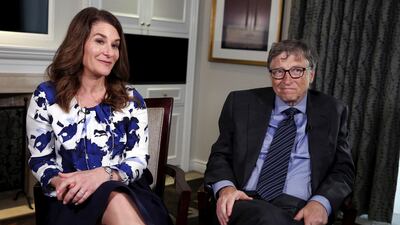
After 27 years of marriage, Microsoft co-founder Bill Gates and his wife Melinda filed divorce documents on May 3, 2021, citing a broken relationship as the reason for the split. Reuters -
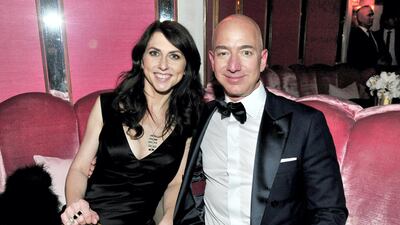
Jeff Bezos and his wife MacKenzie split in 2019. Mr Bezos paid $38bn to settle the divorce. Getty -
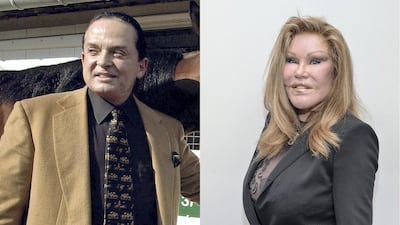
French-American businessman and art dealer Alec Wildenstein divorced his wife of 21 years, Jocelyn Wildenstein in 1999. AFP -
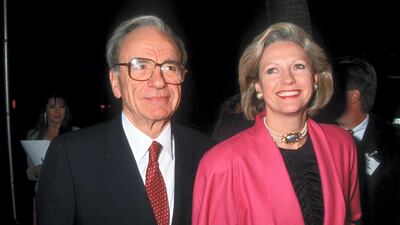
Mr Murdoch and journalist Maria Torv were married for 31 years, but the couple agreed to separate in 1998. Getty -

Former Formula One boss Bernie Ecclestone divorced international model Slavica Radic in 2009 after 25 years of marriage. Photo: Alamy -
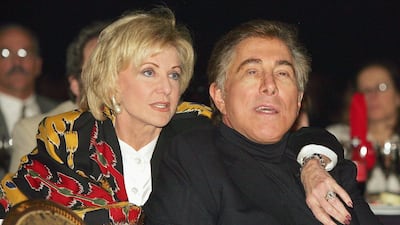
Steve Wynn and his wife Elaine were married to each other twice, from 1963 to 1986 and from 1991 to 2010. Getty -

Oil magnate Harold Hamm wrote his wife Sue Ann Arnall a $974.8 million cheque as part of divorce proceedings. Getty -

Saudi billionaire Adnan Khashoggi paid his wife Soraya a divorce settlement of $874m in 1982. Getty -
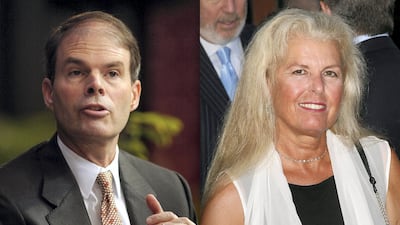
Cellular and Clearwire founder Craig McCaw separated with Wendy McCaw in 1998, earning her a $460m payout. Getty


Ms Scott announces her donations in blog posts that explain her motives and concerns over inequality in society. In 2021, she gave at least $2.7bn, according to a June 2021 post. In a December post, she opted to keep the amount she gave secret.
Her philanthropy is overseen by her Seattle-based family office Lost Horse, although she uses the Bridgespan Group to pick and vet organisations.
Mr Bezos is the world’s second-richest person with a $168.9bn fortune.

Anil Agarwal
Indian billionaire Anil Agarwal is considering a potential merger of his commodity empire’s indebted holding company with cash-rich listed unit Vedanta, sources said.
The tycoon has held preliminary discussions with prospective advisers about the idea of combining his closely held Vedanta Resources with Mumbai-traded Vedanta, they said.
The potential deal follows a global commodities boom that has fuelled a rally in Vedanta shares and almost doubled its market capitalisation in the past year to about $17bn. Deliberations are still at an early stage and there is no certainty that Mr Agarwal will decide to pursue a transaction.
Mr Agarwal did not immediately respond to a request for comment. A representative for Vedanta said there is “no plan” to merge Vedanta Resources with Vedanta.
Vedanta Resources has already been raising its stake in its unit through an open offer and share purchases from the market after a failed takeover attempt. As of December, it owned about 70 per cent of Vedanta, up from about 50 per cent in October 2020. It had about $11.4bn in net debt as of September 30, according to a corporate presentation.
The holding company was the first Indian business to list in London back in 2003, before Mr Agarwal, 68, took it private 15 years later when his Volcan Investments bought out minority investors as part of efforts to streamline the group’s structure.
Vedanta Resources also owns a 79.4 per cent stake in Zambia’s Konkola Copper Mines, which has been under provisional liquidation since May 2019. The matter is still the subject of court cases and arbitration proceedings.
In December, Vedanta said that it intends to unlock value with options including separately listing its aluminium, iron and steel, and oil and gas businesses. The board has formed a panel to evaluate the plan, it said in a filing. The Press Trust of India reported last week that the company will outline details by the end of March.
Subsidiaries of Vedanta include Hindustan Zinc, Bharat Aluminium, Talwandi Sabo Power and Electrosteels Steel, according to the corporate presentation.
Mr Agarwal, a former scrap metals trader, rose to become a commodities magnate through a series of ambitious acquisitions. He has a net worth of about $3bn, according to the Bloomberg Billionaires Index.

Mukesh Ambani
Billionaire Mukesh Ambani’s ambitious effort to pivot his conglomerate Reliance Industries towards green energy could transform India into a clean-hydrogen juggernaut.
Mr Ambani, Asia’s richest man, announced plans earlier this month to invest $75bn in renewables infrastructure, including generation plants, solar panels and electrolysers.
There is growing speculation that the strategy entails transforming all of that clean power into hydrogen, one of the largest endorsements in the next-generation fuel.
Reliance is expected to opt for hydrogen in a bid to avoid India’s wholesale electricity market, which is dominated by financially stressed utilities and plagued by delayed payments, analysts say.
“Reliance is preparing itself to capture the entire value chain of the green hydrogen economy,” said Gagan Sidhu, director of the Centre for Energy Finance at New Delhi-based think tank CEEW. “They clearly have seen the writing on the wall.”
Green hydrogen — made from water and clean electricity — is considered as crucial for the world’s emission-reduction goals, helping consumers and key industries such as steel transition to lower-carbon fuels.
director at the Centre for Energy Finance at CEEW
While Reliance has not broken out how much will be devoted to hydrogen, the $75bn investment in clean energy is by far the biggest in the country. Other companies such as Adani Enterprises and state-run energy entities NTPC and Indian Oil have also outlined plans for green hydrogen.
A key challenge will be to produce it at a cheaper cost. Green hydrogen produced by renewables is far from competitive, compared to other fuels, costing about double the price of using coal, India’s main source of electricity generation.
Mr Ambani, who has a net worth of $90.2bn, according to the Bloomberg Billionaires Index, has vowed to produce green hydrogen at $1 per kilogram, a more than 60 per cent reduction from today’s costs.
“Reliance will aggressively pursue this target and achieve it well before the turn of this decade,” Mr Ambani said last year.

