An electronic screen shows Japan's Nikkei share price index. The yen slumped to a 24-year low of nearly 146 to the dollar. Reuters

Japan spends a record $20bn to support the yen


  • English
  • Arabic

Japan spent up to a record 2.8 trillion yen ($19.7 billion) intervening in the foreign exchange market last week to prop up the yen, Ministry of Finance data showed on Friday, draining nearly 15 per cent of funds it has readily available for intervention.

The figure was less than the 3.6tn yen estimated by Tokyo money market brokers for Japan's first dollar-selling, yen-buying intervention in 24 years to stem the currency's sharp weakening.

The ministry's figure, indicating total spending on currency intervention from August 30 to September 28, is widely believed to have been used entirely for the September 22 intervention.

It would surpass the previous record for dollar-selling, yen-buying intervention in 1998 of 2.62tn yen. Confirmation on the dates of the spending will be released in November.

“This was a big burst of intervention, if it had happened on a single day, underscoring Japanese authorities' determination to defend the yen,” said Daisaku Ueno, chief forex strategist at Mitsubishi UFJ Morgan Stanley Securities.

“But the impact of further intervention will diminish as long as Japan continues to intervene solo,” he said.

The intervention, conducted after the yen slumped to a 24-year low of nearly 146 to the dollar, triggered a sharp bounce of more than 5 yen per dollar from that low, although the currency has since drifted down again to around 144.25.

“Recent sharp, one-sided yen declines heighten uncertainty by making it difficult for companies to set business plans. It's therefore undesirable and bad for the economy,” Bank of Japan governor Haruhiko Kuroda was quoted as saying at a meeting with Cabinet ministers on Friday.

Japan held roughly $1.3tn in reserves, the second-biggest after China, of which $135.5bn was held as deposits parked with foreign central banks and the Bank for International Settlements (BIS), according to foreign reserves data released on September 7.

Those deposits can easily be tapped to finance further dollar-selling, yen-buying intervention.

Japan travel - in pictures

  • Tourists will soon be able to explore the alleyways of Kyoto, Japan, without restriction. The country's prime minister announced travel rules will change in October. Photo: Andre Benz / Unsplash
    Tourists will soon be able to explore the alleyways of Kyoto, Japan, without restriction. The country's prime minister announced travel rules will change in October. Photo: Andre Benz / Unsplash
  • Tokyo Tower adds a splash of colour to Minato district in Japan's capital. Photo: Louie Martinez / Unsplash
    Tokyo Tower adds a splash of colour to Minato district in Japan's capital. Photo: Louie Martinez / Unsplash
  • The Fushimi-inari trail, in Kyoto. Photo: Lin Mei / Unsplash
    The Fushimi-inari trail, in Kyoto. Photo: Lin Mei / Unsplash
  • Itsukushima shrine, in Hatsukaichi-shi, Hiroshima prefecture. Photo: Nicki Eliza Schinow / Unsplash
    Itsukushima shrine, in Hatsukaichi-shi, Hiroshima prefecture. Photo: Nicki Eliza Schinow / Unsplash
  • Mount Fuji can be seen from Fujiyoshida, Yamanashi prefecture. Photo: David Edelstein / Unsplash
    Mount Fuji can be seen from Fujiyoshida, Yamanashi prefecture. Photo: David Edelstein / Unsplash
  • Oden restaurant offers home cooking-style, one-pot dishes in Tokyo. Photo: Guus Baggermans / Unsplash
    Oden restaurant offers home cooking-style, one-pot dishes in Tokyo. Photo: Guus Baggermans / Unsplash
  • Tokyo's street will soon be alive with tourists again. Photo: Rob Maxwell / Unsplash
    Tokyo's street will soon be alive with tourists again. Photo: Rob Maxwell / Unsplash
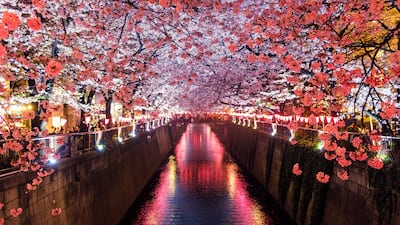
  • Sakura blossoms hang over the Meguro River as it flows through Tokyo. Photo: Sora Sagano / Unsplash
    Sakura blossoms hang over the Meguro River as it flows through Tokyo. Photo: Sora Sagano / Unsplash
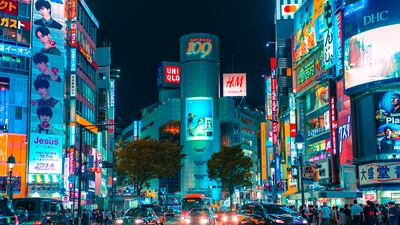
  • Tokyo's vibrant Shibuya district. Photo: Jezael Melgoza / Unsplash
    Tokyo's vibrant Shibuya district. Photo: Jezael Melgoza / Unsplash
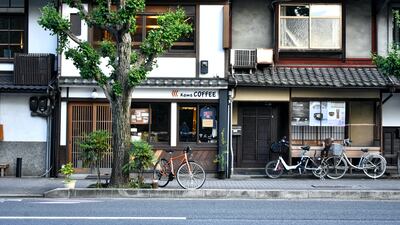
  • Kyoto offers a glimpse of traditional Japan. Photo: Sorasak / Unsplash
    Kyoto offers a glimpse of traditional Japan. Photo: Sorasak / Unsplash

“Even if it were to intervene again, Japan likely won't have to sell US Treasury bills and instead tap this deposit for the time being,” said Izuru Kato, chief economist at Totan Research, a think tank arm of a major money market brokerage company in Tokyo.

If the deposits dry up, Japan would need to dip into its securities holdings sized around $1.04tn.

Of the main types of foreign assets Japan holds, deposits and securities are the most liquid and can be converted into cash immediately.

Other holdings include gold, reserves at the International Monetary Fund (IMF) and IMF special drawing rights, although procuring dollar funds from these assets would take time, analysts say.


Infiniti QX80 specs

Engine: twin-turbocharged 3.5-liter V6

Power: 450hp

Torque: 700Nm

Price: From Dh450,000, Autograph model from Dh510,000

Available: Now

About Proto21

Date started: May 2018
Founder: Pir Arkam
Based: Dubai
Sector: Additive manufacturing (aka, 3D printing)
Staff: 18
Funding: Invested, supported and partnered by Joseph Group

Mercer, the investment consulting arm of US services company Marsh & McLennan, expects its wealth division to at least double its assets under management (AUM) in the Middle East as wealth in the region continues to grow despite economic headwinds, a company official said.

Mercer Wealth, which globally has $160 billion in AUM, plans to boost its AUM in the region to $2-$3bn in the next 2-3 years from the present $1bn, said Yasir AbuShaban, a Dubai-based principal with Mercer Wealth.

Within the next two to three years, we are looking at reaching $2 to $3 billion as a conservative estimate and we do see an opportunity to do so,” said Mr AbuShaban.

Mercer does not directly make investments, but allocates clients’ money they have discretion to, to professional asset managers. They also provide advice to clients.

“We have buying power. We can negotiate on their (client’s) behalf with asset managers to provide them lower fees than they otherwise would have to get on their own,” he added.

Mercer Wealth’s clients include sovereign wealth funds, family offices, and insurance companies among others.

From its office in Dubai, Mercer also looks after Africa, India and Turkey, where they also see opportunity for growth.

Wealth creation in Middle East and Africa (MEA) grew 8.5 per cent to $8.1 trillion last year from $7.5tn in 2015, higher than last year’s global average of 6 per cent and the second-highest growth in a region after Asia-Pacific which grew 9.9 per cent, according to consultancy Boston Consulting Group (BCG). In the region, where wealth grew just 1.9 per cent in 2015 compared with 2014, a pickup in oil prices has helped in wealth generation.

BCG is forecasting MEA wealth will rise to $12tn by 2021, growing at an annual average of 8 per cent.

Drivers of wealth generation in the region will be split evenly between new wealth creation and growth of performance of existing assets, according to BCG.

Another general trend in the region is clients’ looking for a comprehensive approach to investing, according to Mr AbuShaban.

“Institutional investors or some of the families are seeing a slowdown in the available capital they have to invest and in that sense they are looking at optimizing the way they manage their portfolios and making sure they are not investing haphazardly and different parts of their investment are working together,” said Mr AbuShaban.

Some clients also have a higher appetite for risk, given the low interest-rate environment that does not provide enough yield for some institutional investors. These clients are keen to invest in illiquid assets, such as private equity and infrastructure.

“What we have seen is a desire for higher returns in what has been a low-return environment specifically in various fixed income or bonds,” he said.

“In this environment, we have seen a de facto increase in the risk that clients are taking in things like illiquid investments, private equity investments, infrastructure and private debt, those kind of investments were higher illiquidity results in incrementally higher returns.”

The Abu Dhabi Investment Authority, one of the largest sovereign wealth funds, said in its 2016 report that has gradually increased its exposure in direct private equity and private credit transactions, mainly in Asian markets and especially in China and India. The authority’s private equity department focused on structured equities owing to “their defensive characteristics.”

Updated: October 02, 2022, 5:12 AM