


Food security has emerged as the next big crisis alongside the need to secure energy supplies, raising the risk of heightened social tensions in emerging economies as food protectionism exacerbates inflation, according to a new Bank of Singapore report.
The continued rise in prices of agricultural commodities is not only driven by supply side challenges posed by Covid-19 labour restrictions and drought, but also by Russia’s war in Ukraine, Bank of Singapore commodities strategist, Sim Moh Siong, said in a research note on Monday.
“As agricultural prices continue to rise, food inflation has become just as pressing as oil price increases,” Mr Siong said.
The risk of social unrest in low-income emerging market is high as food constitute “relatively large shares of consumption baskets”, in these nations, he added.
Economic shocks from food and energy prices due to Russia-Ukraine war are reverberating through Middle East and North African economies that could increase income inequality in the region, S&P Global Ratings said in a separate report.
-

A baker holds up a seeded white loaf of bread at a bakery in Beirut, Lebanon, which faces a food crisis because of war in Europe. All photos: Bloomberg -
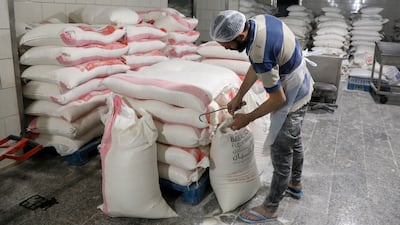
A worker opens a sack of flour to prepare bread dough in Beirut. Lebanon's wheat importers are already rationing flour sales to counter panic buying. -
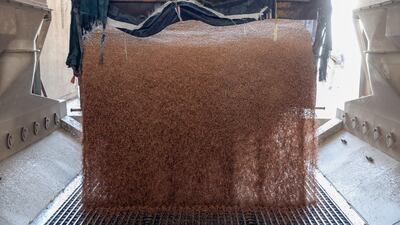
Lebanon, already suffering from years of financial crisis, has faced new problems since Russia invaded Ukraine in February. -
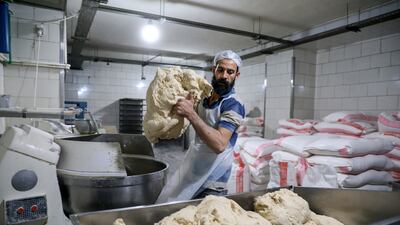
Lebanon normally buys 96 per cent of its wheat from Russia and Ukraine. -

The war between two of the world's biggest wheat exporters has sparked fears of a food crisis in many Middle Eastern countries. -
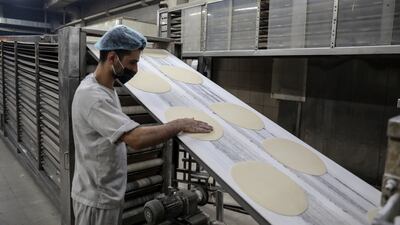
Lebanese importers are struggling to get dollars from a subsidy programme to buy wheat from new suppliers. -
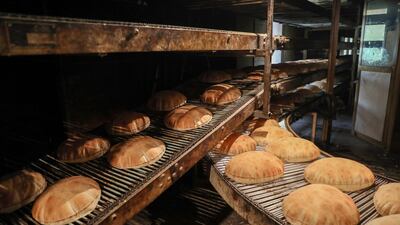
As countries try to secure new sources of wheat, cash-strapped Lebanon's small market of 6 million people could go without. -
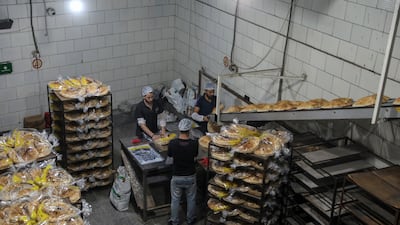
Lebanon lacks grain storage after silos were destroyed in the 2020 Beirut Port blast. -

The country needs 50,000 tonnes of wheat to feed its people for a month. -
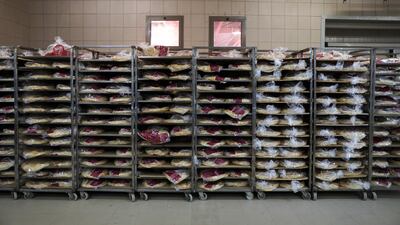
Subsidies keep the price of bread in Lebanon artificially low. -
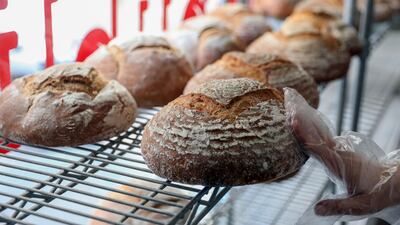
But a loaf now costs on average 10,000 Lebanese pounds, or $0.45, more than six times the price in 2019. -

Millers estimate that without subsidies, prices could more than double. -

Analysts fear that could cause social unrest in a country where three quarters of the population now live in poverty.


“Our analysis has found that Egypt, Jordan, Lebanon, Morocco and Tunisia will be among the hardest hit by economic spillovers from the conflict because their net food and energy imports account for between 4 per cent and 17 per cent of their GDP and they source a large part of their cereal supply from Russia and Ukraine,” Valerijs Rezvijs, S&P Global economist, said.
“We believe rising food and energy prices and supply insecurities, alongside high youth unemployment in these countries, could lead to higher income inequality and pose risks to existing sociopolitical dynamics.”
Temporary fiscal measures to soften the blow to consumers and producers and prevent social discontent will put pressure on post-pandemic fiscal consolidation achieved by many economies in the region.
A protracted Russia-Ukraine conflict “bears a risk of worsening the fiscal dynamics of Mena commodity importers”, he said.
Prices of agricultural commodities have risen throughout the pandemic, driven by Covid-19-driven supply side challenges, labour restrictions and droughts. Russia’s invasion of Ukraine has further deteriorated the situation.
economist, S&P Global
The conflict has caused significant supply disruptions of agricultural commodities, not just in the form of supplies of grain and sunflower oil, but also affecting food prices by curtailing exports of fertilisers.
Russia and Ukraine collectively supply nearly 30 per cent of globally traded wheat and 15 per cent of global corn exports. The conflict means Ukraine’s grain shipments remain out of markets as seaports remained closed while new crop production is jeopardised.
Grain shipments from Russia are also on the decline due to reduced trade finance and market boycotts of Russian produce due to its military assault on Ukraine.
"A sharp rise in the price of fertilisers — of which Russia is the world’s largest exporter — is likely to further affect agricultural yields during the coming season,” Bank of Singapore said.
“Apart from a few European countries, a big chunk of Russian fertiliser exports goes to major agricultural producers such as Brazil, the US, and China, magnifying the risks to world food supplies,” the lender said.
Soaring food prices have also resulted in an increase in agricultural exporters restricting overseas sales to ensure their own food security.
“These protectionist steps have only driven up the food import bill further for countries dependent on international markets,” the bank said.

