


Geoduck clams were not fished commercially until the 1970s, but in recent decades a huge demand from Asian markets has developed. The clams currently sell for huge sums of money, which has made poaching a problem.
-
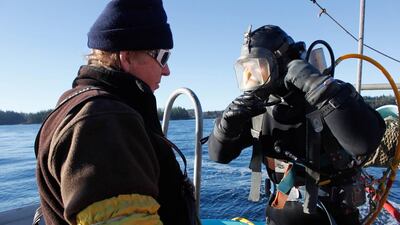
Freddy Gutmann stands by as David Thomas (right) returns on board after harvesting geoduck near Tofino, in British Columbia. Clement Sabourin / AFP -
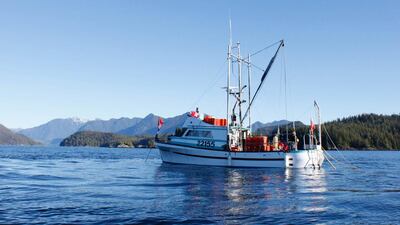
The trawler Hideaway II is seen near Tofino, in British Columbia, Canada, on January 24, 2014 as it searches for geoduck clams. The shell of the clam ranges from 15 centimetres (5.9 in) to over 20 centimetres (7.9 in) in length, but the extremely long siphons make the clam itself much longer than this. Clement Sabourin / AFP -
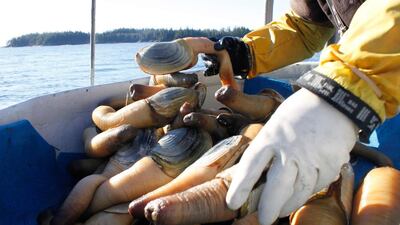
Freddy Gutmann sorts freshly harvested geoducks. The geoduck is both one of the largest clams in the world, and one of the longest-lived animals of any type. Clement Sabourin / AFP
In pictures: In pursuit of the money-making geoduck
Most popular today

