
Oil prices surged towards $108 a barrel on Monday after Saudi Arabia shut its East-West oil pipeline after attacks, removing a crucial route for exporting crude without passing through the Strait of Hormuz and intensifying fears of a global supply crunch.
Brent, the benchmark for about two thirds of the world’s oil, rose as much as 3.7 per cent before paring back gains to trade 3.19 per cent higher at $107.95 a barrel at 8.05am UAE time. West Texas Intermediate gained 3.14 per cent to $103.19.
Saudi Arabia’s Energy Ministry said late on Friday that it had suspended operations on the pipeline as a precaution after “multiple” attacks in the Riyadh and Madinah regions on Thursday, which caused a number of injuries.
It did not give details about any damage the pipeline sustained, or when Saudi Arabia, Opec’s biggest oil producer, plans to resume flow of crude through the pipeline.
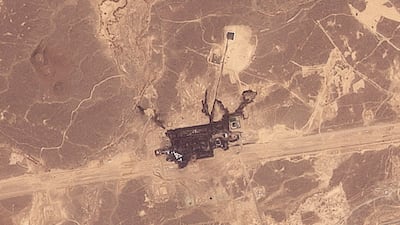
The pipeline is critical in linking oil production sites in the Eastern Province with Yanbu on the kingdom's western coast. The full pumping capacity through the East–West pipeline amounts to about seven million barrels per day.
It has allowed Saudi Arabia to continue exporting oil through its Red Sea export hub, bypassing the US-Iran war shipping chaos in the Strait of Hormuz.
The pipeline’s closure removes a significant outlet for Gulf crude at a time when shipping through the Strait of Hormuz remains severely disrupted, said Ahmad Assiri, research strategist at Pepperstone.
“The East-West pipeline reportedly supplied the world by six to seven [million barrels per day] pre-closure, though said to be precautionary, representing 30 to 40 per cent of crude supply out of the Gulf,” Mr Assiri said. “Market reaction was clear and pushed oil price above the $100 mark, and touched $110 intraday.
“Should such an important pipeline disruption persist, markets will be forced to reprice crude much higher and perhaps to levels we've seen since the beginning of the conflict."
He said recent tension suggested that the disruption to oil supplies could no longer be managed through temporary measures. “Recent tensions in the region indicate that the oil supply shortage may have exhausted symptom-based solutions, and now appears to require an actual resolution to Hormuz disruption,” he said.

