

The UAE’s nuclear regulator said on Wednesday it is prepared for future capacity additions and ready to adopt new technologies to help meet rising electricity demand from data centres, but no formal expansion proposal has been submitted.
“We are aware of discussions, for example with Rosatom in Russia through the media, but there is no proposal to us to build another type of facility,” Christer Viktorsson, director general of the Federal Authority for Nuclear Regulation (FANR), told reporters in Abu Dhabi.
The head of Russian state nuclear energy corporation Rosatom told reporters last month that it had submitted proposals to the UAE to build small nuclear power plants, land-based and floating options.

“Part of our strategy is to be ready for different technologies. We are not favouring any technology in advance of another,” Mr Viktorsson said.
The federal regulator is focused on operating and maintaining the 5.6-gigawatt Barakah Nuclear Power Plant, which meets a quarter of the UAE’s electricity needs. The reactor's final unit was added to the grid in 2024. The South Korean-built complex has four 1,400-megawatt advanced power reactors that cost $20 billion to construct.
“If somebody comes to us saying they want to build another type of facility, we are ready to help and support them to make sure it is safe,” Mr Viktorsson said.
Russia's proposals included potential UAE investment for building nuclear plants in Central Asia. The Rosatom chief's comments followed a visit by UAE President Sheikh Mohamed to Moscow.
Nuclear-powered data centres
Mr Viktorsson said FANR was also preparing to regulate small modular reactors (SMRs), which could support rising electricity demand from data centres and artificial intelligence.
“For data centres, one concept is to have a separate source of energy and it could be an SMR,” he said. Although no expansion decision has been taken, he said the regulator must remain prepared.
“We do not have any information from any organisation about expanding nuclear energy for the time being. However, as a regulator, we have to be ready. That is why we are training staff in new technologies such as SMRs, which are a promising technology.”
He said there were 80 to 90 different SMR designs in the market and the regulator was carefully studying potential future technology.
“We need to know early which technology an investor is interested in so we can be ready to regulate it,” he said.
Mr Viktorsson also said the UAE government has expanded FANR’s mandate beyond plant oversight under its new 2027–2029 strategy.
“Our vision is to be a globally recognised nuclear regulator,” he said. “The government has given us a broader mandate to ensure the whole nuclear and radiation sector develops with safety, security and sustainability.”
-

The UAE has issued an operating licence for the fourth and final unit of its Barakah Nuclear Energy Plant. FANR -

Unit three of Abu Dhabi's Barakah Nuclear Energy Plant started commercial operations in February. Photo: Emirates Nuclear Energy Corporation -
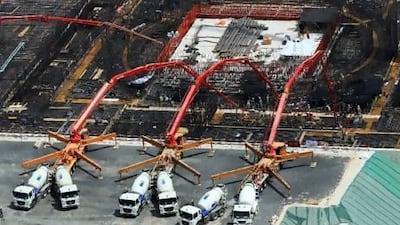
A view of the Barakah nuclear site under construction in 2012. -

Unit 1 being built in 2013 in the Western region of Abu Dhabi. -
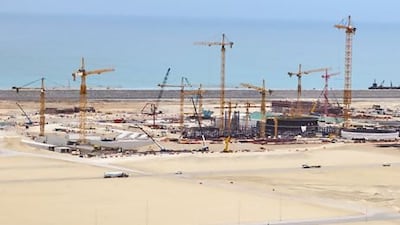
The Emirates Nuclear Energy Corporation selected a Korean consortium in 2013 to build four APR-1400 reactors. Photo: Enec -
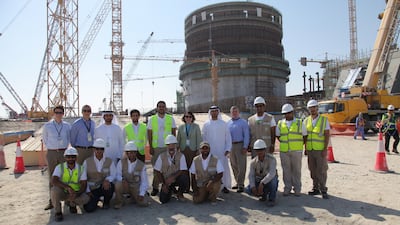
Kristine Svinicki, head of the US Nuclear Regulatory Commission, toured the Barakah site in November 2013. Photo: Enec -
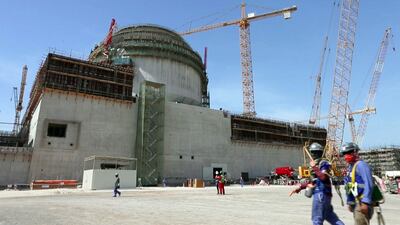
By August 2014, more than 55 per cent of construction at Unit 1 had been completed. Photo: Enec -
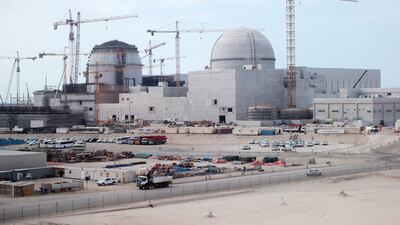
The first nuclear reactor at Barakah in 2016. Christopher Pike / The National -
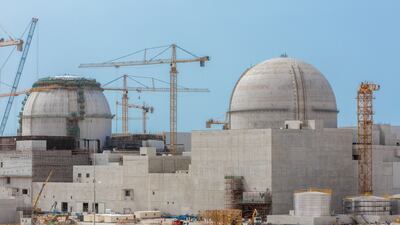
The UAE's nuclear energy programme is based in Barakah in the Western Region of Abu Dhabi. Photo: Enec -
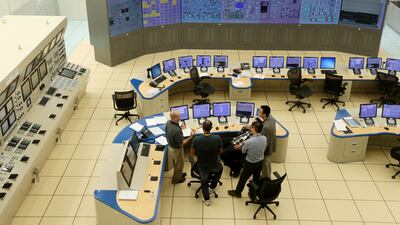
Trainees learn to deal with potentially catastrophic scenarios at this simulator in Barakah. Christopher Pike / The National -

Khalid Naqbi was part of the first batch of resident inspectors sent to the construction site by the Federal Authority for Nuclear Regulation. Ravindranath K / The National


Regional threat surveillance
The regulator is exploring artificial intelligence and digital tools to strengthen oversight and licensing.
“New technology such as AI needs to be used, but we must understand both the limitations and opportunities before introducing it into the oversight process,” Mr Viktorsson said.
At the same time, FANR continues to monitor regional nuclear safety risks, particularly linked to Iran, given the proximity of its nuclear facilities to the Gulf.
“We are responsible for monitoring the territory of the UAE for radiation. We have online monitors, and we were able to assure the government that there was no danger,” Mr Viktorsson said.
He added that FANR had previously assessed potential risks from Iranian facilities using International Atomic Energy Agency data and remains ready to respond to any incident affecting the region.

