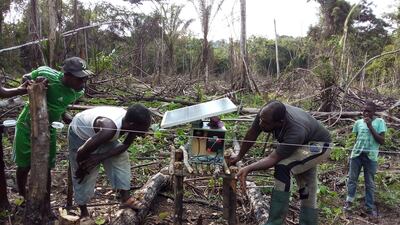
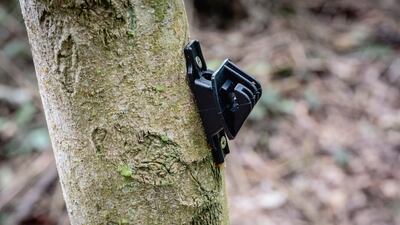
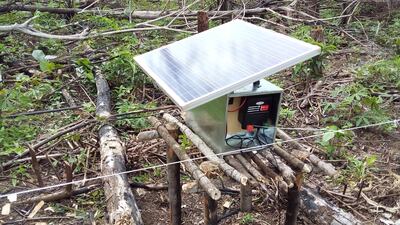
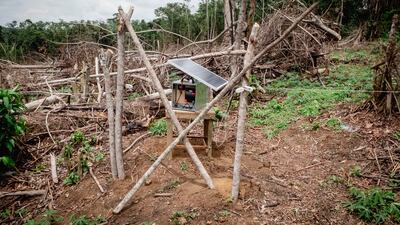
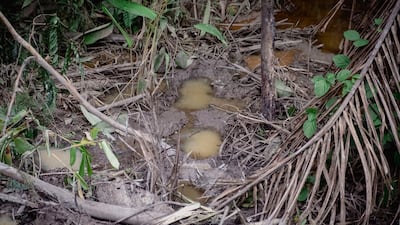
Africa is more than twice as sunny as the Netherlands, has 90 times more people, and is nearly 800 times larger. But the continent’s total solar power capacity last year was less than that enjoyed by the Dutch. This year, finally, imports of solar panels into the least electrified and poorest continent are brightening Africa’s energy story.
Outside North Africa, South Africa and a few other wealthier and better-served countries, the electricity grid is minuscule compared to demand. Lack of sufficient, cost-effective, consistent power holds Africa’s human development and economy back. As the climate heats up, the absence of air-conditioning damages people’s health and prevents them from working and learning effectively.
The continent does not lack for energy resources, with major gasfields in the north, west and east, coal in southern Africa, huge hydroelectric potential, strong wind in northern Africa and along the southern coast, and tremendous solar – particularly across the deserts of the Sahara, Namib and Kalahari. Africa could have some of the cheapest electricity in the world.
But investment in power plants and, particularly, grids has been weak. Legacy hydroelectric plants built between the 1950s and 1970s, such as the Aswan High Dam in Egypt, Kariba between Zambia and Zimbabwe, and Bamendjing in Cameroon, are not enough to meet demand, and struggle with increasingly unreliable rainfall and river flows.
Solving this problem has been held back by poor policy at home and abroad.
Subsidies to consumers and political and economic turbulence make investment in large power stations and transmission lines a poor prospect, raising the cost of capital. Low population densities make it costly to reach remote areas. In turn, this makes the electricity produced much more expensive than it needs to be, so it is unaffordable for ordinary people, and too expensive to drive industrialisation.
To supplement its inadequate grids, Africa employs about 100 gigawatts of diesel generators, more than two-thirds of them larger units for industries, mines or big commercial establishments. They are expensive, noisy, polluting and prone to breakdown. An unfortunate but necessary stopgap, they are not enough to drive an industrial take-off.
Meanwhile, financing policies from Europe and the big international institutions ban most fossil-fuelled based power – even relatively clean gas that could displace diesel. Excluding carbon fuels is all very well – but the environmental benevolence doesn’t stretch to ensuring renewables are built. Outside the more advanced markets in North and South Africa, the continent’s other 48 countries have only 1 per cent the installed solar capacity of Europe.
This year, something has changed. Climate think tank Ember estimates that Africa’s monthly imports of Chinese solar panels – which represent the vast bulk of global supply – leapt by more than five times from 2022 to this August. That single month saw 1.74 gigawatts arrive. If this rate keeps up through the rest of the year, and if the panels turn into actual installations, the continent’s total solar capacity will double.
China’s massive export capacity, and the stiff tariffs imposed on it by the US, have produced a flood of cheap photovoltaic panels elsewhere. Panel imports by countries such as Algeria, Botswana, Eritrea, Liberia and Sudan have leapt from almost nothing to significant amounts overnight. Nigeria has overtaken Egypt as the continent’s second-biggest importer. The panels shipped over the past 12 months into Sierra Leone will raise the country’s electricity output by more than 60 per cent once installed.
The solar boom has spread beyond the usual suspects to countries that were definitely not in the industry’s address book. Abu Dhabi-based Global South Utilities inaugurated a 50-megawatt plant in Chad last week. Angola wants to build sub-Saharan Africa’s biggest solar farm, at 370MW.
However, such projects aside, the panel imports that have fed this rush seem to be destined more for distributed use, serving a single home, building or community. Outside the trendsetters of Egypt and Morocco, Africa’s biggest existing solar farm is only 175MW, a tenth the size of the Al Dhafra plant in Abu Dhabi.
Numerous African countries are launching smaller projects of a few tens of megawatts each. For example, Zambia’s target of 1000MW of solar power mixes larger and smaller facilities, and 200 solar mini-grids to serve rural areas. The share of Zambians with electricity has risen to 50 per cent, from 30 per cent in 2017, but powering the rest needs local solutions.
Solar does not generate all the time, of course, and is limited in the rainy season of central Africa. Some electricity is better than none, and it can save on diesel during the day. But to be truly a foundation of a modern energy system, solar needs to be combined with batteries, wind, hydroelectric, natural gas and, in countries such as Kenya, geothermal, to provide reliable power year-round.
Some serendipitous combination of Chinese manufacturing, local entrepreneurship, and a melange of financing sources, has lit the fuse on Africa’s solar take-off
Mini-grids are a good start for rural electrification. However, they must eventually be combined into a national grid. Power exchange, as in the 12-country Southern Africa Power Pool, can further balance out seasonal and geographic variations, but needs a massive expansion of grids and trading mechanisms.
Financing African solar power projects is still expensive. While Middle Eastern renewable ventures might be able to raise debt at interest rates of about 4.5 per cent, financiers for Africa may demand around 11 per cent. This pushes up the cost of the delivered electricity substantially. If countries can develop track records of reliable payment, this debt premium should ease.
This solar surge has important implications. It provides an additional outlet for excess Chinese manufacturing capacity. Africa’s solar imports are still small on a global scale but, given its potential and its needs, it could be an almost inexhaustible market. Installation rates will rise further as developers gain confidence and expertise. Some countries that have not yet joined the boom, such as Libya, Cameroon and Gabon, may see the light.
Cheaper and more reliable power could help drive take-off in manufacturing and technology businesses, the crucial drivers of sustainable economic growth. For now, some serendipitous combination of Chinese manufacturing, local entrepreneurship, and a melange of financing sources, has lit the fuse on Africa’s solar take-off.

The specs
- Engine: 3.9-litre twin-turbo V8
- Power: 640hp
- Torque: 760nm
- On sale: 2026
- Price: Not announced yet
The Bio
Favourite Emirati dish: I have so many because it has a lot of herbs and vegetables. Harees (oats with chicken) is one of them
Favourite place to go to: Dubai Mall because it has lots of sports shops.
Her motivation: My performance because I know that whatever I do, if I put the effort in, I’ll get results
During her free time: I like to drink coffee - a latte no sugar and no flavours. I do not like cold drinks
Pet peeve: That with every meal they give you a fries and Pepsi. That is so unhealthy
Advice to anyone who wants to be an ironman: Go for the goal. If you are consistent, you will get there. With the first one, it might not be what they want but they should start and just do it
Kill%20
%3Cp%3E%3Cstrong%3EDirector%3A%3C%2Fstrong%3E%20Nikhil%20Nagesh%20Bhat%3C%2Fp%3E%0A%3Cp%3E%3Cstrong%3EStarring%3C%2Fstrong%3E%3A%20Lakshya%2C%20Tanya%20Maniktala%2C%20Ashish%20Vidyarthi%2C%20Harsh%20Chhaya%2C%20Raghav%20Juyal%3C%2Fp%3E%0A%3Cp%3E%3Cstrong%3ERating%3A%3C%2Fstrong%3E%204.5%2F5%3Cbr%3E%3C%2Fp%3E%0A
In%20the%20Land%20of%20Saints%20and%20Sinners
%3Cp%3E%3Cstrong%3EDirector%3A%20%3C%2Fstrong%3ERobert%20Lorenz%3C%2Fp%3E%0A%3Cp%3E%3Cstrong%3EStarring%3A%3C%2Fstrong%3E%20Liam%20Neeson%2C%20Kerry%20Condon%2C%20Jack%20Gleeson%2C%20Ciaran%20Hinds%3C%2Fp%3E%0A%3Cp%3E%3Cstrong%3ERating%3A%20%3C%2Fstrong%3E2%2F5%3C%2Fp%3E%0A
Our family matters legal consultant
Name: Hassan Mohsen Elhais
Position: legal consultant with Al Rowaad Advocates and Legal Consultants.
TOUR RESULTS AND FIXTURES
June 3: NZ Provincial Barbarians 7 Lions 13
June 7: Blues 22 Lions 16
June 10: Crusaders 3 Lions 12
June 13: Highlanders 23 Lions 22
June 17: Maori All Blacks 10 Lions 32
June 20: Chiefs 6 Lions 34
June 24: New Zealand 30 Lions 15
June 27: Hurricanes 31 Lions 31
July 1: New Zealand 21 Lions 24
July 8: New Zealand v Lions
The line up
Friday: Giggs, Sho Madjozi and Masego
Saturday: Nas, Lion Bbae, Roxanne Shante and DaniLeigh
Sole DXB runs from December 6 to 8 at Dubai Design District. Weekend pass is Dh295 while a one day pass is Dh195. Tickets are available from www.soledxb.com
Last-16
France 4
Griezmann (13' pen), Pavard (57'), Mbappe (64', 68')
Argentina 3
Di Maria (41'), Mercado (48'), Aguero (90 3')
RESULTS FOR STAGE 4
Stage 4 Dubai to Hatta, 197 km, Road race.
Overall leader Primoz Roglic SLO (Team Jumbo - Visma)
Stage winners: 1. Caleb Ewan AUS (Lotto - Soudal) 2. Matteo Moschetti ITA (Trek - Segafredo) 3. Primoz Roglic SLO (Team Jumbo - Visma)
JUDAS AND THE BLACK MESSIAH
Directed by: Shaka King
Starring: Daniel Kaluuya, Lakeith Stanfield, Jesse Plemons
Four stars
UAE currency: the story behind the money in your pockets
BMW M5 specs
Engine: 4.4-litre twin-turbo V-8 petrol enging with additional electric motor
Power: 727hp
Torque: 1,000Nm
Transmission: 8-speed auto
Fuel consumption: 10.6L/100km
On sale: Now
Price: From Dh650,000
Need to know
Unlike other mobile wallets and payment apps, a unique feature of eWallet is that there is no need to have a bank account, credit or debit card to do digital payments.
Customers only need a valid Emirates ID and a working UAE mobile number to register for eWallet account.
Killing of Qassem Suleimani
The years Ramadan fell in May
War 2
Director: Ayan Mukerji
Stars: Hrithik Roshan, NTR, Kiara Advani, Ashutosh Rana
Rating: 2/5
Benefits of first-time home buyers' scheme
- Priority access to new homes from participating developers
- Discounts on sales price of off-plan units
- Flexible payment plans from developers
- Mortgages with better interest rates, faster approval times and reduced fees
- DLD registration fee can be paid through banks or credit cards at zero interest rates
Mercer, the investment consulting arm of US services company Marsh & McLennan, expects its wealth division to at least double its assets under management (AUM) in the Middle East as wealth in the region continues to grow despite economic headwinds, a company official said.
Mercer Wealth, which globally has $160 billion in AUM, plans to boost its AUM in the region to $2-$3bn in the next 2-3 years from the present $1bn, said Yasir AbuShaban, a Dubai-based principal with Mercer Wealth.
“Within the next two to three years, we are looking at reaching $2 to $3 billion as a conservative estimate and we do see an opportunity to do so,” said Mr AbuShaban.
Mercer does not directly make investments, but allocates clients’ money they have discretion to, to professional asset managers. They also provide advice to clients.
“We have buying power. We can negotiate on their (client’s) behalf with asset managers to provide them lower fees than they otherwise would have to get on their own,” he added.
Mercer Wealth’s clients include sovereign wealth funds, family offices, and insurance companies among others.
From its office in Dubai, Mercer also looks after Africa, India and Turkey, where they also see opportunity for growth.
Wealth creation in Middle East and Africa (MEA) grew 8.5 per cent to $8.1 trillion last year from $7.5tn in 2015, higher than last year’s global average of 6 per cent and the second-highest growth in a region after Asia-Pacific which grew 9.9 per cent, according to consultancy Boston Consulting Group (BCG). In the region, where wealth grew just 1.9 per cent in 2015 compared with 2014, a pickup in oil prices has helped in wealth generation.
BCG is forecasting MEA wealth will rise to $12tn by 2021, growing at an annual average of 8 per cent.
Drivers of wealth generation in the region will be split evenly between new wealth creation and growth of performance of existing assets, according to BCG.
Another general trend in the region is clients’ looking for a comprehensive approach to investing, according to Mr AbuShaban.
“Institutional investors or some of the families are seeing a slowdown in the available capital they have to invest and in that sense they are looking at optimizing the way they manage their portfolios and making sure they are not investing haphazardly and different parts of their investment are working together,” said Mr AbuShaban.
Some clients also have a higher appetite for risk, given the low interest-rate environment that does not provide enough yield for some institutional investors. These clients are keen to invest in illiquid assets, such as private equity and infrastructure.
“What we have seen is a desire for higher returns in what has been a low-return environment specifically in various fixed income or bonds,” he said.
“In this environment, we have seen a de facto increase in the risk that clients are taking in things like illiquid investments, private equity investments, infrastructure and private debt, those kind of investments were higher illiquidity results in incrementally higher returns.”
The Abu Dhabi Investment Authority, one of the largest sovereign wealth funds, said in its 2016 report that has gradually increased its exposure in direct private equity and private credit transactions, mainly in Asian markets and especially in China and India. The authority’s private equity department focused on structured equities owing to “their defensive characteristics.”
Living in...
This article is part of a guide on where to live in the UAE. Our reporters will profile some of the country’s most desirable districts, provide an estimate of rental prices and introduce you to some of the residents who call each area home.
The years Ramadan fell in May
THE%20HOLDOVERS
%3Cp%3E%3Cstrong%3EDirector%3A%20%3C%2Fstrong%3EAlexander%20Payne%3C%2Fp%3E%0A%3Cp%3E%3Cstrong%3EStarring%3A%3C%2Fstrong%3E%20Paul%20Giamatti%2C%20Da'Vine%20Joy%20Randolph%2C%20Dominic%20Sessa%3C%2Fp%3E%0A%3Cp%3E%3Cstrong%3ERating%3A%3C%2Fstrong%3E%204.5%2F5%3C%2Fp%3E%0A