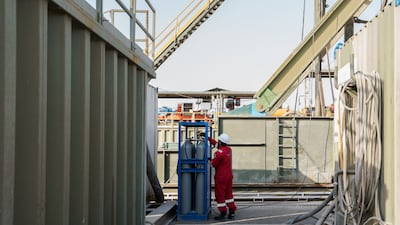
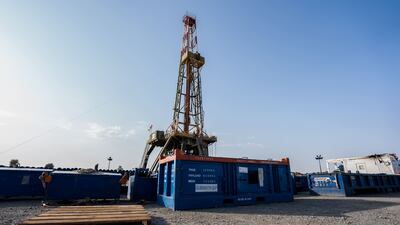
An oil rig platform on the North Sea, about 70 kilometres east of the Aberdeen, Scotland. AFP


How plate tectonics helps us better understand the evolution of energy reserves


  • English
  • Arabic

May 20, 2024

Plate tectonics, the fundamental theory of our planet, is so recent that its discoverers are only just passing from the scene.

While the pioneers of quantum mechanics or relativity belong to the early twentieth century, Jason Morgan of Princeton University died in July, aged 87, while three other greats, Dan McKenzie, Frederick Vine and John Dewey, at 82, 84 and 87 respectively, are still with us.

Their theory continues to surprise and illuminate, explaining the distribution and evolution of earthquakes, volcanoes, mountains, past climates – and hydrocarbon and mineral resources.

Of course, they had precursors. German meteorologist Alfred Wegener in 1912 pointed to numerous lines of evidence that now far-separated continents, such as Africa and South America, fitted together neatly and must have once been joined. But he could not explain how these vast masses of rock could have ploughed through the ocean floor.

British geologist Arthur Holmes solved this problem by proposing in 1919 that continents moved passively by the flow of the hot mantle rocks beneath them over millions of years.

Measuring the proportions of radioactive isotopes in rocks, he was the first to come to an accurate estimate of the age of the Earth, at around 4.5 billion years, giving enough time for plates to move long distances at a few millimetres per year.

After the Second World War, sonar measurements of the ocean floor by Princeton’s Harry Hess revealed the true geometry and scale of the mid-ocean ridges, where new crust is made, and trenches, where it sinks back into the mantle.

In 1963, Cambridge’s Mr Vine – as work for his doctoral thesis – and Drummond Matthews published measurements of the magnetism of the oceanic rocks, showing neat stripes where the Earth’s magnetic field had reversed, and allowing the two sides of each mid-ocean ridge to be matched up and dated.

The seminal year was 1967. Mr Morgan’s paper demonstrated how the Earth’s surface was divided into about 12 large, rigid plates, which shift relative to each other, carrying continents and islands on top of them.

Cambridge University’s Mr McKenzie, who taught me, had only just achieved his PhD, on convection in the mantle, when he published in Nature on the mathematics of oceanic plate movement.

It now seems amazing that we were almost ready to land on the Moon before we knew the basics about how our own Earth works.

Before plate tectonics, we did not understand why the Pacific is ringed by volcanoes and earthquakes, why the Himalayas are where they are, how dinosaurs managed to cross from South America to Africa, or why the rocks of the Middle East record both hot deserts and frozen ice-caps.

Now we see that different parts of the Pacific plates are diving under areas such as the Americas, Japan and New Zealand and melting as they sink, feeding volcanoes with magma and recycling carbon and water. We know that India is colliding with Asia, pushing up the world’s greatest mountain range, and profoundly altering the local and global climate.

The great oilfields of the Middle East were mostly found by good local geological work before the knowledge of wider plate movements.

But plate tectonics explains the region’s enormous bounty of oil and gas.

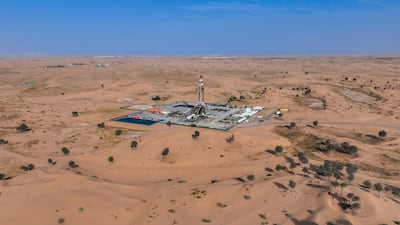
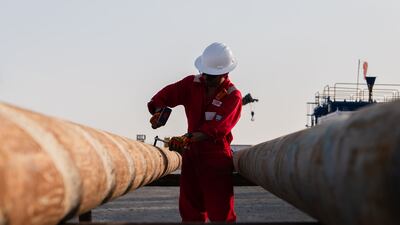
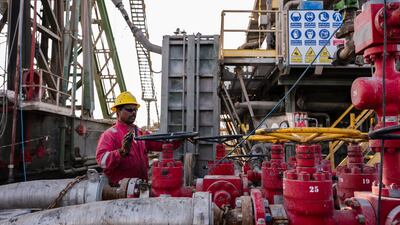
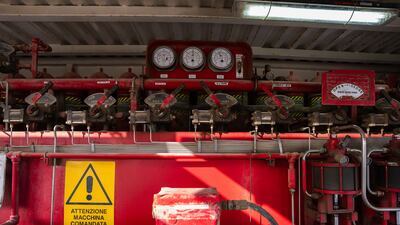
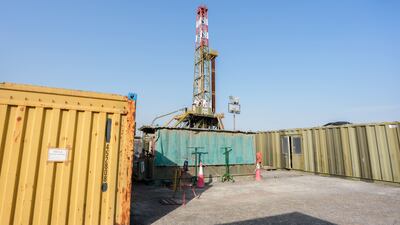
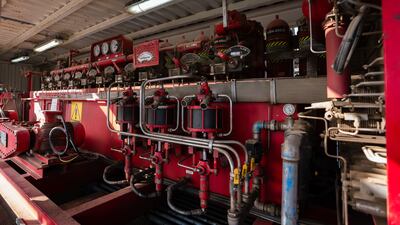
  • Sharjah has discovered new gas reserves in the onshore Al Hadiba field. All photos: Sharjah Government Media Bureau
    Sharjah has discovered new gas reserves in the onshore Al Hadiba field. All photos: Sharjah Government Media Bureau
  • Al Hadiba field is the fifth onshore field in Sharjah, in addition to Al-Saja’a, Kahif, Mahani and Muayed fields
    Al Hadiba field is the fifth onshore field in Sharjah, in addition to Al-Saja’a, Kahif, Mahani and Muayed fields
  • The new field was discovered after the Sharjah National Oil Corporation (SNOC) drilled a well over the past few months
    The new field was discovered after the Sharjah National Oil Corporation (SNOC) drilled a well over the past few months
  • The field located north of the Al Sajaa Industrial Area in Sharjah has “promising quantities” of gas reserves
    The field located north of the Al Sajaa Industrial Area in Sharjah has “promising quantities” of gas reserves
  • Sharjah said the well will be tested in the days ahead to confirm the quantities and potential gas reserves of the field for development
    Sharjah said the well will be tested in the days ahead to confirm the quantities and potential gas reserves of the field for development
  • The discovery of new field is expected to boost gas production in Sharjah
    The discovery of new field is expected to boost gas production in Sharjah
  • Sharjah, in 2020, discovered a new well of natural gas and condensate onshore in the emirate, its first in more than three decades
    Sharjah, in 2020, discovered a new well of natural gas and condensate onshore in the emirate, its first in more than three decades
  • The SNOC established in 2010, is tasked with the exploration, production, engineering, construction, operation and maintenance of Sharjah's energy assets.
    The SNOC established in 2010, is tasked with the exploration, production, engineering, construction, operation and maintenance of Sharjah's energy assets.
  • The new discovery comes as the demand for natural gas continues to rise amid decarbonisation efforts
    The new discovery comes as the demand for natural gas continues to rise amid decarbonisation efforts
  • The SNOC is also exploring green hydrogen and carbon capture projects amid efforts to reach net-zero emissions by 2032,
    The SNOC is also exploring green hydrogen and carbon capture projects amid efforts to reach net-zero emissions by 2032,

As Arabia drifted gradually from chilly southern latitudes across the equator, organic matter accumulated on the floor of vast shallow subtropical seas. Then, some 50 million years ago, the Arabian plate and the attached Zagros of Iran and Iraq began colliding with central Iran, cooking this material into petroleum.

Mr McKenzie’s discoveries were well-timed for Europe. He modelled the creation of sedimentary basins, where part of the Earth’s continental crust is stretched and sinks.

The North Sea is a classic example of such a basin. In 1967, the UK North Sea’s first gasfield started production. Further exploration made it into one of the world’s leading petroleum-producing areas, helping to revive the UK’s economy and Europe’s energy security after the 1970s oil crises.

The fit between Africa and South America noticed by Mr Wegener has been fruitful more recently. The find of the Jubilee field in Ghana in 2007 led companies across the Atlantic to French Guiana, then west to Guyana and Suriname, rewarded since 2015 with a string of huge oil finds.

But this is not just as simple as matching up former conjoined regions. The “pre-salt” region in Brazil has been enormously successful for huge oil and gasfields; its equivalent basin in Angola holds much less, and that mostly gas.

The recent massive finds in deepwater Namibia by TotalEnergies, Shell and Galp have now turned attention to the corresponding but unexplored area across the Atlantic. More subtle geological differences between the African and South American margins suggest that Argentina and Uruguay might be even more promising than Namibia. By about 2027, we should know whether this potential will be borne out.

Such geological considerations also control where critical global minerals are found – such as the belt of copper and silver down the Pacific coast of Central and South America.

It tells us why Oman and the northern UAE have some of the most promising rocks globally for trapping carbon dioxide, relics of an ancient ocean plate forced up over land. And we have some grasp of past climatic shifts, such as how the split of Antarctica from southern South America allowed freezing seas to sweep round the southern continent and usher in the most recent Ice Ages.

There is still much we do not fully understand about plate tectonics. When did it begin – 3.5 billion years ago or even earlier, or much more recently, after the Earth’s mantle had cooled? And beyond our pale blue dot, our closest neighbours, Mars and Venus, don’t seem to have plate tectonics, but do Earth-like planets in other solar systems have them? Is its recycling of elements and stabilisation of climate essential for complex life to evolve and survive?

This recent, rich and profound framework continues to yield new material and intellectual benefits.

Students and scientists in the Middle East are fortunate to have some of the most striking and important geology in the world around them.

And it’s a rare situation in science when the giants of such a fundamental advance are still around to instruct and inspire us.

Robin M. Mills is chief executive of Qamar Energy and author of The Myth of the Oil Crisis

The Saga Continues

Wu-Tang Clan

(36 Chambers / Entertainment One)

What went into the film

25 visual effects (VFX) studios

2,150 VFX shots in a film with 2,500 shots

1,000 VFX artists

3,000 technicians

10 Concept artists, 25 3D designers

New sound technology, named 4D SRL


MATCH INFO

Manchester United 2
(Martial 30', McTominay 90 6')

Manchester City 0

Explainer: Tanween Design Programme

Non-profit arts studio Tashkeel launched this annual initiative with the intention of supporting budding designers in the UAE. This year, three talents were chosen from hundreds of applicants to be a part of the sixth creative development programme. These are architect Abdulla Al Mulla, interior designer Lana El Samman and graphic designer Yara Habib.

The trio have been guided by experts from the industry over the course of nine months, as they developed their own products that merge their unique styles with traditional elements of Emirati design. This includes laboratory sessions, experimental and collaborative practice, investigation of new business models and evaluation.

It is led by British contemporary design project specialist Helen Voce and mentor Kevin Badni, and offers participants access to experts from across the world, including the likes of UK designer Gareth Neal and multidisciplinary designer and entrepreneur, Sheikh Salem Al Qassimi.

The final pieces are being revealed in a worldwide limited-edition release on the first day of Downtown Designs at Dubai Design Week 2019. Tashkeel will be at stand E31 at the exhibition.

Lisa Ball-Lechgar, deputy director of Tashkeel, said: “The diversity and calibre of the applicants this year … is reflective of the dynamic change that the UAE art and design industry is witnessing, with young creators resolute in making their bold design ideas a reality.”

INDIA SQUAD

Rohit Sharma (captain), Shikhar Dhawan (vice-captain), KL Rahul, Suresh Raina, Manish Pandey, Dinesh Karthik (wicketkeeper), Deepak Hooda, Washington Sundar, Yuzvendra Chahal, Axar Patel, Vijay Shankar, Shardul Thakur, Jaydev Unadkat, Mohammad Siraj and Rishabh Pant (wicketkeeper)

'The Woman in the House Across the Street from the Girl in the Window'

Director:Michael Lehmann

Stars:Kristen Bell

Rating: 1/5

Who was Alfred Nobel?

The Nobel Prize was created by wealthy Swedish chemist and entrepreneur Alfred Nobel.

  • In his will he dictated that the bulk of his estate should be used to fund "prizes to those who, during the preceding year, have conferred the greatest benefit to humankind".
  • Nobel is best known as the inventor of dynamite, but also wrote poetry and drama and could speak Russian, French, English and German by the age of 17. The five original prize categories reflect the interests closest to his heart.
  • Nobel died in 1896 but it took until 1901, following a legal battle over his will, before the first prizes were awarded.
Specs

Engine: Dual-motor all-wheel-drive electric

Range: Up to 610km

Power: 905hp

Torque: 985Nm

Price: From Dh439,000

Available: Now

MATCH INFO

Manchester City 3 (Silva 8' &15, Foden 33')

Birmginahm City 0

Man of the match Bernado Silva (Manchester City)

Mercer, the investment consulting arm of US services company Marsh & McLennan, expects its wealth division to at least double its assets under management (AUM) in the Middle East as wealth in the region continues to grow despite economic headwinds, a company official said.

Mercer Wealth, which globally has $160 billion in AUM, plans to boost its AUM in the region to $2-$3bn in the next 2-3 years from the present $1bn, said Yasir AbuShaban, a Dubai-based principal with Mercer Wealth.

Within the next two to three years, we are looking at reaching $2 to $3 billion as a conservative estimate and we do see an opportunity to do so,” said Mr AbuShaban.

Mercer does not directly make investments, but allocates clients’ money they have discretion to, to professional asset managers. They also provide advice to clients.

“We have buying power. We can negotiate on their (client’s) behalf with asset managers to provide them lower fees than they otherwise would have to get on their own,” he added.

Mercer Wealth’s clients include sovereign wealth funds, family offices, and insurance companies among others.

From its office in Dubai, Mercer also looks after Africa, India and Turkey, where they also see opportunity for growth.

Wealth creation in Middle East and Africa (MEA) grew 8.5 per cent to $8.1 trillion last year from $7.5tn in 2015, higher than last year’s global average of 6 per cent and the second-highest growth in a region after Asia-Pacific which grew 9.9 per cent, according to consultancy Boston Consulting Group (BCG). In the region, where wealth grew just 1.9 per cent in 2015 compared with 2014, a pickup in oil prices has helped in wealth generation.

BCG is forecasting MEA wealth will rise to $12tn by 2021, growing at an annual average of 8 per cent.

Drivers of wealth generation in the region will be split evenly between new wealth creation and growth of performance of existing assets, according to BCG.

Another general trend in the region is clients’ looking for a comprehensive approach to investing, according to Mr AbuShaban.

“Institutional investors or some of the families are seeing a slowdown in the available capital they have to invest and in that sense they are looking at optimizing the way they manage their portfolios and making sure they are not investing haphazardly and different parts of their investment are working together,” said Mr AbuShaban.

Some clients also have a higher appetite for risk, given the low interest-rate environment that does not provide enough yield for some institutional investors. These clients are keen to invest in illiquid assets, such as private equity and infrastructure.

“What we have seen is a desire for higher returns in what has been a low-return environment specifically in various fixed income or bonds,” he said.

“In this environment, we have seen a de facto increase in the risk that clients are taking in things like illiquid investments, private equity investments, infrastructure and private debt, those kind of investments were higher illiquidity results in incrementally higher returns.”

The Abu Dhabi Investment Authority, one of the largest sovereign wealth funds, said in its 2016 report that has gradually increased its exposure in direct private equity and private credit transactions, mainly in Asian markets and especially in China and India. The authority’s private equity department focused on structured equities owing to “their defensive characteristics.”

Types of bank fraud

1) Phishing

Fraudsters send an unsolicited email that appears to be from a financial institution or online retailer. The hoax email requests that you provide sensitive information, often by clicking on to a link leading to a fake website.

2) Smishing

The SMS equivalent of phishing. Fraudsters falsify the telephone number through “text spoofing,” so that it appears to be a genuine text from the bank.

3) Vishing

The telephone equivalent of phishing and smishing. Fraudsters may pose as bank staff, police or government officials. They may persuade the consumer to transfer money or divulge personal information.

4) SIM swap

Fraudsters duplicate the SIM of your mobile number without your knowledge or authorisation, allowing them to conduct financial transactions with your bank.

5) Identity theft

Someone illegally obtains your confidential information, through various ways, such as theft of your wallet, bank and utility bill statements, computer intrusion and social networks.

6) Prize scams

Fraudsters claiming to be authorised representatives from well-known organisations (such as Etisalat, du, Dubai Shopping Festival, Expo2020, Lulu Hypermarket etc) contact victims to tell them they have won a cash prize and request them to share confidential banking details to transfer the prize money.

Updated: November 21, 2024, 12:34 PM