Renewable energy was a cheaper source of electricity last year than fossil fuels, the International Renewable Energy Agency has said.
About 86 per cent of all the newly commissioned renewable capacity in 2022 was less expensive than power generated from fossil fuels, the Abu Dhabi-based agency said in a report on Tuesday.
New renewable energy capacity added since 2000 reduced electricity sector fuel costs by $520 billion last year, the report said.
In non-Organisation for Economic Co-operation and Development countries, the agency said new capacity additions in 2022 will result in lifetime savings of up to $580 billion.
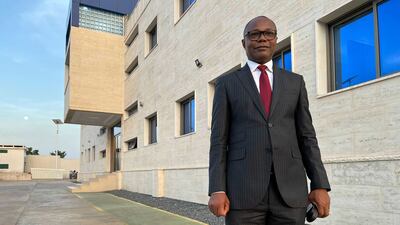
“Irena sees 2022 as a veritable turning point in the deployment for renewables as its cost-competitiveness has never been greater despite the lingering commodity and equipment cost inflation around the world,” said Francesco La Camera, the agency's director general.
“The most affected regions by the historic price shock were remarkably resilient, largely thanks to the massive increase of solar and wind in the last decade.”
Solar energy generation is on course to meet net-zero emissions targets by 2050, according to the International Energy Agency.
Solar photovoltaic generation surged by a record 270 terawatt hours last year to 1,300 terawatt hours, surpassing wind for the first time, the Paris-based agency said.
Direct cost savings, as well as curbing carbon dioxide emissions and local pollutants will yield substantial economic benefits, Irena said.
“Without the deployment of renewables over the last two decades, the economic disruption from the fossil fuel price shock in 2022 would have been much worse and, possibly, beyond many governments' ability to soften with public funding,” the agency said.
Inflation in commodity and equipment costs resulted in countries experiencing different cost trends last year.
At a global level, the weighted average cost of electricity fell by 3 per cent for utility-scale solar PV in 2022. It dropped by 5 per cent for onshore wind and by 22 per cent for geothermal, Irena said.
However, the costs for offshore wind and hydroelectric power increased by 2 per cent and 18 per cent, respectively.
“For the last 13 to 15 years, renewable power generation costs from solar and wind power have been falling,” the agency said.
“Between 2010 and 2022, solar and wind power became cost-competitive with fossil fuels even without financial support.”
“[The] expected high fossil fuel prices will cement the structural shift that has seen renewable power generation become the least cost source of new generation, even undercutting existing fossil fuel generators,” Irena said.
“Renewables can protect consumers from fossil fuel price shocks, avoid physical supply shortages and enhance energy security.”
Annual renewable power capacity must add an average of 1,000 gigawatts annually by 2030 to meet the goals of the Paris Agreement, the agency said in a report in June.
At the same time, global investments in energy transition technology must quadruple to $35 trillion, Irena said.
Last month, the agency said the supply of critical minerals used in electric vehicles and renewable energy projects was vulnerable to a range of geopolitical risks, and that the disruptions could affect the speed of the energy transition in the “short to medium term”.
Mercer, the investment consulting arm of US services company Marsh & McLennan, expects its wealth division to at least double its assets under management (AUM) in the Middle East as wealth in the region continues to grow despite economic headwinds, a company official said.
Mercer Wealth, which globally has $160 billion in AUM, plans to boost its AUM in the region to $2-$3bn in the next 2-3 years from the present $1bn, said Yasir AbuShaban, a Dubai-based principal with Mercer Wealth.
“Within the next two to three years, we are looking at reaching $2 to $3 billion as a conservative estimate and we do see an opportunity to do so,” said Mr AbuShaban.
Mercer does not directly make investments, but allocates clients’ money they have discretion to, to professional asset managers. They also provide advice to clients.
“We have buying power. We can negotiate on their (client’s) behalf with asset managers to provide them lower fees than they otherwise would have to get on their own,” he added.
Mercer Wealth’s clients include sovereign wealth funds, family offices, and insurance companies among others.
From its office in Dubai, Mercer also looks after Africa, India and Turkey, where they also see opportunity for growth.
Wealth creation in Middle East and Africa (MEA) grew 8.5 per cent to $8.1 trillion last year from $7.5tn in 2015, higher than last year’s global average of 6 per cent and the second-highest growth in a region after Asia-Pacific which grew 9.9 per cent, according to consultancy Boston Consulting Group (BCG). In the region, where wealth grew just 1.9 per cent in 2015 compared with 2014, a pickup in oil prices has helped in wealth generation.
BCG is forecasting MEA wealth will rise to $12tn by 2021, growing at an annual average of 8 per cent.
Drivers of wealth generation in the region will be split evenly between new wealth creation and growth of performance of existing assets, according to BCG.
Another general trend in the region is clients’ looking for a comprehensive approach to investing, according to Mr AbuShaban.
“Institutional investors or some of the families are seeing a slowdown in the available capital they have to invest and in that sense they are looking at optimizing the way they manage their portfolios and making sure they are not investing haphazardly and different parts of their investment are working together,” said Mr AbuShaban.
Some clients also have a higher appetite for risk, given the low interest-rate environment that does not provide enough yield for some institutional investors. These clients are keen to invest in illiquid assets, such as private equity and infrastructure.
“What we have seen is a desire for higher returns in what has been a low-return environment specifically in various fixed income or bonds,” he said.
“In this environment, we have seen a de facto increase in the risk that clients are taking in things like illiquid investments, private equity investments, infrastructure and private debt, those kind of investments were higher illiquidity results in incrementally higher returns.”
The Abu Dhabi Investment Authority, one of the largest sovereign wealth funds, said in its 2016 report that has gradually increased its exposure in direct private equity and private credit transactions, mainly in Asian markets and especially in China and India. The authority’s private equity department focused on structured equities owing to “their defensive characteristics.”
The nine articles of the 50-Year Charter
1. Dubai silk road
2. A geo-economic map for Dubai
3. First virtual commercial city
4. A central education file for every citizen
5. A doctor to every citizen
6. Free economic and creative zones in universities
7. Self-sufficiency in Dubai homes
8. Co-operative companies in various sectors
9: Annual growth in philanthropy
The biog
Profession: Senior sports presenter and producer
Marital status: Single
Favourite book: Al Nabi by Jibran Khalil Jibran
Favourite food: Italian and Lebanese food
Favourite football player: Cristiano Ronaldo
Languages: Arabic, French, English, Portuguese and some Spanish
Website: www.liliane-tannoury.com
SPECS
%3Cp%3EEngine%3A%20Twin-turbocharged%204-litre%20V8%3Cbr%3EPower%3A%20625%20bhp%3Cbr%3ETorque%3A%20630Nm%3Cbr%3EOn%20sale%3A%20Now%3Cbr%3EPrice%3A%20From%20Dh974%2C011%3C%2Fp%3E%0A