

The global energy crisis, triggered by Russia’s invasion of Ukraine, has highlighted the need for “closer dialogue” between natural gas producers and consumers to ensure long-term energy security, the International Energy Agency has said.
Although the tension in gas markets has “eased significantly” this year, deeper co-ordination among market players remains essential amid “momentous” market shifts, the Paris-based agency said in a report on Monday.
“A new global gas market is taking shape after last year’s crisis. Given this, responsible producers and consumers must reconsider their approaches to supply security and flexibility, co-operating even more closely,” said Keisuke Sadamori, the agency’s director of energy markets and security.
“Meaningful efforts are also needed to reduce the carbon footprint of gas supply chains, including through greater use of low-emissions gases.”
The EU set gas storage targets last year after Russia slashed its exports to the region in response to economic sanctions imposed on Moscow due to its military offensive against Ukraine.
Continuing at the current average filling rate, EU storage sites will be 90 per cent full by early August and potentially reach full capacity by the middle of September, the IEA said.
“However, full storage sites are no guarantee against market volatility during the winter,” the agency said.
A cold winter and a halt in Russian gas supplies could lead to market tension, the agency said, adding that “fierce” competition for gas exports may arise due to colder weather in North-East Asia and stronger-than-expected economic growth in China.
Gross domestic product in the world's second-largest economy expanded by an annual 6.3 per cent from April to June, after growing by 4.5 per cent in the previous three months as the country reopened after removing Covid-19 restrictions, according to the latest data released on Monday by the National Bureau of Statistics.
However, the pace of growth in the second quarter missed the 7.1 per cent estimate of economists polled by Bloomberg and the 7.3 per cent forecast of those surveyed by Reuters.
“The security of global gas supplies remains at the forefront of energy policymaking, with growing complexity for both the short and long term,” the IEA said.
Liquefied natural gas has become a “baseload” source of supply for Europe, with its share in total EU demand rising to about 35 per cent in 2022, from an average of 12 per cent during the 2010s, the agency said.
The IEA said that producers and consumers should explore the development of innovative commercial offerings, new procurement mechanisms and co-operative frameworks to ensure a flexible supply of LNG.
Global LNG trade hit a record $450 billion in 2022 amid a surge in European demand, according to the IEA.
Despite a rise in demand, LNG supply grew by only 5.5 per cent last year, mostly due to maintenance at large export terminals and as Freeport LNG’s Texas-based plant – one of the world’s largest export centres of the supercooled fuel – was shut down after a fire.
The US, which has emerged as Europe’s biggest LNG supplier, is expected to account for more than half of the global supply increase in 2023, the IEA said.
-
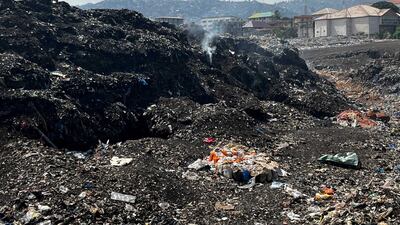
More than 2,000 people live on the Kolleh Town rubbish dump in central Freetown, Sierra Leone. Nick Webster / The National -
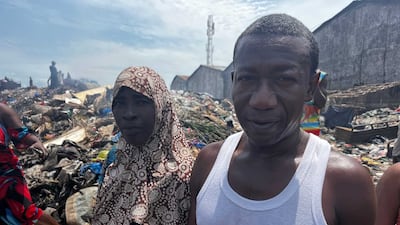
Kaditu Kariwallie, 55, a grandmother who raised her children and grandchildren on the site and Maligie Koroma, Freetown City Council supervisor at the Bomeh refuse site in Freetown Sierra Leone. Nick Webster / The National -
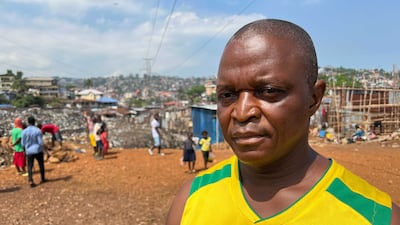
Daniel-Bob Jones, (yellow top) national chairman of community disaster management and Kolleh Town community chairman. Andy Scott / The National -

Yassin Kargbo, Country Manager for Infinitum Energy. The company has a plan to strip the site of its recyclable materials and redevelop the site for its residents. Andy Scott / The National -
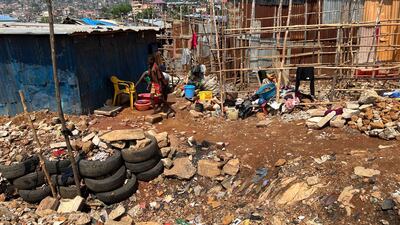
Kolleh Town landfill centre in Sierra Leone - home to more than 2,000 residents that mine the site for recyclable materials. Andy Scott / The National -
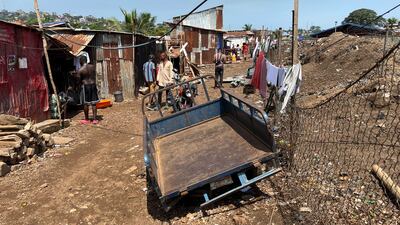
Kolleh Town landfill centre in Sierra Leone - home to more than 2,000 residents that mine the site for recyclable materials. Andy Scott / The National -
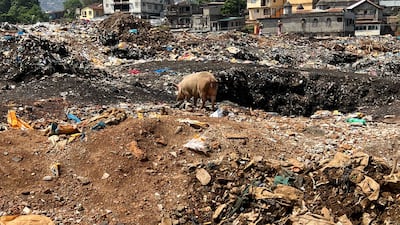
Kolleh Town landfill centre in Sierra Leone - home to more than 2,000 residents that mine the site for recyclable materials. Andy Scott / The National



