

The market for critical minerals, used in electric vehicles and renewable energy technologies, has more than doubled in size over the past five years, according to the International Energy Agency.
From 2017 to 2022, the energy sector drove a threefold increase in lithium demand, a 70 per cent surge in cobalt demand and a 40 per cent increase the demand for nickel, the Paris-based agency said in its Critical Minerals Market Review on Tuesday.
The energy transition minerals market reached $320 billion in 2022, moving it increasingly to the centre stage for the global mining industry, the IEA said.
Meanwhile, investment in critical mineral development rose by 30 per cent last year, following a 20 per cent increase in 2021.
Lithium led the way with a 50 per cent surge in investment, followed by copper and nickel, the agency said.
“At a pivotal moment for clean energy transitions worldwide, we are encouraged by the rapid growth in the market for critical minerals, which are crucial for the world to achieve its energy and climate goals,” said Fatih Birol, IEA executive director.
“Even so, major challenges remain. Much more needs to be done to ensure supply chains for critical minerals are secure and sustainable,” Mr Birol said.
If all critical mineral projects are completed as planned, supply would meet national climate pledges, the IEA said, but added that the risk of delays and technology-specific shortages called for caution.
“Diversity of supply also remains a concern, with many new project announcements coming from already dominant players,” the IEA said.
“Compared with three years ago, the share of the top three critical mineral producers in 2022 either remained unchanged or increased further, especially for nickel and cobalt,” the agency said.
“Additionally, environmental, social and governance practices are making mixed progress.”
Companies are making progress in community investment, worker safety, and gender balance, the IEA said.
However, greenhouse gas emissions per tonne of mineral output have remained high, with roughly the same amount emitted per tonne of mineral output every year, the agency said.
Global electric car sales are set to surge by 35 per cent this year, helped by government subsidies and the tightening of carbon dioxide emissions standards, the IEA said in an April report.
Electric car sales are projected to reach 14 million in 2023 from 10 million last year, according to the agency.
Meanwhile, global additions of renewable power capacity are expected to increase by a third this year as growing policy momentum, higher fossil fuel prices and energy security concerns drive adoption of solar and wind power, the IEA has said.
The growth will continue next year, with the world’s total renewable electricity capacity rising to 4,500 gigawatts, equivalent to the total power output of China and the US combined, the agency said in a report last month.
In April, the ministers of the G7 advanced economies agreed to a joint plan for critical mineral security, which the IEA will support, by producing medium and long-term outlooks for demand and supply to help inform decision-making.
The G7 stressed the importance of critical minerals for clean energy transition and the need to prevent economic and security risks caused by vulnerable supply chains, monopolisation and lack of diversification of existing suppliers.
-
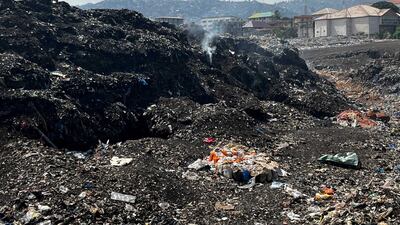
More than 2,000 people live on the Kolleh Town rubbish dump in central Freetown, Sierra Leone. Nick Webster / The National -
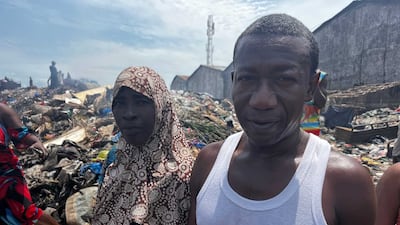
Kaditu Kariwallie, 55, a grandmother who raised her children and grandchildren on the site and Maligie Koroma, Freetown City Council supervisor at the Bomeh refuse site in Freetown Sierra Leone. Nick Webster / The National -
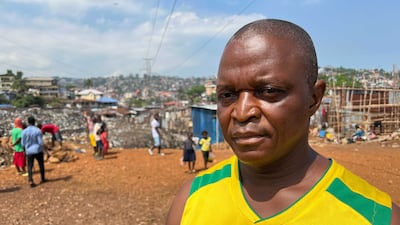
Daniel-Bob Jones, (yellow top) national chairman of community disaster management and Kolleh Town community chairman. Andy Scott / The National -

Yassin Kargbo, Country Manager for Infinitum Energy. The company has a plan to strip the site of its recyclable materials and redevelop the site for its residents. Andy Scott / The National -
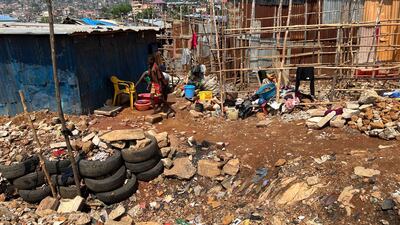
Kolleh Town landfill centre in Sierra Leone - home to more than 2,000 residents that mine the site for recyclable materials. Andy Scott / The National -
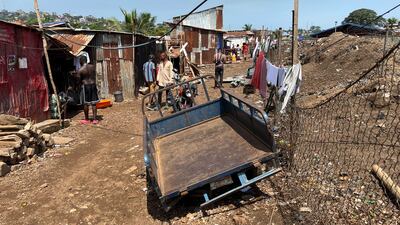
Kolleh Town landfill centre in Sierra Leone - home to more than 2,000 residents that mine the site for recyclable materials. Andy Scott / The National -
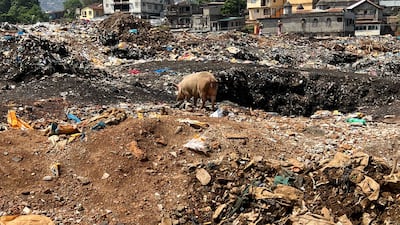
Kolleh Town landfill centre in Sierra Leone - home to more than 2,000 residents that mine the site for recyclable materials. Andy Scott / The National



