The UAE’s gas sector has long presented some curious paradoxes. Despite having the world’s ninth-largest reserves, the country is a net importer of gas.
It is one of only five countries that exports and imports liquefied natural gas (LNG) — the others have far-flung territories that need tankers to transfer gas between them. But policy changes in recent years will help to resolve those paradoxes and move the nation’s gas business into a new era.
Much of the UAE’s gas production, which is associated with oil output, is inflexible. Demand varies widely by season, while oil production can be curtailed by factors such as commitments under the Opec+ agreement.
Until the start-up of nuclear and solar power in recent years, the country was almost entirely reliant on gas for generating electricity, while it is also a fuel and feedstock for industries such as petrochemicals.
The strong economic and population growth over the past two decades led to surging demand, outstripping, at least temporarily, the amount that could be produced domestically.
In July 2007, Dolphin Energy, which is majority-owned by Mubadala, began delivering gas to the UAE by pipeline from Qatar.
In 2010, Dubai started importing LNG through a floating terminal. This, along with the conversion of the Margham gasfield to an underground storage facility, provided flexibility to meet varying demand. In 2016, Sharjah and Ras Al Khaimah signed up to receive steady supplies through Dolphin.
However, it was always apparent that there were risks and costs involved in depending on imports, as well as opportunities to make full use of the UAE’s own gas resources. Steps taken from 2008 have taken time to yield results, but are now coming into effect at a very opportune time — and across four dimensions.
First, to consume less gas and use it more efficiently. Subsidies for electricity and water use have been reduced and reformed, power plants have been upgraded with more efficient equipment and water desalination is being switched to reverse-osmosis, which is less energy-intensive and more flexible than the traditional thermal methods.
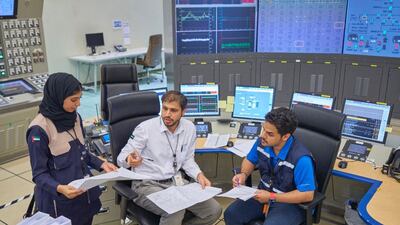
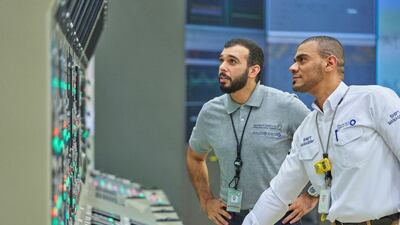
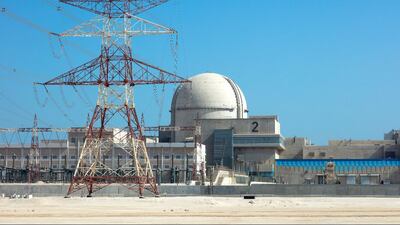
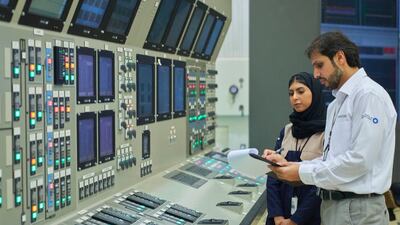
Second, to supplement gas in generating power. The UAE’s white paper on civil nuclear power was published in 2008, construction of the Barakah nuclear power plant commenced in July 2012. It began generating commercial power in April 2021 and the fourth and, for now, final reactor is undergoing testing.
In January 2012, Dubai’s Mohammed bin Rashid Al Maktoum Solar Park was launched and Dubai Electricity and Water Authority (Dewa) is now preparing its sixth phase, on the way to an ultimate capacity of 5 gigawatts by 2030 — about half of the emirate’s peak demand.
Abu Dhabi’s Ewec is constructing the world’s largest single-site solar farm at Al Dhafra with a capacity of 2 gigawatts.
Third, to boost domestic gas production. In 2018, Suhail Al Mazrouei, Minister of Energy and Infrastructure, said the country would be self-sufficient by 2030.
Abu Dhabi National Oil Company (Adnoc) launched a programme to develop more challenging resources in partnership with international oil companies. Last year, it announced an increase of 16 trillion cubic feet, or almost 6 per cent, in its gas reserves.
This includes the world’s largest offshore project for sour gas, containing corrosive and toxic hydrogen sulphide. The Ghasha field should increase national production by more than a quarter by the end of the decade. And a consortium comprising Italy’s Eni and Thailand’s PTTEP found gas offshore in February and drilled deeper for gas last month.
In February 2020, Dubai announced the discovery of large volumes of unconventional gas south of Jebel Ali, although its commercial status remains unclear.
Sharjah and Ras Al Khaimah have revived local exploration and Sharjah National Oil Corporation has also launched a gas storage project to balance seasonal demand.
Fourth, to utilise this newly-available gas productively. As demand drops in the power sector because of higher efficiency, nuclear and solar plants, it can be channelled to local industry and international markets.
Adnoc is building a new LNG export facility at Fujairah. As Europe and Asia buckle under the weight of exceptionally high gas prices and the cuts in Russian exports, the world needs more supply.
And the Taziz industrial complex at Ruwais is the centrepiece of new gas-based industry. Supplied at competitive but not giveaway prices, it will include, among others, a “blue” ammonia plant — with carbon capture and storage — a world-scale methanol plant, the country’s first for this essential fuel and basic chemical, and a factory for the plastic PVC.
The production of blue ammonia and hydrogen from gas can progress alongside green hydrogen made from renewable energy. In the longer term, that can replace polluting, gas-based “grey” hydrogen used in oil refineries and fertiliser plants.
Three elements are necessary to continue this run of success. First is to keep production costs down from these more technically complex new resources.
World LNG prices are very high now and the market is extremely tight, but that will not always be the case, and additional exports from Qatar, Africa and the US will come to customers around 2026-2027, the same time as Adnoc’s Fujairah facility.
Second is to maintain the momentum on the new industrial plants, where the UAE competes with Saudi Arabia’s already giant petrochemical sector and possibly a post-sanctions Iran.
Third is to keep new gas production and use as low-carbon as possible, and continue the progress on renewable energy. The long-prepared turnaround in the UAE’s gas situation is bearing fruit. Now is the time to ensure its long-term sustainability.
Robin M Mills is CEO of Qamar Energy, and author of The Myth of the Oil Crisis

Company%C2%A0profile
%3Cp%3E%3Cstrong%3EName%3A%20%3C%2Fstrong%3EPyppl%3C%2Fp%3E%0A%3Cp%3E%3Cstrong%3EEstablished%3A%20%3C%2Fstrong%3E2017%3C%2Fp%3E%0A%3Cp%3E%3Cstrong%3EFounders%3A%20%3C%2Fstrong%3EAntti%20Arponen%20and%20Phil%20Reynolds%26nbsp%3B%3C%2Fp%3E%0A%3Cp%3E%3Cstrong%3EBased%3A%3C%2Fstrong%3E%20UAE%3C%2Fp%3E%0A%3Cp%3E%3Cstrong%3ESector%3A%3C%2Fstrong%3E%20financial%20services%3C%2Fp%3E%0A%3Cp%3E%3Cstrong%3EInvestment%3A%3C%2Fstrong%3E%20%2418.5%20million%3C%2Fp%3E%0A%3Cp%3E%3Cstrong%3EEmployees%3A%3C%2Fstrong%3E%20150%3C%2Fp%3E%0A%3Cp%3E%3Cstrong%3EFunding%20stage%3A%3C%2Fstrong%3E%20series%20A%2C%20closed%20in%202021%3C%2Fp%3E%0A%3Cp%3E%3Cstrong%3EInvestors%3A%3C%2Fstrong%3E%20venture%20capital%20companies%2C%20international%20funds%2C%20family%20offices%2C%20high-net-worth%20individuals%3C%2Fp%3E%0A
Conflict, drought, famine
Estimates of the number of deaths caused by the famine range from 400,000 to 1 million, according to a document prepared for the UK House of Lords in 2024.
It has been claimed that the policies of the Ethiopian government, which took control after deposing Emperor Haile Selassie in a military-led revolution in 1974, contributed to the scale of the famine.
Dr Miriam Bradley, senior lecturer in humanitarian studies at the University of Manchester, has argued that, by the early 1980s, “several government policies combined to cause, rather than prevent, a famine which lasted from 1983 to 1985. Mengistu’s government imposed Stalinist-model agricultural policies involving forced collectivisation and villagisation [relocation of communities into planned villages].
The West became aware of the catastrophe through a series of BBC News reports by journalist Michael Buerk in October 1984 describing a “biblical famine” and containing graphic images of thousands of people, including children, facing starvation.
Band Aid
Bob Geldof, singer with the Irish rock group The Boomtown Rats, formed Band Aid in response to the horrific images shown in the news broadcasts.
With Midge Ure of the band Ultravox, he wrote the hit charity single Do They Know it’s Christmas in December 1984, featuring a string of high-profile musicians.
Following the single’s success, the idea to stage a rock concert evolved.
Live Aid was a series of simultaneous concerts that took place at Wembley Stadium in London, John F Kennedy Stadium in Philadelphia, the US, and at various other venues across the world.
The combined event was broadcast to an estimated worldwide audience of 1.5 billion.
Expert input
If you had all the money in the world, what’s the one sneaker you would buy or create?
“There are a few shoes that have ‘grail’ status for me. But the one I have always wanted is the Nike x Patta x Parra Air Max 1 - Cherrywood. To get a pair in my size brand new is would cost me between Dh8,000 and Dh 10,000.” Jack Brett
“If I had all the money, I would approach Nike and ask them to do my own Air Force 1, that’s one of my dreams.” Yaseen Benchouche
“There’s nothing out there yet that I’d pay an insane amount for, but I’d love to create my own shoe with Tinker Hatfield and Jordan.” Joshua Cox
“I think I’d buy a defunct footwear brand; I’d like the challenge of reinterpreting a brand’s history and changing options.” Kris Balerite
“I’d stir up a creative collaboration with designers Martin Margiela of the mixed patchwork sneakers, and Yohji Yamamoto.” Hussain Moloobhoy
“If I had all the money in the world, I’d live somewhere where I’d never have to wear shoes again.” Raj Malhotra
Aggro%20Dr1ft
%3Cp%3EDirector%3A%20Harmony%20Korine%3Cbr%3EStars%3A%20Jordi%20Molla%2C%20Travis%20Scott%3Cbr%3ERating%3A%202%2F5%3C%2Fp%3E%0A
Ten tax points to be aware of in 2026
1. Domestic VAT refund amendments: request your refund within five years
If a business does not apply for the refund on time, they lose their credit.
2. E-invoicing in the UAE
Businesses should continue preparing for the implementation of e-invoicing in the UAE, with 2026 a preparation and transition period ahead of phased mandatory adoption.
3. More tax audits
Tax authorities are increasingly using data already available across multiple filings to identify audit risks.
4. More beneficial VAT and excise tax penalty regime
Tax disputes are expected to become more frequent and more structured, with clearer administrative objection and appeal processes. The UAE has adopted a new penalty regime for VAT and excise disputes, which now mirrors the penalty regime for corporate tax.
5. Greater emphasis on statutory audit
There is a greater need for the accuracy of financial statements. The International Financial Reporting Standards standards need to be strictly adhered to and, as a result, the quality of the audits will need to increase.
6. Further transfer pricing enforcement
Transfer pricing enforcement, which refers to the practice of establishing prices for internal transactions between related entities, is expected to broaden in scope. The UAE will shortly open the possibility to negotiate advance pricing agreements, or essentially rulings for transfer pricing purposes.
7. Limited time periods for audits
Recent amendments also introduce a default five-year limitation period for tax audits and assessments, subject to specific statutory exceptions. While the standard audit and assessment period is five years, this may be extended to up to 15 years in cases involving fraud or tax evasion.
8. Pillar 2 implementation
Many multinational groups will begin to feel the practical effect of the Domestic Minimum Top-Up Tax (DMTT), the UAE's implementation of the OECD’s global minimum tax under Pillar 2. While the rules apply for financial years starting on or after January 1, 2025, it is 2026 that marks the transition to an operational phase.
9. Reduced compliance obligations for imported goods and services
Businesses that apply the reverse-charge mechanism for VAT purposes in the UAE may benefit from reduced compliance obligations.
10. Substance and CbC reporting focus
Tax authorities are expected to continue strengthening the enforcement of economic substance and Country-by-Country (CbC) reporting frameworks. In the UAE, these regimes are increasingly being used as risk-assessment tools, providing tax authorities with a comprehensive view of multinational groups’ global footprints and enabling them to assess whether profits are aligned with real economic activity.
Contributed by Thomas Vanhee and Hend Rashwan, Aurifer
War 2
Director: Ayan Mukerji
Stars: Hrithik Roshan, NTR, Kiara Advani, Ashutosh Rana
Rating: 2/5
T20 World Cup Qualifier
October 18 – November 2
Opening fixtures
Friday, October 18
ICC Academy: 10am, Scotland v Singapore, 2.10pm, Netherlands v Kenya
Zayed Cricket Stadium: 2.10pm, Hong Kong v Ireland, 7.30pm, Oman v UAE
UAE squad
Ahmed Raza (captain), Rohan Mustafa, Ashfaq Ahmed, Rameez Shahzad, Darius D’Silva, Mohammed Usman, Mohammed Boota, Zawar Farid, Ghulam Shabber, Junaid Siddique, Sultan Ahmed, Imran Haider, Waheed Ahmed, Chirag Suri, Zahoor Khan
Players out: Mohammed Naveed, Shaiman Anwar, Qadeer Ahmed
Players in: Junaid Siddique, Darius D’Silva, Waheed Ahmed
ALRAWABI%20SCHOOL%20FOR%20GIRLS
%3Cp%3ECreator%3A%20Tima%20Shomali%3C%2Fp%3E%0A%3Cp%3EStarring%3A%C2%A0Tara%20Abboud%2C%C2%A0Kira%20Yaghnam%2C%20Tara%20Atalla%3C%2Fp%3E%0A%3Cp%3ERating%3A%204%2F5%3C%2Fp%3E%0A
Killing of Qassem Suleimani
Company%C2%A0profile
%3Cp%3E%3Cstrong%3ECompany%20name%3A%20%3C%2Fstrong%3EOutsized%0D%3Cbr%3E%3Cstrong%3EStarted%3A%20%3C%2Fstrong%3E2016%0D%3Cbr%3E%3Cstrong%3EFounders%3A%20%3C%2Fstrong%3EAzeem%20Zainulbhai%2C%20Niclas%20Thelander%2C%20Anurag%20Bhalla%20and%20Johann%20van%20Niekerk%20%0D%3Cbr%3E%3Cstrong%3EBased%3A%20%3C%2Fstrong%3EIndia%2C%20South%20Africa%2C%20South-East%20Asia%2C%20Mena%0D%3Cbr%3E%3Cstrong%3ESector%3A%3C%2Fstrong%3E%20Recruitment%0D%3Cbr%3E%3Cstrong%3EInvestment%20raised%3A%3C%2Fstrong%3E%20%241%20million%0D%3Cbr%3E%3Cstrong%3ECurrent%20staff%20count%3A%3C%2Fstrong%3E%2040%0D%3Cbr%3E%3Cstrong%3EInvestors%3A%20%3C%2Fstrong%3ESeed%20and%20angel%20investors%0D%3Cbr%3E%3C%2Fp%3E%0A
Name: Peter Dicce
Title: Assistant dean of students and director of athletics
Favourite sport: soccer
Favourite team: Bayern Munich
Favourite player: Franz Beckenbauer
Favourite activity in Abu Dhabi: scuba diving in the Northern Emirates
Company%20Profile
%3Cp%3E%3Cstrong%3ECompany%20name%3A%3C%2Fstrong%3E%20myZoi%3Cbr%3E%3Cstrong%3EStarted%3A%3C%2Fstrong%3E%202021%3Cbr%3E%3Cstrong%3EFounders%3A%3C%2Fstrong%3E%20Syed%20Ali%2C%20Christian%20Buchholz%2C%20Shanawaz%20Rouf%2C%20Arsalan%20Siddiqui%2C%20Nabid%20Hassan%3Cbr%3E%3Cstrong%3EBased%3A%3C%2Fstrong%3E%20UAE%3Cbr%3E%3Cstrong%3ENumber%20of%20staff%3A%3C%2Fstrong%3E%2037%3Cbr%3E%3Cstrong%3EInvestment%3A%3C%2Fstrong%3E%20Initial%20undisclosed%20funding%20from%20SC%20Ventures%3B%20second%20round%20of%20funding%20totalling%20%2414%20million%20from%20a%20consortium%20of%20SBI%2C%20a%20Japanese%20VC%20firm%2C%20and%20SC%20Venture%3C%2Fp%3E%0A
Who has lived at The Bishops Avenue?
- George Sainsbury of the supermarket dynasty, sugar magnate William Park Lyle and actress Dame Gracie Fields were residents in the 1930s when the street was only known as ‘Millionaires’ Row’.
- Then came the international super rich, including the last king of Greece, Constantine II, the Sultan of Brunei and Indian steel magnate Lakshmi Mittal who was at one point ranked the third richest person in the world.
- Turkish tycoon Halis Torprak sold his mansion for £50m in 2008 after spending just two days there. The House of Saud sold 10 properties on the road in 2013 for almost £80m.
- Other residents have included Iraqi businessman Nemir Kirdar, singer Ariana Grande, holiday camp impresario Sir Billy Butlin, businessman Asil Nadir, Paul McCartney’s former wife Heather Mills.
Hunting park to luxury living
- Land was originally the Bishop of London's hunting park, hence the name
- The road was laid out in the mid 19th Century, meandering through woodland and farmland
- Its earliest houses at the turn of the 20th Century were substantial detached properties with extensive grounds
Avatar: Fire and Ash
Director: James Cameron
Starring: Sam Worthington, Sigourney Weaver, Zoe Saldana
Rating: 4.5/5
Ant-Man%20and%20the%20Wasp%3A%20Quantumania
%3Cp%3E%3Cstrong%3EDirector%3A%20%3C%2Fstrong%3EPeyton%20Reed%3Cbr%3E%3Cbr%3E%3Cstrong%3EStars%3A%3C%2Fstrong%3E%20Paul%20Rudd%2C%20Evangeline%20Lilly%2C%20Jonathan%20Majors%3Cbr%3E%3Cbr%3E%3Cstrong%3ERating%3A%20%3C%2Fstrong%3E2%2F5%3C%2Fp%3E%0A
India squad
Virat Kohli (captain), Rohit Sharma, Mayank Agarwal, K.L. Rahul, Shreyas Iyer, Manish Pandey, Rishabh Pant, Shivam Dube, Kedar Jadhav, Ravindra Jadeja, Yuzvendra Chahal, Kuldeep Yadav, Deepak Chahar, Mohammed Shami, Shardul Thakur.
Profile
Name: Carzaty
Founders: Marwan Chaar and Hassan Jaffar
Launched: 2017
Employees: 22
Based: Dubai and Muscat
Sector: Automobile retail
Funding to date: $5.5 million