

Europe may be hurtling toward a sudden halt of Russian gas, a scenario that would trigger energy rationing, higher inflation and a deep recession.
A showdown over payment terms has already led Moscow to turn off taps to Poland and Bulgaria. With supply already tight, it won’t take much more to send energy markets into shock.
Europe’s natural gas balance is “fragile and it remains just one supply disruption away from completely falling apart”, said Shikha Chaturvedi, an analyst at JPMorgan Chase.
Unless processes can be resolved to meet Kremlin demands, while also steering clear of European Union sanctions, more countries are at risk of being shut off in the coming days or weeks.
Europe relies on Russian gas for one-fifth of its electricity generation and a minor disruption could quickly ripple across the continent.
Storage levels are currently at just 32 per cent capacity, compared with the target of at least 80 per cent needed to keep homes heated and factories running through the winter.
The shutoff of Poland and Bulgaria shows the strain. While the volumes are relatively low, the shortfall soaked up supplies from Germany and liquefied natural gas cargos. That reduces the buffer to cope with further disruption.
President Vladimir Putin has decreed that gas customers in Europe pay in roubles, which the EU says violates sanctions and has called for companies to continue paying in euros — leaving it up to the Kremlin to refuse or accept.
While the bloc aims to cut its dependency on Russian gas by two-thirds this year, an abrupt halt would come too soon.
-
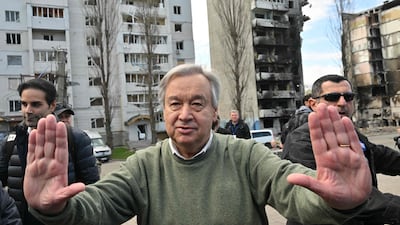
UN Secretary General Antonio Guterres visits Borodyanka, near Kyiv, where Russian forces are accused of killing civilians. AFP -
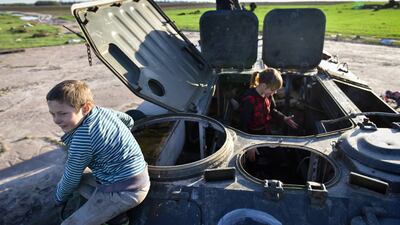
Children play in the wreckage of a Russian armoured vehicle in Lukashivka, Chernihiv region, northern Ukraine. The village has been retaken by Ukrainian forces. EPA -
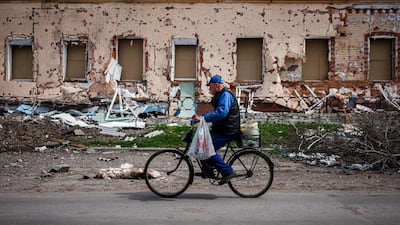
A cyclist passes a destroyed building in Derhachi village, near besieged city Kharkiv, in north-eastern Ukraine. AFP -
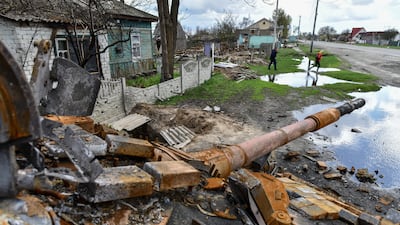
Burnt-out wreckage of a tank in Kolychivka village, Chernihiv region, northern Ukraine. EPA -
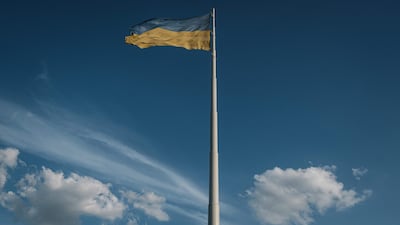
A Ukrainian flag flies in a park in Kramatorsk, Donetsk region, eastern Ukraine. A rocket attack on the city railway station earlier in April killed at least 50 people. AFP -
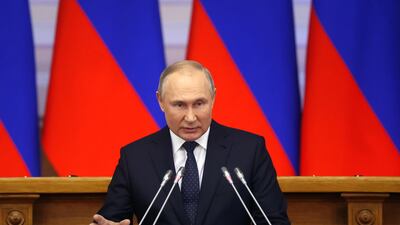
Russian President Vladimir Putin addresses a meeting of MPs in St Petersburg. EPA -

Youngsters Faddei and Oleksandr play in front of a church damaged during Russia's invasion of Ukraine, in the Chernihiv region. Reuters -
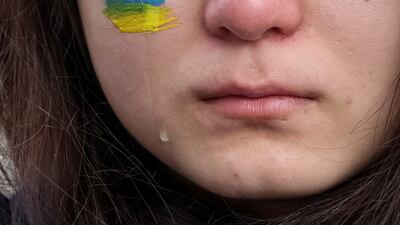
A demonstrator turns emotional as she attends a rally in Kyiv demanding a humanitarian corridor to rescue civilians from Mariupol. Reuters -
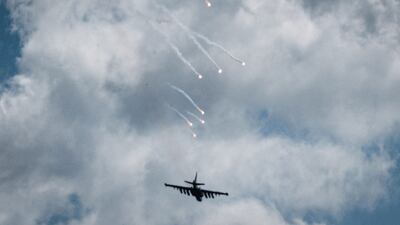
A Ukrainian Sukhoi Su-25 releases decoy flares as it provides air support to Ukrainian ground forces near central city of Yampil. AFP -
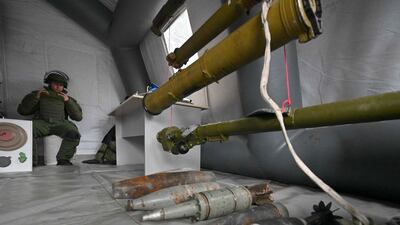
An officer from National Guard of Ukraine surveys weapons left behind by Russian troops in Chernobyl. AFP -

Mr Putin attends a meeting with UN Secretary General Antonio Guterres in Moscow. Reuters -
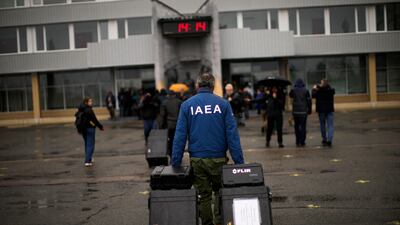
Members of a team from the International Atomic Energy Agency carry equipment as they arrive at the Chernobyl nuclear power plant, in Chernobyl, Ukraine. AP -
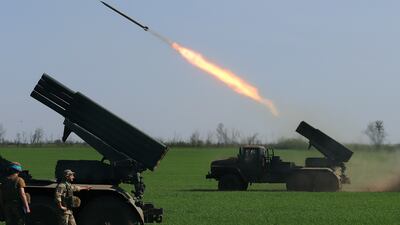
Ukrainian troops fire rockets from the city of Popasna, near Luhansk. EPA -
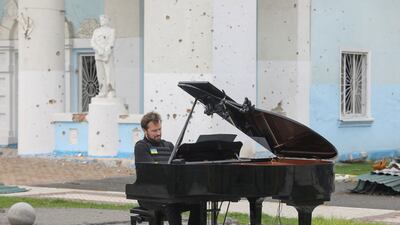
Lithuanian musician Darius Mazintas plays a piano in front of the Central House of Culture destroyed during Russia's invasion, in the town of Irpin, outside Kyiv. Reuters -

Ukrainian refugees Julia, second left, 32, and Miroslava, left, 11, walk away with relatives who received them after they crossed into Poland from Ukraine at the Dorohusk border. AFP -
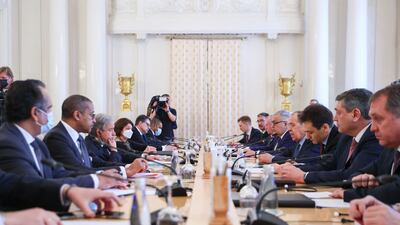
Russian Foreign Minister Sergey Lavrov meets Mr Guterres in Moscow. AFP -
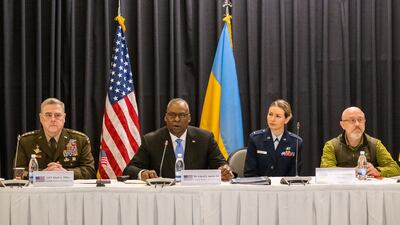
US Chairman of the Joint Chiefs of Staff Gen Mark Milley, left, US Secretary of Defence Lloyd Austin, second left, and Ukrainian Minister of Defence Oleksii Reznikov, right, attend the Ukraine Security Consultative Group meeting at Ramstein airbase in Ramstein-Miesenbach, Germany. Getty Images -
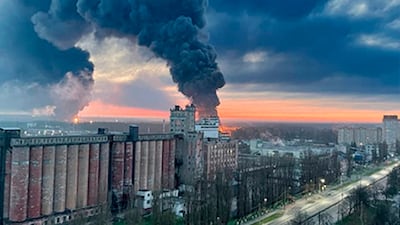
Smoke rises from an oil terminal hit by fire in Bryansk, Russia. AP -
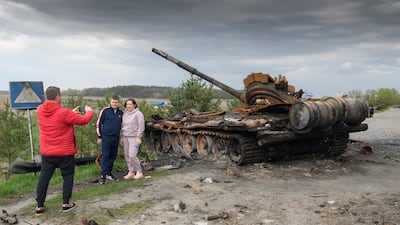
People take pictures by the wreckage of a Russian military vehicle, in the village of Rusaniv, Kyiv region. Reuters -
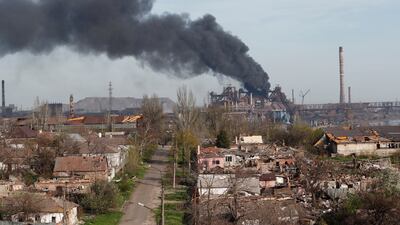
Smoke rises above the Azovstal Iron and Steel Works plant amid fighting in Mariupol, Ukraine. Reuters -
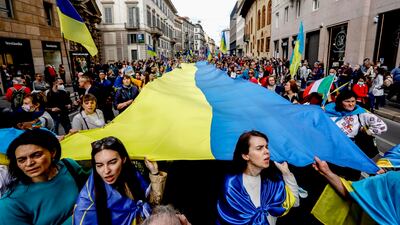
People carry a large Ukrainian flag as they attend a rally to mark the 77th anniversary of Liberation Day in Milan, Italy. The day remembers Italians who fought against the Nazis and Mussolini's troops during the Second World War. EPA -
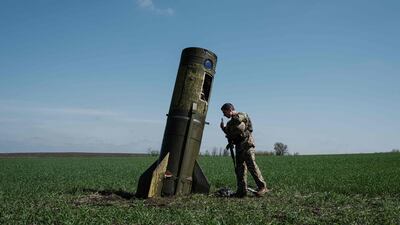
A Ukrainian soldier looks at a Russian ballistic missile's booster stage that fell in a field in Bohodarove, eastern Ukraine. AFP -
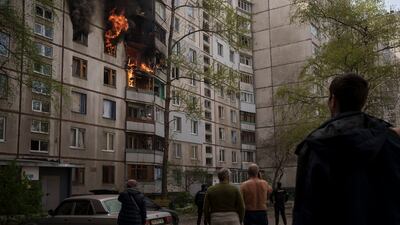
People watch as a residential building burns after Russian bombardment in Kharkiv, Ukraine. AP -

Ukraine's President Volodymyr Zelenskyy meets US Secretary of State Antony Blinken and US Defence Secretary Lloyd Austin. Reuters -
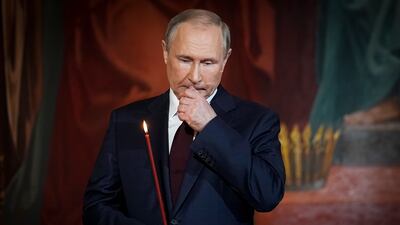
Russian President Vladimir Putin attends the Orthodox Easter service at the Cathedral of Christ the Saviour in Moscow. EPA -
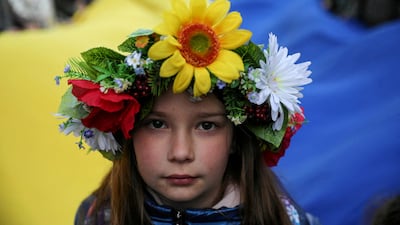
A young girl in front of people carrying a huge Ukrainian flag during a peaceful demonstration entitled 'Solidarity with Ukraine' in Krakow, Poland. Reuters -
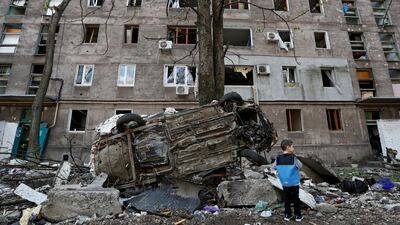
A boy stands next to a wrecked vehicle in front of an apartment damaged during the conflict in the southern port city of Mariupol. Reuters -
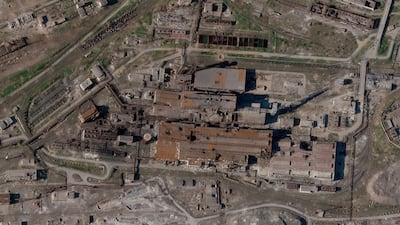
This satellite image from Planet Labs PBC shows damage at the Azovstal steelworks in Mariupol, Ukraine. AP -
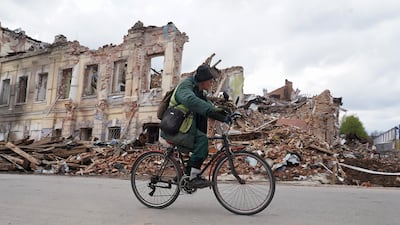
A Ukrainian man rides in front of a destroyed building in Kharkiv which had been shelled by the Russians. EPA -
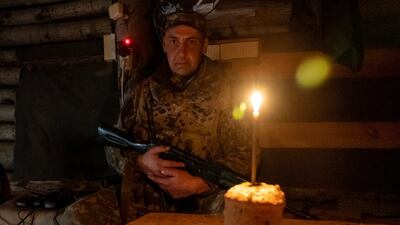
A Ukrainian Territorial Defence fighter in a shelter with an Easter Cake near Kharkiv. Ukrainians mark Orthodox Easter today. EPA -
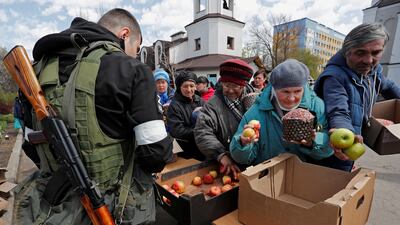
Residents receive Easter cakes and apples handed out by pro-Russian troops on Easter Day at the Svyato-Troitsky Church in the southern port city of Mariupol. Reuters -
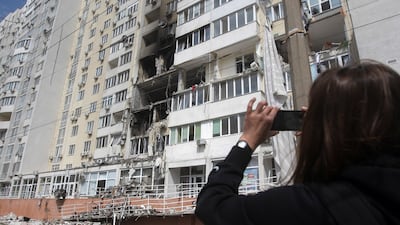
A woman photographs the scene of yesterday's shelling in the southern Ukraine city of Odesa. Eight people were killed, including a three-month child, and about 20 were wounded. EPA -
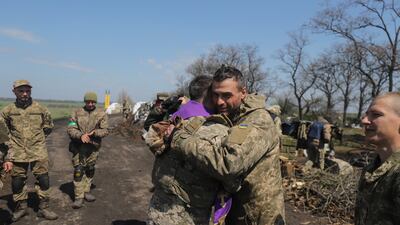
A military chaplain blesses Ukrainian soldiers on the occasion of Orthodox Easter not far from the city of Izyum in Kharkiv. EPA -
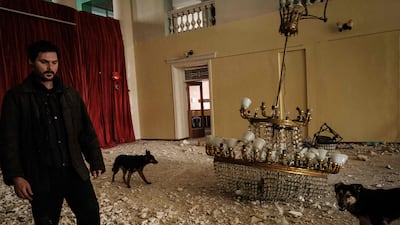
An internally displaced man walks with dogs in the Palace of Culture, which was damaged by shelling in Rubizhne, eastern Ukraine. AFP -
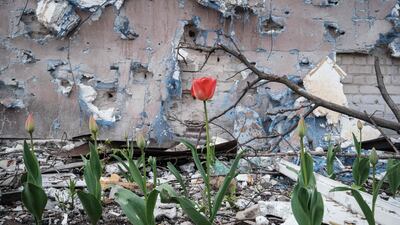
Tulips grow next to a building destroyed by shelling in Rubizhne. AFP -
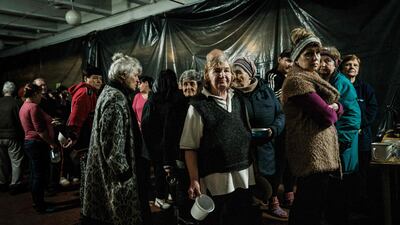
Internally displaced people wait to receive food inside a factory that has been turned into a shelter, in Severodonetsk. AFP -
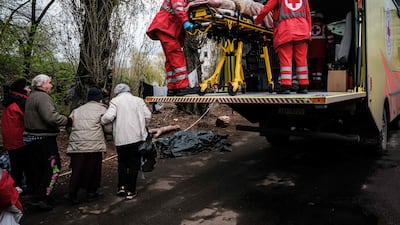
Members of the Ukrainian Red Cross carry a woman, 92, to an ambulance from a bunker at a factory in Severodonetsk. AFP -
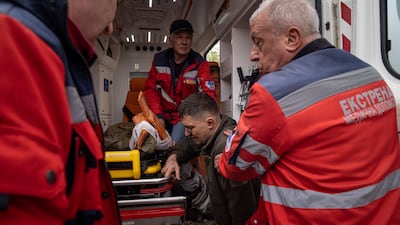
Ambulance workers move an injured Ukrainian serviceman to a hospital in Donetsk. AP -
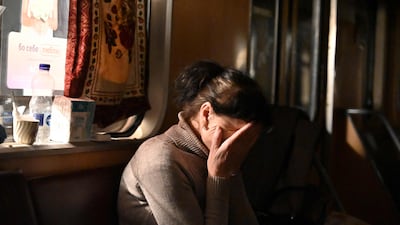
A woman sits inside a subway station that has been turned into a shelter, on the outskirts of second largest Ukrainian city, Kharkiv. AFP -
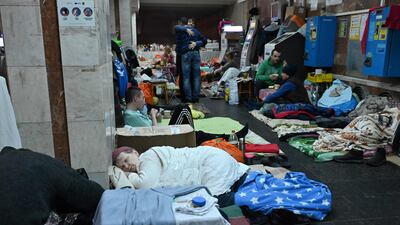
Residents shelter in a subway station in Kharkiv. AFP -
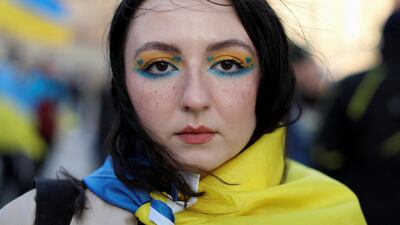
Anastasiya Kryvoho attends a candlelight vigil for Ukraine on the Orthodox Holy Saturday, in Toronto, Canada. Reuters -

Ukrainian President Volodymyr Zelenskyy addresses a press conference with international media in an underground metro station in Kyiv. AFP -
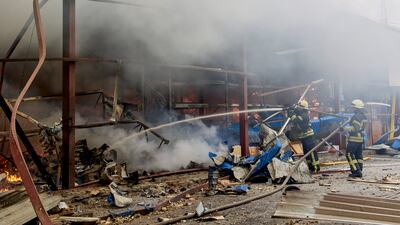
Firefighters work at the scene of a fire after shelling in Kharkiv, Ukraine. EPA -

A family from Myrne, a town occupied by Russian forces, wait to register with police at an evacuation point for people fleeing from Mariupol, Melitopol and surrounding towns. Getty Images -
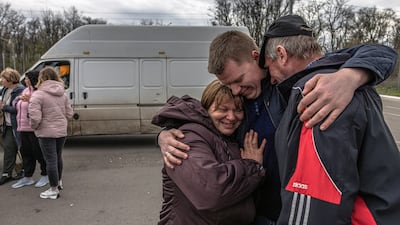
Oleksandr, 25, meets his parents Olga, 49, and Oleksandr, 50, who fled from the Russian-occupied village of Lyubimivka, at the evacuation point in Zaporizhzhia. EPA -
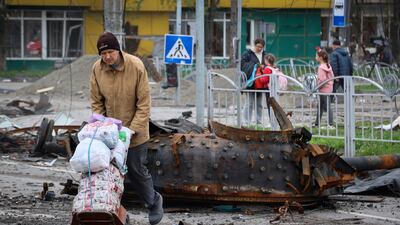
Residents walk near a damaged military vehicle in an area controlled by Russian-backed separatist forces in Mariupol. AP -
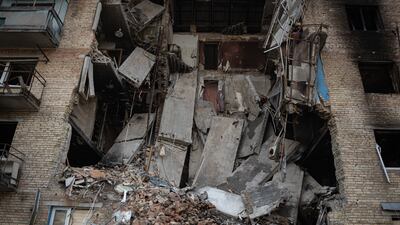
A heavily damaged apartment building in Horenka. Getty Images -
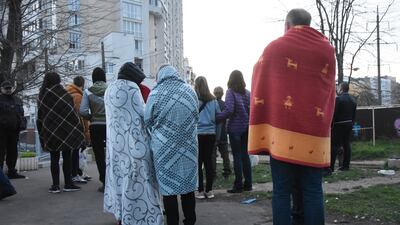
Residents wrapped in blankets stand near their houses damaged by Russian shelling in Odesa. AP -
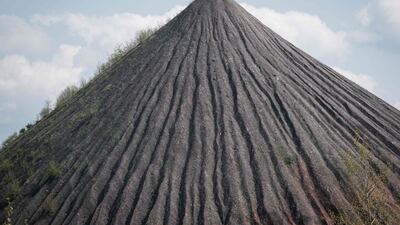
A Ukrainian flag is installed on top of a gob pile in Lysychans, eastern Ukraine. AFP -
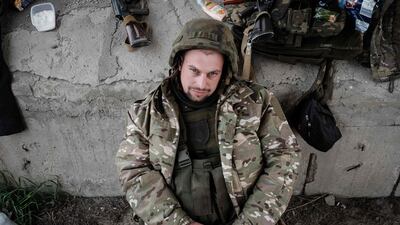
A Ukrainian soldier rests at a checkpoint in Severodonetsk. AFP


The EU has offered vague guidelines in an effort to stand up to Russia over its invasion of Ukraine while maintaining gas flows.
On Friday, Russia clarified the rules on how European customers are required to pay, easing the terms slightly but still leaving doubts over the role of the country’s sanctioned central bank in converting euros to roubles.
EU energy ministers will gather in Brussels on Monday for an emergency meeting to discuss options to maintain energy supplies and the fallout from the move by state-owned Gazprom to cut off Poland and Bulgaria.
The stand-off risks creating divisions between heavy importers such as Germany and those less exposed like France.
If Russia refused to send the fuel — critical for chemicals processes and powering auto factories — European governments would quickly implement rationing mechanisms.
A complete halt in supplies across the region would lead to a 10 per cent reduction of industrial demand, according to energy consultancy Wood Mackenzie.
Germany still relies on Russia for 35 per cent of its gas needs after starting to diversify even before the war started.
Chancellor Olaf Scholz’s administration has invoked the first step of an emergency plan, which includes closely monitoring usage. The next stage would involve directing supply.
Even without energy rationing, Europe’s economy is on shaky ground. The eurozone grew a slower-than-expected 0.2 per cent in the first quarter, reflecting a contraction in Italy, stagnation in France and weak expansion in Spain. Germany narrowly avoided a recession.
“Russia is showing that it’s ready to get serious,” German Economy Minister Robert Habeck said in Berlin last week, acknowledging that the country won’t be in a position to offset Russian gas for more than a year. “That’s not realistic, but we have to nonetheless attempt the unrealistic.”
If a cut off in gas supplies were to last more than a few months, it would have major economic implications for Europe.
Higher gas prices would increase the risk for eurozone inflation, already predicted to be at elevated levels of 7 per cent this year, according to Edward Gardner, a commodities analyst at Capital Economics.
“Given the reliance of Germany’s heavy industry on Russian gas, any interruption would represent a significant drag on economic growth,” said Mark Haefele, chief investment officer at UBS Global Wealth Management.
Uniper, Germany’s largest importer of Russian gas, is pursuing a workaround that would see it opening a euro account in Russia and allowing the funds to be converted by Gazprombank — one of the few Russian lenders that hasn’t been sanctioned. It has to make a payment in late May.
Berlin has signalled the plan is in compliance with EU guidelines, but it’s unclear if it will satisfy Moscow.
Companies from Austria and Italy have also said they believe that they will be able to keep gas flowing. That optimism has kept a lid on prices, with European gas futures rising just 1.1 per cent last week despite the shutoff of two EU member states.
Already contending with Europe’s penalties and plans to phase out imports of Russian coal and oil, the Kremlin would risk eliminating another source of revenue if it plays hard ball over gas payments.
“Russia’s loss of export earnings would be significant,” research group Energy Aspects said in a note this week.
Even if a crisis is averted for now, Mr Putin could still try again to use gas to hurt the EU and undermine the bloc’s solidarity.

