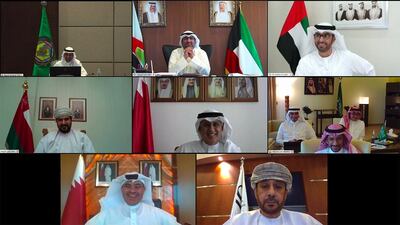
Dr Sultan Al Jaber reaffirmed the UAE’s commitment to the continued co-ordination, consultation and exchange of ideas and expertise to support GCC economic actions at a virtual meeting on Thursday.
The UAE’s Minister of Industry and Advanced Technology also praised the collective efforts to ensure business continuity across all sectors during the Covid-19 pandemic.
Dr Al Jaber was chairing a virtual meeting of the Industrial Co-operation Committee of the Gulf Co-operation Council.
Attendees discussed a set of priority issues including efforts to combat the coronavirus pandemic, and how to optimise and leverage the technologies of the Fourth Industrial Revolution in order to empower the industrial sectors across the GCC.
“Today’s multiple global challenges highlight the need for better co-ordination between Gulf nations,” said Dr Al Jaber.
“By acting together, we can redefine our collective future in the post-Covid landscape, taking into consideration the priorities that best serve our interests, and achieving our goals for growth, progress and prosperity.
“The key enablers of success include industrial integration, adopting joint programmes and projects in strategic and vital industrial areas as well as tapping into our unique advantages, experiences and strengths as GCC countries”.
He added: “There are many measures we can adopt to help develop trade between GCC countries. These include enhancing the benefits of the Unified Economic Agreement; fully adopting the imperatives of the common Gulf market and customs union; working to expand the GCC market; finding new opportunities for exports; and encouraging the private sector to establish profitable, value add projects. In addition we should convene conferences to encourage dialogue on how to enhance the national industries of GCC countries.
“At the same time, it is important to prepare against future crises by further integrating our supply chains so that we can secure inventories of vital materials such as medicine and food, as well as enhance our co-operation on research and development in these sectors.”
Dr Al Jaber also highlighted that the Fourth Industrial Revolution offers great opportunities for co-operation and growth beyond the pandemic.
“In the era of the Fourth Industrial Revolution, GCC industrial sector is well-placed to benefit from 4IR thanks to innovative solutions in AI, robotics, biotechnology, the Internet of Things and more,” he said.
“Comprehensive industrial development will promote in country value and economic diversification and assist in protecting the environment through better resource and energy efficiency. In addition, it will have positive social impacts such as increasing workplace safety, enhancing public services, upgrading infrastructure and contributing to building smart cities.”
During the meeting, Dr Al Jaber shared the UAE’s experience in developing a national strategy for the Fourth Industrial Revolution and Artificial Intelligence, appointing the first Minister for AI, and most recently the establishment of the Ministry for Industry and Advanced Technology, which aims to focus on industrial development, increasing in country value, and raising the efficiency and competitiveness of national industries.

