
The new Dh50 billion stimulus plan for Abu Dhabi announced late on Tuesday by Sheikh Mohammed bin Zayed, the Crown Prince of Abu Dhabi and Deputy Supreme Commander of the Armed Forces, will help lift gross domestic product growth, increase consumption and revitalise the property market as the Government takes advantage of high oil prices to finance economic expansion.
The three-year package and 10 initiatives aim to stimulate growth in the emirate and create at least 10,000 jobs for Emiratis in the public and private sectors. Abu Dhabi's Executive Council has been given a deadline of early September to draw up a detailed execution plan, with initiatives that will cover infrastructure and legislative projects, small and medium-sized enterprises and industrial and social projects.
“The announcement is positive, further highlighting an increased focus on supporting growth and strengthening the business environment,” said Monica Malik, chief economist at Abu Dhabi Commercial Bank. “We have already seen signs of increased investment in Abu Dhabi since end-2017, particularly in the hydrocarbons sector, which should be positive for economic activity this year.”
____________
The 10-step stimulus plan
-

1. Permanent home licences that will except the requirement of having an office or work space for two years. Getty Images -
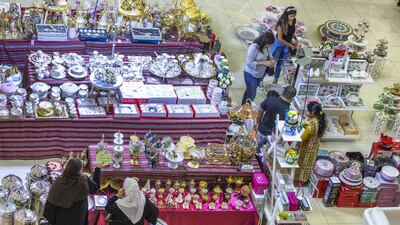
2. Instant licensing for most commercial license types and all Government services. Leslie Pableo for The National -
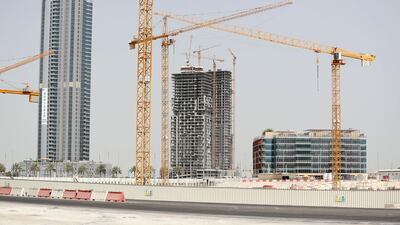
3. New speedy payments for private sector contractors and a review of fines incurred by delays they cause. Chris Whiteoak / The National -

4. A cost-cutting review of building regulations for infrastructure, residential properties, commercial and industrial sectors. Christopher Pike / The National -

5. The establishment of Abu Dhabi Accelerators and Advanced Industries Council, called Ghadan, to identify new technologies and investments that will boost the future economy. Pawan Singh / The National -

6. Developing eco-tourism, creating camping villages and areas for recreational sports areas. Andrew Henderson / The National -

7. Promoting partnerships between the public and private sectors and accelerating projects between the two by the end of 2018. Delores Johnson / The National -

8. Creating at least 10,000 jobs for Emiratis in the private and public sectors over the next five years. Khushnum Bhandari for The National -
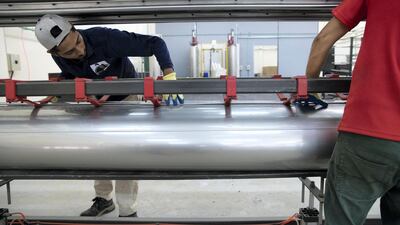
9. Encouraging and organising local production and supporting SMEs to boost their competitiveness locally and regionally. Antonie Robertson / The National -
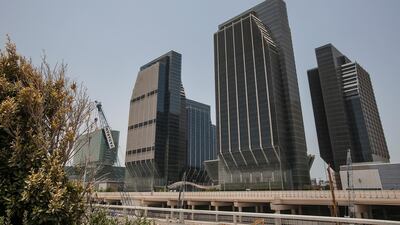
10. Dual licences for companies in Abu Dhabi free zones to allow them to work outside the free zones and bid for government tenders. Mona Al Marzooqi/ The National


____________
The stimulus, which is nearly equal to the 2018 federal budget of Dh51.4bn, follows a series of measures that the emirate has taken to boost growth, create jobs and diversify its economy away from oil income.
Last month the emirate, along with Dubai, announced initiatives to exempt companies from administrative fines for at least the rest of the year. The UAE Government said it planned to grant 10-year residency visas to certain expatriates and allow 100 per cent ownership in companies in selected sectors.
_______________
Read more:
Sheikh Mohammed bin Zayed announces Dh50 billion stimulus for Abu Dhabi
Abu Dhabi and Dubai waive corporate fines to boost growth
_______________
"The stimulus is quite substantial as well, corresponding to up to 6 per cent of Abu Dhabi's GDP according to our estimate, and is broad-based, addressing several key policy areas like facilitating doing business, stimulating SMEs, encouraging public private partnerships and developing infrastructure," said Mohamed Bardastani, chief Middle
East economist at Oxford
Economics.
Oil prices, which touched a three-year high of $80 per barrel last month, are helping governments in the energy-rich Arabian Gulf to spend more and plug shortfalls at the same time.
Saudi Arabia, the world's top oil exporter, announced its biggest ever budget for 2018 and a 72bn Saudi riyal (Dh70.5bn) package aimed at stimulating growth after the economy contracted in 2017.
“Higher oil prices have provided more room for governments in the region to boost spending, and the UAE is particularly well placed with respect to its budget – we anticipate a close-to-balanced consolidated budget this year after the new spending measures are taken into account,” said Tim Fox, chief economist at Emirates NBD, Dubai’s biggest bank.
“The latest announcements also support our view that non-oil sector growth in the UAE will be driven by government spending this year.”
Economists had already forecast faster growth for 2018 thanks to higher government spending as Dubai prepares to host Expo 2020 and Abu Dhabi loosens its purse strings after cutbacks aimed at narrowing a fiscal deficit caused by the oil slump.
"The news of a stimulus package in Abu Dhabi is definitely welcome and comes along side efforts by various emirates to boost relatively weak economic growth," said Mohamed Abu Basha, head of economic research at Cairo investment bank EFG-Hermes
Last month, the Central Bank of the UAE raised its economic growth forecast for 2018 to 2.7 per cent from its previous projection of 2.5 per cent thanks to an expected expansion in the non-oil sector despite slower year-on-year growth in the first quarter.
"Although the eventual economic impact will depend on spending allocation decisions that are to be taken over the next three months, job creation appears to be a central focus," said Bilal Khan, senior economist Mena and Pakistan at Standard Chartered.
“This, we think, is likely to support consumer sentiment over the next couple of years.”

