

Saudi Arabia’s Investment Minister said on Tuesday it was time for the kingdom's wealth fund, the Public Investment Fund, and the government to step back and allow the private sector to help develop the country's ambitious giga-projects slated for completion by 2030.
“Now is the time to say to the private sector: you've seen us do what we promised, you've seen us exceed our targets, so it is time for us to scale back on this government or PIF spend and let the private sector come in and start investing,” Khalid Al Falih told the Future Investment Institute conference in Riyadh.
“This is what we're doing day in and day out at the Ministry of Investment, at the PIF and across the government,” he added.

Saudi Arabia, the world’s largest exporter of oil, is looking to diversify its rentier economy through the Vision 2030 transformation plan launched by Crown Prince Mohammed bin Salman in 2016.
The plan includes the development of large-scale schemes, known as giga-projects, including the futuristic city of Neom straddling the Jordanian and Egyptian borders. The broader blueprint includes adding more renewable capacity to Saudi Arabia’s power grid, as well as developing mining and industrial clusters.
Many of these projects were funded and developed by the PIF, one of the world’s largest sovereign wealth funds, with more than $900 billion worth of assets under management.
Riyadh’s plans to rapidly scale up its giga-projects, however, have encountered several headwinds including ballooning costs. Neom, which was initially slated at $500 billion, is now estimated to cost up to $8.8 trillion according to a March report by The Wall Street Journal. Neom’s new cost outlay is more than 25 times the kingdom’s planned budget for 2025.
Saudi Arabia has revised plans for several projects including The Line, originally a 170km long car-free development meant to house up to nine million people. The tightened purse strings have prompted the kingdom to court more private investments in these developments.
At FII, dubbed Davos of the Desert and now in its ninth iteration, Mr Al Falih touted Saudi Arabia’s investment credentials to global chief executives of companies including BlackRock, KKR, Brookfield Asset Management and JPMorgan.
“Global FDI last year declined 11 per cent. Our FDI over the same period, quadrupled and our aggressive targets are being exceeded,” he said.
He also said that 90 per cent of FDI directed towards Saudi Arabia was non-oil but did not elaborate.
PIF governor Yasir Al Rumayyan said at the opening of FII that foreign investment in the kingdom grew 24 per cent last year to $31.7 billion.
“We have taken Saudi Arabia to the world and now the world is coming to Saudi Arabia … to the FII every year, to the expo in 2030 and to the Fifa World Cup in 2034,” he said.
At last year’s event, Mr Al Rumayyan said the PIF would downsize its international portfolio to invest more heavily in developing domestic projects.
-
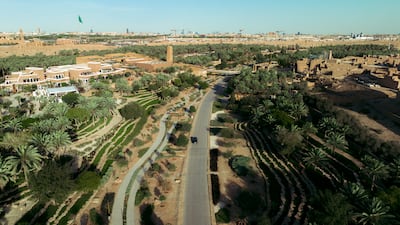
Saudi Arabia's first seat of power – Diriyah – was built from mud bricks along the banks of Wadi Hanifah, north-west of Riyadh. All Photos: Diriyah Gate Development Authority -
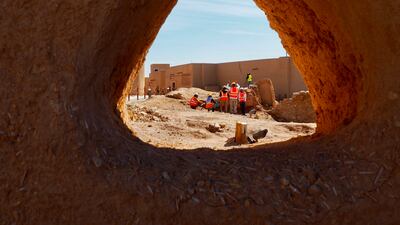
The DGDA is restoring the region, starting with the historic Al Turaif district and then extending to multiple other sites, set to conclude in 2025 -
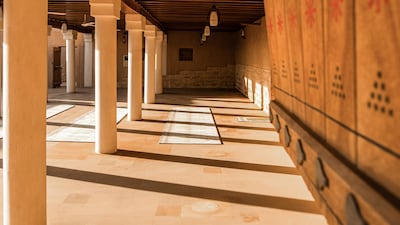
In 2010, Al Turaif district was declared a Unesco World Heritage Site, initiating a concerted effort to restore and make it ready for tourists -

Founded in the 15th century, Al Turaif district offers a glimpse into the distinctive Najdi architectural style, unique to the heart of the Arabian peninsula -
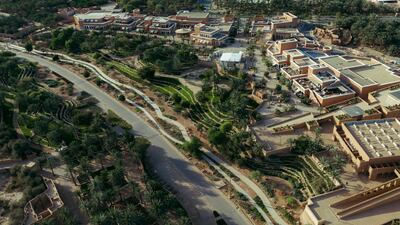
The DGDA has worked hard to preserve the archaeological ruins of Al Turaif, balancing conservation with public accessibility -
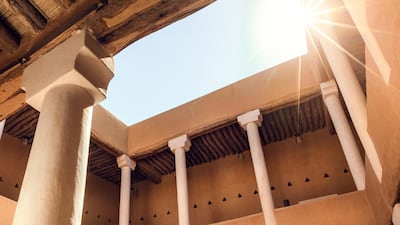
The DGDA officially opened the Al Turaif district to the public in December 2022 and began welcoming local and international visitors to the historic district -
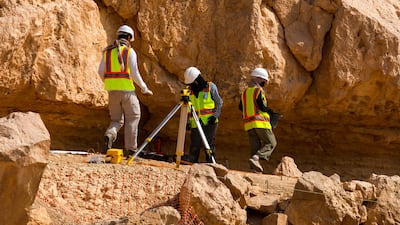
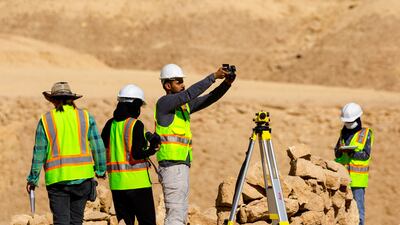
The archaeological site at Wadi Safar Dam, a 60-square-meter extension of Wadi Hanifa, Diryah -
![“[Our] main objective is to study the historical landscape, to better understand the foundation of [the Kingdom of Saudi Arabia’s] social and economic development,” heritage management senior director for DGDA, Paola Pesaresi tells The National](https://www.thenationalnews.com/resizer/v2/WKTDTA3V75GJBPFCXI3CVNBVYE.jpg?smart=true&auth=cac7bc51a9c261099db89f9c424d5b617cd24955183b2d4603a5a86184f191e0&width=400&height=225)
“[Our] main objective is to study the historical landscape, to better understand the foundation of [the Kingdom of Saudi Arabia’s] social and economic development,” heritage management senior director for DGDA, Paola Pesaresi tells The National -
![Natural heritage, cultural heritage and community are the three keys to understanding life in the area. We go through the proper value assessment, with the support of the [local] communities, in order to have them at the centre of any decision making," Pesaresi adds](https://www.thenationalnews.com/resizer/v2/WAE4APNZMBH6TF23RFSIF6YIFU.jpg?smart=true&auth=75c81f994d54920c95201878b63a5f39fe0de45f112d68c67a1ee9756c5b838f&width=400&height=225)
Natural heritage, cultural heritage and community are the three keys to understanding life in the area. We go through the proper value assessment, with the support of the [local] communities, in order to have them at the centre of any decision making," Pesaresi adds -
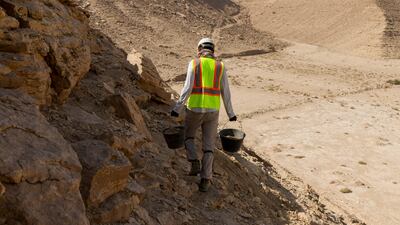
Founded around 1446, Diriyah served as the home of the Saudi royal family and later the capital of the First Saudi State -
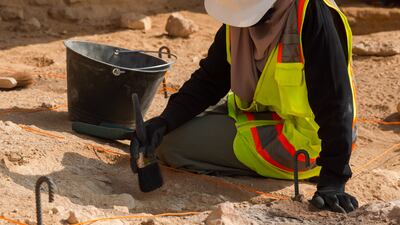
This eventually led to the creation of the First Saudi State, which caused Diriyah to rapidly increase in both size and wealth, becoming an influential modern state -
Diriyah was later invaded during the Ottoman-Saudi War (1811–1818) where – after a six month-long siege, the city capitulated to the Ottomans, ending the First Saudi State. In 1824, the Second Saudi State was founded in Riyadh, just to the south of Diriyah


![“[Our] main objective is to study the historical landscape, to better understand the foundation of [the Kingdom of Saudi Arabia’s] social and economic development,” heritage management senior director for DGDA, Paola Pesaresi tells The National](https://www.thenationalnews.com/resizer/v2/WKTDTA3V75GJBPFCXI3CVNBVYE.jpg?smart=true&auth=cac7bc51a9c261099db89f9c424d5b617cd24955183b2d4603a5a86184f191e0&width=800&height=450)
![Natural heritage, cultural heritage and community are the three keys to understanding life in the area. We go through the proper value assessment, with the support of the [local] communities, in order to have them at the centre of any decision making," Pesaresi adds](https://www.thenationalnews.com/resizer/v2/WAE4APNZMBH6TF23RFSIF6YIFU.jpg?smart=true&auth=75c81f994d54920c95201878b63a5f39fe0de45f112d68c67a1ee9756c5b838f&width=800&height=450)



