Saudi Arabia's Vision 2030 economic reform agenda aims to cut the kingdom's reliance on oil revenue. Reuters

Reforms will boost Saudi Arabia's fiscal strength, IMF says


Sarmad Khan
  • English
  • Arabic

Continued reforms and the calibration of investment programmes in Saudi Arabia will help the kingdom to strengthen its fiscal base and make it more resilient to external shocks, the International Monetary Fund has said.

Although the Saudi economy is booming, spurred on by high oil prices and a strong pick up in private investment, uncertainty in the global economy – affecting financial conditions and crude prices – requires continued efforts to further build buffers and diversify, the fund said on Monday.

With inflation contained, the current account surplus hit its highest in a decade, bolstering the kingdom's structural reform agenda that aims to generate “strong, inclusive and more sustainable growth” in the Arab world’s largest economy.

“The implementation of [the] Vision 2030 reform agenda is continuing unimpeded towards a productive and green economy,” the Washington-based lender said at the conclusion of its Article IV discussions with Saudi authorities.

“Careful calibration of the various investment programmes would be needed to ensure catalytic effects are in place. Improvements in government project selection, appraisal and feasibility would help improve public investment efficiency in Saudi Arabia.”

Saudi Arabia, Opec’s top oil producer, has long relied on hydrocarbon revenue to drive economic growth, much in the same way as its peers in the GCC.

However, over the past decade, the kingdom has embarked on Vision 2030 programme, an overarching economic and fiscal reform agenda that aims to diversify its economy and cut its reliance on oil.

Saudi Arabia has been spending heavily on expanding its industrial and manufacturing base.

It has also launched multibillion-dollar tourism, hospitality, industrial and mining projects to spur non-oil economic growth, boost local consumption and create jobs.

Last year, Saudi Arabia had the highest annual growth rate among the world’s 20 biggest economies after its gross domestic product expanded 8.7 per cent on higher oil revenue and a robust non-oil private sector.

The IMF expects the kingdom's overall real GDP growth to slow to 2.1 per cent in 2023, pulled back by the April Opec+ decision to cap crude production. The World Bank estimates growth at 2.2 per cent.

Last week, the 23-member alliance of oil producers extended its output cuts until the end of 2024 as concerns about economic growth weigh on the outlook for fuel demand.

Saudi Arabia is expected to make an output cut of a million barrels per day in July, which could be extended if required, it said at the time.

The country has carried over the growth momentum into this year as its economy expanded by 3.9 per cent in the first quarter, on an annual basis.

The non-oil sector continued to record strong growth, according to the latest data from the General Authority for Statistics.

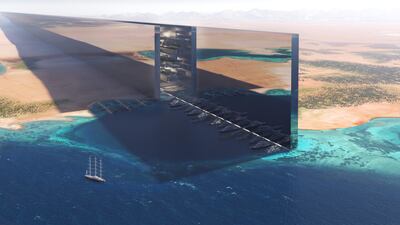
  • The Line is one of 10 districts in Saudi Arabia's $500 billion Neom megacity. Photo: Neom
    The Line is one of 10 districts in Saudi Arabia's $500 billion Neom megacity. Photo: Neom
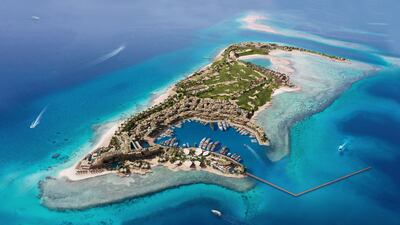
  • Sindalah Island is set to be the first destination open to the public within the Neom mega project. Photo: Neom
    Sindalah Island is set to be the first destination open to the public within the Neom mega project. Photo: Neom
  • Trojena, a mountain tourism destination, will be the first major outdoor skiing site in the GCC. Photo: Neom
    Trojena, a mountain tourism destination, will be the first major outdoor skiing site in the GCC. Photo: Neom
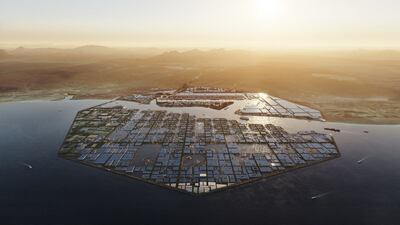
  • Oxagon, part of the Neom mega project, is a futuristic new industrial city in the sea. Photo: Neom
    Oxagon, part of the Neom mega project, is a futuristic new industrial city in the sea. Photo: Neom
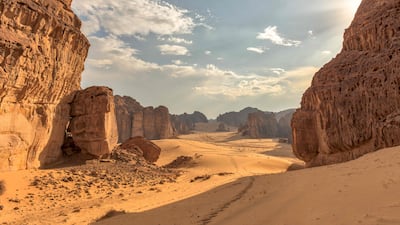
  • AlUla is a budding tourist magnet in the north-western Madinah region. AFP
    AlUla is a budding tourist magnet in the north-western Madinah region. AFP
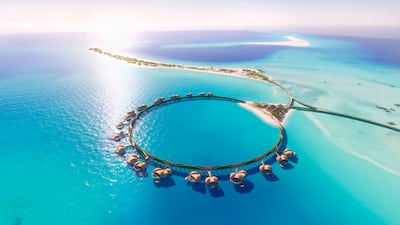
  • When it opens in 2023, Nujuma, a Ritz-Carlton Reserve, will form part of The Red Sea project. Photo: Marriott International
    When it opens in 2023, Nujuma, a Ritz-Carlton Reserve, will form part of The Red Sea project. Photo: Marriott International
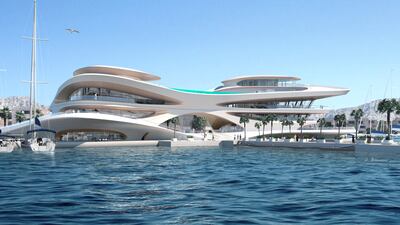
  • Amaala has unveiled the design for its Triple Bay Yacht Club. Photo: Amaala
    Amaala has unveiled the design for its Triple Bay Yacht Club. Photo: Amaala
  • Qiddiya City is an entertainment development project to be established in Riyadh.
    Qiddiya City is an entertainment development project to be established in Riyadh.
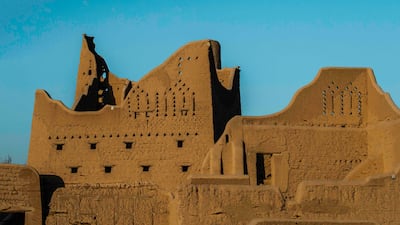
  • Salwa Palace is the largest standing structure in the historic city of Diriyah. Photo: Diriyah Gate Development Authority
    Salwa Palace is the largest standing structure in the historic city of Diriyah. Photo: Diriyah Gate Development Authority
  • A screen grab of aerial footage of the King Salman Park in Riyadh. The project is set to become the world’s biggest urban park.
    A screen grab of aerial footage of the King Salman Park in Riyadh. The project is set to become the world’s biggest urban park.

The IMF expects Saudi Arabia's non-oil GDP growth, which stood at 4.8 per cent in 2022, to average 5 per cent in 2023 and “remain above potential as strong consumption spending and accelerated project implementation boost demand”.

Headline inflation this year will also be contained. Despite a sharp increase in early 2023, when it reached 3.4 per cent on an annual basis, headline inflation was back at 2.7 per cent, year on year, in April as declining contributions from transport and food prices offset the substantial increase in rent, the fund said.

“Despite a booming economic activity, inflation remains low and appears to be easing,” it said.

Higher oil prices last year and stepped-up oil production improved the kingdom’s current account surplus to a 10-year high in 2022.

However, that significant improvement is expected to ease as oil prices stabilise. In 2023, lower oil revenue is expected to shift the fiscal surplus back to a deficit, the IMF said.

Sustaining medium-term fiscal consolidation would be necessary to ensure “intergenerational equity”.

“The [IMF] mission supports the authorities’ plans for continued fiscal prudence and medium-term fiscal consolidation,” the fund said.

“To mitigate risks from oil price volatility, it recommends additional fiscal adjustment, building on the impressive reforms already initiated.”

The fund expects the kingdom's reserves to “stabilise at slightly lower levels of import coverage over the medium term, albeit remaining well above standard reserve adequacy metrics”.

Saudi Arabia’s economy would be positively affected by the rise in oil prices amid expectations of strong crude demand for the rest of the year, according to the IMF.

Possible changes in Opec+ oil production cuts and accelerated structural reforms and investment would also spur growth.

“Risks to the outlook are balanced,” the fund said.

However, too rapid a rise in non-oil investment may further raise domestic demand and pile pressure on prices and external accounts, it said.


How%20to%20avoid%20getting%20scammed
%3Cul%3E%0A%3Cli%3ENever%20click%20on%20links%20provided%20via%20app%20or%20SMS%2C%20even%20if%20they%20seem%20to%20come%20from%20authorised%20senders%20at%20first%20glance%3C%2Fli%3E%0A%3Cli%3EAlways%20double-check%20the%20authenticity%20of%20websites%3C%2Fli%3E%0A%3Cli%3EEnable%20Two-Factor%20Authentication%20(2FA)%20for%20all%20your%20working%20and%20personal%20services%3C%2Fli%3E%0A%3Cli%3EOnly%20use%20official%20links%20published%20by%20the%20respective%20entity%3C%2Fli%3E%0A%3Cli%3EDouble-check%20the%20web%20addresses%20to%20reduce%20exposure%20to%20fake%20sites%20created%20with%20domain%20names%20containing%20spelling%20errors%3C%2Fli%3E%0A%3C%2Ful%3E%0A

Mercer, the investment consulting arm of US services company Marsh & McLennan, expects its wealth division to at least double its assets under management (AUM) in the Middle East as wealth in the region continues to grow despite economic headwinds, a company official said.

Mercer Wealth, which globally has $160 billion in AUM, plans to boost its AUM in the region to $2-$3bn in the next 2-3 years from the present $1bn, said Yasir AbuShaban, a Dubai-based principal with Mercer Wealth.

Within the next two to three years, we are looking at reaching $2 to $3 billion as a conservative estimate and we do see an opportunity to do so,” said Mr AbuShaban.

Mercer does not directly make investments, but allocates clients’ money they have discretion to, to professional asset managers. They also provide advice to clients.

“We have buying power. We can negotiate on their (client’s) behalf with asset managers to provide them lower fees than they otherwise would have to get on their own,” he added.

Mercer Wealth’s clients include sovereign wealth funds, family offices, and insurance companies among others.

From its office in Dubai, Mercer also looks after Africa, India and Turkey, where they also see opportunity for growth.

Wealth creation in Middle East and Africa (MEA) grew 8.5 per cent to $8.1 trillion last year from $7.5tn in 2015, higher than last year’s global average of 6 per cent and the second-highest growth in a region after Asia-Pacific which grew 9.9 per cent, according to consultancy Boston Consulting Group (BCG). In the region, where wealth grew just 1.9 per cent in 2015 compared with 2014, a pickup in oil prices has helped in wealth generation.

BCG is forecasting MEA wealth will rise to $12tn by 2021, growing at an annual average of 8 per cent.

Drivers of wealth generation in the region will be split evenly between new wealth creation and growth of performance of existing assets, according to BCG.

Another general trend in the region is clients’ looking for a comprehensive approach to investing, according to Mr AbuShaban.

“Institutional investors or some of the families are seeing a slowdown in the available capital they have to invest and in that sense they are looking at optimizing the way they manage their portfolios and making sure they are not investing haphazardly and different parts of their investment are working together,” said Mr AbuShaban.

Some clients also have a higher appetite for risk, given the low interest-rate environment that does not provide enough yield for some institutional investors. These clients are keen to invest in illiquid assets, such as private equity and infrastructure.

“What we have seen is a desire for higher returns in what has been a low-return environment specifically in various fixed income or bonds,” he said.

“In this environment, we have seen a de facto increase in the risk that clients are taking in things like illiquid investments, private equity investments, infrastructure and private debt, those kind of investments were higher illiquidity results in incrementally higher returns.”

The Abu Dhabi Investment Authority, one of the largest sovereign wealth funds, said in its 2016 report that has gradually increased its exposure in direct private equity and private credit transactions, mainly in Asian markets and especially in China and India. The authority’s private equity department focused on structured equities owing to “their defensive characteristics.”

Key recommendations
  • Fewer criminals put behind bars and more to serve sentences in the community, with short sentences scrapped and many inmates released earlier.
  • Greater use of curfews and exclusion zones to deliver tougher supervision than ever on criminals.
  • Explore wider powers for judges to punish offenders by blocking them from attending football matches, banning them from driving or travelling abroad through an expansion of ‘ancillary orders’.
  • More Intensive Supervision Courts to tackle the root causes of crime such as alcohol and drug abuse – forcing repeat offenders to take part in tough treatment programmes or face prison.
RESULTS

6.30pm: Handicap (rated 95-108) US$125,000 2000m (Dirt).
Winner: Don’t Give Up, Gerald Mosse (jockey), Saeed bin Suroor (trainer).

7.05pm: Handicap (95 ) $160,000 2810m (Turf).
Winner: Los Barbados, Adrie de Vries, Fawzi Nass.

7.40pm: Handicap (80-89) $60,000 1600m (D).
Winner: Claim The Roses, Mickael Barzalona, Salem bin Ghadayer.

8.15pm: UAE 2000 Guineas Trial (Div-1) Conditions $100,000 1,400m (D)
Winner: Gold Town, William Buick, Charlie Appleby.

8.50pm: Cape Verdi Group 2 $200,000 1600m (T).
Winner: Promising Run, Patrick Cosgrave, Saeed bin Suroor.

9.25pm: UAE 2000 Guineas Conditions $100,000 1,400m (D).
Winner: El Chapo, Luke Morris, Fawzi Nass.

Dengue%20fever%20symptoms
%3Cp%3EHigh%20fever%20(40%C2%B0C%2F104%C2%B0F)%3Cbr%3ESevere%20headache%3Cbr%3EPain%20behind%20the%20eyes%3Cbr%3EMuscle%20and%20joint%20pains%3Cbr%3ENausea%3Cbr%3EVomiting%3Cbr%3ESwollen%20glands%3Cbr%3ERash%26nbsp%3B%3C%2Fp%3E%0A
Jetour T1 specs

Engine: 2-litre turbocharged

Power: 254hp

Torque: 390Nm

Price: From Dh126,000

Available: Now

Real estate tokenisation project

Dubai launched the pilot phase of its real estate tokenisation project last month.

The initiative focuses on converting real estate assets into digital tokens recorded on blockchain technology and helps in streamlining the process of buying, selling and investing, the Dubai Land Department said.

Dubai’s real estate tokenisation market is projected to reach Dh60 billion ($16.33 billion) by 2033, representing 7 per cent of the emirate’s total property transactions, according to the DLD.

Ten tax points to be aware of in 2026

1. Domestic VAT refund amendments: request your refund within five years

If a business does not apply for the refund on time, they lose their credit.

2. E-invoicing in the UAE

Businesses should continue preparing for the implementation of e-invoicing in the UAE, with 2026 a preparation and transition period ahead of phased mandatory adoption. 

3. More tax audits

Tax authorities are increasingly using data already available across multiple filings to identify audit risks. 

4. More beneficial VAT and excise tax penalty regime

Tax disputes are expected to become more frequent and more structured, with clearer administrative objection and appeal processes. The UAE has adopted a new penalty regime for VAT and excise disputes, which now mirrors the penalty regime for corporate tax.

5. Greater emphasis on statutory audit

There is a greater need for the accuracy of financial statements. The International Financial Reporting Standards standards need to be strictly adhered to and, as a result, the quality of the audits will need to increase.

6. Further transfer pricing enforcement

Transfer pricing enforcement, which refers to the practice of establishing prices for internal transactions between related entities, is expected to broaden in scope. The UAE will shortly open the possibility to negotiate advance pricing agreements, or essentially rulings for transfer pricing purposes. 

7. Limited time periods for audits

Recent amendments also introduce a default five-year limitation period for tax audits and assessments, subject to specific statutory exceptions. While the standard audit and assessment period is five years, this may be extended to up to 15 years in cases involving fraud or tax evasion. 

8. Pillar 2 implementation 

Many multinational groups will begin to feel the practical effect of the Domestic Minimum Top-Up Tax (DMTT), the UAE's implementation of the OECD’s global minimum tax under Pillar 2. While the rules apply for financial years starting on or after January 1, 2025, it is 2026 that marks the transition to an operational phase.

9. Reduced compliance obligations for imported goods and services

Businesses that apply the reverse-charge mechanism for VAT purposes in the UAE may benefit from reduced compliance obligations. 

10. Substance and CbC reporting focus

Tax authorities are expected to continue strengthening the enforcement of economic substance and Country-by-Country (CbC) reporting frameworks. In the UAE, these regimes are increasingly being used as risk-assessment tools, providing tax authorities with a comprehensive view of multinational groups’ global footprints and enabling them to assess whether profits are aligned with real economic activity. 

Contributed by Thomas Vanhee and Hend Rashwan, Aurifer

SPECS
%3Cp%3E%3Cstrong%3EEngine%3A%3C%2Fstrong%3E%206-cylinder%203-litre%2C%20with%20petrol%20and%20diesel%20variants%3Cbr%3E%3Cstrong%3ETransmission%3A%20%3C%2Fstrong%3E8-speed%20automatic%3Cbr%3E%3Cstrong%3EPower%3A%3C%2Fstrong%3E%20286hp%20(petrol)%2C%20249hp%20(diesel)%3Cbr%3E%3Cstrong%3ETorque%3A%20%3C%2Fstrong%3E450Nm%20(petrol)%2C%20550Nm%20(diesel)%3Cbr%3E%3Cstrong%3EPrice%3A%20%3C%2Fstrong%3EStarting%20at%20%2469%2C800%3Cbr%3E%3Cstrong%3EOn%20sale%3A%20%3C%2Fstrong%3ENow%3C%2Fp%3E%0A
THE CLOWN OF GAZA

Director: Abdulrahman Sabbah 

Starring: Alaa Meqdad

Rating: 4/5

UAE%20SQUAD
%3Cp%3EMuhammad%20Waseem%20(captain)%2C%20Aayan%20Khan%2C%20Aryan%20Lakra%2C%20Ashwanth%20Valthapa%2C%20Asif%20Khan%2C%20Aryansh%20Sharma%2C%20CP%20Rizwaan%2C%20Hazrat%20Billal%2C%20Junaid%20Siddique%2C%20Karthik%20Meiyappan%2C%20Rohan%20Mustafa%2C%20Vriitya%20Aravind%2C%20Zahoor%20Khan%20and%20Zawar%20Farid.%3C%2Fp%3E%0A
Sarfira

Director: Sudha Kongara Prasad

Starring: Akshay Kumar, Radhika Madan, Paresh Rawal 

Rating: 2/5

Pox that threatens the Middle East's native species

Camelpox

Caused by a virus related to the one that causes human smallpox, camelpox typically causes fever, swelling of lymph nodes and skin lesions in camels aged over three, but the animal usually recovers after a month or so. Younger animals may develop a more acute form that causes internal lesions and diarrhoea, and is often fatal, especially when secondary infections result. It is found across the Middle East as well as in parts of Asia, Africa, Russia and India.

Falconpox

Falconpox can cause a variety of types of lesions, which can affect, for example, the eyelids, feet and the areas above and below the beak. It is a problem among captive falcons and is one of many types of avian pox or avipox diseases that together affect dozens of bird species across the world. Among the other forms are pigeonpox, turkeypox, starlingpox and canarypox. Avipox viruses are spread by mosquitoes and direct bird-to-bird contact.

Houbarapox

Houbarapox is, like falconpox, one of the many forms of avipox diseases. It exists in various forms, with a type that causes skin lesions being least likely to result in death. Other forms cause more severe lesions, including internal lesions, and are more likely to kill the bird, often because secondary infections develop. This summer the CVRL reported an outbreak of pox in houbaras after rains in spring led to an increase in mosquito numbers.

Updated: June 07, 2023, 12:57 PM