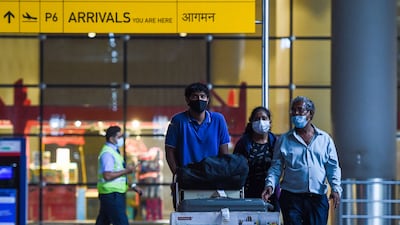
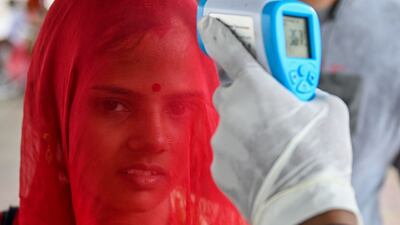
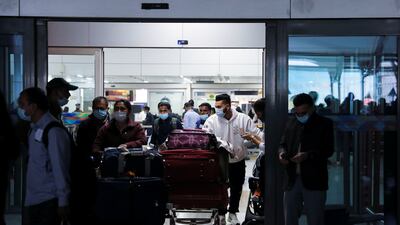
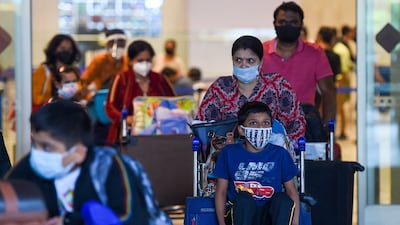
At Mumbai’s Gateway of India, a historic monument by the Arabian Sea, visitors jostle for a good spot to take selfies and snapshots. Most of the tourists are from other parts of the country and the scene is in stark contrast to the coronavirus lockdown of 2020, when the attraction was deserted due to strict Covid curbs.
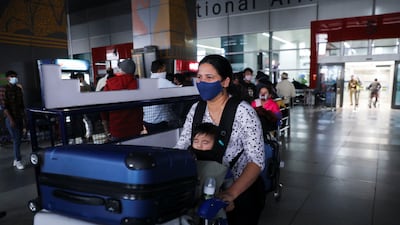
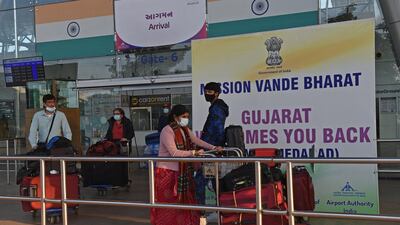
However, with restrictions largely lifted now, India’s Covid-battered tourism industry is starting to benefit from pent-up demand. This has led to a surge in domestic trips, in a phenomenon known as “revenge travel” — although international tourism in the country has yet to recover fully.
“From a time when we were literally shutting down our businesses, we've seen sort of historic highs of demand rates and occupancies,” says Vibhas Prasad, director of the Leisure Hotels Group, a luxury resort chain with 27 properties in northern India.
People are now keen to explore new destinations and are venturing out of their homes with a vengeance
Vikas Sharma,
chief executive of Encalm Hospitality
“So, the leisure market has bounced back pretty much across the country. I think domestic tourism will remain on a strong wicket.”
India’s tourism industry contributed $178 billion, or about 5.8 per cent, to the country’s gross domestic product in 2021, according to the World Travel & Tourism Council. This will more than double to $512 billion by 2028, according to Invest India, a government investment promotion agency. The tourism sector provides about 137 million jobs.
Due to the impact of the pandemic, only 1.54 million foreign tourists arrived in India in 2021, Ministry of Tourism data shows. That compares with 10.93 million tourists in 2019. Tourists are steadily returning, though, with estimates that India received 2.1 million foreign visitors in the first six months of this year.
Domestic tourism also took a beating during the pandemic, with local tourist visits sharply declining to 677 million in 2021 compared with 2.3 billion in 2019. Although domestic visitor numbers for this year have yet to be released, industry sources point to a huge increase in tourist numbers.
“The travel industry is getting back on its feet and is witnessing a robust recovery,” says Vikas Sharma, chief executive of Encalm Hospitality, an airport hospitality company.
“People are now keen to explore new destinations and are venturing out of their homes with a vengeance."
Demand for trips within India is also being boosted by delays in securing visas to some overseas destinations and the cost of a holiday abroad surging.
“Domestic travel has increased as international travel is becoming a hassle with various restrictions and procedures,” says Chander K Baljee, chairman and managing director at Royal Orchid Hotels, which has more than 75 properties across the country.
“Many people are not travelling due to the high fares and hotel rates across Europe and other countries. Indians are now discovering the value of domestic travel. So, in my view, domestic tourism is here to stay.”
As a result of a strong demand, Royal Orchid Hotels' net profit in the second quarter to the end of September surged fivefold in the current fiscal year, according to Mr Baljee.
The company's performance is “better than pre-Covid levels and we expect it to grow further”, he says.
“We are experiencing through-the-roof bookings across the country while some of our properties are booked out for the year,” he adds.
Reflecting a spike in domestic travel, IndiaLends, an online marketplace for loans and credit cards, says that demand for travel loans has shot up 10 times in the past year and crossed pre-pandemic levels.
In a country of about 1.4 billion people, which has an expanding middle class, the domestic travel market has huge potential for much further growth in the coming years, industry experts say.
Even before the pandemic, the numbers of international tourists were widely considered to be below India's potential given the size of the country and the vast range of attractions it offers — from forts to mountains and beaches to jungles — as well as its rich culture and cuisine.
The recovery in foreign tourist arrivals in India still has a long way to go.
“Internationally, due to the geopolitical uncertainty, we currently have guests coming in from a few countries only … this foreign travel currently contributes to only 5 per cent of our overall business,” says Nikhil Kapur, co-founder and director of Atmantan Wellness Centre, a luxury resort in Mulshi, near Mumbai.
He remains hopeful these numbers will improve in the coming months, and says that demand from Indians means that the business “has crossed all our previous benchmarks” compared to before Covid.
“While inbound international travel has picked up significantly, it still hasn’t reached pre-pandemic levels,” says Haitham Mattar, managing director, India, Middle East and Africa at IHG Hotels & Resorts, one of the world's largest hotel chains, with brands including InterContinental and Holiday Inn.
In the second quarter of 2022, the group's total revenue in India exceeded 2019 levels, while occupancy levels are up 2 per cent on 2019 levels at 75 per cent, Mr Mattar says.
“Domestic travel facilitated significant business recovery [after] Covid restrictions were lifted,” he says.
“In 2020, at the peak of the pandemic, we witnessed the lowest occupancy and revenue in the history of our industry.”
However, there are promising signs for international tourism recovery in India, analysts say.
“We believe the sector is on an upswing,” says Shobit Singhal, research analyst at Anand Rathi, a Mumbai-based stock trading and advisory company.
“Rising inbound tourism and a rise in the number of government delegations and international conferences augurs well for the sector.”
During the pandemic, many hospitality companies evolved and adapted to a shift in trends, and some are continuing to reap the rewards from this.
“We found that due to extended stays such as 'workations', our guests’ needs evolved into one for a branded homestays with standardised service,” says Ramit Sethi, founder of Seclude Luxury Homestay, which has luxury home-style boutique properties in locations including Kerala, Goa and Shimla — important tourist destinations in India.
“This was an idea we were already envisioning, which got accelerated during Covid and is a trend we've witnessed that is still in play today.”
As travel picks up, India’s airline industry is buoyant too.
“After nearly two years of navigating one of the worst crises ever faced by the industry, Indian aviation has been showing signs of strong recovery from early 2022 with a consistent upswing in demand for both domestic and international travel,” a representative for Vistara told The National.
The airline, which is a joint venture between Tata Group and Singapore Airlines, said it is expanding its domestic and international routes, recently having added the city of Jaipur in the north Indian state of Rajasthan to its network.
The country's festive and wedding season in this quarter is also helping to fuel demand.
“As the peak travel season continues, passenger traffic across our network has significantly increased, majorly driven by visiting friends and relatives, and leisure travel,” a Vistara representative said.
Such trends are boosting the outlook for the South Asian country’s tourism industry.
“India’s tourism industry is now experiencing a positive increase [and] during the second quarter of this year, our bookings at Wyndham were as high as 700 per cent, compared to the number of bookings at the same time last year,” says Nikhil Sharma, regional director for Eurasia, Wyndham Hotels and Resorts.
“This positive momentum makes us hopeful.”

ANDROID%20VERSION%20NAMES%2C%20IN%20ORDER
%3Cp%3EAndroid%20Alpha%3C%2Fp%3E%0A%3Cp%3EAndroid%20Beta%3C%2Fp%3E%0A%3Cp%3EAndroid%20Cupcake%3C%2Fp%3E%0A%3Cp%3EAndroid%20Donut%3C%2Fp%3E%0A%3Cp%3EAndroid%20Eclair%3C%2Fp%3E%0A%3Cp%3EAndroid%20Froyo%3C%2Fp%3E%0A%3Cp%3EAndroid%20Gingerbread%3C%2Fp%3E%0A%3Cp%3EAndroid%20Honeycomb%3C%2Fp%3E%0A%3Cp%3EAndroid%20Ice%20Cream%20Sandwich%3C%2Fp%3E%0A%3Cp%3EAndroid%20Jelly%20Bean%3C%2Fp%3E%0A%3Cp%3EAndroid%20KitKat%3C%2Fp%3E%0A%3Cp%3EAndroid%20Lollipop%3C%2Fp%3E%0A%3Cp%3EAndroid%20Marshmallow%3C%2Fp%3E%0A%3Cp%3EAndroid%20Nougat%3C%2Fp%3E%0A%3Cp%3EAndroid%20Oreo%3C%2Fp%3E%0A%3Cp%3EAndroid%20Pie%3C%2Fp%3E%0A%3Cp%3EAndroid%2010%20(Quince%20Tart*)%3C%2Fp%3E%0A%3Cp%3EAndroid%2011%20(Red%20Velvet%20Cake*)%3C%2Fp%3E%0A%3Cp%3EAndroid%2012%20(Snow%20Cone*)%3C%2Fp%3E%0A%3Cp%3EAndroid%2013%20(Tiramisu*)%3C%2Fp%3E%0A%3Cp%3EAndroid%2014%20(Upside%20Down%20Cake*)%3C%2Fp%3E%0A%3Cp%3EAndroid%2015%20(Vanilla%20Ice%20Cream*)%3C%2Fp%3E%0A%3Cp%3E%3Cem%3E*%20internal%20codenames%3C%2Fem%3E%3C%2Fp%3E%0A
SNAPSHOT
While Huawei did launch the first smartphone with a 50MP image sensor in its P40 series in 2020, Oppo in 2014 introduced the Find 7, which was capable of taking 50MP images: this was done using a combination of a 13MP sensor and software that resulted in shots seemingly taken from a 50MP camera.
Mohammed bin Zayed Majlis
Read more from Kareem Shaheen
Know your cyber adversaries
Cryptojacking: Compromises a device or network to mine cryptocurrencies without an organisation's knowledge.
Distributed denial-of-service: Floods systems, servers or networks with information, effectively blocking them.
Man-in-the-middle attack: Intercepts two-way communication to obtain information, spy on participants or alter the outcome.
Malware: Installs itself in a network when a user clicks on a compromised link or email attachment.
Phishing: Aims to secure personal information, such as passwords and credit card numbers.
Ransomware: Encrypts user data, denying access and demands a payment to decrypt it.
Spyware: Collects information without the user's knowledge, which is then passed on to bad actors.
Trojans: Create a backdoor into systems, which becomes a point of entry for an attack.
Viruses: Infect applications in a system and replicate themselves as they go, just like their biological counterparts.
Worms: Send copies of themselves to other users or contacts. They don't attack the system, but they overload it.
Zero-day exploit: Exploits a vulnerability in software before a fix is found.
Haemoglobin disorders explained
Thalassaemia is part of a family of genetic conditions affecting the blood known as haemoglobin disorders.
Haemoglobin is a substance in the red blood cells that carries oxygen and a lack of it triggers anemia, leaving patients very weak, short of breath and pale.
The most severe type of the condition is typically inherited when both parents are carriers. Those patients often require regular blood transfusions - about 450 of the UAE's 2,000 thalassaemia patients - though frequent transfusions can lead to too much iron in the body and heart and liver problems.
The condition mainly affects people of Mediterranean, South Asian, South-East Asian and Middle Eastern origin. Saudi Arabia recorded 45,892 cases of carriers between 2004 and 2014.
A World Health Organisation study estimated that globally there are at least 950,000 'new carrier couples' every year and annually there are 1.33 million at-risk pregnancies.
Mercer, the investment consulting arm of US services company Marsh & McLennan, expects its wealth division to at least double its assets under management (AUM) in the Middle East as wealth in the region continues to grow despite economic headwinds, a company official said.
Mercer Wealth, which globally has $160 billion in AUM, plans to boost its AUM in the region to $2-$3bn in the next 2-3 years from the present $1bn, said Yasir AbuShaban, a Dubai-based principal with Mercer Wealth.
“Within the next two to three years, we are looking at reaching $2 to $3 billion as a conservative estimate and we do see an opportunity to do so,” said Mr AbuShaban.
Mercer does not directly make investments, but allocates clients’ money they have discretion to, to professional asset managers. They also provide advice to clients.
“We have buying power. We can negotiate on their (client’s) behalf with asset managers to provide them lower fees than they otherwise would have to get on their own,” he added.
Mercer Wealth’s clients include sovereign wealth funds, family offices, and insurance companies among others.
From its office in Dubai, Mercer also looks after Africa, India and Turkey, where they also see opportunity for growth.
Wealth creation in Middle East and Africa (MEA) grew 8.5 per cent to $8.1 trillion last year from $7.5tn in 2015, higher than last year’s global average of 6 per cent and the second-highest growth in a region after Asia-Pacific which grew 9.9 per cent, according to consultancy Boston Consulting Group (BCG). In the region, where wealth grew just 1.9 per cent in 2015 compared with 2014, a pickup in oil prices has helped in wealth generation.
BCG is forecasting MEA wealth will rise to $12tn by 2021, growing at an annual average of 8 per cent.
Drivers of wealth generation in the region will be split evenly between new wealth creation and growth of performance of existing assets, according to BCG.
Another general trend in the region is clients’ looking for a comprehensive approach to investing, according to Mr AbuShaban.
“Institutional investors or some of the families are seeing a slowdown in the available capital they have to invest and in that sense they are looking at optimizing the way they manage their portfolios and making sure they are not investing haphazardly and different parts of their investment are working together,” said Mr AbuShaban.
Some clients also have a higher appetite for risk, given the low interest-rate environment that does not provide enough yield for some institutional investors. These clients are keen to invest in illiquid assets, such as private equity and infrastructure.
“What we have seen is a desire for higher returns in what has been a low-return environment specifically in various fixed income or bonds,” he said.
“In this environment, we have seen a de facto increase in the risk that clients are taking in things like illiquid investments, private equity investments, infrastructure and private debt, those kind of investments were higher illiquidity results in incrementally higher returns.”
The Abu Dhabi Investment Authority, one of the largest sovereign wealth funds, said in its 2016 report that has gradually increased its exposure in direct private equity and private credit transactions, mainly in Asian markets and especially in China and India. The authority’s private equity department focused on structured equities owing to “their defensive characteristics.”
Red flags
- Promises of high, fixed or 'guaranteed' returns.
- Unregulated structured products or complex investments often used to bypass traditional safeguards.
- Lack of clear information, vague language, no access to audited financials.
- Overseas companies targeting investors in other jurisdictions - this can make legal recovery difficult.
- Hard-selling tactics - creating urgency, offering 'exclusive' deals.
Courtesy: Carol Glynn, founder of Conscious Finance Coaching
What can victims do?
Always use only regulated platforms
Stop all transactions and communication on suspicion
Save all evidence (screenshots, chat logs, transaction IDs)
Report to local authorities
Warn others to prevent further harm
Courtesy: Crystal Intelligence
Dubai Rugby Sevens
November 30, December 1-2
International Vets
Christina Noble Children’s Foundation fixtures
Thursday, November 30:
10.20am, Pitch 3, v 100 World Legends Project
1.20pm, Pitch 4, v Malta Marauders
Friday, December 1:
9am, Pitch 4, v SBA Pirates
LOVE%20AGAIN
%3Cp%3EDirector%3A%20Jim%20Strouse%3C%2Fp%3E%0A%3Cp%3EStars%3A%20Priyanka%20Chopra%20Jonas%2C%20Sam%20Heughan%2C%20Celine%20Dion%3C%2Fp%3E%0A%3Cp%3ERating%3A%202%2F5%3C%2Fp%3E%0A
The schedule
December 5 - 23: Shooting competition, Al Dhafra Shooting Club
December 9 - 24: Handicrafts competition, from 4pm until 10pm, Heritage Souq
December 11 - 20: Dates competition, from 4pm
December 12 - 20: Sour milk competition
December 13: Falcon beauty competition
December 14 and 20: Saluki races
December 15: Arabian horse races, from 4pm
December 16 - 19: Falconry competition
December 18: Camel milk competition, from 7.30 - 9.30 am
December 20 and 21: Sheep beauty competition, from 10am
December 22: The best herd of 30 camels
UNSC Elections 2022-23
Seats open:
- Two for Africa Group
- One for Asia-Pacific Group (traditionally Arab state or Tunisia)
- One for Latin America and Caribbean Group
- One for Eastern Europe Group
Countries so far running:
Milestones on the road to union
1970
October 26: Bahrain withdraws from a proposal to create a federation of nine with the seven Trucial States and Qatar.
December: Ahmed Al Suwaidi visits New York to discuss potential UN membership.
1971
March 1: Alex Douglas Hume, Conservative foreign secretary confirms that Britain will leave the Gulf and “strongly supports” the creation of a Union of Arab Emirates.
July 12: Historic meeting at which Sheikh Zayed and Sheikh Rashid make a binding agreement to create what will become the UAE.
July 18: It is announced that the UAE will be formed from six emirates, with a proposed constitution signed. RAK is not yet part of the agreement.
August 6: The fifth anniversary of Sheikh Zayed becoming Ruler of Abu Dhabi, with official celebrations deferred until later in the year.
August 15: Bahrain becomes independent.
September 3: Qatar becomes independent.
November 23-25: Meeting with Sheikh Zayed and Sheikh Rashid and senior British officials to fix December 2 as date of creation of the UAE.
November 29: At 5.30pm Iranian forces seize the Greater and Lesser Tunbs by force.
November 30: Despite a power sharing agreement, Tehran takes full control of Abu Musa.
November 31: UK officials visit all six participating Emirates to formally end the Trucial States treaties
December 2: 11am, Dubai. New Supreme Council formally elects Sheikh Zayed as President. Treaty of Friendship signed with the UK. 11.30am. Flag raising ceremony at Union House and Al Manhal Palace in Abu Dhabi witnessed by Sheikh Khalifa, then Crown Prince of Abu Dhabi.
December 6: Arab League formally admits the UAE. The first British Ambassador presents his credentials to Sheikh Zayed.
December 9: UAE joins the United Nations.
Our legal columnist
Name: Yousef Al Bahar
Advocate at Al Bahar & Associate Advocates and Legal Consultants, established in 1994
Education: Mr Al Bahar was born in 1979 and graduated in 2008 from the Judicial Institute. He took after his father, who was one of the first Emirati lawyers
match info
Chelsea 2
Willian (13'), Ross Barkley (64')
Liverpool 0