Adnoc's refinery in Ruwais. Photo: Adnoc

Adnoc identifies $19bn of products with local manufacturing potential


  • English
  • Arabic

Abu Dhabi National Oil Company has identified Dh70 billion ($19bn) worth of products in its procurement pipeline with local manufacturing potential and has signed agreements for Dh21bn ($5.7bn) worth of these manufacturing opportunities.

Products with local manufacturing potential will be purchased by Adnoc, the state-controlled oil and gas major, between 2022 and 2030 as it the company expands its operations, it said in a statement on Tuesday.

Adnoc signed agreements with UAE and international companies at the Make it in the Emirates Forum taking place in Abu Dhabi.

The deals will allow companies to set up and expand manufacturing facilities in the UAE, as well as jointly explore with Adnoc the potential for new investments in local manufacturing.

The local manufacturing opportunities comprise more than 100 products that will be utilised across Adnoc’s full value chain as it expands its operations.

“Adnoc is reinforcing its role as a critical engine for the UAE’s industrial growth as we expand our operations to responsibly cater for the world’s growing energy demand,” said Dr Sultan Al Jaber, Minister of Industry and Advanced Technology and Adnoc managing director and group chief executive.

“We invite local and international manufacturers to take advantage of these opportunities and join the UAE in our industrial growth journey as we strengthen the resilience of our supply chains, enhance economic self-sufficiency and deliver lasting value.”

Adnoc is creating multiple long-term domestic manufacturing opportunities for the private sector and it is encouraging the companies to seize the opportunity, Dr Al Jaber added.

Adnoc plans to spend $127bn in capital expenditure to bolster its upstream production capacity and downstream portfolio, as well as its low-carbon fuels business and clean energy ambitions.

The company also aims to increase its national reserves of 4 billion stock-tank barrels of oil and 16 trillion standard cubic feet of natural gas as t continues to invest in new exploration projects.

Last month Adnoc announced new oil discoveries at Bu Hasa, the emirate’s biggest onshore field, as well as at the onshore Block 3 and Al Dhafra Petroleum Concession that will add 650 million barrels of oil to the emirate's hydrocarbons reserves.

In December, Adnoc announced a “significant” increase in national reserves of 4 billion stock-tank barrels (STB) of oil and 16 trillion standard cubic feet of natural gas. The additional reserves increased the UAE’s hydrocarbon reserves base to 111 billion barrels of oil and 289 trillion scf of natural gas, Adnoc said in a statement at the time.

The company has awarded several contracts recently to increase its production.

Earlier this month, Adnoc awarded a contract worth $173 million to boost production capacity of Abu Dhabi's flagship Murban crude at one of its largest oilfields, Asab. In March, Adnoc Onshore awarded a contract worth $227m to Robt Stone Middle East for enhanced oil recovery, a technology that will help it to recover more reserves from its largest onshore oilfield, Bab.

The company also signed a five-year contract worth $3.8bn with Adnoc Drilling in December for the continued provision of drilling, workovers and other well services that will drive work crew efficiency, as well as improve rig move times and maintenance scheduling.

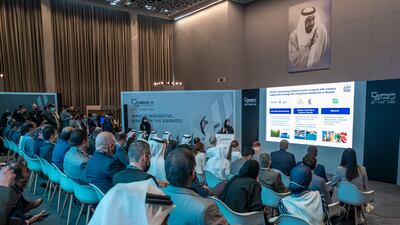
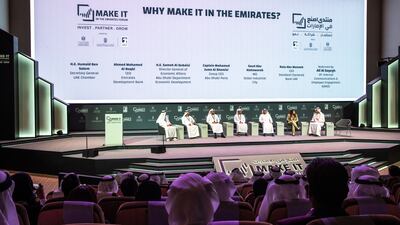
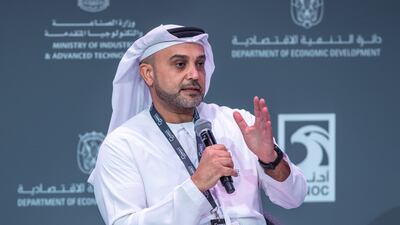
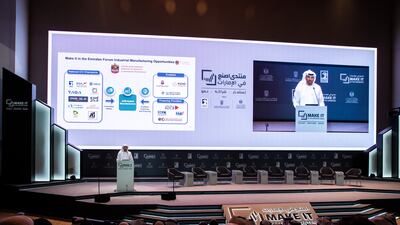
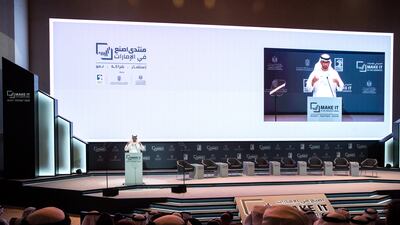
  • Delegates attend a session on the second day of the Make it in the Emirates forum in Abu Dhabi. All photos: Victor Besa / The National
    Delegates attend a session on the second day of the Make it in the Emirates forum in Abu Dhabi. All photos: Victor Besa / The National
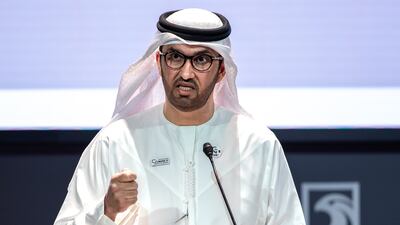
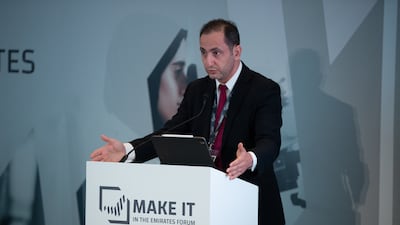
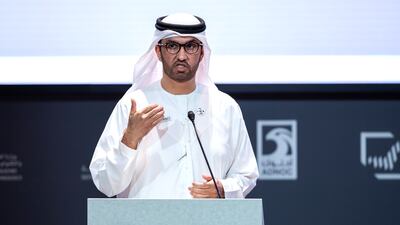
  • Dr Sultan Al Jaber, Minister of Industry and Advanced Technology, and managing director and group chief executive of Adnoc, addresses delegates.
    Dr Sultan Al Jaber, Minister of Industry and Advanced Technology, and managing director and group chief executive of Adnoc, addresses delegates.
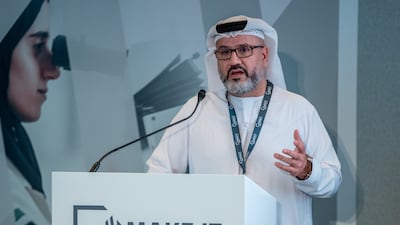
  • Ahmed Al Bastaki is the chief commercial officer of Rafed, which is part of Pure Health Group.
    Ahmed Al Bastaki is the chief commercial officer of Rafed, which is part of Pure Health Group.
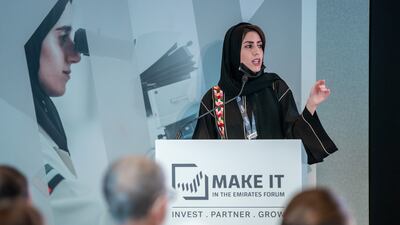
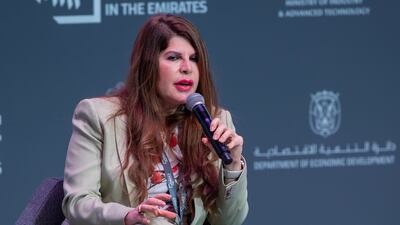
  • Ruba Nemer, manager of Adnoc's regulatory affairs department, addresses delegates. Victor Besa / The National
    Ruba Nemer, manager of Adnoc's regulatory affairs department, addresses delegates. Victor Besa / The National
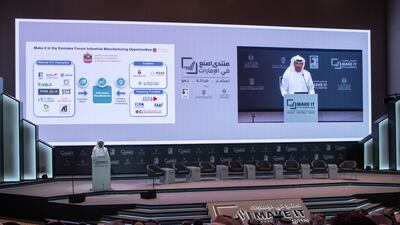
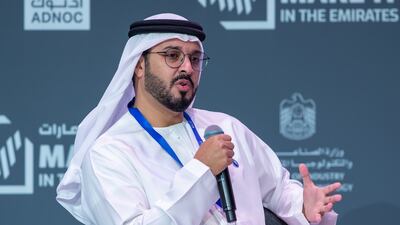
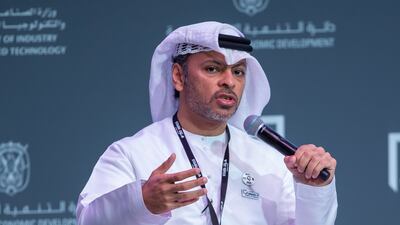
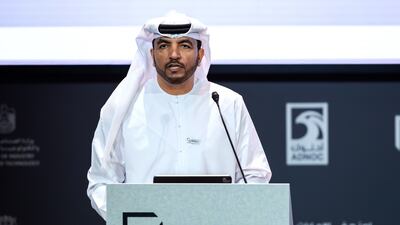
  • Ameed Al-Ashqar from Adnoc during the energy company's session on procurement opportunities.
    Ameed Al-Ashqar from Adnoc during the energy company's session on procurement opportunities.
  • Delegates attend a session on the second day of the Make it in the Emirates forum.
    Delegates attend a session on the second day of the Make it in the Emirates forum.
  • The UAE has already launched the National In-Country Value programme that aims to boost the private sector's participation in the economy, diversify output and localise critical parts of the supply chain.
    The UAE has already launched the National In-Country Value programme that aims to boost the private sector's participation in the economy, diversify output and localise critical parts of the supply chain.
  • Omar Al Suwaidi, Undersecretary at the Ministry of Industry and Advanced Technology, addresses delegates.
    Omar Al Suwaidi, Undersecretary at the Ministry of Industry and Advanced Technology, addresses delegates.
  • Rola Abu Manneh, chief executive of Standard Chartered Bank UAE.
    Rola Abu Manneh, chief executive of Standard Chartered Bank UAE.
  • Humaid bin Salem, secretary general of the Abu Dhabi Chamber of Commerce and Industry.
    Humaid bin Salem, secretary general of the Abu Dhabi Chamber of Commerce and Industry.
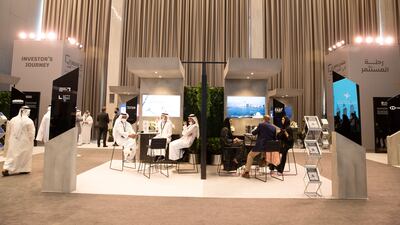
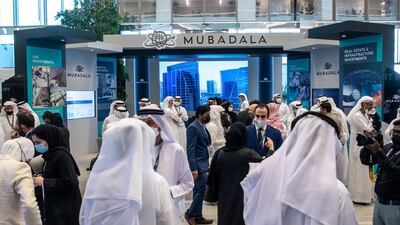
  • The Mubadala stand at the forum.
    The Mubadala stand at the forum.
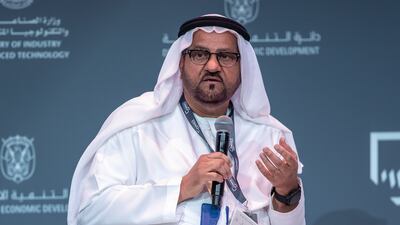
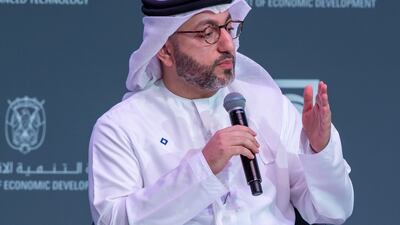
  • Abdulmunim Al Kindy, executive director of people, technology and corporate support at Adnoc.
    Abdulmunim Al Kindy, executive director of people, technology and corporate support at Adnoc.
  • Ahmed Al Naqbi, chief executive of Emirates Development Bank.
    Ahmed Al Naqbi, chief executive of Emirates Development Bank.
  • Sameh Al Qubaisi, director general of economic affairs at the Abu Dhabi Department of Economic Development.
    Sameh Al Qubaisi, director general of economic affairs at the Abu Dhabi Department of Economic Development.
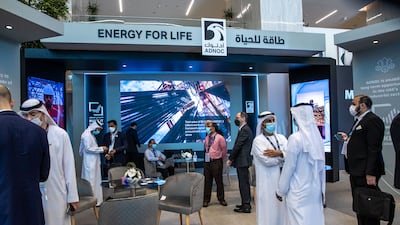
  • The Adnoc stand at the forum.
    The Adnoc stand at the forum.
  • Ismail Abdulla, chief executive of Strata.
    Ismail Abdulla, chief executive of Strata.
  • Saud Abu Alshawareb, managing director of the Dubai Industrial City.
    Saud Abu Alshawareb, managing director of the Dubai Industrial City.
  • Dr Al Jaber said the UAE had emerged from the Covid-19 pandemic stronger, helped by its strategy to further strengthen its industrial sector to boost economic resilience.
    Dr Al Jaber said the UAE had emerged from the Covid-19 pandemic stronger, helped by its strategy to further strengthen its industrial sector to boost economic resilience.
  • Delegates were told that more than $11bn has been redirected into the national economy through the National In-Country Value programme.
    Delegates were told that more than $11bn has been redirected into the national economy through the National In-Country Value programme.
  • Omar Al Suwaidi, Undersecretary of the Ministry of Industry and Advanced Technology, addresses delegates.
    Omar Al Suwaidi, Undersecretary of the Ministry of Industry and Advanced Technology, addresses delegates.
  • Mohammed Al Shorafa, left, chairman of the Abu Dhabi Department of Economic Development.
    Mohammed Al Shorafa, left, chairman of the Abu Dhabi Department of Economic Development.
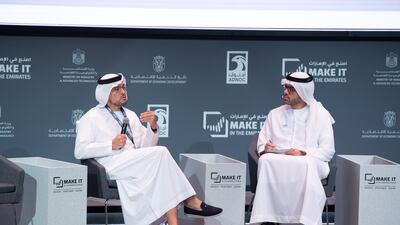
  • Mr Al Shorafa, left, and Ali Al Sayegh, vice president of internal communications and employee engagement at Adnoc, during a discussion at the forum.
    Mr Al Shorafa, left, and Ali Al Sayegh, vice president of internal communications and employee engagement at Adnoc, during a discussion at the forum.
  • Dr Al Jaber said there are more than 300 products available in 11 priority sectors for local manufacturers.
    Dr Al Jaber said there are more than 300 products available in 11 priority sectors for local manufacturers.

Adnoc is among the 11 national champion companies that have opened up more than 300 products in the UAE's 11 priority sectors for local manufacturers. So far, more than $11bn has been redirected into the national economy through the National In-Country Value scheme that aims to boost the private sector's participation in the economy, diversify output and localise critical parts of the supply chain.

The products identified with local manufacturing potential by Adnoc are spread over drilling; mechanical and heating ventilation and air conditioning (HVAC); technology; piping, fittings and valves; electric submersible; instruments, control and telecom; maintenance, repair and operations; chemicals; electrical; and offshore architecture. Companies interested in finding out more details can visit www.adnoc.ae/suppliers or contact icv@adnoc.ae.

Agreements signed by Adnoc include a strategic collaboration agreement with India’s Intech Organics to explore manufacturing calcium and sodium bromide in the UAE for the first time.

The company also concluded framework agreements with Schlumberger and Independent Technical Services (ITS) on local manufacturing and assembly of electric submersible pumps and its components.

Adnoc also signed a strategic collaboration agreement with MaxTube Saje for local manufacturing of glass reinforced epoxy (GRE) lining of various metallic tubular products including production tubing.

The company also reached a strategic collaboration agreement with NOV-Tuboscope on evaluating the localisation of GRE-lined production tubing; and a strategic collaboration agreement with Soluforce on setting up local manufacturing facility for reinforced thermoplastic pipes and non-metallic solutions, among others.

Adnoc is also driving the UAE’s industrial growth through the expansion of its downstream business.

The Ta’ziz Industrial Chemicals Zone, Adnoc’s joint venture with ADQ, will produce new industrial chemicals in the UAE for the first time, replacing chemicals currently imported, while also exporting to meet growing demand for these chemicals globally.

Adnoc has already welcomed major local and international partners and investors into the Ta’ziz Industrial Chemicals Zone. Building.

The company has registered expressions of interest with more than 20 investors in the Ta’ziz Light Industrial and Services Zones at the Make it in the Emirates Forum.

The Ta’ziz Light Industrial and Services Zones will house an ecosystem that will convert the chemicals produced in the Ta’ziz Industrial Chemicals Zone into consumable products and host companies providing industrial services to Ta’ziz and the Ruwais Industrial Complex.


Predictions

Predicted winners for final round of games before play-offs:

  • Friday: Delhi v Chennai - Chennai
  • Saturday: Rajasthan v Bangalore - Bangalore
  • Saturday: Hyderabad v Kolkata - Hyderabad
  • Sunday: Delhi v Mumbai - Mumbai
  • Sunday - Chennai v Punjab - Chennai

Final top-four (who will make play-offs): Chennai, Hyderabad, Mumbai and Bangalore

Asia Cup 2018 final

Who: India v Bangladesh

When: Friday, 3.30pm, Dubai International Stadium

Watch: Live on OSN Cricket HD

CABINET%20OF%20CURIOSITIES%20EPISODE%201%3A%20LOT%2036
%3Cp%3E%3Cstrong%3EDirector%3A%20%3C%2Fstrong%3EGuillermo%20del%20Toro%3Cbr%3E%3Cstrong%3EStars%3A%3C%2Fstrong%3E%20Tim%20Blake%20Nelson%2C%20Sebastian%20Roche%2C%20Elpidia%20Carrillo%3Cbr%3ERating%3A%204%2F5%3C%2Fp%3E%0A
The burning issue

The internal combustion engine is facing a watershed moment – major manufacturer Volvo is to stop producing petroleum-powered vehicles by 2021 and countries in Europe, including the UK, have vowed to ban their sale before 2040. The National takes a look at the story of one of the most successful technologies of the last 100 years and how it has impacted life in the UAE. 

Read part four: an affection for classic cars lives on

Read part three: the age of the electric vehicle begins

Read part two: how climate change drove the race for an alternative 

Tips for newlyweds to better manage finances

All couples are unique and have to create a financial blueprint that is most suitable for their relationship, says Vijay Valecha, chief investment officer at Century Financial. He offers his top five tips for couples to better manage their finances.

Discuss your assets and debts: When married, it’s important to understand each other’s personal financial situation. It’s necessary to know upfront what each party brings to the table, as debts and assets affect spending habits and joint loan qualifications. Discussing all aspects of their finances as a couple prevents anyone from being blindsided later.

Decide on the financial/saving goals: Spouses should independently list their top goals and share their lists with one another to shape a joint plan. Writing down clear goals will help them determine how much to save each month, how much to put aside for short-term goals, and how they will reach their long-term financial goals.

Set a budget: A budget can keep the couple be mindful of their income and expenses. With a monthly budget, couples will know exactly how much they can spend in a category each month, how much they have to work with and what spending areas need to be evaluated.

Decide who manages what: When it comes to handling finances, it’s a good idea to decide who manages what. For example, one person might take on the day-to-day bills, while the other tackles long-term investments and retirement plans.

Money date nights: Talking about money should be a healthy, ongoing conversation and couples should not wait for something to go wrong. They should set time aside every month to talk about future financial decisions and see the progress they’ve made together towards accomplishing their goals.

UAE'S%20YOUNG%20GUNS
%3Cp%3E1%20Esha%20Oza%2C%20age%2026%2C%2079%20matches%0D%3Cbr%3E%0D%3Cbr%3E2%20Theertha%20Satish%2C%20age%2020%2C%2066%20matches%0D%3Cbr%3E%0D%3Cbr%3E3%20Khushi%20Sharma%2C%20age%2021%2C%2065%20matches%0D%3Cbr%3E%0D%3Cbr%3E4%20Kavisha%20Kumari%2C%20age%2021%2C%2079%20matches%0D%3Cbr%3E%0D%3Cbr%3E5%20Heena%20Hotchandani%2C%20age%2023%2C%2016%20matches%0D%3Cbr%3E%0D%3Cbr%3E6%20Rinitha%20Rajith%2C%20age%2018%2C%2034%20matches%0D%3Cbr%3E%0D%3Cbr%3E7%20Samaira%20Dharnidharka%2C%20age%2017%2C%2053%20matches%0D%3Cbr%3E%0D%3Cbr%3E8%20Vaishnave%20Mahesh%2C%20age%2017%2C%2068%20matches%0D%3Cbr%3E%0D%3Cbr%3E9%20Lavanya%20Keny%2C%20age%2017%2C%2033%20matches%0D%3Cbr%3E%0D%3Cbr%3E10%20Siya%20Gokhale%2C%20age%2018%2C%2033%20matches%0D%3Cbr%3E%0D%3Cbr%3E11%20Indhuja%20Nandakumar%2C%20age%2018%2C%2046%20matches%3C%2Fp%3E%0A
%3Cp%3E%3Ca%20href%3D%22https%3A%2F%2Fwww.thenationalnews.com%2Fbusiness%2Feconomy%2Fislamic-economy-consumer-spending-to-increase-45-to-3-2tn-by-2024-1.936583%22%20target%3D%22_self%22%3EGlobal%20Islamic%20economy%20to%20grow%203.1%25%20to%20touch%20%242.4%20trillion%20by%202024%3C%2Fa%3E%26nbsp%3B%3C%2Fp%3E%0A%3Cp%3E%3Ca%20href%3D%22https%3A%2F%2Fwww.thenationalnews.com%2Fbusiness%2Feconomy%2Fuk-economy-plunges-into-worst-ever-recession-after-record-20-4-contraction-1.1062560%22%20target%3D%22_self%22%3EUK%20economy%20plunges%20into%20worst-ever%20recession%20after%20record%2020.4%25%20contraction%3C%2Fa%3E%3C%2Fp%3E%0A%3Cp%3E%3Ca%20href%3D%22https%3A%2F%2Fwww.thenationalnews.com%2Fbusiness%2Feconomy%2Fislamic-economy-consumer-spending-to-increase-45-to-3-2tn-by-2024-1.936583%22%20target%3D%22_self%22%3EIslamic%20economy%20consumer%20spending%20to%20increase%2045%25%20to%20%243.2tn%20by%202024%3C%2Fa%3E%3C%2Fp%3E%0A

Mercer, the investment consulting arm of US services company Marsh & McLennan, expects its wealth division to at least double its assets under management (AUM) in the Middle East as wealth in the region continues to grow despite economic headwinds, a company official said.

Mercer Wealth, which globally has $160 billion in AUM, plans to boost its AUM in the region to $2-$3bn in the next 2-3 years from the present $1bn, said Yasir AbuShaban, a Dubai-based principal with Mercer Wealth.

Within the next two to three years, we are looking at reaching $2 to $3 billion as a conservative estimate and we do see an opportunity to do so,” said Mr AbuShaban.

Mercer does not directly make investments, but allocates clients’ money they have discretion to, to professional asset managers. They also provide advice to clients.

“We have buying power. We can negotiate on their (client’s) behalf with asset managers to provide them lower fees than they otherwise would have to get on their own,” he added.

Mercer Wealth’s clients include sovereign wealth funds, family offices, and insurance companies among others.

From its office in Dubai, Mercer also looks after Africa, India and Turkey, where they also see opportunity for growth.

Wealth creation in Middle East and Africa (MEA) grew 8.5 per cent to $8.1 trillion last year from $7.5tn in 2015, higher than last year’s global average of 6 per cent and the second-highest growth in a region after Asia-Pacific which grew 9.9 per cent, according to consultancy Boston Consulting Group (BCG). In the region, where wealth grew just 1.9 per cent in 2015 compared with 2014, a pickup in oil prices has helped in wealth generation.

BCG is forecasting MEA wealth will rise to $12tn by 2021, growing at an annual average of 8 per cent.

Drivers of wealth generation in the region will be split evenly between new wealth creation and growth of performance of existing assets, according to BCG.

Another general trend in the region is clients’ looking for a comprehensive approach to investing, according to Mr AbuShaban.

“Institutional investors or some of the families are seeing a slowdown in the available capital they have to invest and in that sense they are looking at optimizing the way they manage their portfolios and making sure they are not investing haphazardly and different parts of their investment are working together,” said Mr AbuShaban.

Some clients also have a higher appetite for risk, given the low interest-rate environment that does not provide enough yield for some institutional investors. These clients are keen to invest in illiquid assets, such as private equity and infrastructure.

“What we have seen is a desire for higher returns in what has been a low-return environment specifically in various fixed income or bonds,” he said.

“In this environment, we have seen a de facto increase in the risk that clients are taking in things like illiquid investments, private equity investments, infrastructure and private debt, those kind of investments were higher illiquidity results in incrementally higher returns.”

The Abu Dhabi Investment Authority, one of the largest sovereign wealth funds, said in its 2016 report that has gradually increased its exposure in direct private equity and private credit transactions, mainly in Asian markets and especially in China and India. The authority’s private equity department focused on structured equities owing to “their defensive characteristics.”

Desert Warrior

Starring: Anthony Mackie, Aiysha Hart, Ben Kingsley

Director: Rupert Wyatt

Rating: 3/5

Auron Mein Kahan Dum Tha

Starring: Ajay Devgn, Tabu, Shantanu Maheshwari, Jimmy Shergill, Saiee Manjrekar

Director: Neeraj Pandey

Rating: 2.5/5

THE SPECS

Aston Martin Rapide AMR

Engine: 6.0-litre V12

Transmission: Touchtronic III eight-speed automatic

Power: 595bhp

Torque: 630Nm

Price: Dh999,563

Real estate tokenisation project

Dubai launched the pilot phase of its real estate tokenisation project last month.

The initiative focuses on converting real estate assets into digital tokens recorded on blockchain technology and helps in streamlining the process of buying, selling and investing, the Dubai Land Department said.

Dubai’s real estate tokenisation market is projected to reach Dh60 billion ($16.33 billion) by 2033, representing 7 per cent of the emirate’s total property transactions, according to the DLD.

German intelligence warnings
  • 2002: "Hezbollah supporters feared becoming a target of security services because of the effects of [9/11] ... discussions on Hezbollah policy moved from mosques into smaller circles in private homes." Supporters in Germany: 800
  • 2013: "Financial and logistical support from Germany for Hezbollah in Lebanon supports the armed struggle against Israel ... Hezbollah supporters in Germany hold back from actions that would gain publicity." Supporters in Germany: 950
  • 2023: "It must be reckoned with that Hezbollah will continue to plan terrorist actions outside the Middle East against Israel or Israeli interests." Supporters in Germany: 1,250 

Source: Federal Office for the Protection of the Constitution

Sole survivors
  • Cecelia Crocker was on board Northwest Airlines Flight 255 in 1987 when it crashed in Detroit, killing 154 people, including her parents and brother. The plane had hit a light pole on take off
  • George Lamson Jr, from Minnesota, was on a Galaxy Airlines flight that crashed in Reno in 1985, killing 68 people. His entire seat was launched out of the plane
  • Bahia Bakari, then 12, survived when a Yemenia Airways flight crashed near the Comoros in 2009, killing 152. She was found clinging to wreckage after floating in the ocean for 13 hours.
  • Jim Polehinke was the co-pilot and sole survivor of a 2006 Comair flight that crashed in Lexington, Kentucky, killing 49.

Directed: Smeep Kang
Produced: Soham Rockstar Entertainment; SKE Production
Cast: Rishi Kapoor, Jimmy Sheirgill, Sunny Singh, Omkar Kapoor, Rajesh Sharma
Rating: Two out of five stars 

Updated: June 21, 2022, 9:43 AM