


Moody’s Investors Service cut Ukraine’s credit rating to the third-lowest level, as the three-month war with Russia rumbles on and raises the risk the country will not be able to repay its debt.
The downgrade of Ukraine's government ratings to Caa3 was driven by the increased risks to Kyiv's debt sustainability from Russia's military action, leading to a more protracted conflict than Moody's expected, the New York-based agency said on Friday.
This “increases the likelihood of a debt restructuring and losses being imposed on private sector creditors … a more protracted military conflict following the invasion by Russia would keep financing needs very high for a prolonged period and result in a further rise in the debt burden,” Moody's said.
Moody's gave a negative outlook, reflecting a “still a high degree of uncertainty around how the invasion will evolve and its credit implications. Hence, the recovery by investors in the event of default could be lower than 65 per cent to 80 per cent, which would be consistent with a rating below Caa3.”
Russia and Ukraine have been at odds since 2014, and the war that began in February has taken a heavy toll on the latter. The conflict is expected to shrink the economy by more than 35 per cent in 2022, with the fiscal gap projected to reach between $3 billion and $10bn a month, the Institute of International Finance said last month.
The IIF also said that the war would have a spill-over effect to the global economy, which it described as “teetering on the brink of recession” on Friday.
The coronavirus lockdowns in China and a hawkish US Federal Reserve are also weighing on activity worldwide.
The World Bank last month said it expects the Ukraine economy to contract by about 45 per cent in 2022 because of the conflict.
A more prolonged conflict will also weigh on Kyiv's financial resources, with Moody's estimating financing needs of around $50bn in 2022 — which is 35 per cent gross domestic product this year — and forecasting a rise in government debt to around 90 per cent of GDP from about 49 per cent at the end of 2021.
“The severity of the economic damage from the protracted military conflict will have long-lasting negative implications for the government's finances, increasing risks to debt sustainability,” it said.
Financial support from the international community will help mitigate external and liquidity risks, Moody's said. The agency estimates that global financial institutions and other donors have committed about $38bn, of which $5bn so far has been disbursed, since the start of the conflict.
-
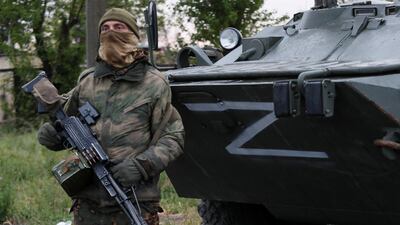
A pro-Russian troop stands guard before the expected departure of Ukrainian soldiers, who surrendered at the besieged Azovstal steel mill in the course of conflict in Mariupol. Reuters -
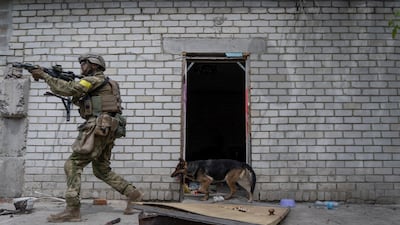
A Ukrainian soldier on reconnaissance in a recently retaken village on the outskirts of Kharkiv, east Ukraine. AP Photo -
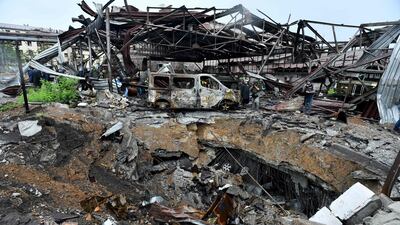
The destroyed part of the Ilyich Iron and Steel Works in Mariupol. AFP -
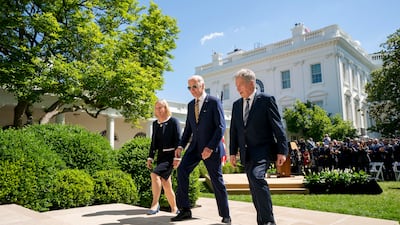
US President Joe Biden, Swedish Prime Minister Magdalena Andersson and Finnish President Sauli Niinisto walk through the White House rose garden after discussing the war, as well as potential Nato membership, in Washington. AP -

Ukrainian soldiers who surrendered at the besieged Azovstal steel plant in Mariupol are escorted by pro-Russian troops to Olenivka in the breakaway Donetsk region. Reuters -
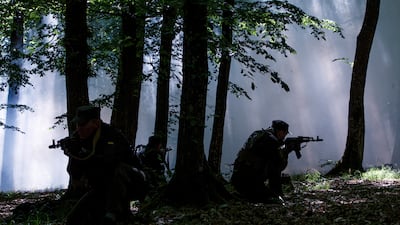
Ukrainian National Guard soldiers train in the woods of the Transcarpathian region. Reuters -
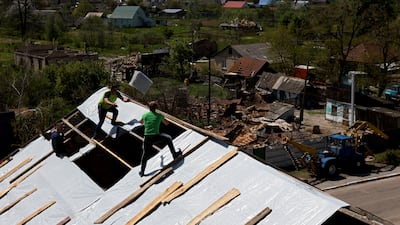
A roof damaged during Russia's invasion of Ukraine is rebuilt in Moshchun village, near Kyiv. Reuters -
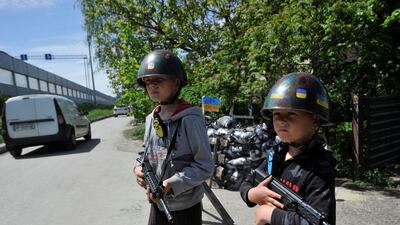
Ukrainian children play war games at a "checkpoint" they set up in Stoyanka, near Kyiv. AFP -
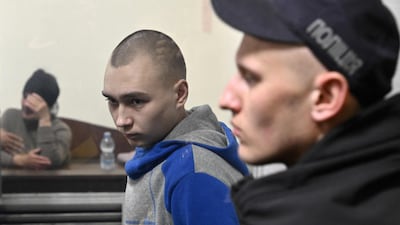
Russian soldier Vadim Shishimarin, centre, on trial for war crimes in the Solomyansky district court in Kyiv, Ukraine. AFP -

A controlled detonation of explosive devices is conducted near Borodianka, Ukraine. Reuters -
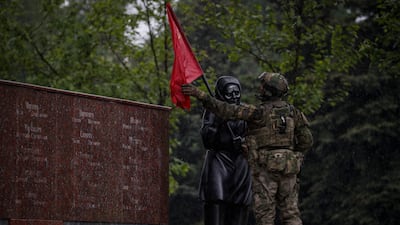
A Russian serviceman adjusts the Soviet flag on a statue in Leninsky Komsomol Square in Mariupol, Ukraine. EPA -
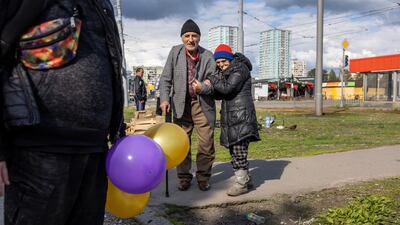
A couple leave a metro station where they had been living after fleeing Russian shelling in Kharkiv, Ukraine. Getty Images -
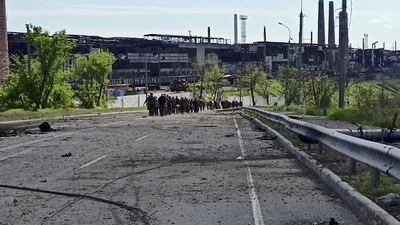
Ukrainian forces leave the Azovstal steel works plant in Mariupol. AFP -
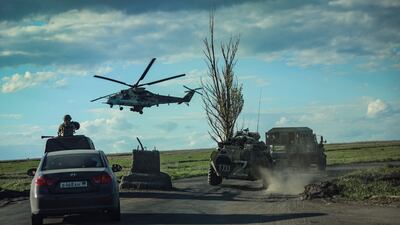
Russian militrary vehicles follow buses (not in picture) carrying Ukrainian troops being evacuated from the besieged Azovstal steel plant in Mariupol. EPA -
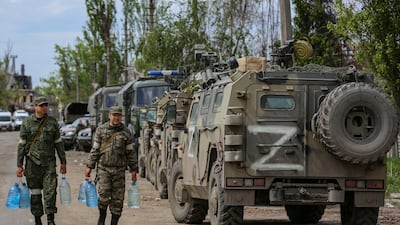
Members of the self-proclaimed Donetsk People's Republic forces carry water bottles as the evacuation of Ukrainian soldiers is carried out in Mariupo. EPA -
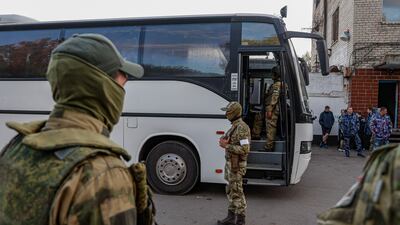
Ukrainian separatist troops and Russian soldiers, rear right, guard the buses with Ukrainian troops, in Mariupol. EPA -
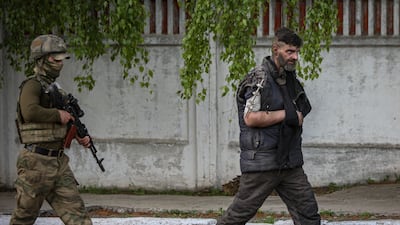
A member of the self-proclaimed Donetsk People's Republic forces escorts a Ukrainian fighter being evacuated from the steel plant. EPA -
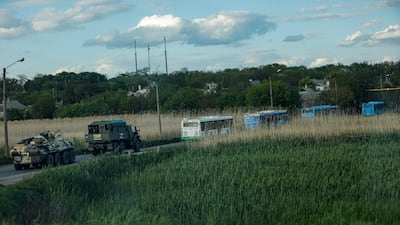
Russian militrary vehicles escort buses carrying Ukrainian troops from the Azovstal steel plant. EPA -
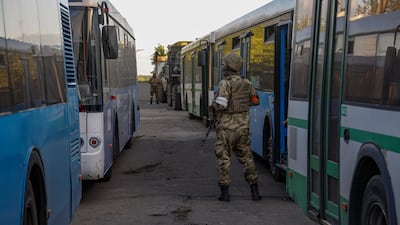
A total of 265 Ukrainian militants, including 51 seriously wounded, laid down arms and surrendered to Russian forces, the Russian Ministry of Defence said on May 17. EPA -
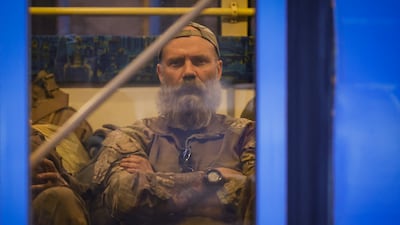
A Ukrainian soldier sits on a bus as troops are evacuated. EPA -
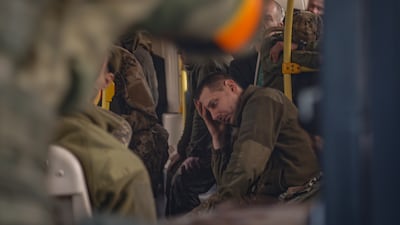
Russian President Vladimir Putin on April 21 ordered his defence minister to not storm but blockade the plant where a number of Ukrainian fighters were holding out. EPA -

Those in need of medical assistance were sent for treatment to a hospital in Novoazovsk, Russia said. EPA -
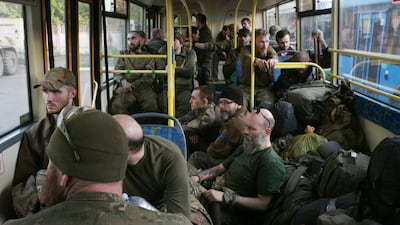
Some of the Ukrainian troops evacuated from the steel plant. AP -
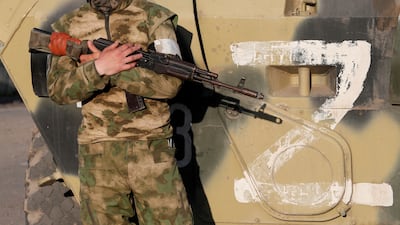
A pro-Russian fighter stands guard next to a combat vehicle, before the evacuation of wounded Ukrainian soldiers from the besieged Azovstal steel mill,in Mariupol. Reuters -
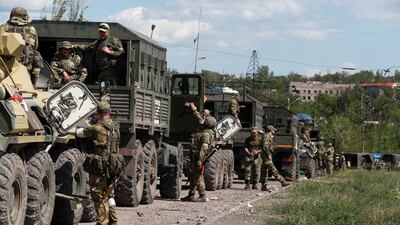
Pro-Russian troops wait before the evacuation of wounded Ukrainian soldiers from the Azovstal steel mill. Reuters -
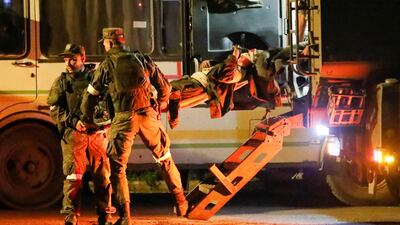
A wounded Ukrainian soldier evacuated from Mariupol is carried on a stretcher out of a bus, after arriving in Novoazovsk. Reuters -
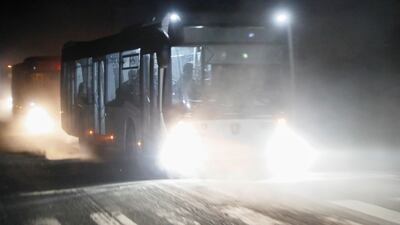
Buses carrying Ukrainian soldiers from the besieged Azovstal steel mill drive away under escort of the pro-Russian forces, in Mariupol. Reuters -
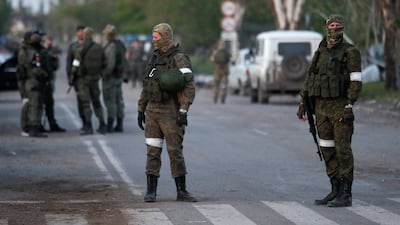
Pro-Russian troops stand guard on a road in Mariupol, Ukraine. Reuters -
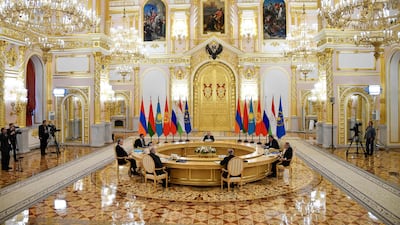
Left to right, clockwise: Kazakhstan's President Kassym-Jomart Tokayev, Kyrgyzstan's President Sadyr Japarov, Russian President Vladimir Putin, Tajikistan's President Emomali Rakhmon, Armenian Prime Minister Nikol Pashinyan, Stanislav Zas, Secretary General of the Collective Security Treaty Organisation (CSTO), and Belarus's President Alexander Lukashenko hold a meeting of CSTO leaders at the Kremlin in Moscow. AFP -
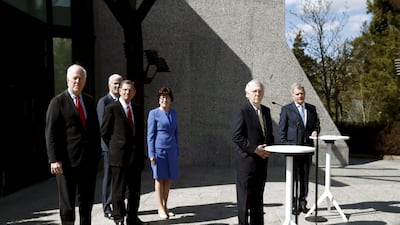
Finland's President Sauli Niinisto and US Senate Minority Leader Mitch McConnell answer questions from the media as Republican senators John Barrasso, Susan Collins and John Cornyn and US new ambassador to Finland Douglas Hickey listen, after a meeting at the president's official residence in Helsinki. Reuters -
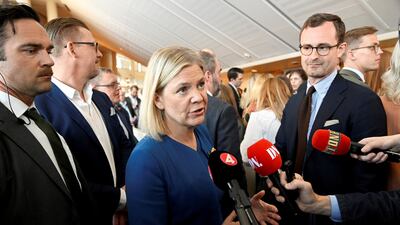
Sweden's Prime Minister Magdalena Andersson speaks to the media before the parliamentary debate on Swedish Nato membership, in Stockholm. Reuters -
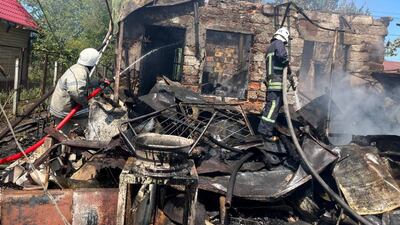
Firefighters work at a scene of a missile strike, as the Russian invasion of Ukraine continues, in Zatoka, Odesa region. Reuters -
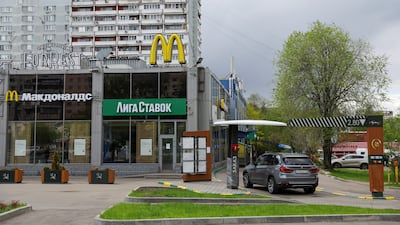
A closed McDonald's restaurant in Moscow. Reuters -
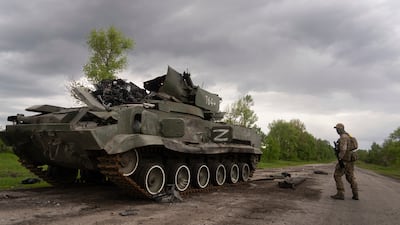
A Ukrainian soldier walks past a wrecked Russian armoured personnel carrier, near Kutuzivka, north of Kharkiv. AP -
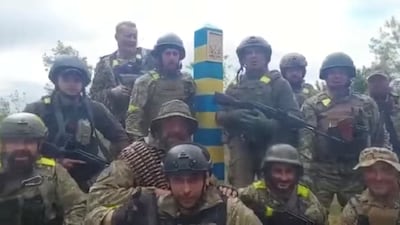
A screengrab obtained from a video shows Ukrainian troops at the Ukraine-Russia border, in what was said to be the Kharkiv region. Reuters -
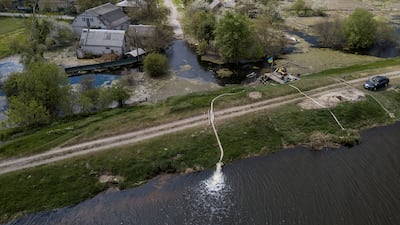
Water gushes from a pump station after Ukrainian troops opened a dam to flood a residential area in Demydiv, to stop the advance of Russian forces towards the capital Kyiv. Reuters -
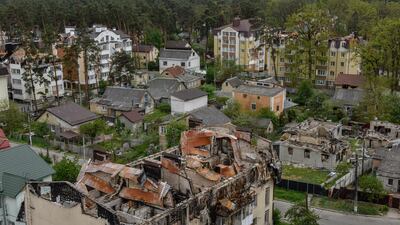
Residental buildings damaged by shelling in Irpin, Kyiv region. EPA -
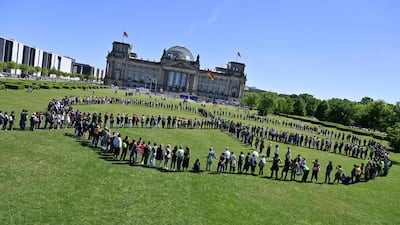
Activists line up to form a peace sign in front of the building that houses the Bundestag, Germany's lower house of parliament, in Berlin. The event was organised by Greenpeace. AFP -
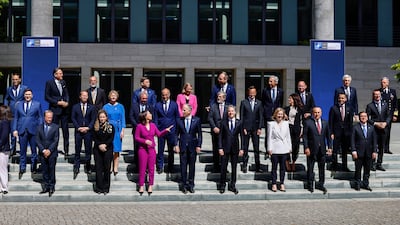
Officials stand together for a photo at an informal meeting of Nato foreign ministers in Berlin, with the focus on the potential membership of Finland and Sweden. Getty Images -
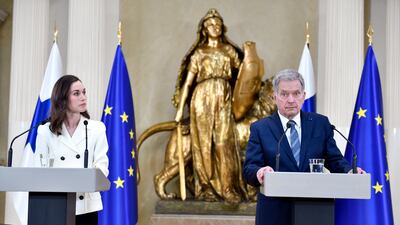
Finland's Prime Minister Sanna Marin (L) and President Sauli Niinisto hold a press conference at the Presidential Palace in Helsinki, where they announced the country's intentions to apply for Nato membership. AP -

An Ukrainian girl with the national flag painted on her face attends a cultural event in support of the besieged country in a metro station in Dnipro, Ukraine. Reuters -

Kalush Orchestra of Ukraine are named the winners of the 66th Eurovision Song Contest in Turin, Italy. Getty Images -
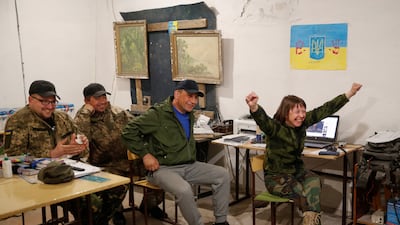
Members of the Ukrainian military celebrate Kalush Orchestra winning the Eurovision Song Contest, at their position in the Kyiv region. Reuters -
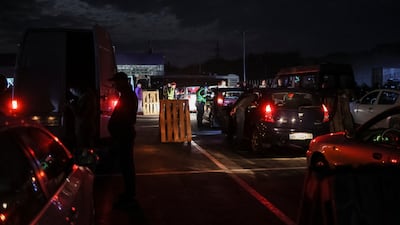
Refugees from Mariupol region arrive at a registration and humanitarian aid centre for internally displaced people in Zaporizhzhia, Ukraine. Reuters -
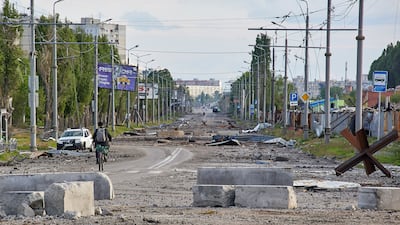
A damaged street on the outskirts of Kharkiv. EPA -
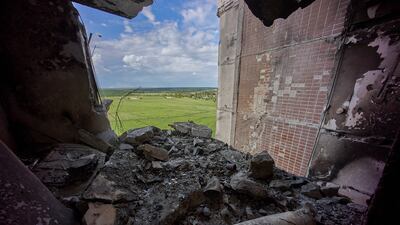
A damaged residential building on the outskirts of Kharkiv. EPA -
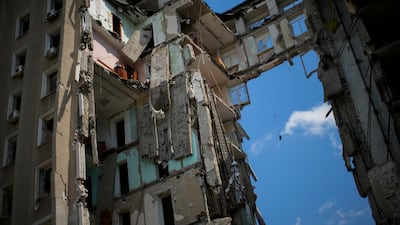
Debris hangs from a regional government building in Mykolaiv, which was heavily damaged in a Russian attack. AP -
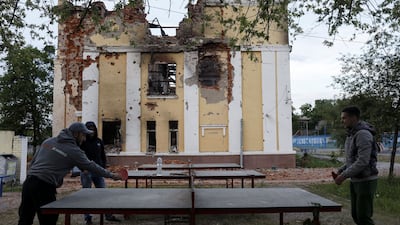
Former students play table tennis in the playground of a destroyed school in Kharkiv. Reuters


That should cover a large portion of Ukraine's estimated financing needs for 2022, and would come as a big relief for Kyiv. Last month, the IIF said that commitments would “certainly fall short” at a time when they were at $6bn.
This week, Group of Seven financial leaders pledged $18.4bn to Ukraine to help it pay its bills in the coming months, with the group saying it will offer more support if needed, and the US Congress gave final approval for a $40bn aid package for the country.
The recent opening of an account at the International Monetary Fund to channel donor resources for balance of payments and budgetary needs, including the possibility for countries to transfer Special Drawing Rights, will further increase funding, Moody's said.
“The challenge for the banking system to absorb significant new sovereign debt and the potential inability to access international markets will likely keep Ukraine dependent on official funding,” it added.
The negative outlook on Ukraine suggests an upgrade is unlikely in the near term — but it could be changed to stable if the war were to end relatively soon, Moody's said.
This would contribute to “helping to contain Ukraine's financing needs and reducing risks to the sustainability of Ukraine's government debt burden. Furthermore, indications that the recovery for bondholders in the event of default was expected to remain in line with a Caa3 rating could also lead to a stabilisation of the outlook.”

