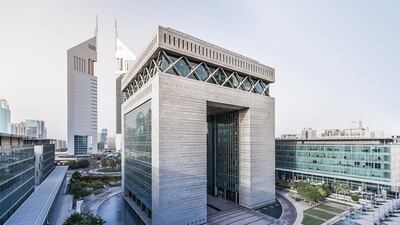
Grip, a Dubai International Financial Centre-registered investment banking and wealth management company, will conduct a multi-million dollar capital raise through the issuance of digital securities representing investor shares.
The issuance – the first of its kind in the Middle East, Africa and South Asia region – will see Grip leading the capital raise for Lead Real Estate, a residential and commercial developer that has its headquarters in Tokyo, according to a DIFC statement on Thursday.
“The issuance is the first major globally compliant digital securities offering in Measa (Middle East, Africa and South Asia), marking a key milestone for DIFC and Dubai. Grip is also on course to establish a private securities marketplace within the centre – a first for the region,” DIFC said.
The offering involves a collaborative effort by reputed lawyers, service providers, technology providers and regulated firms from across the world, including the UAE, the US, Japan, Hong Kong and the Cayman Islands.
Lead Real Estate is focused on the planning, acquisition, renovation and repurposing of real estate assets, with some of its projects leveraging opportunities arising from the 2021 Tokyo Olympics. The company’s assets are spread across Japan, America, Hong Kong and the Philippines.
"At Grip we are keen to be involved with cutting edge investment opportunities, and our pipeline is made up of green bonds and impact investments from clients that range from Japan, Mexico, Georgia and the GCC region", V Gowribalan, chief executive of Grip, said.
DIFC, which was set up in 2004, aims to raise the number of financial companies to 1,000, and employ 50,000 people by 2024. About 25,638 people worked in the centre at the end of last year, a 9 per cent jump from 2018.
“DIFC’s robust yet forward looking legal and regulatory framework is providing Grip with a platform to deliver a first for the centre and Measa region," Arif Amiri, chief executive of DIFC Authority, said. "Innovation like this will propel economic development in the region and illustrates how DIFC is driving the future of finance."
Earlier this month, the financial free zone signed an agreement with Dubai Investment Development Agency to attract more foreign investment into the emirate.
DIFC’s revenue at the end of 2019 rose 2 per cent year-on-year to $228 million (Dh837.45m), while its net profit at $119m remained stable with 2018 levels.

About Housecall
Date started: July 2020
Founders: Omar and Humaid Alzaabi
Based: Abu Dhabi
Sector: HealthTech
# of staff: 10
Funding to date: Self-funded
Ten tax points to be aware of in 2026
1. Domestic VAT refund amendments: request your refund within five years
If a business does not apply for the refund on time, they lose their credit.
2. E-invoicing in the UAE
Businesses should continue preparing for the implementation of e-invoicing in the UAE, with 2026 a preparation and transition period ahead of phased mandatory adoption.
3. More tax audits
Tax authorities are increasingly using data already available across multiple filings to identify audit risks.
4. More beneficial VAT and excise tax penalty regime
Tax disputes are expected to become more frequent and more structured, with clearer administrative objection and appeal processes. The UAE has adopted a new penalty regime for VAT and excise disputes, which now mirrors the penalty regime for corporate tax.
5. Greater emphasis on statutory audit
There is a greater need for the accuracy of financial statements. The International Financial Reporting Standards standards need to be strictly adhered to and, as a result, the quality of the audits will need to increase.
6. Further transfer pricing enforcement
Transfer pricing enforcement, which refers to the practice of establishing prices for internal transactions between related entities, is expected to broaden in scope. The UAE will shortly open the possibility to negotiate advance pricing agreements, or essentially rulings for transfer pricing purposes.
7. Limited time periods for audits
Recent amendments also introduce a default five-year limitation period for tax audits and assessments, subject to specific statutory exceptions. While the standard audit and assessment period is five years, this may be extended to up to 15 years in cases involving fraud or tax evasion.
8. Pillar 2 implementation
Many multinational groups will begin to feel the practical effect of the Domestic Minimum Top-Up Tax (DMTT), the UAE's implementation of the OECD’s global minimum tax under Pillar 2. While the rules apply for financial years starting on or after January 1, 2025, it is 2026 that marks the transition to an operational phase.
9. Reduced compliance obligations for imported goods and services
Businesses that apply the reverse-charge mechanism for VAT purposes in the UAE may benefit from reduced compliance obligations.
10. Substance and CbC reporting focus
Tax authorities are expected to continue strengthening the enforcement of economic substance and Country-by-Country (CbC) reporting frameworks. In the UAE, these regimes are increasingly being used as risk-assessment tools, providing tax authorities with a comprehensive view of multinational groups’ global footprints and enabling them to assess whether profits are aligned with real economic activity.
Contributed by Thomas Vanhee and Hend Rashwan, Aurifer
COMPANY%20PROFILE
%3Cp%3E%3Cstrong%3EName%3A%20%3C%2Fstrong%3EKinetic%207%3Cbr%3E%3Cstrong%3EStarted%3A%3C%2Fstrong%3E%202018%3Cbr%3E%3Cstrong%3EFounder%3A%3C%2Fstrong%3E%20Rick%20Parish%3Cbr%3E%3Cstrong%3EBased%3A%3C%2Fstrong%3E%20Abu%20Dhabi%2C%20UAE%3Cbr%3E%3Cstrong%3EIndustry%3A%3C%2Fstrong%3E%20Clean%20cooking%3Cbr%3E%3Cstrong%3EFunding%3A%3C%2Fstrong%3E%20%2410%20million%3Cbr%3E%3Cstrong%3EInvestors%3A%3C%2Fstrong%3E%20Self-funded%3C%2Fp%3E%0A
More from Neighbourhood Watch:
Citadel: Honey Bunny first episode
Directors: Raj & DK
Stars: Varun Dhawan, Samantha Ruth Prabhu, Kashvi Majmundar, Kay Kay Menon
Rating: 4/5
Killing of Qassem Suleimani
Key figures in the life of the fort
Sheikh Dhiyab bin Isa (ruled 1761-1793) Built Qasr Al Hosn as a watchtower to guard over the only freshwater well on Abu Dhabi island.
Sheikh Shakhbut bin Dhiyab (ruled 1793-1816) Expanded the tower into a small fort and transferred his ruling place of residence from Liwa Oasis to the fort on the island.
Sheikh Tahnoon bin Shakhbut (ruled 1818-1833) Expanded Qasr Al Hosn further as Abu Dhabi grew from a small village of palm huts to a town of more than 5,000 inhabitants.
Sheikh Khalifa bin Shakhbut (ruled 1833-1845) Repaired and fortified the fort.
Sheikh Saeed bin Tahnoon (ruled 1845-1855) Turned Qasr Al Hosn into a strong two-storied structure.
Sheikh Zayed bin Khalifa (ruled 1855-1909) Expanded Qasr Al Hosn further to reflect the emirate's increasing prominence.
Sheikh Shakhbut bin Sultan (ruled 1928-1966) Renovated and enlarged Qasr Al Hosn, adding a decorative arch and two new villas.
Sheikh Zayed bin Sultan (ruled 1966-2004) Moved the royal residence to Al Manhal palace and kept his diwan at Qasr Al Hosn.
Sources: Jayanti Maitra, www.adach.ae
Our legal consultant
Name: Dr Hassan Mohsen Elhais
Position: legal consultant with Al Rowaad Advocates and Legal Consultants.
Tori Amos
Native Invader
Decca
COMPANY%20PROFILE
%3Cp%3E%3Cstrong%3EName%3A%3C%2Fstrong%3E%20Floward%0D%3Cbr%3E%3Cstrong%3EBased%3A%20%3C%2Fstrong%3ERiyadh%2C%20Saudi%20Arabia%0D%3Cbr%3E%3Cstrong%3EFounders%3A%20%3C%2Fstrong%3EAbdulaziz%20Al%20Loughani%20and%20Mohamed%20Al%20Arifi%0D%3Cbr%3E%3Cstrong%3ESector%3A%20%3C%2Fstrong%3EE-commerce%0D%3Cbr%3E%3Cstrong%3ETotal%20funding%3A%20%3C%2Fstrong%3EAbout%20%24200%20million%0D%3Cbr%3E%3Cstrong%3EInvestors%3A%20%3C%2Fstrong%3EAljazira%20Capital%2C%20Rainwater%20Partners%2C%20STV%20and%20Impact46%0D%3Cbr%3E%3Cstrong%3ENumber%20of%20employees%3A%20%3C%2Fstrong%3E1%2C200%3C%2Fp%3E%0A
Haemoglobin disorders explained
Thalassaemia is part of a family of genetic conditions affecting the blood known as haemoglobin disorders.
Haemoglobin is a substance in the red blood cells that carries oxygen and a lack of it triggers anemia, leaving patients very weak, short of breath and pale.
The most severe type of the condition is typically inherited when both parents are carriers. Those patients often require regular blood transfusions - about 450 of the UAE's 2,000 thalassaemia patients - though frequent transfusions can lead to too much iron in the body and heart and liver problems.
The condition mainly affects people of Mediterranean, South Asian, South-East Asian and Middle Eastern origin. Saudi Arabia recorded 45,892 cases of carriers between 2004 and 2014.
A World Health Organisation study estimated that globally there are at least 950,000 'new carrier couples' every year and annually there are 1.33 million at-risk pregnancies.
