


The government did not fully brief the Bank of England on its mini-budget and sweeping tax-cut plans before it was unveiled, the regulator's deputy governor said.
Mel Stride, chair of the Treasury committee, asked Sir Jon Cunliffe whether the mini-budget, unveiled by former chancellor Kwasi Kwarteng on September 23, had “blindsided” the bank.
“Like others, we knew there was a fiscal event, and we knew some of the things that would be in it because it was very public and in the Conservative leadership campaign," Mr Cunliffe said.
“But some things were a surprise on the day, to us as to others. We did not have a full briefing of the package the night before.”
He told the Treasury committee that the bank would have advised the government if it knew there would be such a dramatic effect on market stability.
“Had they asked us what the market reaction would be, we would have interacted with them," Mr Cunliffe said.
“But it is not our responsibility to give the government advice on fiscal policy, it is the role of the Treasury.”
The Bank of England is usually briefed confidentially before the budget and monetary policy, he said.
But as the government needed to “move quickly”, there was no such discussion.
The Governor of the Bank of England, Andrew Bailey, is known to have been meeting regularly with Mr Kwarteng in the lead-up to the mini-budget, before increasing conversations after it sparked turmoil in the financial markets.
Bank of England raises interest rates to highest level in 14 years - video
The bank was forced to step in and launch an emergency bond-buying programme to settle the markets, after the interest on government bonds – known as gilt yields – surged to about 5 per cent.
Mr Cunliffe repeated a point made in a letter to Mr Stride on Tuesday that the bank’s intervention in the bonds market followed a period of historic rises in yields.
The surge was “outside of historical experiences”, he said.
“Yields had been moving up very fast internationally since the start of the new year.
“But the five biggest movements in long-dated gilt yields since we started keeping a record in 2000 came in the period after September 23, until the bank intervened in the gilt market.”
Mr Cunliffe said there was “clearly” a UK component to the market chaos, even though markets are stretched internationally.
He said there had been danger that as bond yields rose, the sell-off of gilts would develop into a “fire sale spiral”.
“If it became established … then the gilt market would basically breakdown,” Mr Cunliffe said.
He said the markets were also reacting to to a new government they did not know.
“The then-chancellor said on the Sunday on television there would be further tax cuts, which did have an impact in Asian markets on the Sunday evening,” Mr Cunliffe said.
Andrew Hauser, the bank’s executive director for markets, said the situation developed very quickly.
“This was a situation which went from, ‘We’re ringing to let you know’, to shouting on the phone to us within two days,” Mr Hauser told the committee.
“This was a full-scale liquidation event.”
Kwasi Kwarteng sacked as UK Chancellor - in pictures
-

Britain's former Chancellor of the Exchequer Kwasi Kwarteng leaves 11, Downing Street. He has been sacked after weeks of economic chaos during his brief term in office. AP -
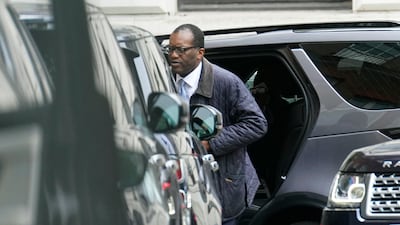
Mr Kwarteng arriving at Downing Street. AP -
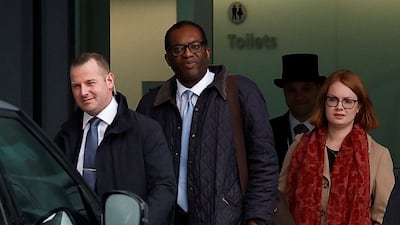
Mr Kwarteng leaves Heathrow Airport in London, before travelling to Downing Street. Reuters -

Mr Kwarteng leaves the stage after delivering his keynote speech to party members at the annual Conservative Party conference in Birmingham. PA -
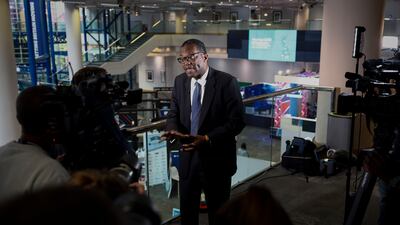
Mr Kwarteng gives an interview on the second day of Conservative Party conference. Getty Images -
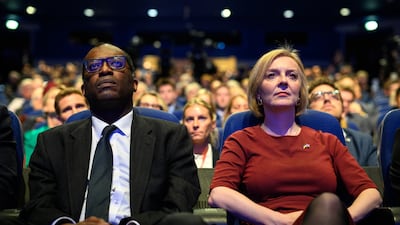
Mr Kwarteng and Prime Minister Liz Truss on the opening day of the conference in Birmingham. Getty Images -
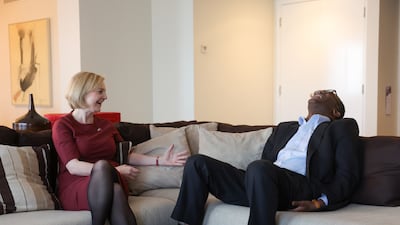
Liz Truss meets Mr Kwarteng at the Conservative Party Conference. Photo: Andrew Parsons / CCHQ -
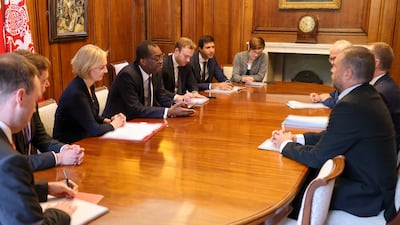
Ms Truss and Mr Kwarteng meet people from the Office for Budget Responsibility in No. 11 Downing Street, in September. Photo: No. 10 Downing Street -
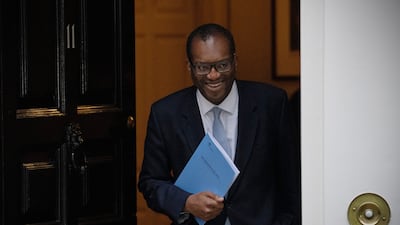
Mr Kwarteng leaving 11 Downing Street in September. Getty Images -
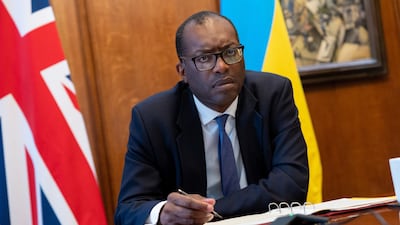
Mr Kwarteng speaks online to the Ukrainian Minister of Finance Serhiy Marchenko in September. Photo: HM Treasury -
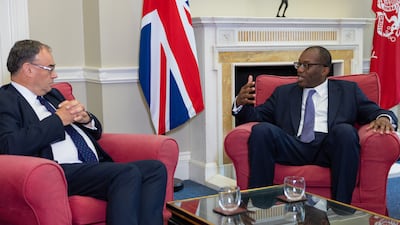
Mr Kwarteng meets Andrew Bailey, Governor of the Bank of England, at the Treasury in September. Photo: HM Treasury -

Then as Secretary of State for Business, Energy and Industrial Strategy, Mr Kwarteng introduces Ms Truss as she launches her campaign to become the next prime minister in July. Getty Images -
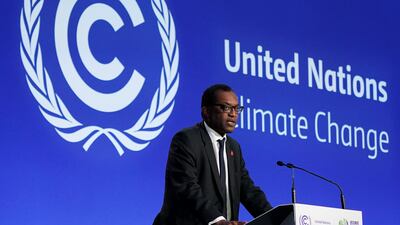
Mr Kwarteng speaks to delegates during Cop26 in Glasgow, in November 2021. Getty Images -
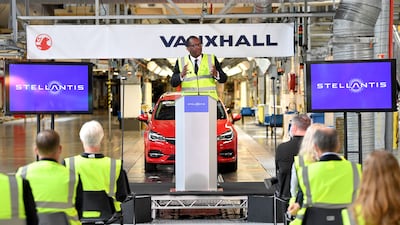
Mr Kwarteng speaks at the press conference announcing Stellantis' investment in the Vauxhall Ellesmere Port plant to build new electric vehicles, in July 2021. Getty Images -
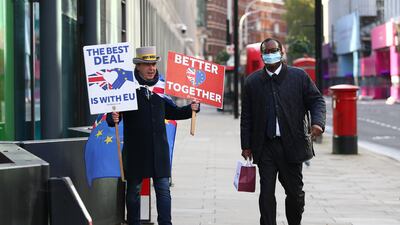
Anti-Brexit protester Steve Bray demonstrates as Kwasi Kwarteng walks past him in London in November 2020. Getty Images


Mr Cunliffe said the Bank of England's intervention was always meant to be a temporary operation to buy bonds from the market.
“We were very clear we wanted a temporary, targeted operation and that we were not supporting the gilt market generally," he said.
"The gilt market does have to adjust to economic policy, whatever that policy may be.”
Mr Cunliffe said that the bank planned to unwind its purchasing in a timely and orderly manner, and by going through the same governance.
“The unwind will be a kind of mirror image of the wind,” he told the committee.

