• Emirates successfully tested a Boeing 777 with one engine entirely powered by sustainable aviation fuel. All photos: Andrew Scott / The National
    Emirates successfully tested a Boeing 777 with one engine entirely powered by sustainable aviation fuel. All photos: Andrew Scott / The National
  • Specially chosen pilots flew the plane for an hour to test the performance of the sustainable aviation fuel
    Specially chosen pilots flew the plane for an hour to test the performance of the sustainable aviation fuel
  • Sustainable aviation fuel emits 75-80 per cent less CO2 per lifecycle
    Sustainable aviation fuel emits 75-80 per cent less CO2 per lifecycle
  • By 2030, every plane made by Boeing will fly using sustainable aviation fuel
    By 2030, every plane made by Boeing will fly using sustainable aviation fuel
  • It is the first commercial flight to use biofuel
    It is the first commercial flight to use biofuel
  • Emirates plans to run the same test flight with an Airbus A380
    Emirates plans to run the same test flight with an Airbus A380
  • The Boeing 777-300ER was the first in the Mena region to be powered by 100% SAF in one of two engines
    The Boeing 777-300ER was the first in the Mena region to be powered by 100% SAF in one of two engines

Emirates successfully tests flight powered by sustainable aviation fuel


Deena Kamel
  • English
  • Arabic

Emirates has successfully completed a demonstration flight powered by 100 per cent sustainable aviation fuel (SAF), as part of the global aviation industry's push to use more of the greener fuel to meet carbon emission targets.

The Boeing 777-300ER plane flew for more than an hour over Dubai's coastline on Monday, becoming the first such flight in the Mena region to be powered by SAF in one of two engines, the airline said.

“The trial today is very important and sets a new milestone for the industry and Emirates airline … it has not been done before on a wide body aeroplane, so it is great team work between Emirates, GE and Boeing,” said chief operating officer Adel Al Redha at the Emirates Engineering Centre before the flight took off.

“It is definitely a step forward towards helping the environment. With this step, our aim is to provide an alternative fuel that will reduce carbon emissions and become more environmentally friendly.”

The airline's engineering team is also holding talks with European plane maker Airbus about plans for a similar SAF-powered test flight using its flagship A380 double-decker this year, Mr Al Redha said.

Emirates — the world's largest operator of Boeing 777 and Airbus A380 aircraft — is aiming for “SAF to make up half its total fuel supply by 2030”, although this depends largely on regulatory certification and adequate supply of the alternative fuel at commercially viable prices, he said.

“There is a process we have to go through to get the approval from the regulatory authorities to use SAF on commercial planes,” he said.

“Then we start discussing with the producers how to make this fuel available in Dubai or the UAE in higher quantities and what the delivery costs will be for this fuel.”

The cost of research and development, and production costs for SAF are “high in the beginning”, so the airline is open to working with both local and global companies for its procurement, Mr Al Redha said.

SAF is widely considered in the global aviation industry as the most significant contributor to reaching its net-zero goal by 2050.

However, this requires a major boost in SAF production from the current minuscule levels, and at cheaper prices.

Emirates worked with GE Aerospace, Boeing, Honeywell, Finnish biofuel producer Neste and Wisconsin-based renewable fuels company Virent to procure and develop a blend of SAF that closely replicates the properties of conventional jet fuel.

Only one engine on the plane used biofuel while the other used conventional fuel. Andrew Scott / The National

The initiative adds to the body of industry data and research about SAF blends in higher proportions, paving the way for standardisation and future certification of 100 per cent drop-in SAF as a replacement for jet fuel. The current blend limit is 50 per cent.

“Boeing has been a huge proponent of SAF as the most immediate and long-term method to help the industry reach its target of net zero by 2050,” Kuljit Ghata-Aura, president of Boeing in the Middle East, Turkey and Africa, told reporters.

“SAF is the method by which you can do this with the least disruption to existing infrastructure and existing aircraft design, and is therefore a real credible solution.”

Commercial aircraft are currently allowed to fly using a maximum of 50 per cent blend of SAF combined with conventional jet fuel, and the industry is working towards certification that will permit 100 per cent SAF.

“Boeing Company will only manufacture aircraft that are capable of flying on 100 per cent SAF from 2030,” Mr Ghata-Aura said.

Producing SAF on a cheaper scale will require action from all aerospace stakeholders, including governments, regulators, plane makers, engine makers and airlines, he said.

The use of SAF can result in up to an 80 per cent reduction in the life cycle of carbon dioxide emissions, said Mohamed Al Ghailani, Boeing's regional lead on global sustainability policy and partnerships.

Defining the standards for use of 100 per cent SAF could come within two years, said Zeina Chakhtoura, GE Aviation's senior customer service manager.

Before Emirates' test flight, chemical and physical fuel property measurements were carried out during rigorous trials until a blending ratio that mirrored the qualities of jet fuel was established.

More than 18 tonnes of SAF were blended from renewable diesel fuel provided by Neste and Virent. The 100 per cent SAF supplied one GE90 engine on the Boeing 777 wide-body aircraft, with conventional jet fuel powering the other.

The test flight shows the compatibility of the blended SAF as a safe and reliable fuel source, Emirates said.

The UAE's Enoc Group participated in the test flight by securing, blending and loading the SAF.

Neste said it was working closely together with partners to accelerate the availability and use of SAF as the company increases its SAF production capacity to 1.5 million tonnes per year by the end of the year.

“We look forward to growing the supply of SAF also to Dubai,” said Jonathan Wood, vice president for renewable aviation at Neste's Europe, Middle East and Africa unit.

Virent said its technology converts widely available, plant-based sugars into the compounds that make 100 per cent SAF possible, without the need to blend it with traditional jet fuel.

Working with Emirates on the flight test demonstrates “that we can power sustainable aviation without modifying today’s modern airline engines or the infrastructure that serves the airline industry”, said Dave Kettner, president and general counsel of Virent.

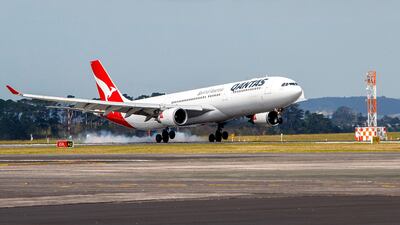
  • 1. Qantas. The airline has taken first place in AirlineRatings.com's annual list of the safest airlines around the globe. Photo: AFP
    1. Qantas. The airline has taken first place in AirlineRatings.com's annual list of the safest airlines around the globe. Photo: AFP
  • 2. Air New Zealand. The airline has slipped down from first to second place in the ranking of 385 global airlines. Photo: AP
    2. Air New Zealand. The airline has slipped down from first to second place in the ranking of 385 global airlines. Photo: AP
  • 3. Etihad Airways. The national carrier of the UAE is the highest-ranked Middle Eastern airline in the list. Photo: Etihad
    3. Etihad Airways. The national carrier of the UAE is the highest-ranked Middle Eastern airline in the list. Photo: Etihad
  • 4. Qatar Airways. In fourth place, it's one of three Middle Eastern airlines in the top 20. Reuters
    4. Qatar Airways. In fourth place, it's one of three Middle Eastern airlines in the top 20. Reuters
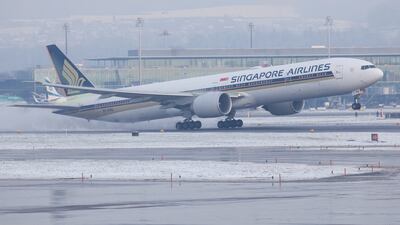
  • 5. Singapore Airlines. The carrier has slipped down one place from fourth. Reuters
    5. Singapore Airlines. The carrier has slipped down one place from fourth. Reuters
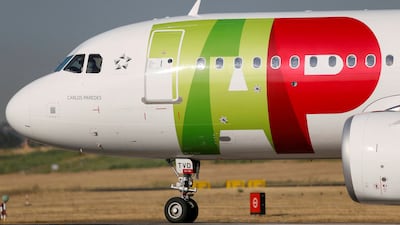
  • 6. TAP Air Portugal is the flag carrier airline of Portugal and ranks sixth in the 2023 ranking. Reuters / Rafael Marchante
    6. TAP Air Portugal is the flag carrier airline of Portugal and ranks sixth in the 2023 ranking. Reuters / Rafael Marchante
  • 7. Emirates. The Dubai airline has climbed 13 places to rank as the seventh-safest airline in the world. Photo: Emirates
    7. Emirates. The Dubai airline has climbed 13 places to rank as the seventh-safest airline in the world. Photo: Emirates
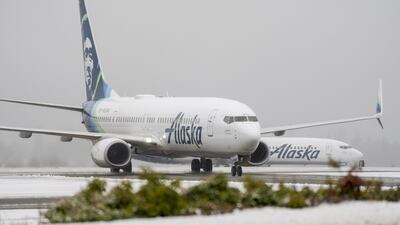
  • 8. Alaska Airlines. The carrier ranked the eighth-safest airline in the world for 2023. Photo: David Ryder / Bloomberg
    8. Alaska Airlines. The carrier ranked the eighth-safest airline in the world for 2023. Photo: David Ryder / Bloomberg
  • 9. EVA Air. The Taiwanese airline holds its ninth place from 2022. EPA-EFE
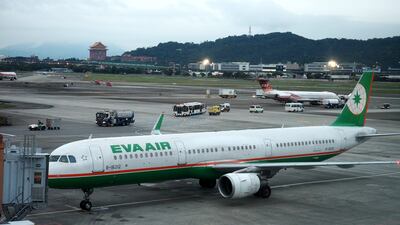
    9. EVA Air. The Taiwanese airline holds its ninth place from 2022. EPA-EFE
  • 10. Virgin Australia/Virgin Atlantic. The airline rounds out the top 10. Photo: AFP
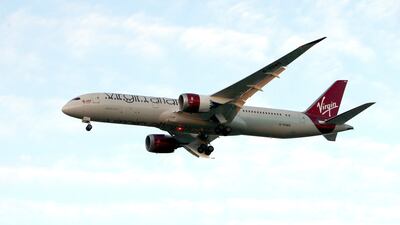
    10. Virgin Australia/Virgin Atlantic. The airline rounds out the top 10. Photo: AFP
  • 11. Cathay Pacific. The Hong Kong airline ranks as one of the world's safest. Reuters
    11. Cathay Pacific. The Hong Kong airline ranks as one of the world's safest. Reuters
  • 12. Hawaiian Airlines. The carrier sits 12th in the list. Reuters
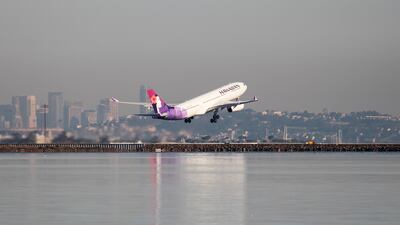
    12. Hawaiian Airlines. The carrier sits 12th in the list. Reuters
  • 13. SAS. The Scandinavian airline has fallen seven places in 2023. Photo: Carsten Snejbjerg / Bloomberg
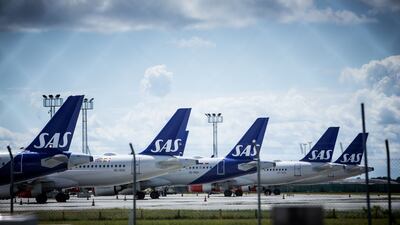
    13. SAS. The Scandinavian airline has fallen seven places in 2023. Photo: Carsten Snejbjerg / Bloomberg
  • 14. United Airlines. The carrier is one of several US airlines in the ranking. AP Photo
    14. United Airlines. The carrier is one of several US airlines in the ranking. AP Photo
  • 15. Lufthansa. The German air carrier holds the 15th spot in the annual safety ranking. Reuters
    15. Lufthansa. The German air carrier holds the 15th spot in the annual safety ranking. Reuters
  • 16. Finland's largest and flag carrier Finnair is the world's sixteenth safest airline. ReuterS / Phil Noble
    16. Finland's largest and flag carrier Finnair is the world's sixteenth safest airline. ReuterS / Phil Noble
  • 17. British Airways. The UK's flag carrier ranks in the world's safest airlines. Reuters
    17. British Airways. The UK's flag carrier ranks in the world's safest airlines. Reuters
  • 18. KLM. The flag carrier of the Netherlands holds a spot in the top 20. Reuters
    18. KLM. The flag carrier of the Netherlands holds a spot in the top 20. Reuters
  • 19. American Airlines. The carrier has slipped to 19th in the annual list. Reuters / Joshua Roberts
    19. American Airlines. The carrier has slipped to 19th in the annual list. Reuters / Joshua Roberts
  • 20. Delta Air Lines. The US airline rounds out the top 20. AP Photo
    20. Delta Air Lines. The US airline rounds out the top 20. AP Photo
The specs

Engine: 2-litre 4-cylinder and 3.6-litre 6-cylinder

Power: 220 and 280 horsepower

Torque: 350 and 360Nm

Transmission: eight-speed automatic

Price: from Dh136,521 VAT and Dh166,464 VAT 

On sale: now

Global state-owned investor ranking by size

1.

United States

2.

China

3.

UAE

4.

Japan

5

Norway

6.

Canada

7.

Singapore

8.

Australia

9.

Saudi Arabia

10.

South Korea

Ten tax points to be aware of in 2026

1. Domestic VAT refund amendments: request your refund within five years

If a business does not apply for the refund on time, they lose their credit.

2. E-invoicing in the UAE

Businesses should continue preparing for the implementation of e-invoicing in the UAE, with 2026 a preparation and transition period ahead of phased mandatory adoption. 

3. More tax audits

Tax authorities are increasingly using data already available across multiple filings to identify audit risks. 

4. More beneficial VAT and excise tax penalty regime

Tax disputes are expected to become more frequent and more structured, with clearer administrative objection and appeal processes. The UAE has adopted a new penalty regime for VAT and excise disputes, which now mirrors the penalty regime for corporate tax.

5. Greater emphasis on statutory audit

There is a greater need for the accuracy of financial statements. The International Financial Reporting Standards standards need to be strictly adhered to and, as a result, the quality of the audits will need to increase.

6. Further transfer pricing enforcement

Transfer pricing enforcement, which refers to the practice of establishing prices for internal transactions between related entities, is expected to broaden in scope. The UAE will shortly open the possibility to negotiate advance pricing agreements, or essentially rulings for transfer pricing purposes. 

7. Limited time periods for audits

Recent amendments also introduce a default five-year limitation period for tax audits and assessments, subject to specific statutory exceptions. While the standard audit and assessment period is five years, this may be extended to up to 15 years in cases involving fraud or tax evasion. 

8. Pillar 2 implementation 

Many multinational groups will begin to feel the practical effect of the Domestic Minimum Top-Up Tax (DMTT), the UAE's implementation of the OECD’s global minimum tax under Pillar 2. While the rules apply for financial years starting on or after January 1, 2025, it is 2026 that marks the transition to an operational phase.

9. Reduced compliance obligations for imported goods and services

Businesses that apply the reverse-charge mechanism for VAT purposes in the UAE may benefit from reduced compliance obligations. 

10. Substance and CbC reporting focus

Tax authorities are expected to continue strengthening the enforcement of economic substance and Country-by-Country (CbC) reporting frameworks. In the UAE, these regimes are increasingly being used as risk-assessment tools, providing tax authorities with a comprehensive view of multinational groups’ global footprints and enabling them to assess whether profits are aligned with real economic activity. 

Contributed by Thomas Vanhee and Hend Rashwan, Aurifer

Tamkeen's offering
  • Option 1: 70% in year 1, 50% in year 2, 30% in year 3
  • Option 2: 50% across three years
  • Option 3: 30% across five years 
Our legal columnist

Name: Yousef Al Bahar

Advocate at Al Bahar & Associate Advocates and Legal Consultants, established in 1994

Education: Mr Al Bahar was born in 1979 and graduated in 2008 from the Judicial Institute. He took after his father, who was one of the first Emirati lawyers

How to wear a kandura

Dos

  • Wear the right fabric for the right season and occasion 
  • Always ask for the dress code if you don’t know
  • Wear a white kandura, white ghutra / shemagh (headwear) and black shoes for work 
  • Wear 100 per cent cotton under the kandura as most fabrics are polyester

Don’ts 

  • Wear hamdania for work, always wear a ghutra and agal 
  • Buy a kandura only based on how it feels; ask questions about the fabric and understand what you are buying
Updated: February 06, 2023, 7:33 AM