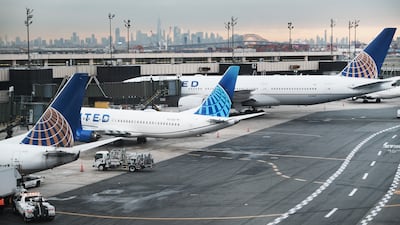
Aircraft have been gradually moving towards automation. AFP

Airlines push for lone pilot flights to cut costs but move faces resistance


  • English
  • Arabic

Airlines and regulators are pushing to have only one pilot in the cockpit of passenger jets instead of two.

The move would lower costs and ease pressure from crew shortages, but placing such responsibility on a single person at the controls is unsettling for some.

More than 40 countries including Germany, the UK and New Zealand have asked the UN body that sets aviation standards to help make single-pilot flights a safe reality.

The EU Aviation Safety Agency (EASA) has also been working with plane makers to determine how solo flights would operate and preparing rules to oversee them. The agency said such services could start in 2027.

The plan doesn’t sit well with pilots and is a hard sell for passengers, too.

Tony Lucas, an Airbus A330 captain for Qantas Airways and president of the Australian & International Pilots Association, is concerned that a lone pilot might be overwhelmed by an emergency before anyone else has time to reach the cockpit to help.

“The people going down this route aren’t the people who fly jets every day,” Mr Lucas said. “When things go awry, they go awry fairly quickly.”

That is what happened on board Air France Flight 447 on its way to Paris from Rio de Janeiro on June 1, 2009.

With the plane cruising at 10.6km over the Atlantic Ocean and the captain resting in the cabin, the two co-pilots in the cockpit started receiving faulty speed readings, probably from frozen detector tubes outside the aircraft.

By the time the captain reached the cockpit 90 seconds later, the plane was in an aerodynamic stall from which it never recovered. Less than three minutes later, it hit the water, killing all 228 people on board.

Mr Lucas, a check and training captain, also worries about the lost opportunities to mentor junior pilots if flight crew are working increasingly on their own.

____________________________

World's safest airlines 2022

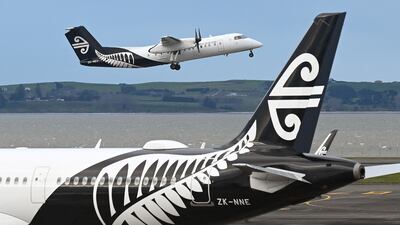
  • 1. Air New Zealand. AFP
    1. Air New Zealand. AFP
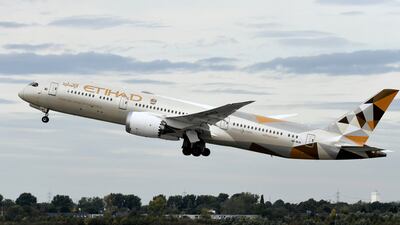
  • 2. Etihad Airways. AFP
    2. Etihad Airways. AFP
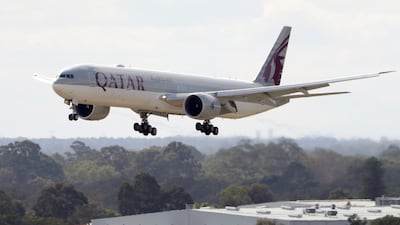
  • 3. Qatar Airways. EPA
    3. Qatar Airways. EPA
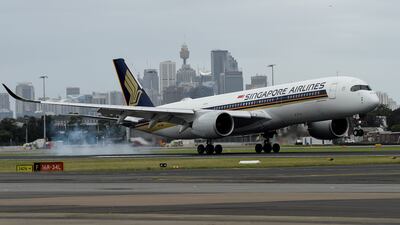
  • 4. Singapore Airlines. EPA
    4. Singapore Airlines. EPA
  • 5. TAP Air Portugal. Reuters
    5. TAP Air Portugal. Reuters
  • 6. Scandinavian Airlines (SAS). Reuters
    6. Scandinavian Airlines (SAS). Reuters
  • 7. Qantas. Reuters
    7. Qantas. Reuters
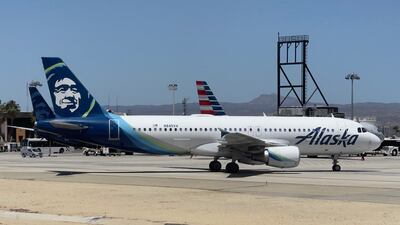
  • 8. Alaska Airlines. AFP
    8. Alaska Airlines. AFP
  • 9. EVA Air. EPA
    9. EVA Air. EPA
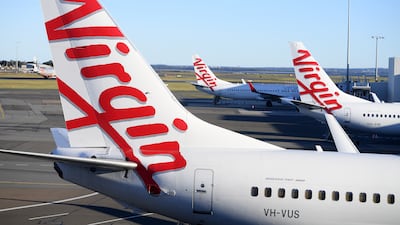
  • 10. Virgin Australia/Atlantic. EPA
    10. Virgin Australia/Atlantic. EPA
  • 11. Cathay Pacific. Getty Images
    11. Cathay Pacific. Getty Images
  • 12. Hawaiian Airlines. Reuters
    12. Hawaiian Airlines. Reuters
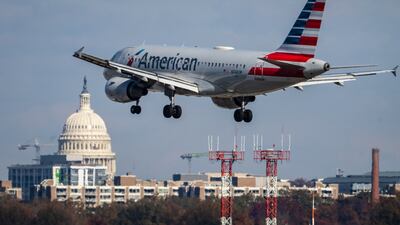
  • 13. American Airlines. AFP
    13. American Airlines. AFP
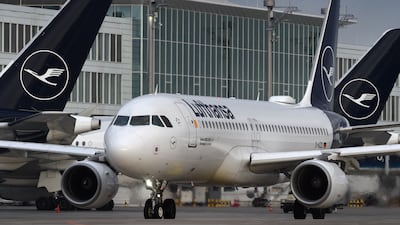
  • 14. Lufthansa/Swiss Group. AFP
    14. Lufthansa/Swiss Group. AFP
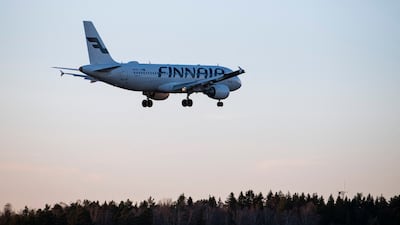
  • 15. Finnair. AFP
    15. Finnair. AFP
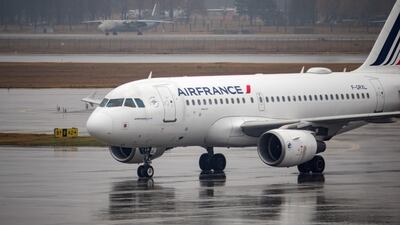
  • 16. Air France-KLM Group. Getty Images
    16. Air France-KLM Group. Getty Images
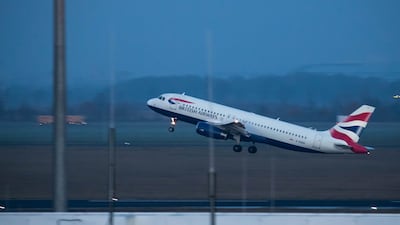
  • 17. British Airways (BA). EPA
    17. British Airways (BA). EPA
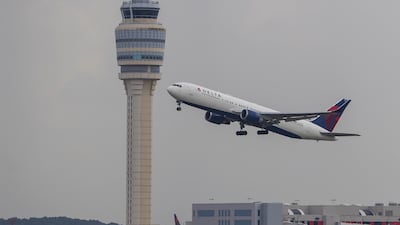
  • 18. Delta Air Lines. EPA
    18. Delta Air Lines. EPA
  • 19. United Airlines. AFP
    19. United Airlines. AFP
  • 20. Emirates. Reuters
    20. Emirates. Reuters

____________________________

The challenges

The planned changes bring many challenges. It is not yet clear what would happen if a lone pilot collapsed or started flying erratically. Automation, technology and remote assistance from the ground would somehow have to replace the expertise, safety and immediacy of a second pilot.

Aviation has been moving towards this point for decades. In the 1950s, commercial aircraft cockpits were more crowded, typically with a captain, first officer or co-pilot, a flight engineer, a navigator and a radio operator.

Advances in technology gradually made the last three positions redundant.

Janet Northcote, the EASA’s head of communications, wrote in an email that “we are potentially removing the last piece of human redundancy from the flight deck”.

One condition for single-pilot operations is that it is at least as safe as with two people at the controls, according to an EU request to the International Civil Aviation Organisation (ICAO), the UN aviation standards body.

“The psychological barriers are probably harder than the technological barriers,” Boeing's South-East Asia president Alexander Feldman said at a Bloomberg business summit in Bangkok last week.

“The technology is there for single pilots; it is really about where the regulators and the general public feel comfortable.”

A first step would be to allow solo piloting when aircraft are cruising, typically a less busy period than take-offs and landings. That would allow the other pilot to rest in the cabin, rather than staying in the cockpit to help to fly the plane.

By alternating breaks in this manner, a two-person crew could fly longer routes without the help - and expense - of an extra pilot.

Ultimately, flying could be fully automated with minimal oversight from a pilot in the cockpit. The system could detect if the pilot, for whatever reason, is incapacitated and then land the plane by itself at a preselected airport, according to the EASA.

However, such flights are not expected to begin until well after 2030, it said.

Miracle on the Hudson

Captain Chesley 'Sully' Sullenberger attends the New York premiere of the film Sully. The film centres on the 'Miracle on the Hudson'. Reuters

The value of having two pilots up front was famously borne out on January 15, 2009, when a US Airways plane struck a flock of geese shortly after take-off and lost power in both engines.

The captain, Chesley Sullenberger, and first officer Jeffrey Skiles together managed to land the Airbus A320 on the Hudson River. No one died. The incident became known as the Miracle on the Hudson.

Nothing to date has proved safer than “a second rested, qualified, well-trained pilot physically present on the flight deck”, the International Federation of Air Line Pilots’ Associations told ICAO in a paper for its assembly last month.

“Commercial airline passengers absolutely expect and deserve two pilots in the cockpit,” said Joe Leader, chief executive officer of Apex, a New York-based aviation association that focuses on passengers’ experiences.

Transitioning to single-pilot operations could affect areas such as crew training and medical requirements, as well as mental health and job satisfaction, the UK Civil Aviation Authority said in an email.

The impact of flying alone, even for a while, requires “detailed assessment”, said the authority, one of the regulators that contributed to the European paper for the ICAO assembly.

The International Co-ordinating Council of Aerospace Industries Associations, which represents plane makers worldwide, is urging ICAO to devise a road map for flights with one pilot at the controls during non-critical periods.

Airbus said in an email it is assessing how its planes might be flown by smaller crews. For now, the plane maker is collaborating with airlines and regulators to see if two pilots could safely replace three-person crews on long-haul flights.

Airlines are looking into single-pilot flights, including China Eastern Airlines, which suffered a fatal crash in March.

A pilot at the Shanghai-based airline co-authored research last month that assessed how take-off and landing tasks could be automated or completed with the help from a ground station.

The EASA said it is aware of concerns about solo flying and that addressing them is part of the process.

“These concepts will not be implemented until the aviation community is comfortable that operations will be at least as safe as they are today,” Ms Northcote said.


UPI facts

More than 2.2 million Indian tourists arrived in UAE in 2023
More than 3.5 million Indians reside in UAE
Indian tourists can make purchases in UAE using rupee accounts in India through QR-code-based UPI real-time payment systems
Indian residents in UAE can use their non-resident NRO and NRE accounts held in Indian banks linked to a UAE mobile number for UPI transactions

Mercer, the investment consulting arm of US services company Marsh & McLennan, expects its wealth division to at least double its assets under management (AUM) in the Middle East as wealth in the region continues to grow despite economic headwinds, a company official said.

Mercer Wealth, which globally has $160 billion in AUM, plans to boost its AUM in the region to $2-$3bn in the next 2-3 years from the present $1bn, said Yasir AbuShaban, a Dubai-based principal with Mercer Wealth.

Within the next two to three years, we are looking at reaching $2 to $3 billion as a conservative estimate and we do see an opportunity to do so,” said Mr AbuShaban.

Mercer does not directly make investments, but allocates clients’ money they have discretion to, to professional asset managers. They also provide advice to clients.

“We have buying power. We can negotiate on their (client’s) behalf with asset managers to provide them lower fees than they otherwise would have to get on their own,” he added.

Mercer Wealth’s clients include sovereign wealth funds, family offices, and insurance companies among others.

From its office in Dubai, Mercer also looks after Africa, India and Turkey, where they also see opportunity for growth.

Wealth creation in Middle East and Africa (MEA) grew 8.5 per cent to $8.1 trillion last year from $7.5tn in 2015, higher than last year’s global average of 6 per cent and the second-highest growth in a region after Asia-Pacific which grew 9.9 per cent, according to consultancy Boston Consulting Group (BCG). In the region, where wealth grew just 1.9 per cent in 2015 compared with 2014, a pickup in oil prices has helped in wealth generation.

BCG is forecasting MEA wealth will rise to $12tn by 2021, growing at an annual average of 8 per cent.

Drivers of wealth generation in the region will be split evenly between new wealth creation and growth of performance of existing assets, according to BCG.

Another general trend in the region is clients’ looking for a comprehensive approach to investing, according to Mr AbuShaban.

“Institutional investors or some of the families are seeing a slowdown in the available capital they have to invest and in that sense they are looking at optimizing the way they manage their portfolios and making sure they are not investing haphazardly and different parts of their investment are working together,” said Mr AbuShaban.

Some clients also have a higher appetite for risk, given the low interest-rate environment that does not provide enough yield for some institutional investors. These clients are keen to invest in illiquid assets, such as private equity and infrastructure.

“What we have seen is a desire for higher returns in what has been a low-return environment specifically in various fixed income or bonds,” he said.

“In this environment, we have seen a de facto increase in the risk that clients are taking in things like illiquid investments, private equity investments, infrastructure and private debt, those kind of investments were higher illiquidity results in incrementally higher returns.”

The Abu Dhabi Investment Authority, one of the largest sovereign wealth funds, said in its 2016 report that has gradually increased its exposure in direct private equity and private credit transactions, mainly in Asian markets and especially in China and India. The authority’s private equity department focused on structured equities owing to “their defensive characteristics.”

2025 Fifa Club World Cup groups

Group A: Palmeiras, Porto, Al Ahly, Inter Miami.

Group B: Paris Saint-Germain, Atletico Madrid, Botafogo, Seattle.

Group C: Bayern Munich, Auckland City, Boca Juniors, Benfica.

Group D: Flamengo, ES Tunis, Chelsea, Leon.

Group E: River Plate, Urawa, Monterrey, Inter Milan.

Group F: Fluminense, Borussia Dortmund, Ulsan, Mamelodi Sundowns.

Group G: Manchester City, Wydad, Al Ain, Juventus.

Group H: Real Madrid, Al Hilal, Pachuca, Salzburg.


Results
%3Cp%3E%0D%3Cstrong%3EElite%20men%3C%2Fstrong%3E%0D%3Cbr%3E1.%20Amare%20Hailemichael%20Samson%20(ERI)%202%3A07%3A10%0D%3Cbr%3E2.%20Leornard%20Barsoton%20(KEN)%202%3A09%3A37%0D%3Cbr%3E3.%20Ilham%20Ozbilan%20(TUR)%202%3A10%3A16%0D%3Cbr%3E4.%20Gideon%20Chepkonga%20(KEN)%202%3A11%3A17%0D%3Cbr%3E5.%20Isaac%20Timoi%20(KEN)%202%3A11%3A34%0D%3Cbr%3E%3Cstrong%3EElite%20women%3C%2Fstrong%3E%0D%3Cbr%3E1.%20Brigid%20Kosgei%20(KEN)%202%3A19%3A15%0D%3Cbr%3E2.%20Hawi%20Feysa%20Gejia%20(ETH)%202%3A24%3A03%0D%3Cbr%3E3.%20Sintayehu%20Dessi%20(ETH)%202%3A25%3A36%0D%3Cbr%3E4.%20Aurelia%20Kiptui%20(KEN)%202%3A28%3A59%0D%3Cbr%3E5.%20Emily%20Kipchumba%20(KEN)%202%3A29%3A52%3C%2Fp%3E%0A
If you go...

Fly from Dubai or Abu Dhabi to Chiang Mai in Thailand, via Bangkok, before taking a five-hour bus ride across the Laos border to Huay Xai. The land border crossing at Huay Xai is a well-trodden route, meaning entry is swift, though travellers should be aware of visa requirements for both countries.

Flights from Dubai start at Dh4,000 return with Emirates, while Etihad flights from Abu Dhabi start at Dh2,000. Local buses can be booked in Chiang Mai from around Dh50

The%20specs
%3Cp%3E%3Cstrong%3EEngine%3A%20%3C%2Fstrong%3ESingle%20front-axle%20electric%20motor%3Cbr%3E%3Cstrong%3EPower%3A%20%3C%2Fstrong%3E218hp%3Cbr%3E%3Cstrong%3ETorque%3A%20%3C%2Fstrong%3E330Nm%3Cbr%3E%3Cstrong%3ETransmission%3A%20%3C%2Fstrong%3ESingle-speed%20automatic%3Cbr%3E%3Cstrong%3EMax%20touring%20range%3A%20%3C%2Fstrong%3E402km%20(claimed)%3Cbr%3E%3Cstrong%3EPrice%3A%20%3C%2Fstrong%3EFrom%20Dh215%2C000%20(estimate)%3Cbr%3E%3Cstrong%3EOn%20sale%3A%20%3C%2Fstrong%3ESeptember%3C%2Fp%3E%0A
The%20specs
%3Cp%3E%3Cstrong%3EEngine%3A%3C%2Fstrong%3E%201.8-litre%204-cyl%20turbo%0D%3Cbr%3E%3Cstrong%3EPower%3A%20%3C%2Fstrong%3E190hp%20at%205%2C200rpm%0D%3Cbr%3E%3Cstrong%3ETorque%3A%3C%2Fstrong%3E%20320Nm%20from%201%2C800-5%2C000rpm%0D%3Cbr%3E%3Cstrong%3ETransmission%3A%20%3C%2Fstrong%3ESeven-speed%20dual-clutch%20auto%0D%3Cbr%3E%3Cstrong%3EFuel%20consumption%3A%3C%2Fstrong%3E%206.7L%2F100km%0D%3Cbr%3E%3Cstrong%3EPrice%3A%3C%2Fstrong%3E%20From%20Dh111%2C195%0D%3Cbr%3E%3Cstrong%3EOn%20sale%3A%20%3C%2Fstrong%3ENow%3C%2Fp%3E%0A
Avatar: Fire and Ash

Director: James Cameron

Starring: Sam Worthington, Sigourney Weaver, Zoe Saldana

Rating: 4.5/5

RESULTS

6.30pm Handicap (TB) $68,000 (Dirt) 1,200m

Winner Canvassed, Par Dobbs (jockey), Doug Watson (trainer)

7.05pm Meydan Cup – Listed Handicap (TB) $88,000 (Turf) 2,810m

Winner Dubai Future, Frankie Dettori, Saeed bin Suroor

7.40pm UAE 2000 Guineas – Group 3 (TB) $125,000 (D) 1,600m

Winner Mouheeb, Ryan Curatolo, Nicholas Bachalard

8.15pm Firebreak Stakes – Group 3 (TB) $130,000 (D) 1,600m

Winner Secret Ambition, Tadhg O’Shea, Satish Seemar

9.50pm Meydan Classic – Conditions (TB) $$50,000 (T) 1,400m

Winner Topper Bill, Richard Mullen, Satish Seemar

9.25pm Dubai Sprint – Listed Handicap (TB) $88,000 (T) 1,200m

Winner Man Of Promise, William Buick, Charlie Appleby

Meatless Days
Sara Suleri, with an introduction by Kamila Shamsie
​​​​​​​Penguin 

Updated: November 24, 2022, 10:22 AM