Foreign investors may be attracted to forecasts that Riyadh will see a further population boom. Bloomberg


Saudi Arabia's property market offers promise of reliable returns for global investors


  • English
  • Arabic

July 16, 2025

Global investors are now sizing up the profit returns from Saudi Arabia's real estate market, as the kingdom's once closed-off sector will soon be accessible. Interest has peaked, especially as opportunities to buy into megaprojects such as Neom's The Line, Oxagon and Diriyah are expected.

On July 8, the Saudi cabinet approved the Law of Real Estate Ownership and Investment by Non-Saudis, replacing a framework from 2000 and formally opening designated zones across the kingdom, including Riyadh and Jeddah, to foreign ownership from January 2026.

This sweeping reform aligns with the kingdom's Vision 2030 target to diversify the economy, boost foreign direct investment and expand real estate supply, while protecting sovereign interests through controlled zone designations.
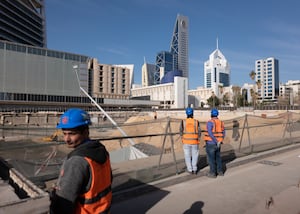
Foreign investors are probably asking what type of return on investment they could receive given the kingdom's activity, and the potential is promising.

How ready is the market?

Following publication in the official gazette, the Real Estate General Authority must publish implementing regulations on the Istitlaa platform within 180 days. It has time to define zones open to foreign buyers and prescribe approval processes.

The Ministry of Investment will streamline foreign investment approvals and the Ministry of Interior will integrate land-registry data with security protocols. Together, these institutions must co-ordinate licensing, title registration and compliance checks to launch transactional platforms by the start of 2026.

Saudi Arabia’s government has demonstrated capacity for rapid digital roll-outs, exemplified by e-government portals and integrated identity systems, suggesting core registry upgrades can be delivered on schedule.

Moreover, existing permissions already enabled foreign citizens to invest indirectly – for example, through Premium Residency, licensed developers, or real estate funds – creating precedents for a more structured regime, but the main hurdles could involve:

  • Regulatory consultation, by compressing public comment cycles to meet the 180-day deadline.
  • IT integration, by updating national land registries to handle new ownership categories and cross-border title verification.
  • A financing ecosystem, which would need to be adapted, especially the mortgage frameworks for foreign buyers that will include risk and compliance protocols.

With Vision 2030’s political backing, a January 2026 activation is credible. Advancing to an April 2026 operational window will depend on top-level prioritisation of the law and dedicated interministerial task forces.

Global market comparison

This move by Saudi Arabia feels very much like Dubai did back in 2002, when it opened certain areas for foreign ownership.

With the reforms of the country also making headlines, now would be a great time for any investor to get in early and benefit from capital appreciation of real estate as the market opens further.

All of this will of course take time, as Dubai has shown, the period needed for the real estate market to lead to maturity takes time. Notwithstanding this, I think Saudi Arabia and its investors are in a great position to benefit from this move going forward.

Global investors with their eyes on Saudi Arabia must consider local returns against Gulf and global benchmarks.

In the fourth quarter of 2024, Saudi Arabia’s real estate price index rose 3.6 per cent year-on-year, led by a 10.2 per cent price surge in Riyadh and 4.6 per cent in Najran.

Meanwhile, rental markets remain strong. Riyadh yields average 8.89 per cent and Jeddah 7.89 per cent gross annually.

If we were to compare Saudi Arabia with the UAE, the US and the UK, Dubai delivers rental yields between 5 per cent and 11 per cent, buoyed by robust demand in mixed-use and luxury segments and the golden visa programme.

The US’s average gross rental yield is 6.68 per cent as of the second quarter of 2025, with high-yield cities such as Detroit exceeding 20 per cent. The UK average buy-to-let gross yield stands at 5.60 per cent, with cities including Sunderland and Aberdeen offering yields above 8 per cent.

Saudi Arabia’s combination of double-digit yields and mid-single-digit price appreciation positions it competitively within the Gulf and many western markets.

More needed

Real estate market maturity marked by liquidity, transparency and global investor confidence will take time as has been shown in the UAE, but as long as Saudi Arabia build the below, it should be well on its way to maturity in the years to come.

Broadening the Real Estate sector is among the central aims of the kingdom's Vision 2030 programme. Reuters

Secondary market depth will be needed by launching real estate investment trusts and collective investment schemes to deepen capital pools and improve liquidity.

Valuation standards will need to be upgraded by establishing independent appraisal bodies and aligning with IFRS 13 for fair-value reporting.

Legal and dispute resolution will also require upgrading, by expanding specialised real estate courts and arbitration centres to protect investor rights.

Financing and securitisation will need to be more competitive by developing covered-bond and mortgage-securitisation markets to diversify funding and lower borrowing costs.

These enhancements, while not prerequisites for the January 2026 opening, will be essential for evolving from a frontier to a mature market akin to the UK and US over several years.

The opening of Saudi Arabia’s real estate market is one of the most consequential investment gateways in the region since the UAE did the same more than 20 years ago.

Regulatory foundations appear on track for January 2026, with an April 2026 operational window possible, if expedited.

Early market metrics, robust price growth and high rental yields will underscore strong growth potential. But full maturation will depend on continued reforms in liquidity, transparency and financing infrastructure.

For global investors, Saudi Arabia offers frontier-market yields with the promise of a reliable long-term destination as institutional frameworks deepen under the Vision 2030 initiative.


Ten tax points to be aware of in 2026

1. Domestic VAT refund amendments: request your refund within five years

If a business does not apply for the refund on time, they lose their credit.

2. E-invoicing in the UAE

Businesses should continue preparing for the implementation of e-invoicing in the UAE, with 2026 a preparation and transition period ahead of phased mandatory adoption. 

3. More tax audits

Tax authorities are increasingly using data already available across multiple filings to identify audit risks. 

4. More beneficial VAT and excise tax penalty regime

Tax disputes are expected to become more frequent and more structured, with clearer administrative objection and appeal processes. The UAE has adopted a new penalty regime for VAT and excise disputes, which now mirrors the penalty regime for corporate tax.

5. Greater emphasis on statutory audit

There is a greater need for the accuracy of financial statements. The International Financial Reporting Standards standards need to be strictly adhered to and, as a result, the quality of the audits will need to increase.

6. Further transfer pricing enforcement

Transfer pricing enforcement, which refers to the practice of establishing prices for internal transactions between related entities, is expected to broaden in scope. The UAE will shortly open the possibility to negotiate advance pricing agreements, or essentially rulings for transfer pricing purposes. 

7. Limited time periods for audits

Recent amendments also introduce a default five-year limitation period for tax audits and assessments, subject to specific statutory exceptions. While the standard audit and assessment period is five years, this may be extended to up to 15 years in cases involving fraud or tax evasion. 

8. Pillar 2 implementation 

Many multinational groups will begin to feel the practical effect of the Domestic Minimum Top-Up Tax (DMTT), the UAE's implementation of the OECD’s global minimum tax under Pillar 2. While the rules apply for financial years starting on or after January 1, 2025, it is 2026 that marks the transition to an operational phase.

9. Reduced compliance obligations for imported goods and services

Businesses that apply the reverse-charge mechanism for VAT purposes in the UAE may benefit from reduced compliance obligations. 

10. Substance and CbC reporting focus

Tax authorities are expected to continue strengthening the enforcement of economic substance and Country-by-Country (CbC) reporting frameworks. In the UAE, these regimes are increasingly being used as risk-assessment tools, providing tax authorities with a comprehensive view of multinational groups’ global footprints and enabling them to assess whether profits are aligned with real economic activity. 

Contributed by Thomas Vanhee and Hend Rashwan, Aurifer

COMPANY%20PROFILE
%3Cp%3E%3Cstrong%3EName%3A%20%3C%2Fstrong%3EElmawkaa%3Cbr%3E%3Cstrong%3EBased%3A%3C%2Fstrong%3E%20Hub71%2C%20Abu%20Dhabi%3Cbr%3E%3Cstrong%3EFounders%3A%3C%2Fstrong%3E%20Ebrahem%20Anwar%2C%20Mahmoud%20Habib%20and%20Mohamed%20Thabet%3Cbr%3E%3Cstrong%3ESector%3A%3C%2Fstrong%3E%20PropTech%3Cbr%3E%3Cstrong%3ETotal%20funding%3A%3C%2Fstrong%3E%20%24400%2C000%3Cbr%3E%3Cstrong%3EInvestors%3A%20%3C%2Fstrong%3E500%20Startups%2C%20Flat6Labs%20and%20angel%20investors%3Cbr%3E%3Cstrong%3ENumber%20of%20employees%3A%3C%2Fstrong%3E%2012%3Cbr%3E%3C%2Fp%3E%0A
Electric scooters: some rules to remember
  • Riders must be 14-years-old or over
  • Wear a protective helmet
  • Park the electric scooter in designated parking lots (if any)
  • Do not leave electric scooter in locations that obstruct traffic or pedestrians
  • Solo riders only, no passengers allowed
  • Do not drive outside designated lanes
The five new places of worship

Church of South Indian Parish

St Andrew's Church Mussaffah branch

St Andrew's Church Al Ain branch

St John's Baptist Church, Ruwais

Church of the Virgin Mary and St Paul the Apostle, Ruwais


How does ToTok work?

The calling app is available to download on Google Play and Apple App Store

To successfully install ToTok, users are asked to enter their phone number and then create a nickname.

The app then gives users the option add their existing phone contacts, allowing them to immediately contact people also using the application by video or voice call or via message.

Users can also invite other contacts to download ToTok to allow them to make contact through the app.


About Karol Nawrocki

• Supports military aid for Ukraine, unlike other eurosceptic leaders, but he will oppose its membership in western alliances.

• A nationalist, his campaign slogan was Poland First. "Let's help others, but let's take care of our own citizens first," he said on social media in April.

• Cultivates tough-guy image, posting videos of himself at shooting ranges and in boxing rings.

• Met Donald Trump at the White House and received his backing.

Dust and sand storms compared

Sand storm

  • Particle size: Larger, heavier sand grains
  • Visibility: Often dramatic with thick "walls" of sand
  • Duration: Short-lived, typically localised
  • Travel distance: Limited 
  • Source: Open desert areas with strong winds

Dust storm

  • Particle size: Much finer, lightweight particles
  • Visibility: Hazy skies but less intense
  • Duration: Can linger for days
  • Travel distance: Long-range, up to thousands of kilometres
  • Source: Can be carried from distant regions
Israel Palestine on Swedish TV 1958-1989

Director: Goran Hugo Olsson

Rating: 5/5

THE BIO

Favourite car: Koenigsegg Agera RS or Renault Trezor concept car.

Favourite book: I Am Pilgrim by Terry Hayes or Red Notice by Bill Browder.

Biggest inspiration: My husband Nik. He really got me through a lot with his positivity.

Favourite holiday destination: Being at home in Australia, as I travel all over the world for work. It’s great to just hang out with my husband and family.


Updated: July 16, 2025, 10:01 AM