


Motorbike riders in brightly coloured clothes delivering food have become a ubiquitous sight on the streets – and in elevators – across the UAE.
Covid-19 brought seismic shifts to our way of living, and while some practices naturally fell away, others stuck. The comfort, variety and value that food delivery offers have seen the sector growing, despite increased competition, say industry operators.
Home-grown ride-hailing app Careem in 2018 jumped into the mix with Careem Now and, following its acquisition by Uber in 2019 for $3.1 billion, launched Careem Food in 2020 with operations now in the UAE, Saudi Arabia and Jordan.
The company has seen rapid growth since its launch, despite what initial naysayers had to say when it entered the space, Jaskaran Singh, vice president of product management at Careem, who also leads its food business, tells The National.
“Dubai is a unique city in the region with one of the highest food delivery penetration rates in the region – and maybe even globally,” he says.
Based on the high levels of penetration, food delivery as a market is growing at a compound annual growth rate of between 5 per cent to 8 per cent in Dubai, according to Mr Singh.
-
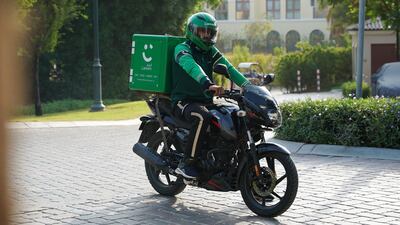
Careem captains operate across the UAE. Photo: Careem -
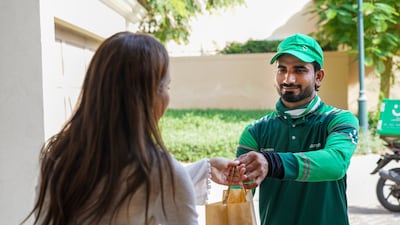
Careem NOW delivers food to your doorstep. Photo: Careem -
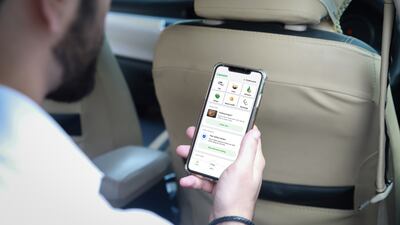
The Careem super app makes ordering quick and easy. Photo: Careem -

A Careem rental bicycle at Jumeirah Beach, Dubai. Photo: RTA / Careem -

Careem also operates in Riyadh, Saudi Arabia. Reuters -
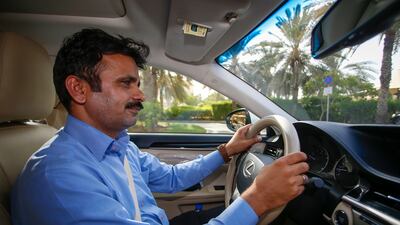
Abrar Ahmed, Careem's longest-serving driver, takes 'The National' for a spin in Dubai Media City. Chris Whiteoak / The National -
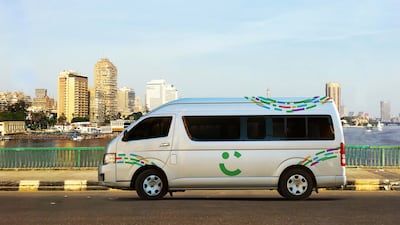
Careem's bus service in Egypt. Courtesy Careem -

The new 13-seater bus service will operate throughout the country. Photo: Careem -

You can even hire cars from Careem in Dubai. Victor Besa / The National


But for Careem, the rate of growth has been a much larger 75 per cent annually following its market entry. The company ranks second in Dubai in terms of gross transaction values, having benefitted significantly from its large ride-hailing base, Mr Singh says.
“Covid did increase adoption. But I think people here like convenience and like ordering food, and in a city like Dubai, there’s just so much choice … So Covid helped a bit and, if anything, things have continued and even accelerated from there,” he says.
In the UAE, the online meal delivery market is forecast to reach more than $1 billion in revenue this year, and rise to $1.3 billion by 2029, driven by the convenience it offers and the higher disposable income in the country, according to data from Statista.
UAE restaurants receive an estimated 228,740 orders per year, while the number of delivery orders for fast-food chains specialising in delivery is at more than 600,000 orders, according to a report released this year by restaurant software provider Syrve MENA and marketing platform Admitad.
It also found that the wider Mena region recorded a 10 per cent annual increase in delivery orders during the first quarter of 2024, after order volumes rose 6 per cent and values increased by 5 per cent in 2023, when compared to 2022.
Online business channels, including food aggregators and last-mile delivery platforms, are poised to play a “pivotal role” in reshaping the dynamics of the Gulf’s food market, consultancy Alpen Capital said in a December report.
Approximately 64 per cent of the Gulf’s population is aged between 15 and 49 years, and this group has led to the rise in demand for new dining concepts and diverse cuisines, and in driving the growth of cloud kitchens and online food delivery platforms, it said.
“The food delivery market in the UAE, and the wider GCC, has seen remarkable growth, driven by evolving consumer preferences and a robust digital infrastructure,” says Anis Harb, general manager at Deliveroo Middle East.
Currently, the market is “thriving”, he says. “While it’s comparable to global markets in terms of innovation and expansion, the Middle East stands out for its rapid adoption of tech-driven solutions and the increasing role of local businesses in shaping the industry’s growth trajectory.”
Racing for orders
While the market is growing, the rising number of players in a relatively smaller market such as the UAE has already led to consolidation in the industry.
Indian food delivery platform Zomato sold its UAE food delivery business in 2019 to Germany’s Delivery Hero, which operates talabat, for $172 million and ceased local operations in the Emirates in 2022.
Meanwhile, food delivery platform Uber Eats, which launched in the UAE in 2017, said in 2020 that it would no longer operate as an independent entity in the country following Uber’s acquisition of Careem. Uber said at the time that the “tough” decision to instead join forces with Careem was made after taking a “hard look” at the metrics in what has been a competitive food delivery market in the UAE.
Careem also acquired subscription-based food delivery platform Munch:On in the UAE in 2022 to expand its services and geographic footprint. In December, UAE telecoms and technology company e& also completed the acquisition of a 50.03 per cent stake in the Careem Everything App, for $400 million.
“I think the market may not be growing at a rapid rate, but it is an attractive market. So from that perspective … there might be consolidation among existing players, but at the same time, there could be new players who want to try – and you see that happening,” says Mr Singh.
Along with “notable large names”, the market has also seen the entry of local, home-grown players, he says.
“I would expect that to continue. But the thing is that this business makes sense at scale, so it's not easy. And like, in our case as well, it would have been much harder if we didn't have our ride-hailing base.”
While competition in the UAE’s food delivery market has intensified, there is still room for growth and innovation, agrees Mr Harb.
“The market continues to evolve with new consumer demands such as healthier options and convenience-driven services. Rather than saturation, there’s opportunity for differentiation.”
The key players are also seeking to expand their market share. Talabat, which plans to list on the Dubai Financial Market this year, had a food service market penetration of 22 per cent within the Mena markets in which it operates, with potential for “significant growth headroom”, it said in its investor presentation.

One challenge holding back newer entrants is exclusivity contracts that some platforms enforce with restaurants, according to Mr Singh.
This aspect is not regulated locally, unlike some global markets, where regulators prevent such exclusivity arrangements to crack down on monopolistic practices.
“We are strong advocates of customer choice … customers should have the choice, restaurants should have the choice, and then whatever works best for everyone, overall, it's just better for the system,” he says.
Dangling a carrot
A key focus for Careem to build its consumer base has been its subscription programme, Careem Plus, says Mr Singh.
The programme has more than 250,000 members in Dubai, and having launched recently in Abu Dhabi, it is “growing rapidly” in the capital as well. It costs Dh19 ($5) per month to be a member, and benefits include free delivery on food and groceries as well as 10 per cent back on 10 rides.
“Since the time we've launched it, members would have saved about Dh200 million,” he says. “Careem Plus has been a big, big focus for us. We've also invested behind it, right from a branding standpoint, from a product standpoint, the value proposition standpoint.”
Pricing plays a significant role in consumer decisions, with value for money being a key driver in the UAE market, says Deliveroo's Mr Harb. To address this, Deliveroo Plus, its subscription programme, offers free delivery and exclusive offers, with rates starting from Dh19 a month.
The programme’s growth since launch highlights “the increasing appeal of value-driven solutions”, he says. “Subscription and loyalty programme resonate well in the region, as they enhance the overall customer experience and offer tangible benefits.”

Careem has also launched schemes such as ‘Dirham for Delays’, which offers customers Dh1 for every minute an order exceeds the promised delivery time. The campaign, which was first launched in Dubai last year, came under criticism for putting pressure on drivers and risking their safety. However, the company stressed at the time that drivers were not involved or affected.
The campaign, which ran from May 8 to June 30 last year, saw Dh709,000 ($193,000) repaid to customers, Careem revealed this year, when the scheme was relaunched in February. Careem has also launched the scheme in Abu Dhabi, running from September 2 to October 31.
The scheme is handled from the back end and drivers are not aware about the time promised to the customer, stresses Mr Singh.
“The way we do it is based on our tech. So, let's say you've ordered a burger from McDonald's, and it's in the afternoon, and it's in Media City, and you live in JLT. Now, all of this is data,” he says.
“So, we know how much time it might take [to prepare the food], we know where our captains are placed, how much time will it take for them to reach and then the last mile [delivery]. This tech we've invested in since the time we've launched ride hailing. We have years of data. And the data points, the quantum of data we have is much larger, because [of] ride hailing, especially with Hala.”
There is a lot of “number-crunching” that happens in the background, with live streams of data, and “that’s what gives us the confidence to go and make this bet”, he adds.
Robots knocking
Technology is also a key focus for the market, as operators aim to increase efficiencies. And the robots and drones are stepping in.
In July, Dubai Sustainable City launched a delivery robot pilot programme promising waiting times of under 30 minutes. Three autonomous on-demand delivery robots will provide services from all restaurants and shops within the plaza area to residents, it said at the time.
In February last year, Dubai’s Roads and Transport Authority, Dubai Integrated Economic Zones Authority and Talabat also joined forces to launch a three-month pilot programme using food delivery robots, called talabots, in Dubai Silicon Oasis. After a successful trial during Expo2020, seven of the talabots were deployed to serve about 300 homes.
With mobility advancement such as flying taxis expected to come soon to Dubai, “maybe delivery by drones could also become a norm” in the future, according to Mr Singh.
“But at this point, I feel the customer needs are more around some of these more basic things, like, is it healthy, is it affordable, are you solving the choice for me, versus, more gimmicky stuff, like are you giving it to me through a drone.”
Careem is presently working on some new concepts to address health and affordability and also help people with the “choice conundrum”.
“Today, you have some pretty static experiences. Every app looks the same and the onus is really on the consumer to figure out what they want to eat. But with AI, this can change completely. If you give a small prompt on what you're in the mood for, I can tailor the entire app experience to that,” he says.
That will include immersive experiences with video and customisation.
According to Mr Harb, key future trends include the integration of AI and automation for more efficient operations, a growing emphasis on sustainability practices, and an expansion of services beyond traditional food delivery to include on-demand retail and personalised experiences.
“In the near term, we anticipate more personalised and convenient delivery options, while in the long term, we will likely see further tech innovation in service offerings,” he says.

