


London's Heathrow Airport is demanding a complete “rethink” of the business rates system, under which it faces a substantially increased bill in the near future.
Changes to the way business rates are calculated mean Heathrow could be subjected to a bill of almost £1 billion ($1.26 billion) in the coming years, according to new research.
Rules brought in last year mean that from 2026, Heathrow could be charged more in line with its profitability in 2024, because the Valuation Office Agency is moving towards a “receipts and expenditure” model for calculating business rate charges.
With passenger numbers already breaking records so far this year, Heathrow faces being a victim of its own success in terms of business rates.
“Huge hikes in business rates simply increase costs for consumers without adding a single pound of investment to the services they are using,” a Heathrow official said.
“The whole sector wants to see more joined up thinking between government departments to avoid decisions like this, which only curb our ability to compete internationally and meet consumers’ demands for smooth, safe journeys and progress on sustainability.”
After crunching the numbers, The Sunday Times found that Europe's busiest airport is facing a £900m business rates bill – which could be passed on to passengers.
Business rates are distinct from corporation taxes and normally in the UK are charged on the properties used by companies from which they conduct their operations.
Heathrow is already the UK's largest business rates payer, but under the new rules it could see its bill rise from the current £200 million a year to £300 million a year between 2026 and 2029.
If passed on to passengers through the airlines, the £900 million bill could mean Heathrow's estimated 80 million annual passengers pay an additional charge of £3.75 each.
Heathrow's major client airlines – especially British Airways and Virgin Atlantic, which already have a tense relationship with the airport – would baulk at passing the business rates cost on to customers.
If Heathrow absorbs the cost itself, the airport's wide-ranging expansion plans could be affected.
However, there may be some hope on the radar for the west London airport. If the UK's opposition Labour Party wins the general election in three weeks – which it is widely expected to do – it has pledged to significantly reform the business rates system. That said, it's still unclear how this would affect airports.

Strong Q1 numbers
The business rates bill would be a potential headache for Heathrow's new investors as well.
Having struck a deal last week, Saudi Arabia's Public Investment Fund and the French private equity fund Ardian will together now own 37.6 per cent of Heathrow as part of a £3.26 billion deal.
The two companies had previously planned to buy the 25 per cent stake that Spanish infrastructure firm Ferrovial put up for sale, but have ended up with larger slices after other shareholders exercise so-called “tag-along” rights.
Ferrovial will retain a 5.25 per cent stake in the airport.
Heathrow had a very strong start to 2024, with a record 18.5 million passengers travelling through its terminals in the first quarter.
The airport predicted a busy summer and recently increased its full-year passenger number outlook to 82.4 million for 2024.
Heathrow made an adjusted profit of £83 million in the first three months of this, compared with a loss of £139 million in the same period in 2023.
-
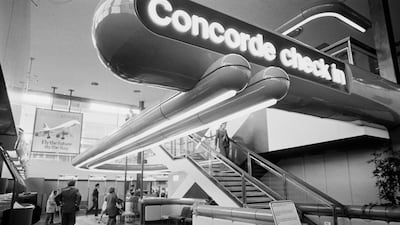
Heathrow Airport in London, the UK's busiest, has been a travel hub for decades. Here The National takes a look back at Heathrow through the years. All photos: Getty Images -
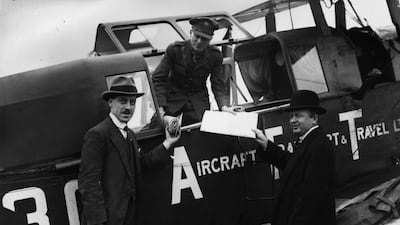
An Airco De Havilland biplane of the British airline, Aircraft Transport and Travel Limited, about to leave on the company’s inaugural flight from Hounslow Heath Aerodrome, later known as Heathrow, to Le Bourget, Paris, in August 1919 -
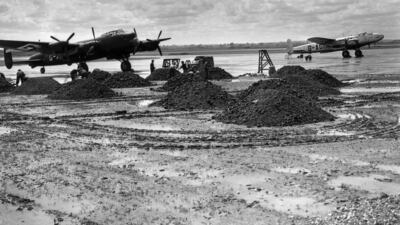
Waterlogged runways at London Airport - Heathrow's original name - one week before it became Britain's main aerial gateway to the US in 1946 -
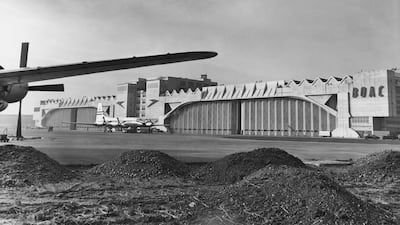
The new BOAC maintenance headquarters at London Airport circa 1955 -
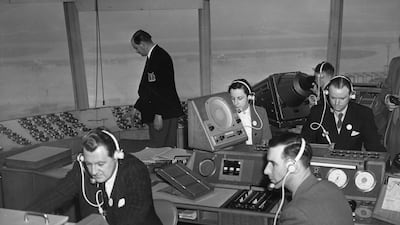
The air traffic control room at the airport's new terminal in 1955 -
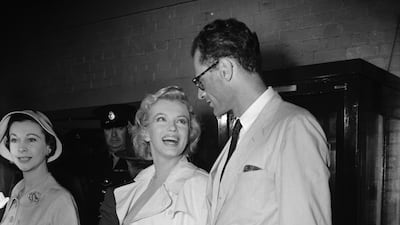
US film star Marilyn Monroe with her husband, playwright Arthur Miller, after arriving at the airport in July 1956 -
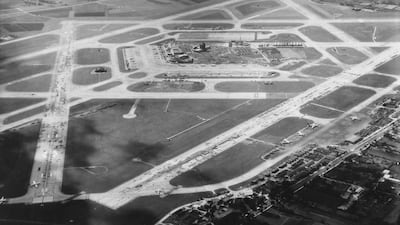
An aerial view showing the runways in 1958 -

The arrivals and departures board in 1960 -

A new airport gift shop, selling items by Chanel, Wedgwood and Pringle of Scotland, in 1961 -
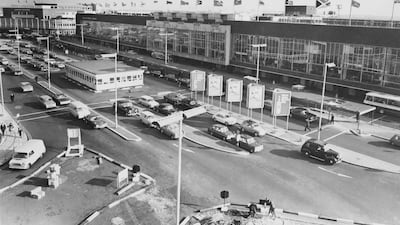
The Queen's Building and the No. 1 Building Europa at Heathrow in 1965 -
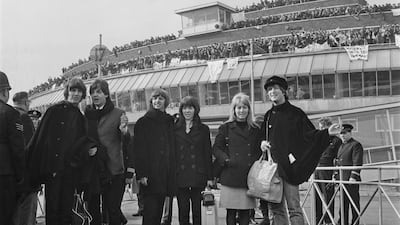
The Beatles leave Heathrow for Salzburg in Austria, to resume filming of the movie Help!, in 1965 -
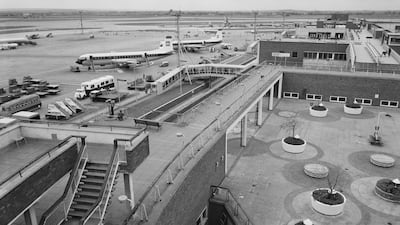
Passenger terminal gates at Heathrow in 1966 -
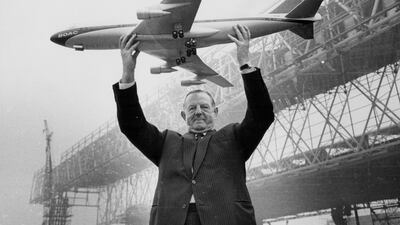
Keith Granville, managing director of BOAC, holding up a model of the Boeing 747 jet, with the new aircraft hangars under construction in the background, at Heathrow in 1969 -
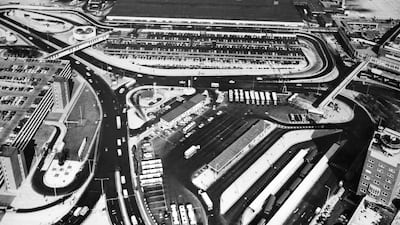
An aerial view of Heathrow in 1970 -
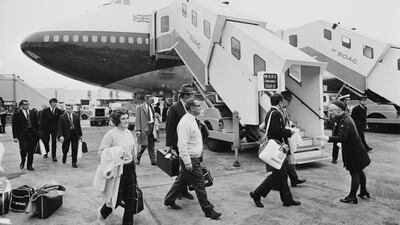
Passengers boarding the first BOAC Jumbo Jet 747 used for a commercial flight, from London Heathrow to New York, in 1971 -
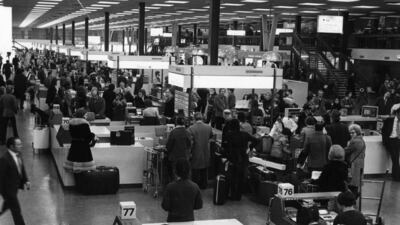
Passengers going through the departure lounge at Heathrow in 1973 -
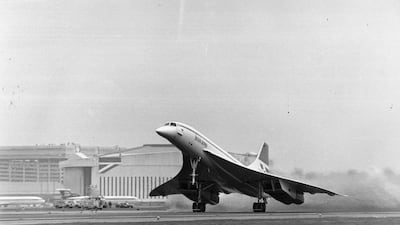
Concorde takes off from Heathrow on her first commercial flight for British Airways in 1976 -
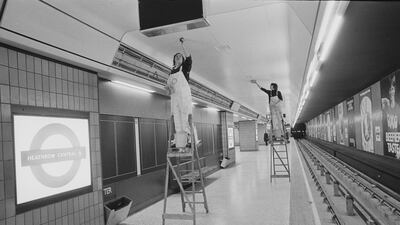
Men at work finalising the Heathrow Central underground station before its opening in 1977 -
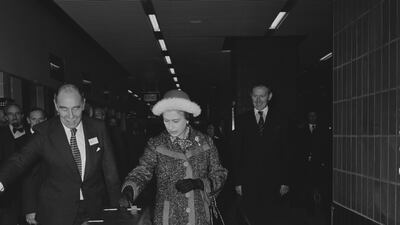
Queen Elizabeth II passing though the Tube gates at Heathrow Central station on its opening in 1977 -
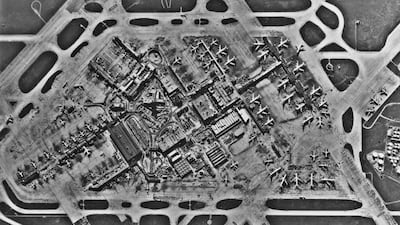
An aerial view of Heathrow in 1978 -

Passengers waiting near a departures board in 1979 -
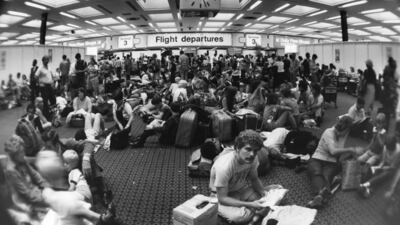
Holidaymakers waiting in the departure lounge at Terminal 3 of Heathrow in 1981 -
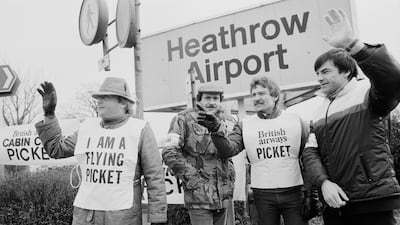
British Airways employees protesting at Heathrow in 1984 -
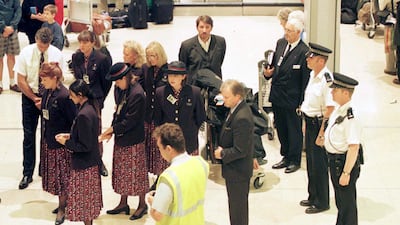
Passengers and staff observe a silence in Heathrow's Terminal One to mark the beginning of the funeral of Diana, Princess of Wales, in 1997 -
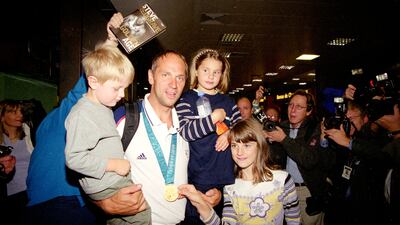
Rower Steve Redgrave at Heathrow with daughters Sophie and Natalie and son Zak after returning from the Sydney 2000 Olympic Games with his gold medal -
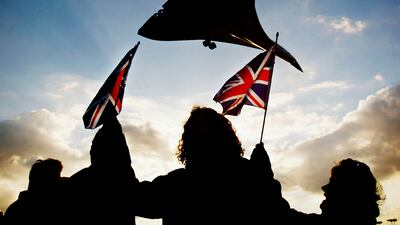
Spectators watch the last Concorde land at Heathrow in 2003 -
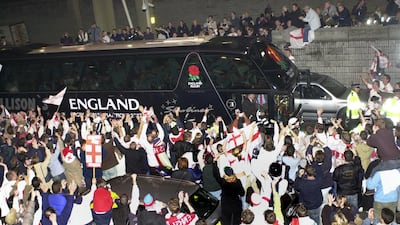
Fans surround the coach carrying the England rugby team at Heathrow, as they arrived from Sydney after winning the World Cup in 2003 -
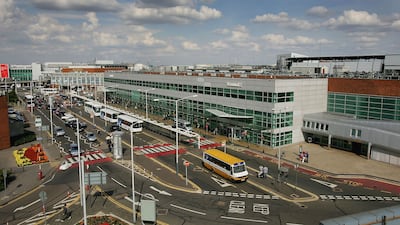
Heathrow's Terminal 2 in 2004 -
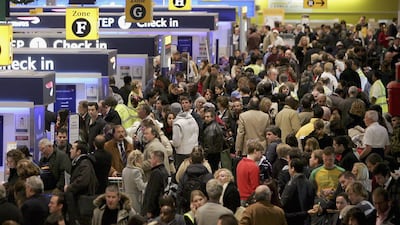
Passengers queue to check in at Terminal 1 of Heathrow Airport during the Christmas 2006 and New Year period -
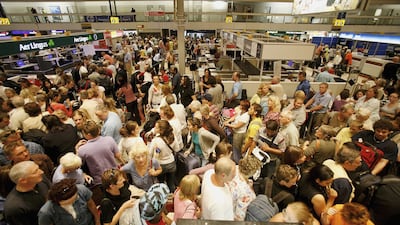
Passengers wait at Terminal 1 on August 10, 2006, after airport security was raised to critical when a terrorist plot to blow up planes in mid-flight from the UK to the US was disrupted by police -
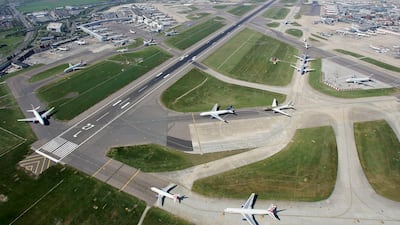
Planes queueing to take off at Heathrow in 2007 -
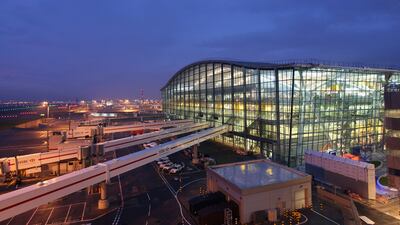
The new Terminal 5 at Heathrow in 2008 -
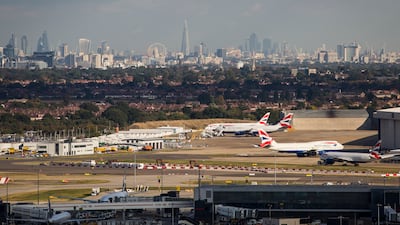
Aircraft at Heathrow Airport in front of the London skyline in 2016 -
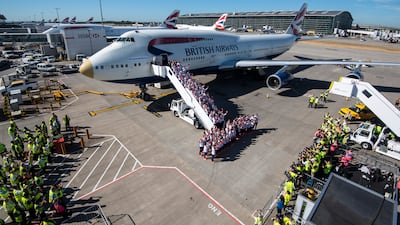
Members of Team GB arrive from Rio de Janeiro at Heathrow, after returning from the 2016 Olympics, which saw Great Britain's strongest performance at the Games in over a century -

A composite photo shows planes taking off from Heathrow in November 2016. Forty-two planes were captured between 10.17am and 11.17am and a montage was created from those single images -
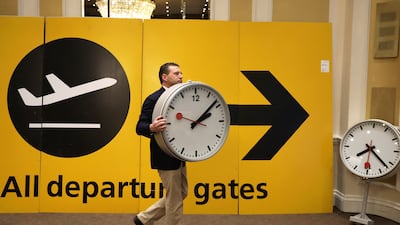
Items are arranged during an auction preview at Heathrow in 2018. The contents of Terminal 1, which closed in 2015, were being sold -
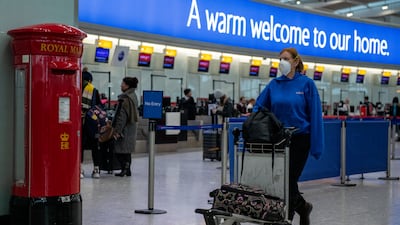
An airline passenger wearing a face mask pushes her bags through Heathrow's Terminal 5 during the coronavirus pandemic in 2020 -
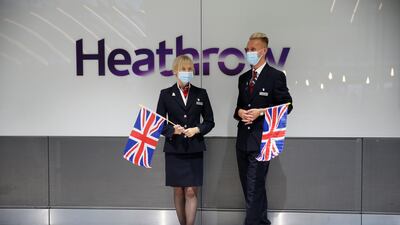
British Airways employees welcome Olympians returning from the Tokyo Olympics in 2021 -
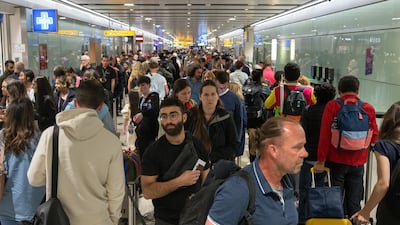
Travellers wait in a long queue to pass through the security check in 2022



