


Google removed the wait-list for its latest generative artificial intelligence tool Bard and introduced the technology in more than 180 countries and territories.
The company is wrestling Microsoft-backed Bing and ChatGPT for a greater share of the generative AI market.
Originally launched in February, the new conversational AI service focuses on creating innovative ways to engage with information, from language and images to videos and audio.
In March, the Alphabet-owned company opened limited public access to select consumers in the US and the UK.
Besides English, Bard is now available in Japanese and Korean, and it will support 40 languages soon, the company announced at its Google I/O conference in Mountain View, California, on Wednesday.
“We are rapidly improving Bard … adding to its capabilities … we are doing it very responsibly," said the company's chief executive, Sundar Pichai.
"It now supports a wide range of programming … and it’s gotten much smarter at reasoning."
Google said it moved Bard to PaLM 2, a more advanced and capable large language model that has enabled many of the recent improvements — including advanced maths, reasoning skills and coding capabilities.
Google’s Pathways Language Model (PaLM) is considered to be a major advancement in generative AI.
It enables data scientists to efficiently train a single model across systems that is capable of understanding hundreds of languages and generation tasks.
“This early momentum is just the beginning … coming soon, Bard will become more visual both in its responses and your prompts,” said Sissie Hsiao, vice president at Google and general manager for Google Assistant and Bard.
Users will be able to ask Bard questions such as, "What are some must-see sights in Dubai?" — and in addition to text answers, the technology will also offer visuals to give users a better sense and context of what they are exploring.
Users will also be able to include images — alongside text — in their prompts, allowing them to boost their creativity and receive more detailed responses.
Generative AI uses machine learning to produce content such as text, images, video and audio. It can generate novel content, in the right context, instead of merely analysing or acting on the existing data.
The global generative AI market is expected to reach $188.62 billion by 2032, growing at an annual rate of more than 36 per cent, from $8.65 billion last year, data from The Brainy Insights market research company showed.
The North American region dominated the market in last year.
Generative AI could also drive a seven per cent — or almost $7 trillion — increase in the global economy and lift productivity growth by 1.5 percentage points over a 10-year period, Goldman Sachs estimated.
“Large language models are still a nascent technology with known limitations," Ms Hsiao said.
"So as we further expand, we will continue to maintain our high standards for quality and local nuances while also ensuring we adhere to our AI principles."
Google has also launched two more export actions to allow users to move Bard’s responses into Gmail and Docs.
“We will introduce new ways to fuel your imagination and curiosity by integrating the capabilities of Google apps and services you may already use — Docs, Drive, Gmail, Maps and others — right into the Bard experience," Ms Hsiao said.
“You will always be in control of your privacy settings when deciding how you want to use these tools and extensions."
In the coming months, Google will also integrate Adobe Firefly (creative generative AI models) into Bard to help users turn their ideas into high-quality images that can be then edited in Adobe Express.
-

A bicycle path along Google's new Bay View campus. EPA -
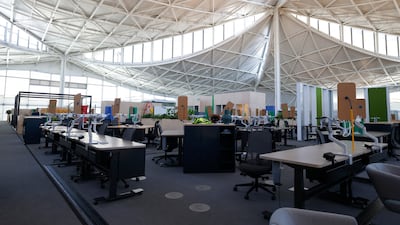
Workstations in Google's new Bay View campus building. EPA -
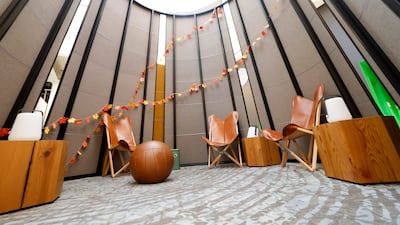
Sitting area at Google's Campfire Corner in Google's new Bay View campus. EPA -

Sitting area at Google's Campfire Corner in Google's new Bay View campus building. EPA -

Interior view in Google's new Bay View campus building. EPA -
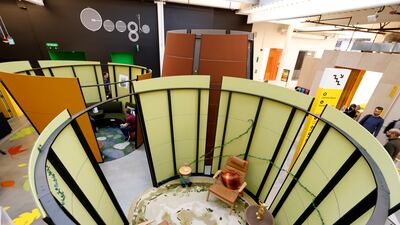
Interior view of Google's Campfire Corner in Google's new Bay View campus building. EPA -

Interior view in Google's new Bay View campus building. EPA -
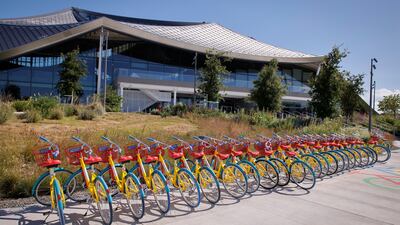
An exterior view of building BV200 and Google shared bicycles during a tour of Google's new Bay View Campus. Reuters -

A seating area in Google's new Bay View campus building. EPA -
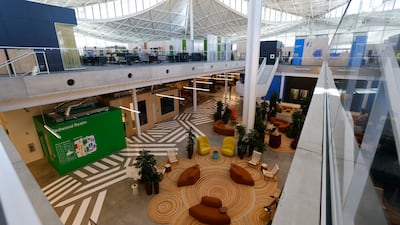
Google announced the opening of its new Bay View campus in Silicon Valley, representing the company's first time developing its own major campus. EPA -
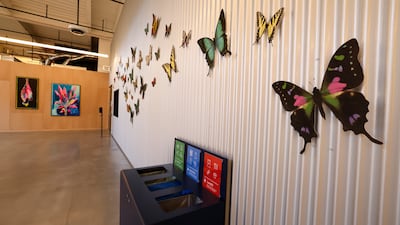
Art work in Google's new Bay View campus. EPA -
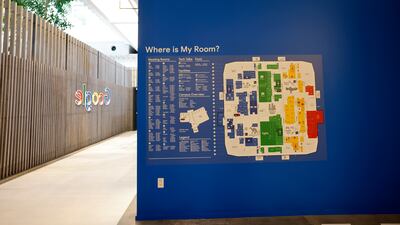
An Office directory in Google's new Bay View campus. EPA -

Interior and ceiling view of BV200, Google's new Bay View campus building. EPA -

The Google bicycle Pedal Park inside Google's new Bay View campus building. EPA -

Binary code and art work on the window of Google's new Bay View campus. EPA -
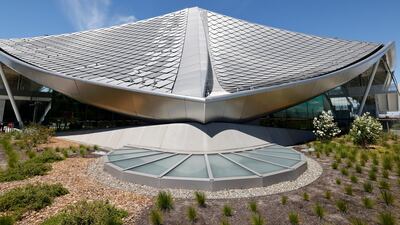
The side of Google's new Bay View campus building. EPA -

An outdoor weight room in front of Google's new Bay View campus. EPA -

Binary code on the window of Google's new Bay View campus. EPA -
The Google logo in front of Google's Bay View Building. EPA -
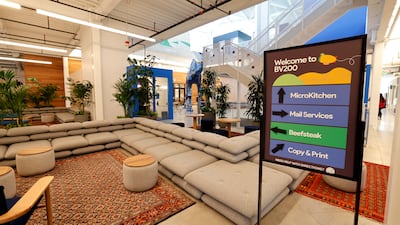
An interior view of BV200, Google's new Bay View campus. EPA -
An Interior view of BV200, Google's new Bay View campus building. EPA -
A Google Android bot in the lobby of BV100, Google's new Bay View campus. EPA -

The Bay View campus was designed by architects Bjarke Ingels Group (BIG) and Heatherwick Studio, as well as Google's design and engineering teams and spans 42 acres adjacent to the open space, two office buildings, and 1,000-person event centre. EPA -

A coffee table made out of a wood stump in the sitting area at BV200, Google's new Bay View campus. EPA -

Google employees in the cafeteria area in Mountain View, California. EPA -
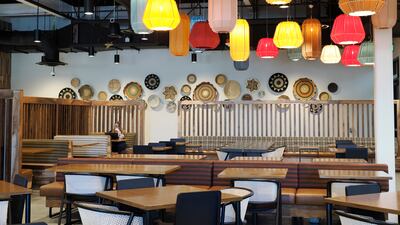
A Google employee in the cafeteria area in Mountain View, California. EPA -

A worker inside Google's new Bay View campus in Mountain View, California. Bloomberg -
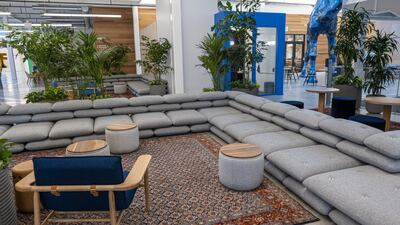
A seating area inside Google's new Bay View campus. Bloomberg -
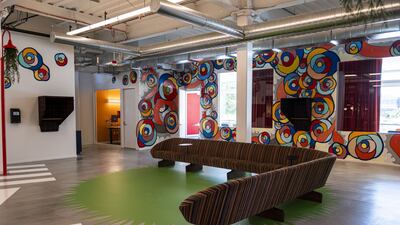
Inside Google's new Bay View campus in Mountain View, California. Bloomberg -
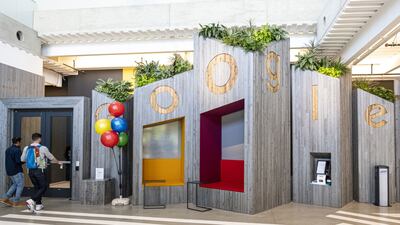
Workers inside Google's new Bay View campus. Bloomberg -
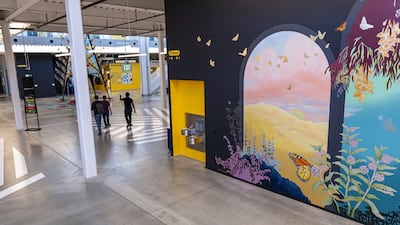
A mural inside Google's new Bay View campus in Mountain View, California. Bloomberg -
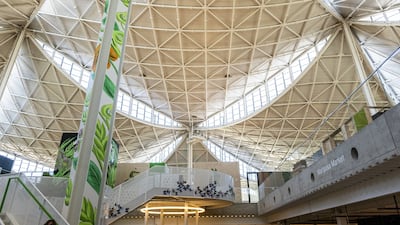
Inside Google's new Bay View campus in Mountain View, California. Bloomberg -
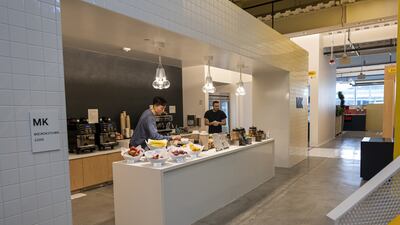
Workers in one of the many dining areas inside Google's new Bay View campus in Mountain View, California. Bloomberg -
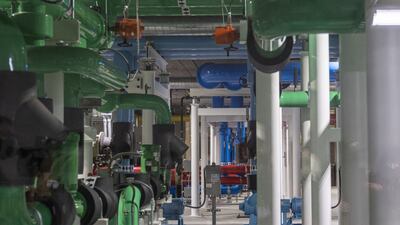
Inside Google's new Bay View campus in Mountain View, California. Bloomberg -

Desks inside Google's new Bay View campus. Bloomberg -
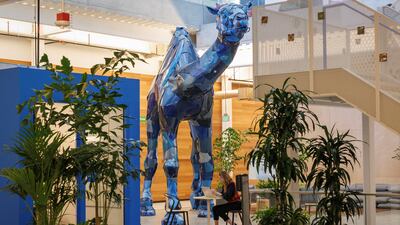
One of nine pieces of art created by Bay Area artists for the campus. Reuters


Launched in December, San Francisco-based research company OpenAI’s ChatGPT comes up with human-like responses to prompts in seconds, based on information publicly available on the internet.
The program has become hugely popular, while also raising concerns about what it is being used for and its accuracy.
Google launched Bard in February. In the same month, Microsoft announced its new AI-powered Bing search engine that aims to deliver better searches, more complete answers, a new chat experience and the ability to generate fresh content.
Last month, Russia's largest lender Sberbank launched its own generative AI tool, GigaChat.

